Wolf Hill, Nantong's Langshan
Wolf Hill, Langshan in Chinese, rises on the south edge of Nantong near the Yangtze approach. The main peak stands about 107 metres high, modest on any mountain scale yet prominent on the Jiangsu plain, which is why writers once called it the first hill of the river and sea. It anchors a five-hill scenic area with Ma'anshan, Jianshan, Junshan and Huangnishan. Guangjiao Temple occupies the Buddhist core. Plan a half day for the climb and halls, then walk the Hao River in the evening if legs allow.
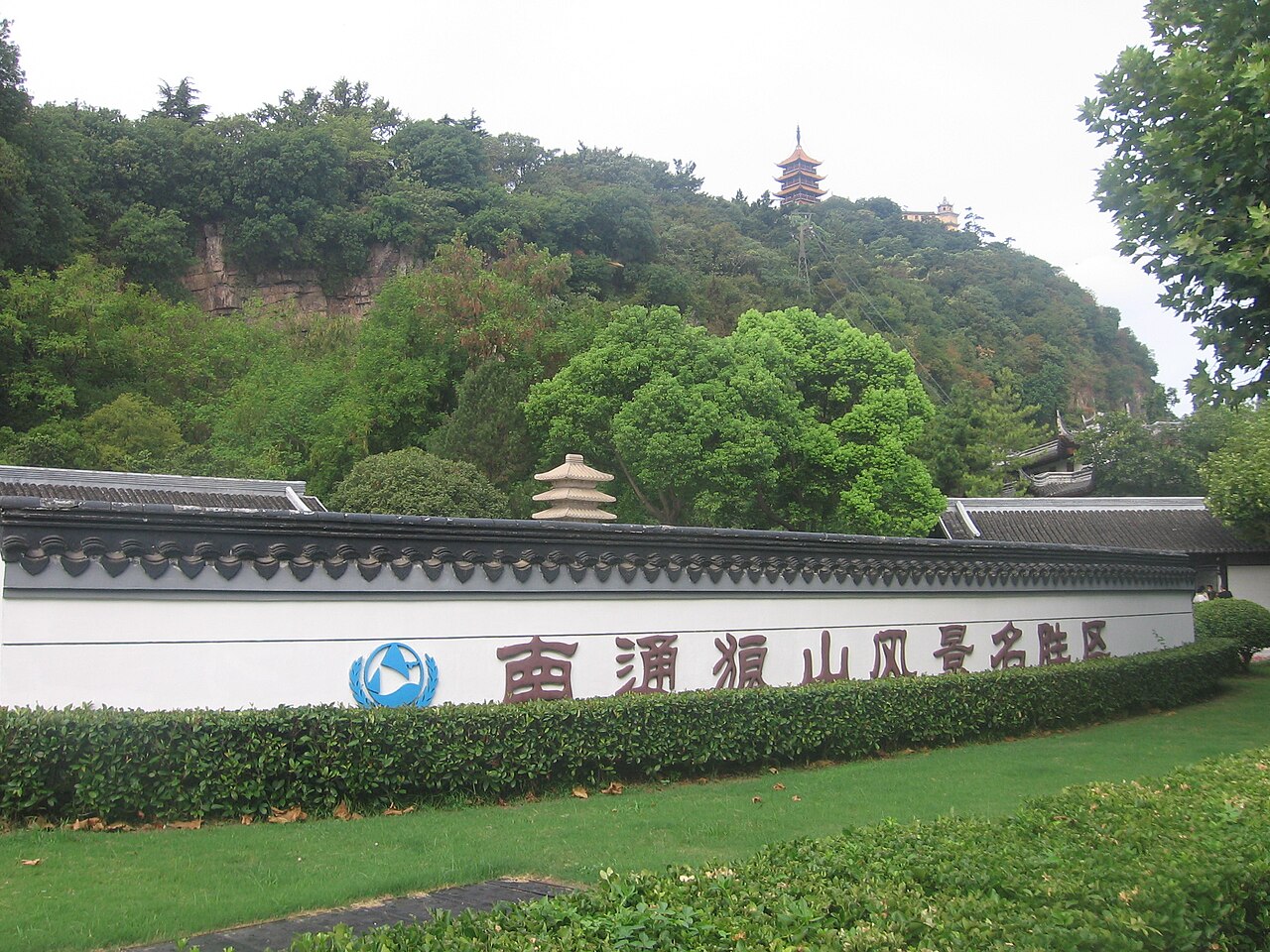
Name and the five hills
Folklore links the name to white wolves that once lived on the slopes, or to a hill shape that suggested a wolf. Between 990 and 994 an official named Yang Jun disliked the wolf label and promoted a homophonous "lang" with a gentler literary sense. Purple rock later encouraged the name Zilangshan, and Nantong itself gained the poetic label Zilang. Langshan remains the highest of the five and the one visitors mean when they say Wolf Hill.
Jianshan shows a sharp ridge compared to a sheathed sword and holds the rebuilt grave of the Dutch engineer Hendrik Frans Tellegen, remembered for water work in Nantong. Junshan carries older garrison legends from when these rises were islands in a wider estuary. Ma'anshan and Huangnishan complete the ring of low peaks once surrounded by water. Together they form a provincial scenic area and a national 4A zone with dozens of recorded halls, tombs, inscriptions and caves.
Guangjiao Temple and religious layers
Tradition names the Tang-era master Sengjia as the opener of the Buddhist mountain. Stories say he subdued a wolf spirit and established a seat for Dashizhi, which grew into today's Guangjiao Temple. Langshan ranks among the smaller famous Buddhist mountains in Chinese pilgrimage lists. North of the Buddhist core, the Langshan Catholic church became an important shrine for northern Jiangsu, and twentieth-century papal grants of plenary indulgence placed it among major Catholic pilgrimage sites in China. Travellers who care about either tradition should confirm mass or incense hours on local notices.
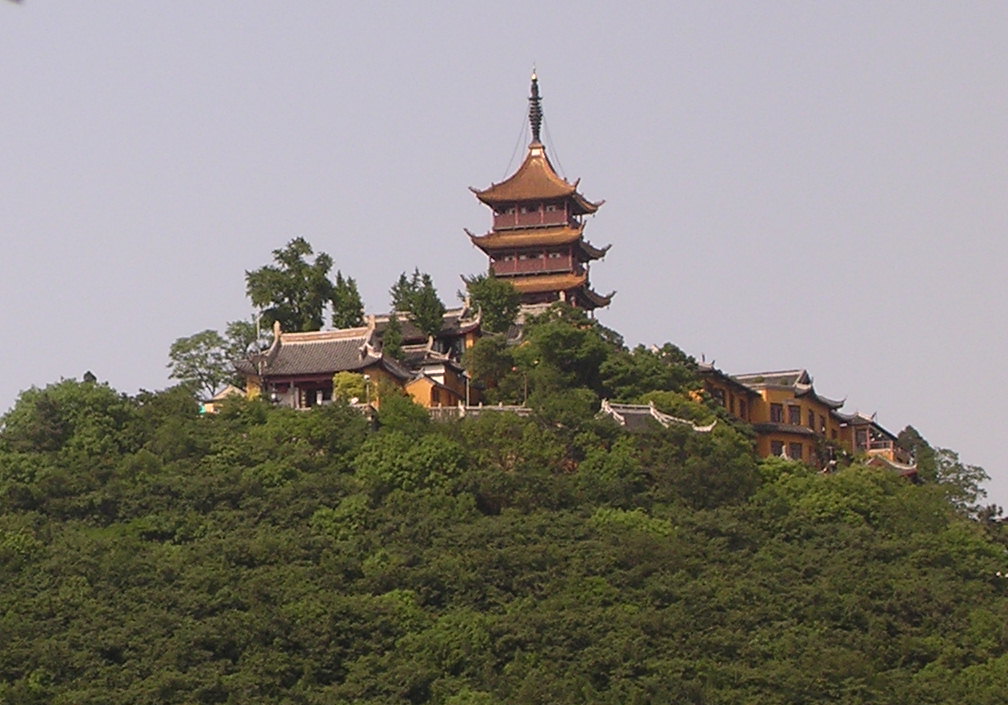
Calligrapher Mi Fu praised the hill. Poet Luo Binwang is associated with a burial here in local memory. Stone inscriptions and hillside paths repay slow walking more than a sprint to a single viewpoint.
Visit order and effort
Follow marked paths to the temple compounds and Yangtze overlooks. The climb is short by alpine standards yet uses stone steps that stress knees in summer heat. Carry water. Clear days help river-mouth views. After the hill, the free Hao River loop offers flat green recovery. If Shanghai already filled your week and you have no appetite for temples, you can skip Nantong entirely. Keep the stop when Langshan is a specific goal between Shanghai and northern Jiangsu.
Tickets, hours and getting there
Scenic tickets and temple donation practices follow official notice. This page quotes no yuan prices. Carry ID. Nantong links by rail and road toward Shanghai and inland Jiangsu. Buses and taxis cover Langshan from city hotels. Stay near the Hao River if you want evening walks. Stay near the station if transit dominates. The Nantong travel guide frames a simple hill-then-river day.
Before you go
- Wear shoes with grip for stone steps.
- Check temple etiquette on dress and photography.
- Pair the hill with the Hao River the same day.
- Read the Nantong travel guide for food and Shanghai day-trip honesty.
Frequently asked questions
How long does Wolf Hill take?
Two to three hours covers the main temple climb and viewpoints. Add more if you walk neighboring hills.
Is it only Buddhist?
Buddhism dominates the classic outing, yet Catholic pilgrimage history also marks the wider Langshan area.
Can I combine it with Shanghai in one day?
Possible, yet rushed. Protect at least a half day on the hill if that is why you came.
What if my knees dislike stairs?
Keep the flat Hao River parks and skip the climb.
The wider five-hill walk
Strong walkers sometimes continue from Langshan toward Jianshan or Junshan when time and tickets allow. Views shift as you move along the river-mouth ridge line. Most first-time visitors are content with Guangjiao Temple, the main overlooks and a slow descent. Save energy for the flat Hao River evening if that pairing is the plan.
Summer heat on exposed steps rises quickly after 10:00. Start early, carry water and rest in shaded halls. Spring and autumn give clearer Yangtze light with less humidity.
Sources
Facts in this article were checked against the following sources, retrieved 19 October 2026.
Photos are from Wikimedia Commons under the licences shown in each caption.