Nantong Travel Guide: Wolf Hill, the Hao River and a Short Stay
Nantong gives you two things that fit comfortably into one unhurried day: the temple-topped Wolf Hill (Langshan) above the Yangtze estuary, and the Hao River, an old city moat that now runs through continuous waterside parks. Metro Line 1 reaches both ends of town, and trains from Nantong West reach Shanghai Hongqiao in roughly 75 to 90 minutes. Most visitors sleep one night, climb the hill in the morning and walk the moat at dusk.
What a visit actually covers
Wolf Hill's main peak is only about 107 metres high, but it is the highest point on a flat plain, which is why older writers called it the first hill of the river and the sea. Guangjiao Temple holds the Buddhist core, and a small pagoda crowns the summit. The climb is stone steps rather than a mountain hike: two to three hours covers the temple, the river overlook and a slow descent.
The Hao River is the opposite kind of outing. Records put a moat here as early as 958, and it survived when many Chinese cities filled theirs in for roads. Paths are mostly open city green, so you can walk a segment in the early morning, go back to the hotel, and come out again for the evening lights without paying anything. Separate temples and museums along the banks keep their own tickets and hours.
If your only interest in Jiangsu is classical gardens, Suzhou serves you better. Nantong suits travellers who want a quieter Yangtze-mouth town with a real hill, a long moat walk and food that leans toward the sea.
Places worth visiting
Wolf Hill (Langshan): getting up the hill
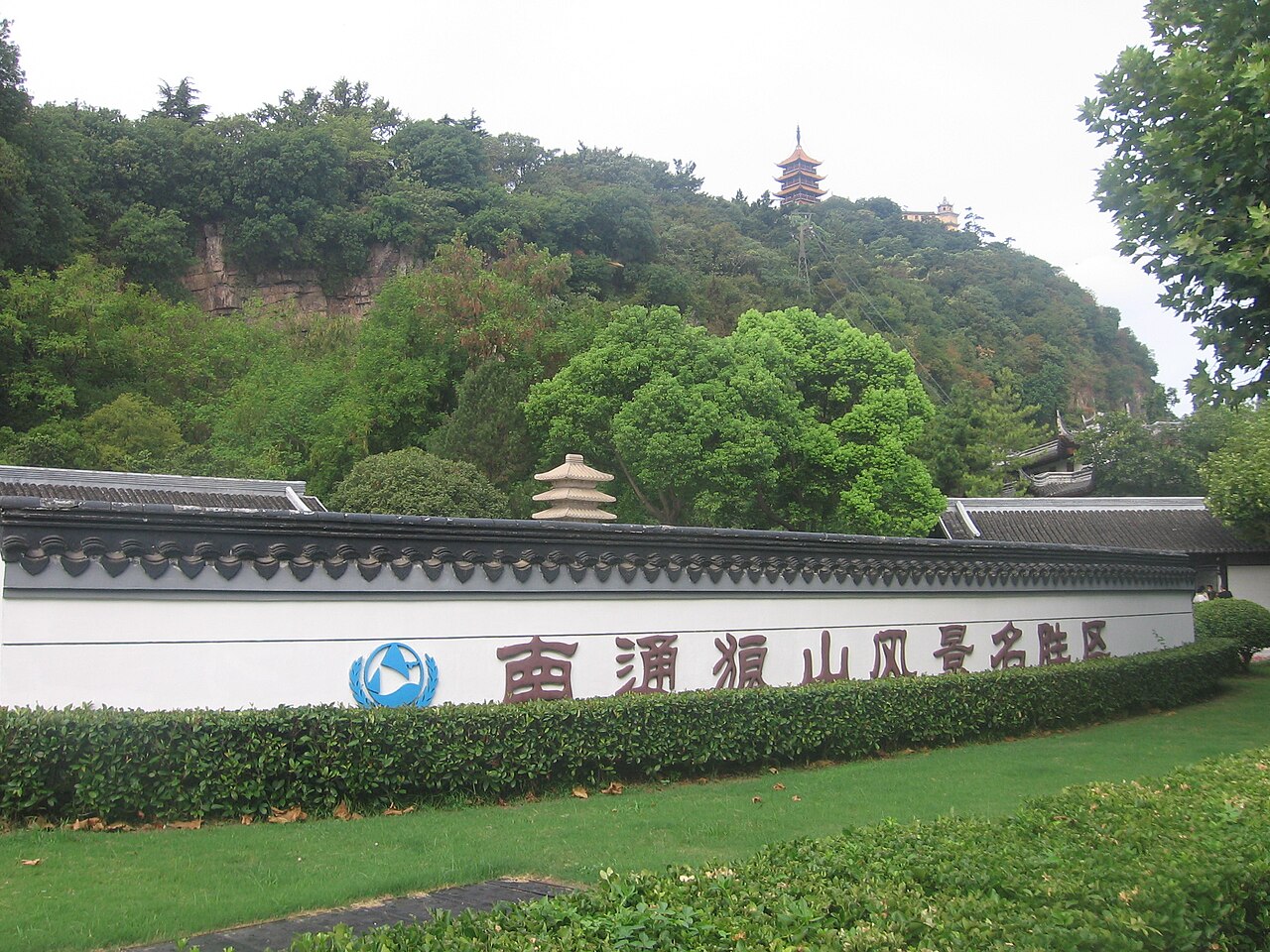
Langshan Station on Metro Line 1 is the simple way in; travellers report about a ten-minute walk from the station to the scenic area. Go early on summer days, because the steps are exposed after mid-morning. Inside, the order most people follow is temple halls first, then the summit pagoda and the Yangtze overlook, then down past the tomb associated with the Tang poet Luo Binwang. The hill is one of five low rises in a provincial scenic area; Jianshan next door holds the rebuilt grave of Dutch water engineer Hendrik Frans Tellegen. Ticket price, gate hours and any cable car fare should be checked on the official notice for your date, as they change by season.
Guangjiao Temple and the summit
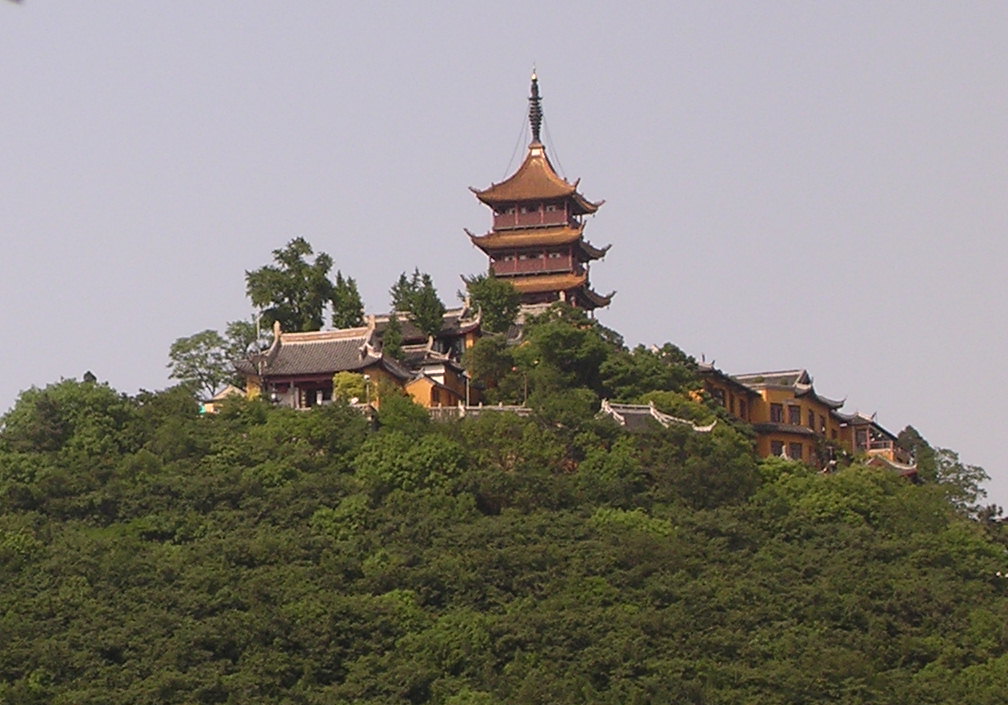
Guangjiao Temple is the reason most Chinese visitors climb. Tradition credits the Tang-era monk Sengjia with founding the Buddhist mountain, and the temple is dedicated to the bodhisattva Dashizhi, unusual among Chinese pilgrimage sites. Expect incense smoke and crowds on Buddhist festival days and weekend mornings. Dress modestly in the halls and ask before photographing monks or worshippers.
The Hao River moat walk

Pick one continuous stretch and walk it in one direction; the full circuit takes half a day and most of the payoff comes from the first hour or two. Along the banks you pass Guangxiao Pagoda, Tianning Temple and Wenfeng Pagoda, plus former residences linked to the industrialist Zhang Jian. A Haohe tour bus line runs along Haonan Road if you want an orientation lap first. Weekend evenings bring local families out, which is part of the pleasure.
Nantong Museum and Zhang Jian's town
Zhang Jian, the late-Qing scholar who turned to industry, shaped modern Nantong with cotton mills, schools and the Nantong Museum compound beside the moat, founded in 1905. On a wet day this is the best indoor option, and the labels explain why the city looks the way it does better than any viewpoint. Check the museum's opening days before you go; Chinese museums often close one weekday.
The skyline and the river crossing
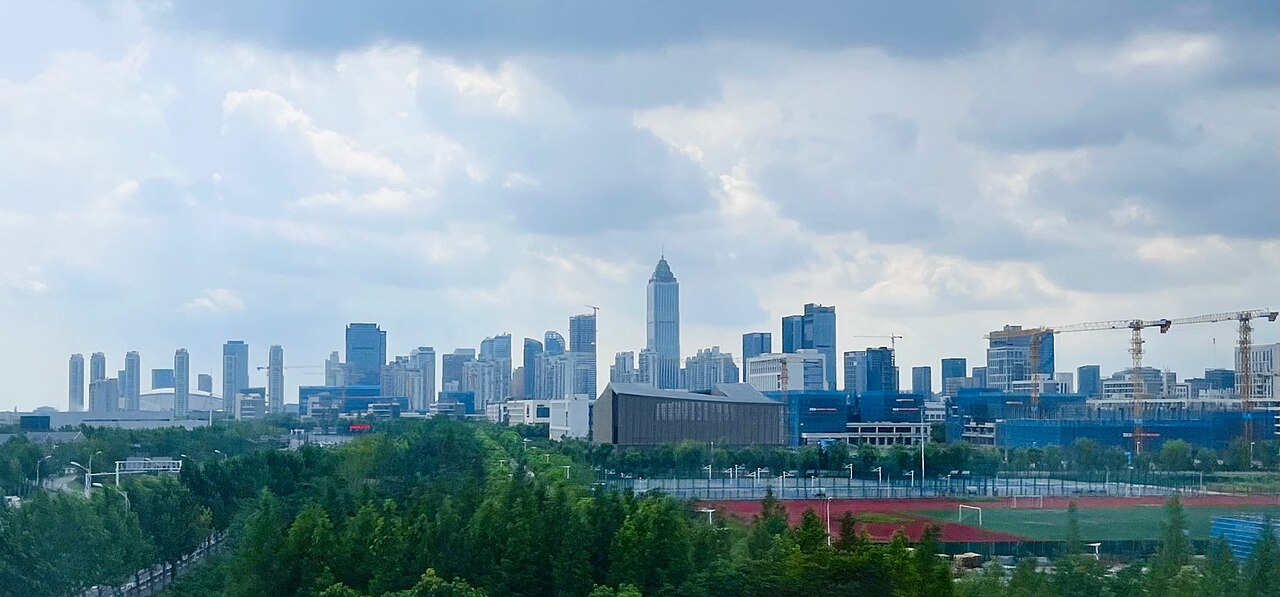
Modern Nantong is a large, spread-out city. The Shanghai–Suzhou–Nantong railway crosses the Yangtze on the Hutong bridge, which is why the trip south is now short enough for a day trip in either direction. That convenience cuts both ways: if Shanghai has already filled your week and neither temples nor moat walks appeal, Nantong can be skipped without regret.
Getting in and where to stay
- From Shanghai: high-speed and intercity trains run between Shanghai Hongqiao or Shanghai Station and Nantong West, with timetables showing about 1 hour 17 minutes to 1 hour 30 minutes. Late-evening departures exist, but check the last train before planning a day trip.
- Metro: Line 1 runs from Pingchao through Nantong West Railway Station into the city and past Langshan.
- By air: Nantong Xingdong International Airport handles domestic flights.
- Where to stay: pick a hotel near the Hao River if you want to walk in the evening; pick one near a Line 1 station if you are arriving late at Nantong West and leaving early.
Inland Jiangsu continues west to Taizhou and Yangzhou; the coast runs north to Yancheng.
When to come to Nantong
April to early June and late September to November are the comfortable months. July and August are hot and humid, and the steps on Wolf Hill feel steep at noon. Winters on the Jiangsu plain are damp rather than severe. Clear days matter most for the river overlook, so keep the hill flexible if the forecast is hazy and do the moat first.
Eating in Nantong
Nantong cooking sits between Yangtze river fish and the Yellow Sea coast. Clams from the Rudong shore turn up in soups and stir-fries, and seasonal river fish appear on many menus. The busiest small restaurants near the Hao River are a better bet than hotel buffets. Seafood is often priced by weight, so ask the price per jin and the weight before it goes into the pan.
How to arrange the route
One day: Metro Line 1 to Langshan in the morning, lunch in town, Hao River walk from late afternoon into the evening lights.
Two days: add the Nantong Museum and a second, different stretch of the moat, or move on by train toward Yangzhou.
As a Shanghai day trip: take a morning train to Nantong West, ride Line 1 straight to Langshan, and choose either the museum or the moat for the afternoon. Doing all three in one day is possible but rushed.
What to cut if short on time
Keep Wolf Hill if you want views and temples; keep the Hao River if your knees prefer flat ground. The museum is the first cut on a dry day, and the skyline viewpoints are the second.
Things to confirm before you go
- Wolf Hill ticket price, gate hours and any cable car operation on the official notice for your date.
- Opening days for the Nantong Museum.
- Your last train from Nantong West if returning to Shanghai the same day.
- Weather for the summit overlook.
Frequently asked questions
How many days do I need in Nantong?
One full day covers Wolf Hill and a Hao River walk. A second day adds the museum and a slower pace.
Can I visit Nantong as a day trip from Shanghai?
Yes. Trains to Nantong West take about 75 to 90 minutes, and Metro Line 1 connects the station with Langshan. Leave at least half a day for the hill.
Is Wolf Hill a hard climb?
No. The peak is around 107 metres, but the stone steps are steady and exposed, so start early in summer and carry water.
Nantong or Suzhou?
Suzhou for classical gardens and canal towns; Nantong for a quieter riverside hill, a long moat walk and coastal food.
Sources
The facts in this article were checked against the following sources, retrieved September 16, 2026, and rechecked on October 20, 2026.
- Nantong https://en.wikipedia.org/wiki/Nantong
- Langshan (Nantong) https://en.wikipedia.org/wiki/Langshan_(Nantong)
- Nantong rail transit station list (MetroMan) https://www.metroman.cn/en/cities/nantong/stations
- Nantong Municipal Government transport page https://www.nantong.gov.cn/ntsrmzf/jtcxzt/jtcxzt.html
- Nantong West to Shanghai timetable (gaotie.net) https://www.gaotie.net/route/nantongxi-shanghai/
Ticket prices and gate hours change; this article does not quote yuan amounts, so check the official notice for your date.
All photos are from Wikimedia Commons, used under CC licenses; re-use requires attribution.
- nantong-2.jpg from File:Nantong Langshan Scenic Spot (Wolf Hill).jpg, by Zhou Guanhuai, CC BY-SA 4.0
- nantong-3.jpg from File:Guangjiao Temple on Wolf Hill.JPG, public domain
- nantong-skyline.jpg from File:The skyline of Nantong City in July, 2022.jpg, by Wangcheni97, CC BY-SA 4.0
- nantong-1.jpg from File:Haohe Tour Bus Line at Haonan Lu in Nantong, Jiangsu, China 20260219.jpg, by 4084470 0.smil, CC BY 4.0