Confucius Temple: The Ritual Heart of Qufu
The Temple of Confucius (Kong Miao) stands in Qufu, the hometown ritual and architectural core of Confucian worship in China. It forms one leg of the UNESCO serial property that also includes the Kong Family Mansion and the Cemetery of Confucius. Enter along the central axis through gates and inscribed steles toward Dacheng Hall, the ceremonial heart rebuilt across dynasties. Tickets and combined passes follow official notice—this page invents no yuan prices. Build your Jining / Qufu trip around this temple first; canal wandering and Mount Tai are secondary or separate days.
How to walk the axis
Start at the southern gates and move north with the imperial ritual logic: gates, inscribed stele pavilions, then the great courtyards before Dacheng Hall. Allow half a day if you only walk the temple; add the adjacent mansion when energy remains and make it a full honest day. Monday openings and festival weeks change the mood—holiday crowds fill courtyards; quiet winter mornings feel stark and clear.
Read stele texts as layers of imperial endorsement rather than a single museum label. Cypress shade helps in summer; midday courtyards bake. April–May and September–October are the kindest walking windows in Shandong's warm temperate climate.
Pairing mansion and cemetery
The city guide's day one is temple plus mansion, old-town evening; day two is the cemetery forest. Do not treat Qufu as a two-hour photo checkbox if you traveled this far for Confucian heritage. Keep Tai'an Mount Tai for a separate prefecture day. Beijing's Confucius Temple is a capital counterpart with a different scale and story—Qufu remains the hometown core.
Respect in a living ritual site
Keep voices moderate near halls and incense. Stay off barriers around steles and offerings. Photography rules vary by chamber—follow signs. Tour flags are common; step aside rather than argue for the perfect empty courtyard shot. Dress for temple etiquette: covered shoulders help when halls feel formal.
Things to confirm before you go
- Combined ticket options covering temple and mansion, last entry times, official channels.
- Which rail station you use (Qufu East vs Jining) and transfer time into the old town.
- Holiday crowd forecasts and whether dawn entry is realistic from your hotel.
- Water, sun protection and comfortable shoes for stone courtyards.
- Whether the cemetery is scheduled for the next day, not leftover hours after Tai'an.
Food after the halls
Qufu tourist streets mix Kong-family banquet theater with simpler Shandong noodle shops. Follow packed local rooms over empty feast halls unless a banquet is specifically why you came. One solid Lu-cuisine lunch beats an unfinished upsell.
Quick decisions
Half day or full day?
Half day temple-only; full day with the mansion.
Same day as the cemetery?
Better as day two—the forest needs its own legs.
Same day as Mount Tai?
No. Separate prefectures, separate honest days.
What next?
Kong Family Mansion while you are adjacent; Confucius Cemetery tomorrow.
Architecture without a checklist panic
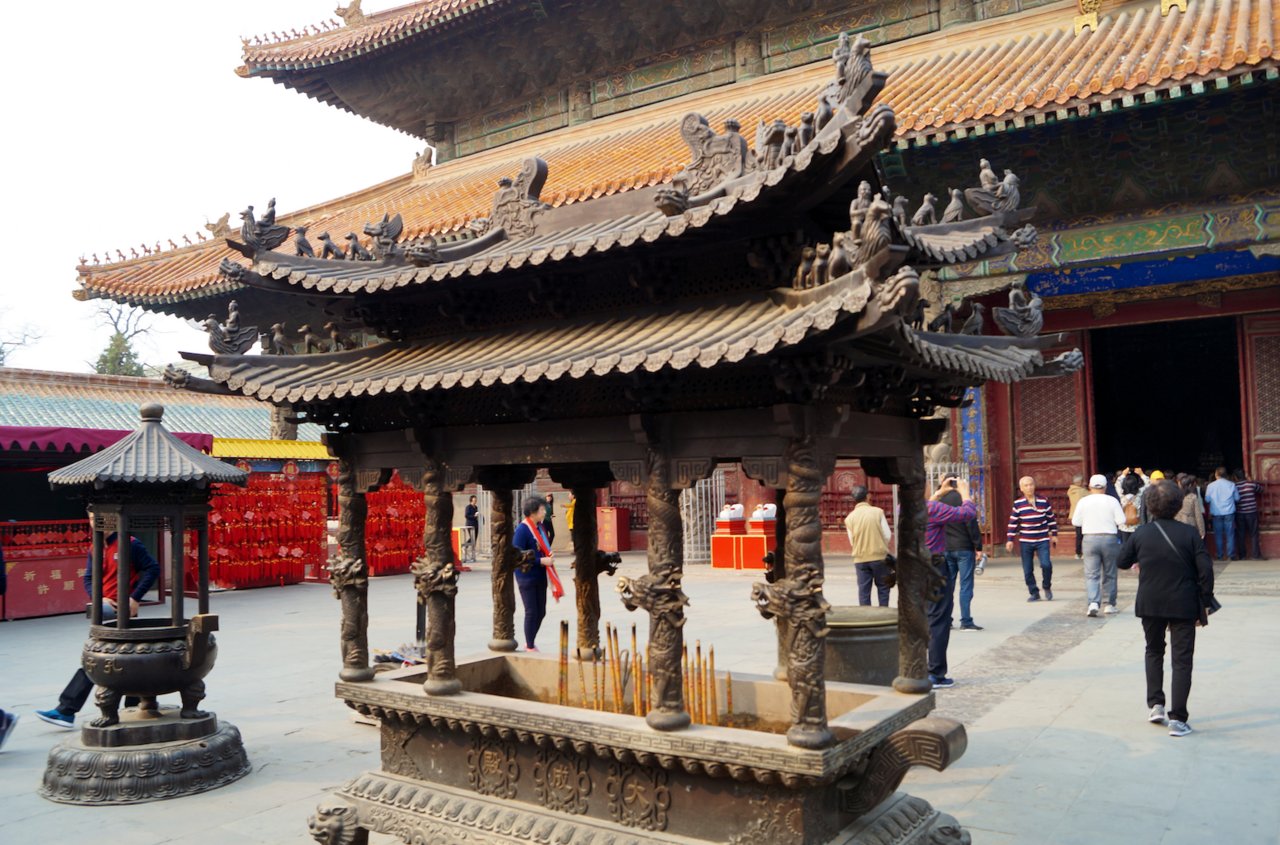
Yellow-glazed roofs, dougong brackets and cypress courtyards signal imperial-grade patronage across rebuilds. You do not need to memorise every gate name on the first visit. Pick three anchors: a major gate, a stele pavilion cluster, and Dacheng Hall. Sit once in a side court when tour noise peaks. That pause is how the site's scale becomes felt rather than merely photographed.
Incense burners and prayer tablets appear in active courtyards—share space with people who came to offer respect, not only to collect UNESCO stamps. If a ceremony or student group occupies the axis, wait; the hall will still be there ten minutes later.
Museums and labels
Exhibition rooms and caption boards help when classical Chinese on steles defeats you. Use them as orientation, then return outside where light and tree shade explain the compound better than vitrines. Audio guides vary in quality; a short pre-read on Confucius as teacher and on Qufu as hometown ritual centre is often enough.
Transport and lodging
Stay inside or near Qufu's old town for dawn access. Qufu East high-speed station needs a taxi or bus transfer—build that into arrival day so temple morning is not spent negotiating rides. Jining city hotels make sense mainly when trains force them; they are not the scenic base.
Season notes
Spring and autumn walk best. Summer demands water and a hat between stone courts. Winter reduces crowds and can feel austere under bare branches—bring a coat for wind corridors. Heavy holiday weeks (National Day, Spring Festival travel peaks) punish patience; if those dates are fixed, enter at opening and accept denser photos.
Photography manners on the axis
Wide courtyard shots want empty stone that rarely exists at noon. Take what you can, then lower the camera and walk. Tripods that block incense lines earn rightful stewards' complaints. Flash inside halls is usually unwelcome—assume ban unless posted otherwise. Detail photos of dougong and roof beasts work even in crowds because you aim up, not through people.