Mei Lanfang Memorial Hall
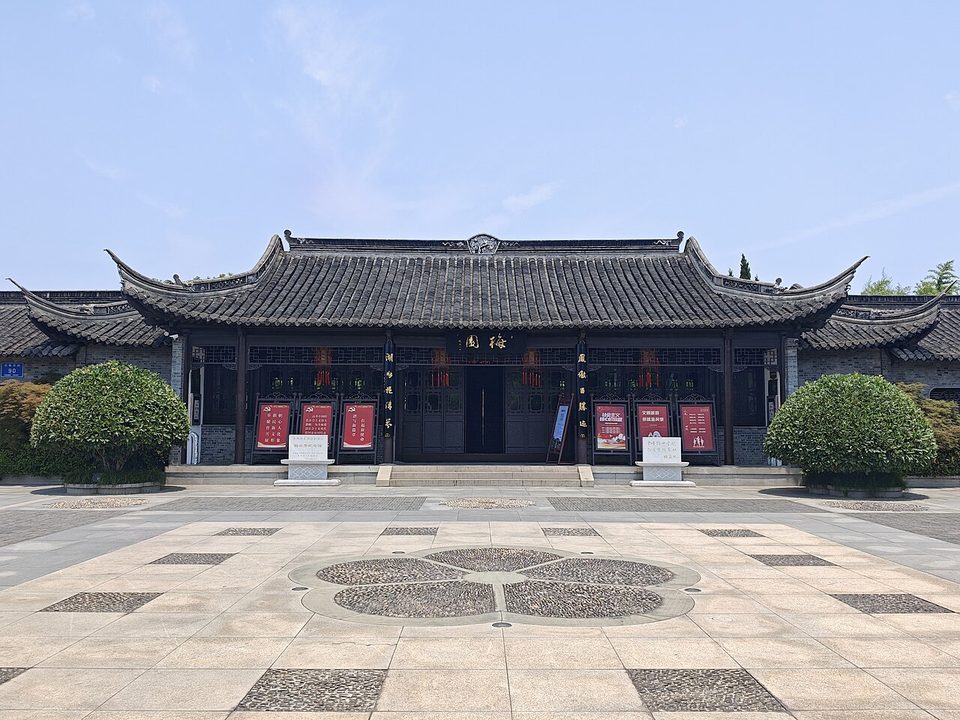
Mei Lanfang, the most famous Peking opera performer of the twentieth century, was born in Beijing and spent his career on the stages of Beijing, Shanghai and the world. His family, though, came from Taizhou in Jiangsu, and the city has built its best known museum around that link. The Mei Lanfang Memorial Hall, called Meiyuan or the Mei Garden by locals, is a garden museum on the old moat in the Fengcheng River scenic area, on the site where Mei's ancestors once lived.
Who Mei Lanfang was
Mei Lan, known on stage as Mei Lanfang, was born in 1894 into a family of Peking opera and Kunqu performers of Taizhou ancestry. He started training at eight and made his stage debut at eleven at the Guanghe Theatre in 1904, playing a weaving girl. He specialised in the dan, the female roles, and above all in the qingyi, the young or middle-aged woman of grace and refinement. He was counted among the Four Great Dan of his generation.
Mei took Peking opera abroad. He performed in Japan in the 1920s, toured North America in 1930, where Hollywood stars welcomed him, and in 1935 played to audiences in Moscow and Berlin. Bertolt Brecht saw him perform, and the experience shaped Brecht's thinking on the alienation effect. When the Japanese army occupied Beijing in 1937, its commanders pressed Mei to perform for them. He refused to sing for the rest of the war and lived in reduced circumstances until 1945. He died in 1961.
His best remembered roles include Consort Yu in The Hegemon-King Bids His Lady Farewell, the opera based on the fall of Xiang Yu, whose traditional hometown park is at Xiangwang Guli in Suqian. The Drunken Concubine is another signature piece.
The 1956 homecoming
In March 1956 Mei came to Taizhou with his wife and his son Mei Baojiu. They stayed five days, performed for local audiences and went looking for the home of Mei's great-great-grandparents, four generations back, in Baoba village. That village site is where the Mei Garden stands today.
How the museum grew
The memorial was built in stages, and the layers are still visible. In 1984, for the 90th anniversary of Mei's birth, Taizhou put up a memorial pavilion beside the moat northwest of the Fenghuang Dun mound. The garden historian Chen Congzhou designed it and wood carvers from Dongyang in Zhejiang made it. In 1987 the city added a historical exhibition hall southeast of the pavilion. Its buildings are real Ming-style houses. Three old residences of the Wang family, a prominent Taizhou clan, and a shrine to local worthies were taken down and rebuilt here as five linked halls, keeping their original measurements and methods, and the hall opened on New Year's Day 1988. The statesman Li Xiannian wrote the name board in 1985, and the large white marble statue of Mei is by the sculptor Liu Kaiqu.
The exhibition hall and the neighbouring Mei Lanfang Park merged in 1997. A rebuilding from October 2007 cost about 30 million yuan and reopened on 6 November 2008 with a new entrance plaza, a statue square, a waterside pavilion, an old-style opera stage and a new watercourse fed from the moat. The Taizhou housing bureau gives the grounds as about 22,000 square metres, with water on three sides. The museum then closed again for repairs and a new display, and reopened on a trial basis on 10 September 2024.
What you see
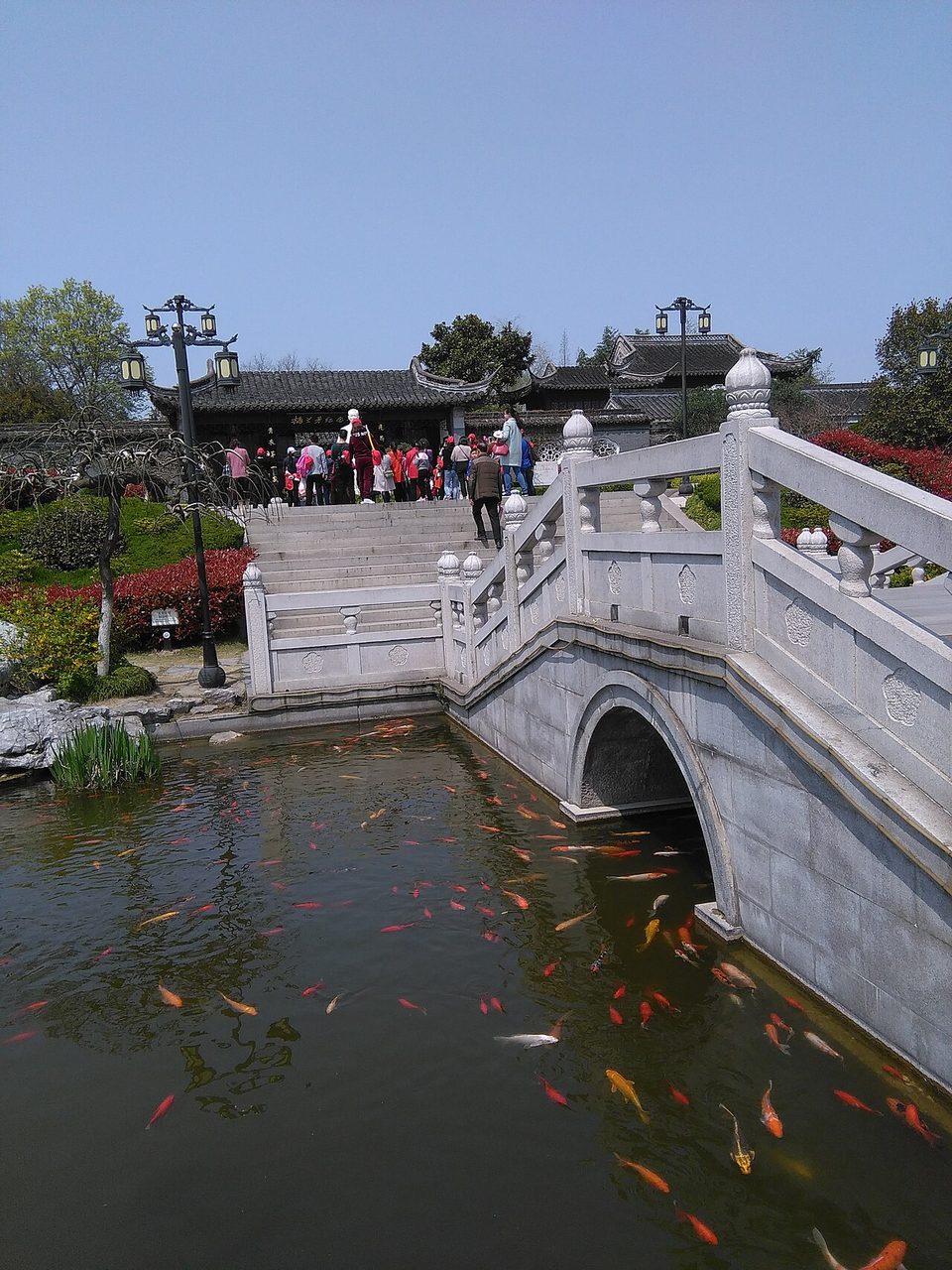
The museum combines a garden with a life story. The 2008 layout arranged the display in five parts across eight rooms, themed on Mei's fame across China, his reputation abroad, his integrity, his character and his Taizhou roots, using objects, documents and multimedia. The current display dates from the 2024 refit, so expect some changes from older descriptions. The garden itself rewards a slow walk, with rockwork banks, bridges over the moat water and the 1984 pavilion. Background opera music plays through the grounds.
Visitors new to Peking opera may want to read the Farewell My Concubine story before going, since it makes the displays and the Xiang Yu connection easier to follow. Opera fans will want extra time inside the halls.
Tickets and hours
The museum's reopening notice of 9 September 2024 lists hours of 9:00 to 16:30, Tuesday to Sunday, with last entry at 16:00. It closes on Mondays except public holidays. The ticket is 10 yuan, with a 5 yuan student rate for full-time students over 18 up to undergraduate level. Visitors under 18, visitors aged 60 and over, serving military and people with disabilities enter free with ID. Tickets are sold through the museum's WeChat account with real-name booking and at the ticket window. Hours and prices may have changed since that notice, so check the day's notice or the museum's account before you go.
Getting there and pairing it
The museum is on the old moat east of the historic centre, inside the Fengcheng River scenic area, the riverside belt whose walks are described in the city guide. Taxis and city buses reach it from Taizhou station. Two hours covers the museum and garden comfortably. Combine it with a Fengcheng River walk on the same day, and give the second day to the boats and marshes of Qinhu National Wetland Park.
Frequently asked questions
Was Mei Lanfang born in Taizhou?
No. He was born in Beijing. His family's roots were in Taizhou, and he visited in 1956.
Is it open on Mondays?
Normally no, except on public holidays.
Is it in Zhejiang Taizhou?
No. This museum is in Taizhou, Jiangsu, the inland city between Yangzhou and Nantong.
Sources
Facts in this article were checked against the following sources, retrieved 21 October 2026.
- Mei Lanfang, English Wikipedia
- 梅兰芳纪念馆, Chinese Wikipedia
- Taizhou housing and urban construction bureau, Mei Lanfang Memorial Hall
- Reopening notice reported by Sina Jiangsu, September 2024
- Taizhou, Jiangsu, English Wikipedia
- Taizhou travel guide on this site
Photos are from Wikimedia Commons under the licences shown in each caption.