Chengshantou, the Cape at the Eastern End of Shandong
Chengshantou is the easternmost point of the Shandong Peninsula, in Chengshan town, Rongcheng, a county-level city under Weihai. It takes its name from the Chengshan hills, which end here in cliffs with the sea on three sides. The cape has been a national scenic area since 1988 and a 4A scenic area since 2002, and in 2005 Chinese National Geography magazine named it one of China's eight most beautiful coasts. People come for sunrise, for the Qin and Han stories attached to the place, and for the sea cliffs. It is a long road trip from downtown Weihai, so it needs its own day.
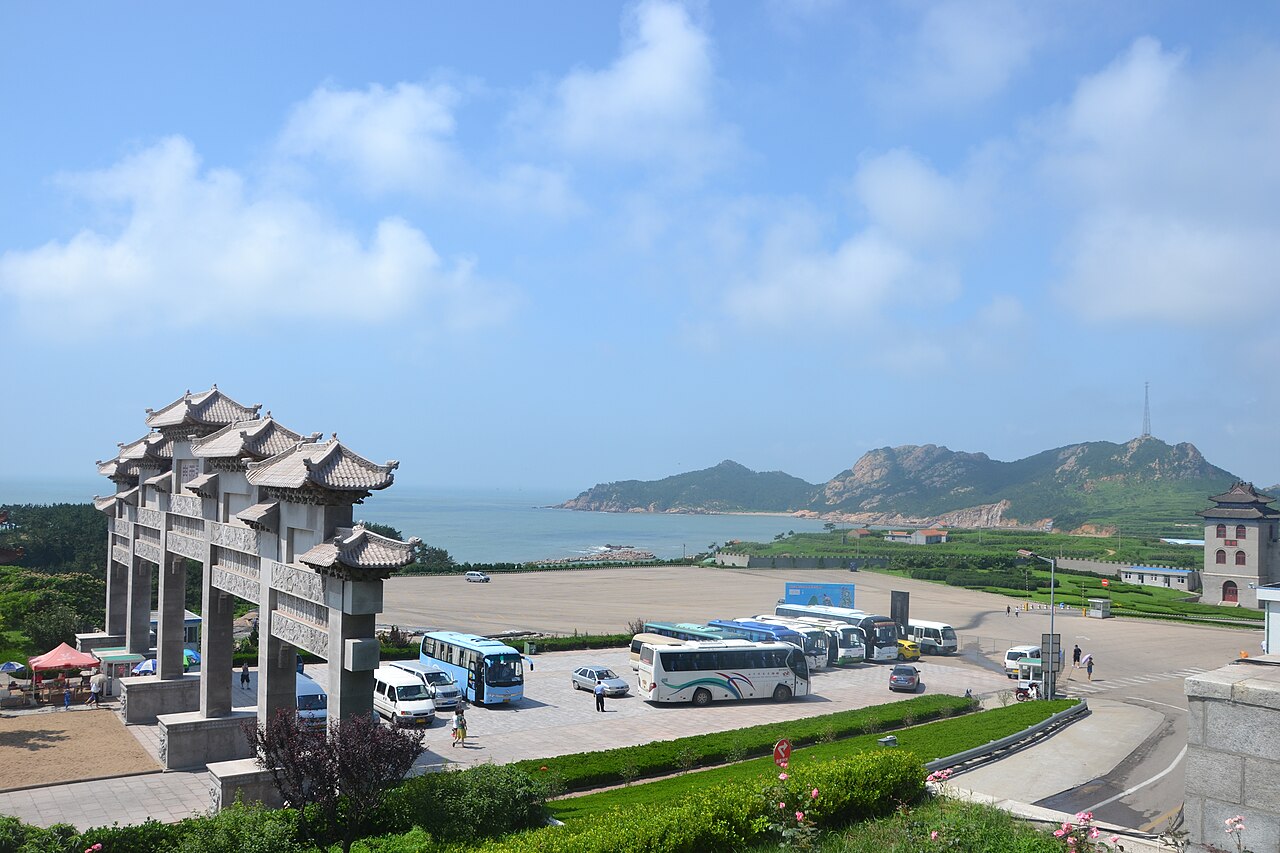
Where the sun was worshipped
Long before tourism, Chengshantou was tied to the sun. Sima Qian's Records of the Grand Historian lists eight gods worshipped in the old state of Qi. The seventh, the Lord of the Sun, was honoured at Chengshan, which the text describes as jutting into the sea at the far northeast corner of Qi, where it greets the sunrise. Chinese Wikipedia quotes the same chronicle for the visits that followed. The First Emperor, Qin Shi Huang, travelled to the cape on his tours of the east between 219 and 210 BC, and in 94 BC Emperor Wu of Han came to pay respects to the sun at Chengshan.
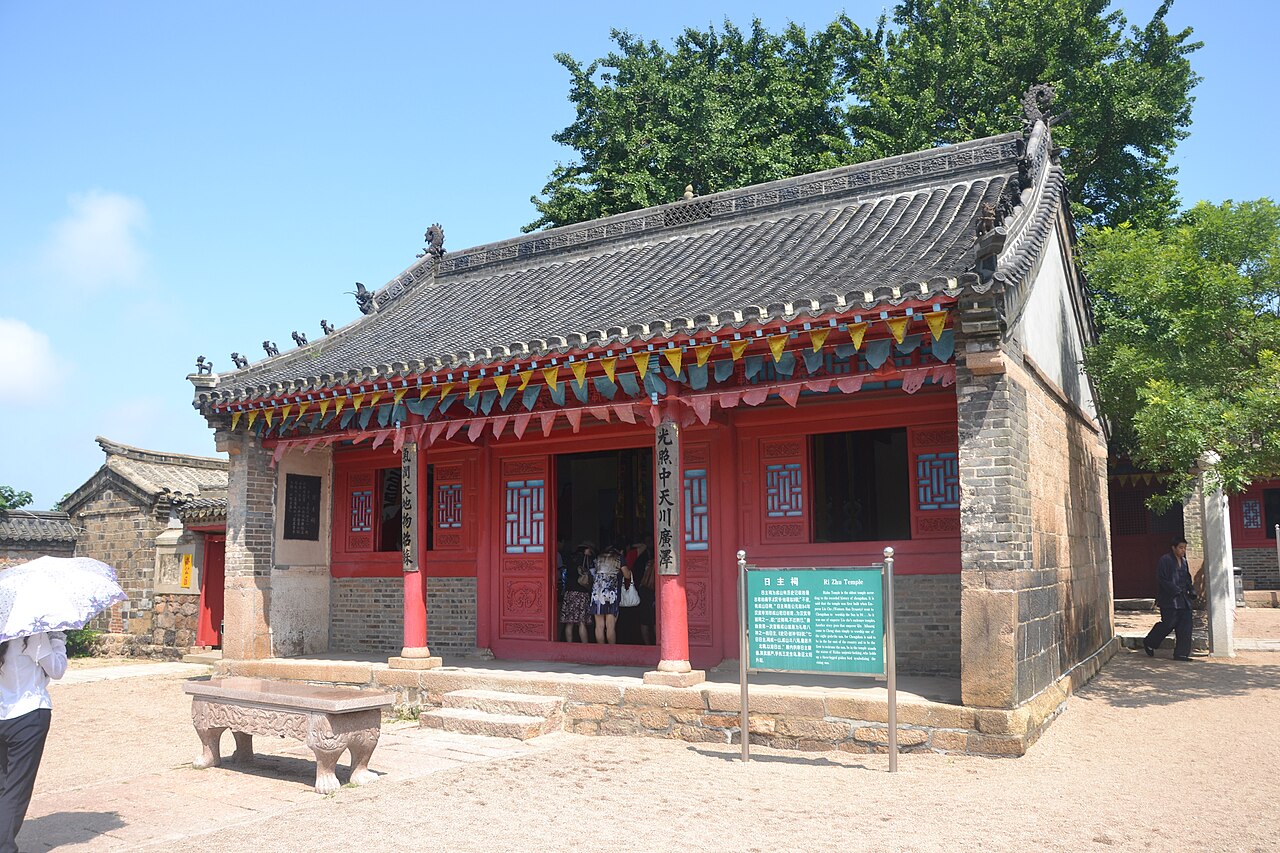
Those visits left the stories you meet on site. One holds that Li Si, the First Emperor's chancellor, wrote the words for the end of the sky, the eastern gate of Qin, on a stone set up here. Another explains the rocks offshore as the remains of a bridge the emperor tried to build across the sea. The Shihuang Temple is said to stand on the site of a Qin travelling palace. Chinese Wikipedia describes it as the only temple in China dedicated to the First Emperor. The ruins and inscriptions of Chengshantou became a Shandong provincial heritage site in 1992.
The Shihuang Temple and Deng Shichang
The temple covers about 0.66 hectares. Its halls include one for the First Emperor, a shrine to the Lord of the Sun, a hall for Tianhou, the sea goddess, an opera stage and a shrine to Deng Shichang. Deng was captain of the cruiser Zhiyuan and died with his ship in the Battle of the Yalu River in September 1894, during the First Sino-Japanese War. The war came to this coast too. In January 1895 Japanese troops landed at Chengshantou before marching on Weihaiwei and the fleet base on Liugong Island. A small museum of Qin and Han history displays material connected with the cape.
Cliffs, an island and the lighthouse
Chinese Wikipedia gives the scenic area 1.5 kilometres from east to west and 2 kilometres from north to south, with a highest point of 200 metres. The cape faces South Korea across the Yellow Sea, about 94 nautical miles away, and the line from Chengshantou to Changsan Cape in North Korea is used to divide the northern and southern Yellow Sea. The waters off the cape are a rich fishing ground and a busy shipping lane with difficult currents and weather, which is why a lighthouse was built here. It was the first lighthouse in the Weihai area.
Waves have cut the cliffs into sea stacks, caves and spits. Hailü Island, a rock of about 0.07 square kilometres off the north side, takes its name from hailü, sea donkeys, a local name for the seals once found around it, and large numbers of gulls live there now. A marine ecological reserve of 63.66 square kilometres was created around the cape in 2002.
Sunrise and weather
Chengshantou is promoted as the place in mainland China to see the sun rise first over the sea. Travel listings give summer sunrise at around 4:30 to 4:50 and winter sunrise after 6:00, and say the east gate is staffed through the night for early visitors. Check the exact time for your date. Fog is the main risk. China Meteorological Administration figures quoted by Chinese Wikipedia give average relative humidity of 87 percent in June and 94 percent in July, and sea fog is common in early summer. September and October usually have clearer air. Bring a warm, windproof layer for the dark hours before dawn, even in summer.
Tickets and getting there
Travel listings in 2026 quote an adult ticket of about 148 yuan at the gate, with half price for students and seniors, a separate fee of about 80 yuan to drive a car inside, and an optional sightseeing bus. Listed hours vary between sources, from about 7:30 until late afternoon, with sales stopping an hour or more before closing. Treat all of these figures as reported and check the day's notice from the scenic area before you go.
The cape is roughly 60 kilometres east of downtown Weihai, about an hour by car along the coast road. Listings mention a bus from Weihai bus station toward Chengshantou that takes about an hour and a half. Many visitors hire a car for the day and combine the cape with other stops on the eastern coast.
Planning your visit
The Weihai guide keeps Chengshantou for a third day with clear weather and warns against squeezing it in after an island day. Allow three to four hours at the cape. If you want sunrise, stay the night in Chengshan town or near the gate, since the drive from Weihai would mean leaving around 3:00 in summer.
Before you go
- Check the sunrise time and weather forecast the evening before.
- Bring a windproof jacket and shoes with grip for the cliff paths.
- Confirm ticket prices and the last entry time on the day.
- Book a room near the gate if you want sunrise.
Frequently asked questions
Where is Chengshantou?
At the eastern tip of the Shandong Peninsula in Chengshan town, Rongcheng, about 60 kilometres east of downtown Weihai.
Is Chengshantou good for sunrise?
It is promoted as the first place in mainland China to see sunrise over the sea. Fog is common in June and July.
How much is the ticket?
Listings quote about 148 yuan for adults at the gate in 2026. Check the scenic area's notice for the current price.
Can I visit Chengshantou and Liugong Island on the same day?
It is possible by car but rushed. The Weihai guide suggests separate days.
Sources
Facts in this article were checked against the following sources, retrieved 12 October 2026.
Photos are from Wikimedia Commons under the licences shown in each caption.