Liugong Island, Where China's First Modern Navy Was Based and Defeated
Liugong Island sits in the middle of the mouth of Weihai Bay, about four kilometres off the waterfront of Weihai. It is small, 3.15 square kilometres and about four kilometres long, with steep cliffs on the north side and a gentle slope down to the harbour on the south. In the late Qing it was the headquarters of the Beiyang Fleet, China's first modern navy, and in February 1895 it was where that fleet ended at the close of the First Sino-Japanese War. Britain then held it for four decades. The island is reached only by boat, and its museum and old naval buildings make it the main history visit on the Shandong coast.
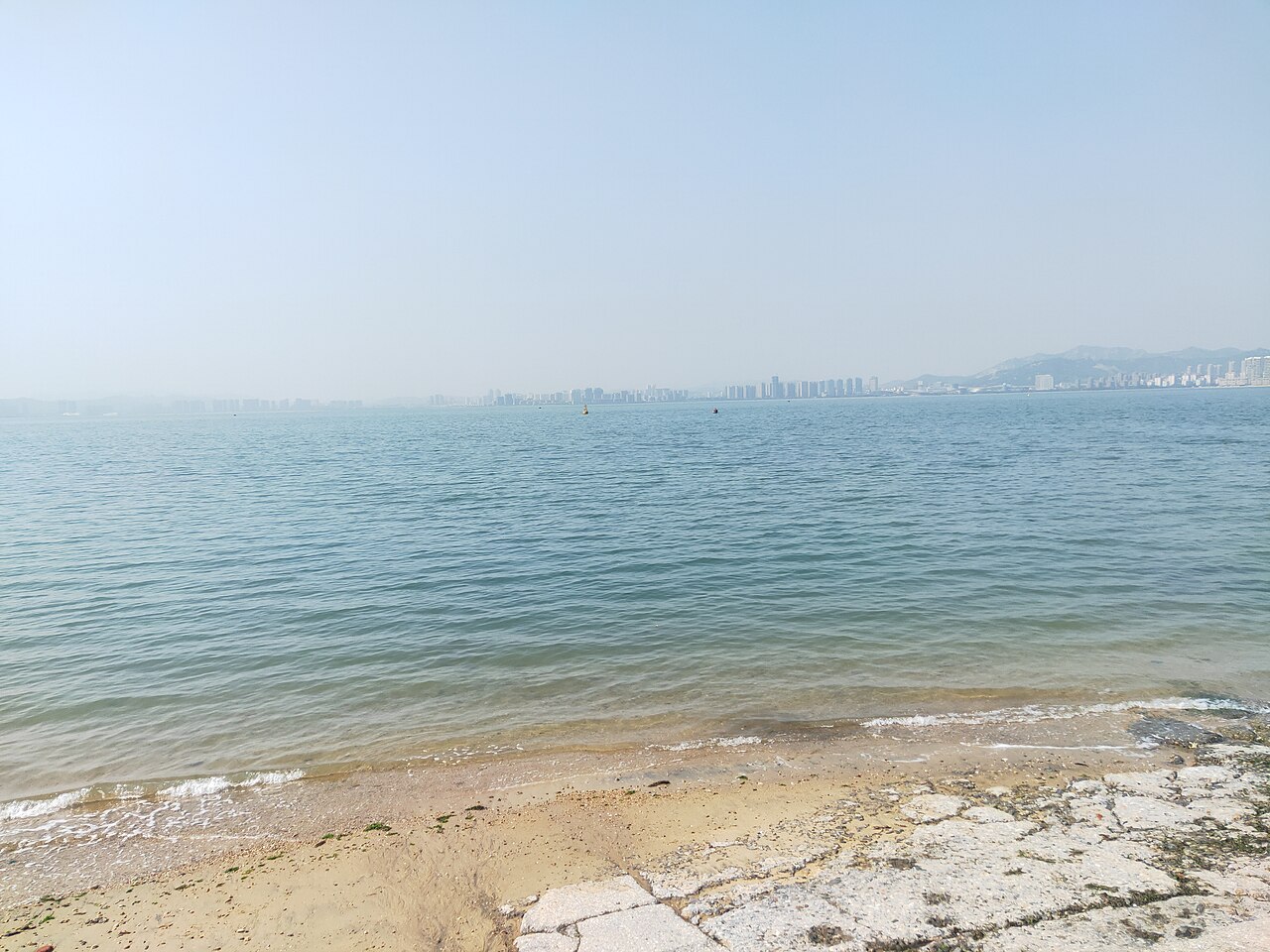
An island guarding the capital's sea gate
Weihai and Lüshun, at the tip of the Liaodong Peninsula across the strait, together controlled the entrance to the Bohai Sea and the sea route to Tianjin and Beijing. Chinese Wikipedia traces Liugong's military role to 1398, when the Ming set up the Weihai garrison against pirates. Before that the island was a stopping place for grain ships sailing north under the Yuan. English Wikipedia says the island takes its name from members of the Liu family who settled there in the Han dynasty.
Work on Weihai's naval defences began in 1887, with Liugong at the centre. Six forts, an iron pier, a dock, a naval academy, an engineering office, a machine shop, a telegraph office and ammunition stores were built. The Beiyang Fleet was formally established on the island in December 1888, with Ding Ruchang as admiral, and Chinese Wikipedia says it then had 25 ships of over 40,000 tons in all. The admiral's headquarters were finished in 1889. The T-shaped iron pier was built between 1889 and 1891.
1895 and after
During the war the fleet was trapped in the harbour while Japanese troops took the forts around the bay. Ding Ruchang killed himself, and on 17 February 1895 Japanese forces landed on the island, took over its installations and captured the ten remaining warships in port. Japan held it until 1898, when Britain leased Weihaiwei, including Liugong.
The Royal Navy used the island as a base and added houses, a hospital, churches, tea houses, a sports ground and a post office. Weihaiwei itself went back to China in 1930, but Britain kept the naval base under a further lease. Most British forces withdrew after Japan occupied Weihai in 1938, and Japanese troops landed on the island in 1940. After 1952 it was an important base of the People's Liberation Army Navy's North Sea Fleet. The island opened to visitors in April 1985. Its pine forest, covering more than half the island, was named a national forest park the same year.
The museum and the memorial sites
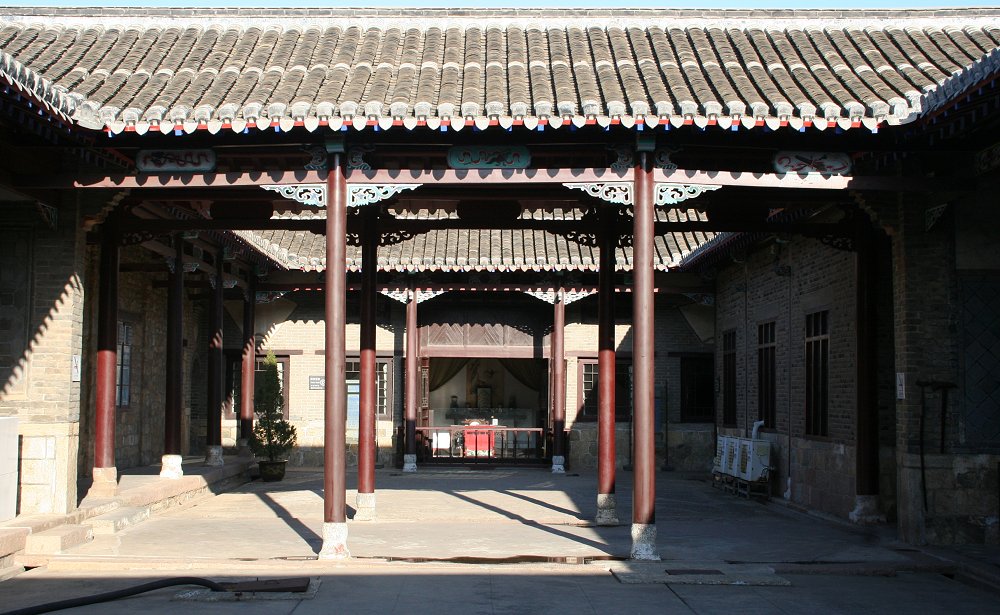
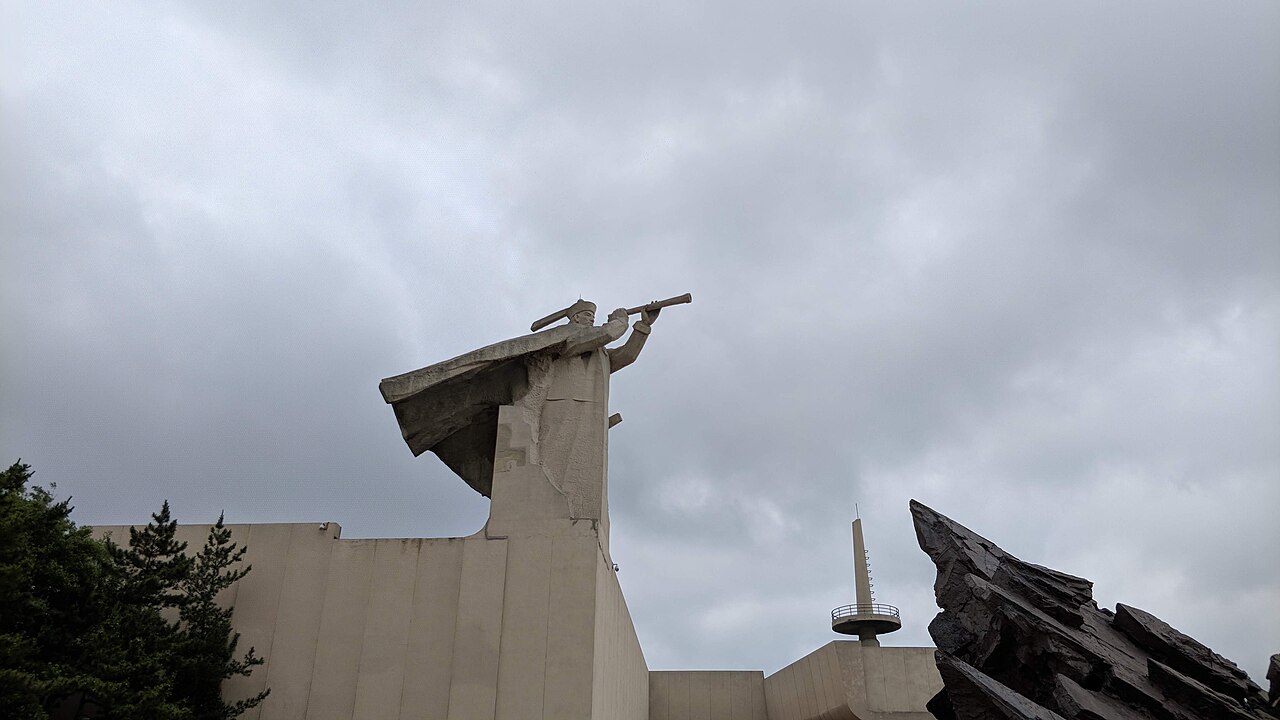
The First Sino-Japanese War Museum began in 1985 and took its present name in 1992. In 2008 it was in the first batch of national first-grade museums. It uses the fleet headquarters and other Qing buildings as galleries, with rooms on the Beiyang navy, the battle of Weihaiwei, a waxwork of the admirals in council and the place where Ding Ruchang died. Chinese Wikipedia lists more than a thousand historical photographs and over 300 objects recovered from sunken ships. The largest of these are the twin main guns raised from the cruiser Jiyuan. A separate modern exhibition hall, begun in 2005, opened in 2008.
The museum also looks after a national heritage site listed in 1988 that covers 28 places around the bay. On the island these include the headquarters, the Longwang temple and its opera stage, Ding Ruchang's residence, the naval academy, the iron pier, the dock and several forts. Open to visitors are the headquarters, the Longwang temple, the Ding Ruchang memorial, the Huangdao fort with its weapons hall, and the Donghong and Qiding Mountain forts. Qiding Mountain, at 153 metres, is the island's high point.
Ferries, tickets and timing
Boats leave from the Weihai tourist pier on the downtown waterfront. Tickets are sold as a package of return ferry plus island entry, booked in advance under your real name. Travel listings in 2026 quote about 122 yuan for adults, and the island runs paid extras such as a cable car, an island bus that includes a visit to a submarine, a digital theatre and a boat trip around the island. In autumn 2026 the Weihai government announced 31 yuan packages for residents of Weihai and Yantai and their university students from 1 September to 31 October, outside the national holiday week. Listings report the last boat to the island in mid-afternoon and the last return around 18:00. Treat those figures as reported and check the day's notice, because fog and wind cancel sailings more often than visitors expect.
Plan on most of a day. Land early, see the headquarters and museum while you are fresh, then walk or ride out to the forts. The Weihai guide keeps the island on its own day and suggests saving Chengshantou, the cape at the eastern tip of the peninsula, for another day.
Before you go
- Book the ferry and island package with the ID you will carry.
- Bring a wind layer for the boat and the forts.
- Check weather and sailing notices on the morning you go.
- Note the last return boat time when you land.
Frequently asked questions
How do I get to Liugong Island?
Take the ferry from the Weihai tourist pier on the city waterfront. The crossing is about four kilometres.
How long should I spend on Liugong Island?
Most of a day. The museum and headquarters take a couple of hours, and the forts and forest paths more.
What happened on Liugong Island in 1895?
Japanese forces took the island on 17 February 1895 and captured the remaining Beiyang Fleet ships after Admiral Ding Ruchang's death.
Was Liugong Island British?
It was part of the British lease of Weihaiwei from 1898. Britain returned Weihaiwei in 1930 but used the naval base on the island until 1940.
Sources
Facts in this article were checked against the following sources, retrieved 12 October 2026.
- 刘公岛, Chinese Wikipedia
- Liugong Island, English Wikipedia
- 中国甲午战争博物院, Chinese Wikipedia
- 烟威两地31元登岛!2026刘公岛秋季宠粉优惠来袭, Weihai Municipal Government
Photos are from Wikimedia Commons under the licences shown in each caption.