The Tomb of Prince Jian of Lu
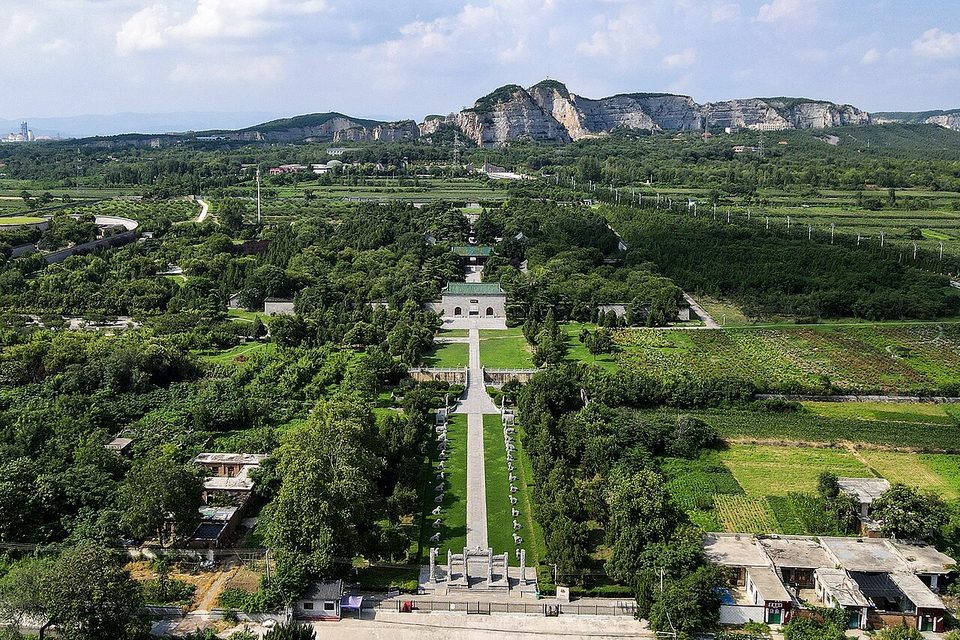
The Tomb of Prince Jian of Lu lies on the southern slope of Fenghuang Mountain in Fengquan District, on the northern edge of Xinxiang. Chinese Wikipedia calls it the best-preserved and largest Ming princely tomb in China, and the site markets itself as the "Dingling of the Central Plains" because its plan copies the Wanli Emperor's tomb outside Beijing. It is a national key cultural relic and a national 4A scenic area, and it is the most substantial historic site within easy reach of the city.
Who was buried here
Zhu Yiliu (1568 to 1614) was the fourth son of the Longqing Emperor and the only full brother of the Wanli Emperor. Their mother was the Empress Dowager Li. He was made Prince of Lu in 1571 and lived in Beijing for years, where his estates and shops spread across the capital. In 1589 he left for his fief at Weihui in northern Henan, and the court granted him enormous landholdings and control of the local salt trade. Chinese Wikipedia describes him as studious and generous to the court, giving silver for public works and frontier armies. When his mother died in 1614 he reportedly stopped eating and sleeping in grief, and he died the same year at 46. His posthumous title was Jian, giving the name Prince Jian of Lu.
His favour with his brother explains the scale of the tomb. It was built during the Wanli reign and follows the Dingling, where Wanli himself was buried.
The layout
The cemetery has two tombs side by side, both facing south and together covering about 13 hectares. The eastern tomb is the prince's. The western one belongs to his secondary consort, Lady Zhao, a former palace maid of the Empress Dowager, and Chinese Wikipedia calls it the largest surviving tomb of a Ming prince's consort.
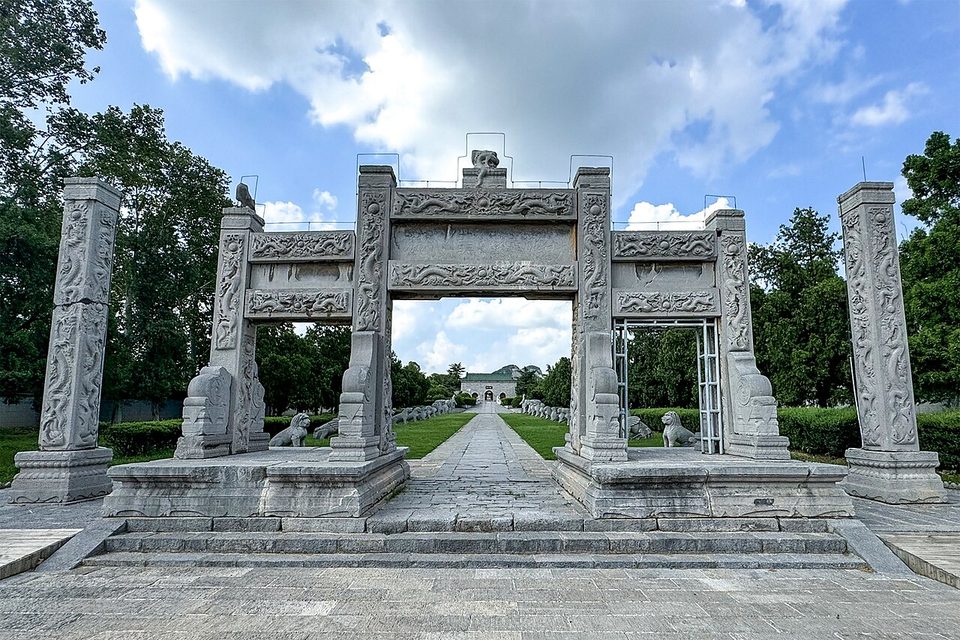
Each tomb has two parts. A spirit way of carved stone figures leads to the main gate. Behind it lie the stone archways, a three-arched bridge over a moat, the gatehouse, the Ling'en Gate and Ling'en Hall, the Ming tower and finally the walled burial mound called the precious citadel. An outer wall of blue stone, 324 metres north to south, 147 metres east to west and 6 metres high, encloses the prince's tomb.
A monastery, then a prison
The tomb's later history is stranger than its building. After the Ming fell, a monk named Zhenxi bought the site in 1656 for 480 taels of silver and turned the prince's tomb into a Buddhist hall and Lady Zhao's into a nunnery.
From 1953 the western tomb served as the Yubei Prison of northern Henan, a use that lasted until 2005. During the Cultural Revolution, Red Guards could not get into the prison, so the consort's tomb came through largely intact. The prince's side was less lucky. Its three stone archways and the animals along the spirit way were damaged, and one civil official figure lost its head, which has never been found. Repairs began after 1979 on the proposal of the conservation architect Qi Yingtao. The province listed the site in 1986 and the State Council in 1996.
What to look for
Walk the spirit way slowly. The scars on the stone animals and officials date from the 1960s, and one civil official still stands without his head. The archways carry relief carving worth a close look. At the end of the axis, the Ming tower and the walled mound mark the burial itself. Then walk across to Lady Zhao's tomb, which the prison years kept in better condition, and compare the stonework.
Tickets, hours and getting there
Local listings in 2026 show separate summer and winter hours and a ticket for adults. Prices and hours change, so check the scenic area's notice or the Xinxiang culture and tourism channels before travelling. This page does not quote prices.
The tomb is about 13 kilometres north of central Xinxiang, according to Chinese Wikipedia. A taxi or ride-hailing car is the easiest way to get there, and the ride is short enough to fit in a morning before an afternoon in the city.
Weihui, the prince's old fief, is the neighbouring county-level city. Its Bigan Temple, a national key cultural relic, honours the Shang prince Bigan and claims a stele carved, by tradition, by Confucius. It makes a second stop for anyone with a car.
Before you go
- Allow two hours for both tombs.
- Bring water and sun cover for the open spirit way.
- Combine with Guoliang Tunnel only if you stay overnight. The mountain trip needs its own day.
- Read the Xinxiang travel guide for the city museum and trains.
Frequently asked questions
Why is it called the Dingling of the Central Plains?
Its plan follows the Wanli Emperor's Dingling, and the prince was Wanli's brother.
Is the underground palace open?
Check the scenic area's current notice. This page does not claim access to the burial chambers.
Is it worth it if I have seen the Ming Tombs in Beijing?
It is smaller and far quieter, and the prison history gives it a story of its own.
Are prices listed here?
No. Prices and hours follow the official notice.
Sources
Facts in this article were checked against the following sources, retrieved 20 October 2026.
- 潞简王墓, Chinese Wikipedia
- 朱翊镠, Chinese Wikipedia
- 比干庙, Chinese Wikipedia
- Xinxiang, English Wikipedia
- Xinxiang travel guide on this site
Photos are from Wikimedia Commons under the licences shown in each caption.