Xinyang Travel Guide: Jigongshan, Tea Country, and South Henan (with a Three-Day Itinerary)
Xinyang’s planning problem is climate identity: this south Henan prefecture sells cool mountain air and Maojian tea more than a dense old-town checklist. Jigongshan (Rooster Mountain) is a historic summer retreat with villa roads and ridge views; the city below is the tea and rail hinge. Give the mountain a real day, then decide whether Nanwan Lake or a tea-garden stop earns leftover hours.
Planning mountain day vs tea city day
Jigongshan is the distinctive half-to-full day. Republican-era villas, forest roads, and a cooler microclimate than the plain: do this before generic city parks.
Tea is a tasting and shopping theme, not a waterfall substitute. Xinyang Maojian is a major Chinese green tea; factory visits and shops cluster around the city. Pair tasting with dinner downtown, not with a late mountain descent in fog.
Nanwan Lake is optional water time. Keep it when you want a reservoir shoreline day; cut it when Jigongshan already filled your only full day.
Stay downtown for food and rail, or on/near Jigongshan if you want dawn ridge air.
When to come to Xinyang
Humid subtropical south Henan: hot summers on the plain, cooler nights on Jigongshan, damp winters. April–May (tea season atmosphere) and September–October suit ridge walking. Summer is exactly when locals historically fled upward for cooler air, yet weekend villas get busy. Winter fog can erase views; pack layers even in July for the summit breeze. Plum-rain weeks make stone paths slick.
How to get in and where to stay
Xinyang is a rail node between the Central Plains and the Yangtze corridor, with links toward Wuhan and Nanyang. Buses and taxis reach Jigongshan; confirm return times if you day-trip. The mountain is outside the downtown core, so leave a transport buffer.
Stay in the city for Maojian dinners and morning trains; stay on the mountain only if lodging availability matches your season.
Places worth visiting
Jigongshan visit order: ridge, villas, overlooks
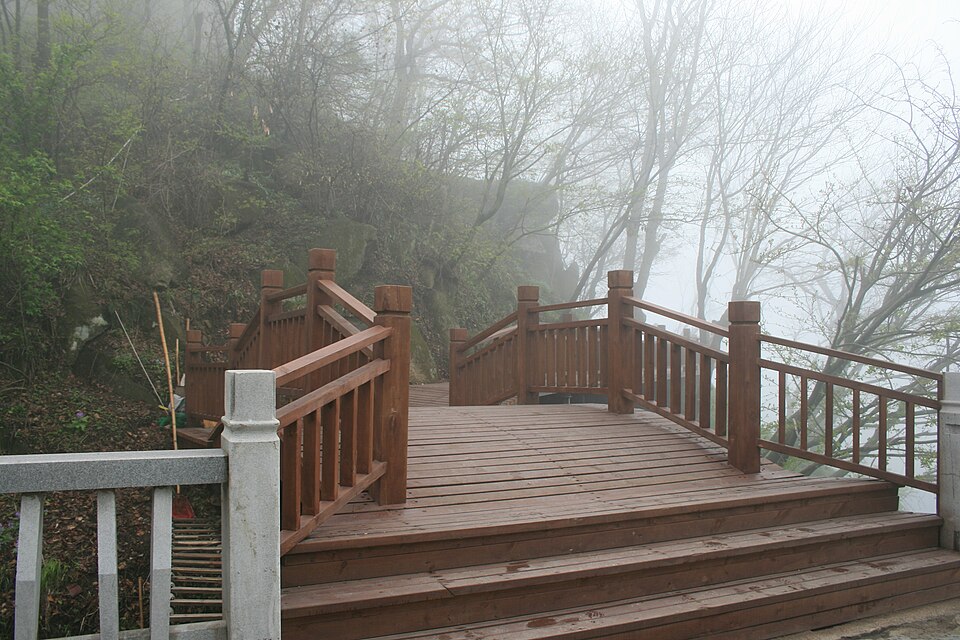
Walk or ride between villa clusters and main overlooks rather than racing a single peak stamp. Jigongshan straddles the Henan–Hubei border zone as a famous summer resort mountain, with late-Qing and Republican architecture mixed into forest roads. Tickets and vehicle rules follow official notice. Bring a light jacket; temperature drops relative to Xinyang city are real. Pair with a slow lunch on the mountain or a planned early descent for city tea shops.
Mountain day vs tea-shop afternoon
| Jigongshan | City Maojian tasting | |
|---|---|---|
| Role | Climate + villa landscape | Tea identity / shopping |
| Time | Most of a day | 1–2 hours downtown |
| Skip if | Mobility limits steep walks | You already buy tea elsewhere |
Do not pretend a quick tea mall equals the mountain trip. Conversely, do not skip all tea context if Maojian is why you chose Xinyang over another Henan stop.
Who should skip Nanwan Lake
Skip Nanwan when your calendar only holds Jigongshan plus onward rail, when you dislike reservoir recreation zones, or when weather already stole mountain views and you would rather museum or tea instead. Keep Nanwan for a second nature day with bikes or shoreline walks. It is pleasant water, not a UNESCO-level must.
Also on the map
City parks and river walks. Evening digestion after tea shopping.
Tea museums / branded stores. Useful orientation; quality varies, taste before bulk buying.
Border hiking connectors. Only with maps and daylight; not a casual add-on after sunset villa photos.
Zhumadian rail buffer north. Soft hub overnight and Suiping Chaya hills; see Zhumadian when you need a south Henan stop before Xinyang mountains.
Eating in Xinyang
South Henan food mixes spicy and mild tables; fish and mountain produce appear near Jigongshan. Maojian tea is the drink to try properly (hot, not as a sugary souvenir bottle first). Follow busy downtown noodle and hot-dry influences if you arrive from Wuhan’s orbit. Avoid empty “tea banquet” rooms with no locals.
How to arrange the route
Two days are enough for mountain plus tea; three only with Nanwan or slow weather buffers.
Day one: Jigongshan villas and overlooks; return or overnight on the mountain.
Day two: Maojian tasting and city walking; evening rail if needed.
Day three: Nanwan Lake or a buffer toward Wuhan / Nanyang, or north via Zhumadian on the Beijing–Guangzhou corridor.
Xinyang is a soft landing between Central Plains heritage cities and Hubei; it is not a compact “six temples” checklist city.
What to cut if short on time
Drop in this order:
- Nanwan Lake, optional water day.
- Extended tea shopping, keep one tasting instead.
- Secondary city parks, replaceable green time.
- Keep: Jigongshan ridge and villa circuit. That is the minimum honest Xinyang.
With one day only: Jigongshan, skip Nanwan.
Things to confirm before you go
- Jigongshan tickets, shuttle, and lodging rules follow official notice.
- Weather and fog forecasts for ridge views.
- Return transport if day-tripping from the city.
- Tea purchase authenticity if buying weight for gifts.
- Seasonal temperature gap between plain and mountain.
Frequently asked questions
How many days for Xinyang?
One day for Jigongshan; two if you want proper tea time downtown. Add Nanwan only with a third day or a nature-focused pair of days.
Is Jigongshan worth it in summer?
Yes for cooler air relative to the plain; expect crowds on weekends and pack rain layers. Views can haze; go early.
Maojian shops or mountain first?
Mountain first if you have only one clear-weather day. Tea shops wait; ridge fog does not always clear on your schedule.
What must you eat or drink?
A serious Maojian tasting once, plus a filling south Henan lunch after the mountain.
Sources
The facts in this article were checked against the following Wikipedia and encyclopedia entries, retrieved September 18, 2026.
- Xinyang https://en.wikipedia.org/wiki/Xinyang
- Jigongshan https://en.wikipedia.org/wiki/Jigongshan
- Xinyang Maojian tea https://en.wikipedia.org/wiki/Xinyang_Maojian_tea
- Xinyang (Chinese) https://zh.wikipedia.org/wiki/信阳市
- Jigongshan (Chinese) https://zh.wikipedia.org/wiki/鸡公山
Mountain tickets change; this article does not invent yuan amounts.
All photos are from Wikimedia Commons, used under CC0; re-use requires attribution.
- xinyang-jigong.jpg from File:Jigongshan (Rooster Mountain).jpg, by Gary Lee Todd, Ph.D., CC0
- xinyang-jigong-2.jpg from File:Jigongshan (Rooster Mountain) - 10323894203.jpg, by Gary Lee Todd, Ph.D., CC0