Dafeng Milu National Nature Reserve
The Dafeng Milu reserve sits on the tidal coast of Dafeng District in Yancheng, facing the Yellow Sea. It protects the milu, the deer that Western books call Père David's deer, and it holds the largest herd of the species anywhere. The deer vanished from China in 1900 and came back to this coast in 1986. The visitor side of the reserve is run as Zhonghua Milu Park, the Chinese Milu Park, and it is one of the two places in Yancheng where most people go for wildlife.
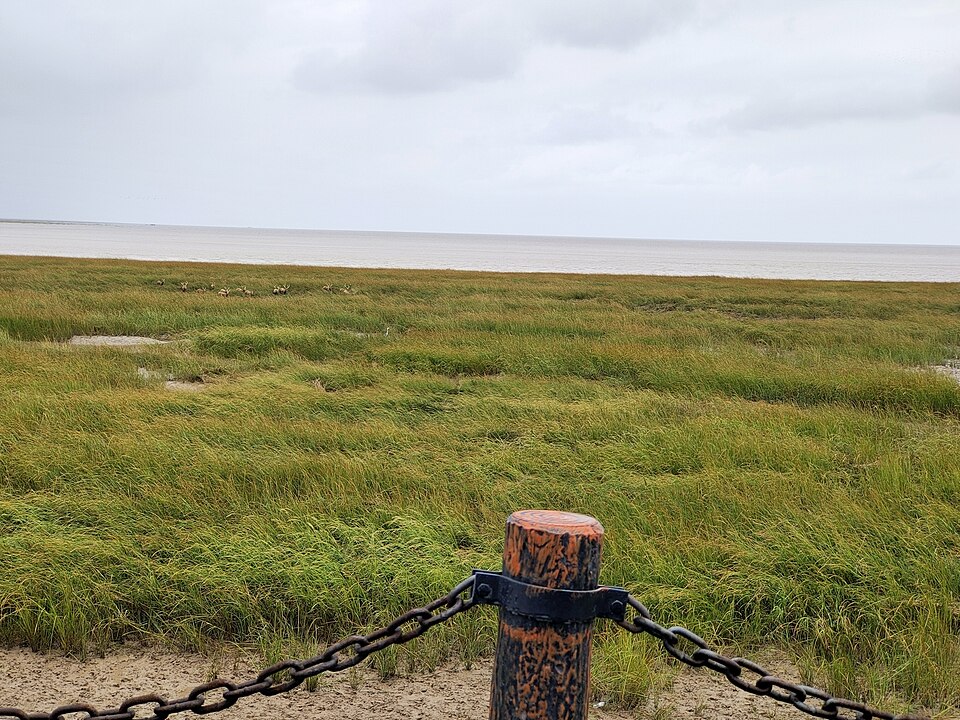
The deer that came home
The milu is an odd animal. It has a long tail for a deer, wide hooves for soft ground and antlers whose tines point backwards, and it swims well and stands in water up to its shoulders to graze. The Chinese folk name sibuxiang, the four unlikes, says it has the hooves of a cow, the neck of a camel, the antlers of a deer and the tail of a donkey while being none of them. Neolithic sites from the Liao River to Jiangsu and Zhejiang have produced its antlers, so it once ranged over much of eastern China. By the nineteenth century the only known herd lived in the Nanyuan imperial hunting park south of Beijing. The French missionary Armand David saw them there and sent specimens to Paris in 1866, which is how the deer got its Western name.
Then the herd collapsed. In 1895 a Yongding River flood broke the park wall and starving villagers ate the animals that escaped. In 1900 German troops occupied the park and the rest were shot or carried off. The species survived only because a handful had been sent to European zoos. The 11th Duke of Bedford gathered them into a breeding herd at Woburn Abbey in England, starting with 18 deer, and every milu alive today descends from that herd.
The return came in two waves. In 1985 a group from Woburn went to the Nanhaizi Milu Park in Beijing, on the old hunting ground. In August 1986 China's Ministry of Forestry and the WWF moved 39 deer from British zoos to Dafeng. Chinese Wikipedia says they came from seven zoos in the London area, and English Wikipedia says 36 came from five zoos, mostly Whipsnade. The reserve itself uses 39, and a memorial on site is dedicated to the 39 deer of 1986.
From 39 to 8,500
The herd grew fast on the salt marsh. When Dafeng became a national nature reserve in 1997 it held 268 deer. By 2006 the count was about 950, and by September 2013 it had passed 2,000. In June 2025 the Jiangsu Forestry Bureau reported 8,502 milu in the reserve, including 759 calves born that year. Of the total, 3,673 live as a free-ranging wild population outside the fenced areas, the result of a free-ranging programme that grew out of the reserve's first decade of trials. The reserve now sends deer to other sites, and in October 2025 the Dafeng district government reported 21 animals leaving for an experimental herd at Wuliangsuhai in Inner Mongolia. Xinhua called the reserve the world's largest milu gene bank.
The status of the species reflects that history. The IUCN lists the milu as Extinct in the Wild and has said it will stay there until reintroduced herds prove viable over the long term. Dafeng's free-ranging population is the main test of that.
The reserve and the World Heritage coast
The reserve became a Ramsar wetland of international importance in 2002. In 2019 it was inscribed as part of the Migratory Bird Sanctuaries along the Coast of the Yellow Sea and Bohai Gulf of China, the country's first coastal wetland World Heritage site, together with the crane reserve to the north and the Tiaozini flats near Dongtai. The site was extended in 2024. Chinese sources list 182 bird species in the Dafeng reserve, and wintering swans and other waterbirds share the marsh with the deer. Reported areas vary a lot because the core, the buffer and the wider experimental zone are counted differently. English sources give a core of about 2,668 hectares.
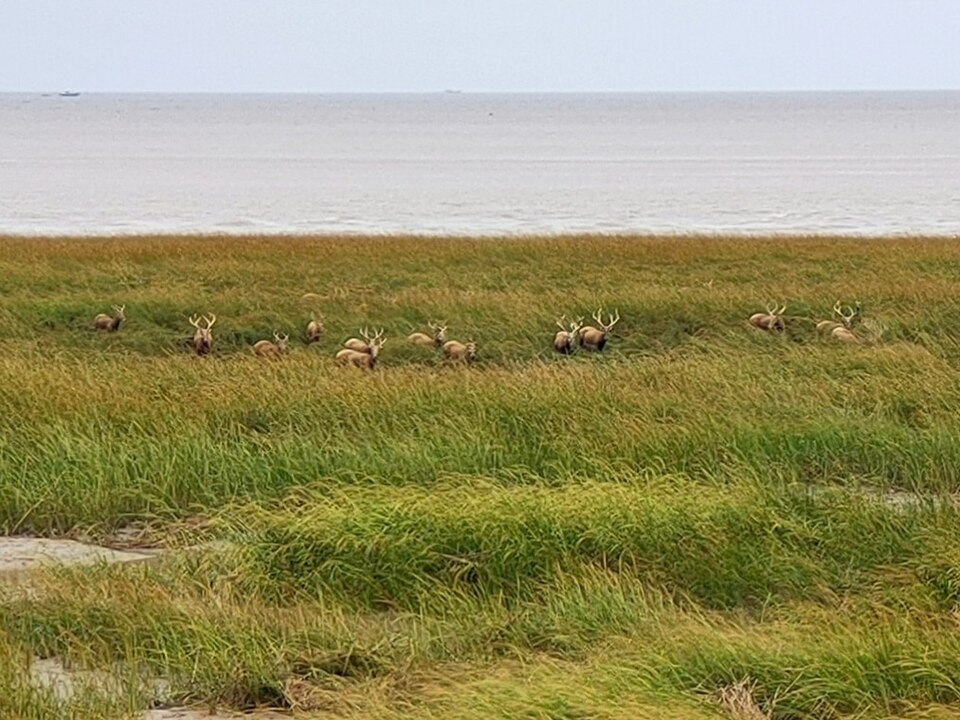
What you see on a visit
Visitors stay in the outer ring of the park. The reserve describes a viewing platform modelled on the one at the old Nanyuan hunting park, from which herds can be watched at a distance, and the Fengshen Tower, a water tower built to mark the 1986 return that doubles as a lookout over the marsh. The tomb for the 39 returning deer tells the story of the founding herd. Electric carts and boats run inside the grounds. Travel platforms note that the gate ticket does not cover the internal transport, and several visitor reviews say the cart or boat is the way to get close to the large herds.
Bring binoculars and a long lens. The deer are wild animals in a large landscape, and the best sightings often come early, when herds graze in the open before the day's heat or the tour groups.
Tickets, hours and getting there
Yancheng Bendibao lists Zhonghua Milu Park on Milu Avenue in Dafeng with hours of 8:00 to 18:00 and adult tickets from 45 yuan, with concession tickets at 25 yuan. Other listings give 8:30 to 17:00. Free and half-price categories follow the usual Jiangsu rules for children, older visitors and people with disabilities. Treat all of these as indicative and check the day's notice from the park, especially for cart and boat fares, which are charged separately.
The park is about 50 kilometres from Dafeng town and well over an hour from central Yancheng. Qunar lists a dedicated bus from Dafeng bus station with a few departures a day, and Tongcheng lists a direct coach from Yancheng. Timetables change, so confirm the last bus back before you set out. Most independent visitors hire a car and driver for the day. Self-drivers come off the coastal expressway at Dafeng or Dongtai and follow the Milu road signs.
Combining with the crane reserve
The deer and the Yancheng crane reserve make a two-day wildlife trip, one day each, with nights in Yancheng city. Winter is the season when both work at once, since the cranes arrive from late October and leave by March.
Frequently asked questions
Will I definitely see deer?
The park holds thousands of milu and the managed areas see them daily. Distance varies, so a cart or boat ride improves the view.
Is the wild herd visible?
The free-ranging herd lives in the wider reserve outside the visitor ring. Sightings from public roads are possible but not guaranteed.
Is one day enough?
Yes for the park itself. The travel time from Yancheng means a full day with transport.
Sources
Facts in this article were checked against the following sources, retrieved 21 October 2026.
- 江苏大丰麋鹿国家级自然保护区, Chinese Wikipedia
- Dafeng Milu Nature Reserve, English Wikipedia
- Père David's deer, English Wikipedia
- Jiangsu Forestry Bureau, Dafeng milu population passes 8,500 in 2025
- Xinhua, from 39 to more than 8,500 milu
- Dafeng District government, 21 milu sent to Wuliangsuhai
- Yancheng Bendibao, Zhonghua Milu Park
- 中国黄(渤)海候鸟栖息地, Chinese Wikipedia
- Yancheng travel guide on this site
Photos are from Wikimedia Commons under the licences shown in each caption.