The Western Xia Imperial Tombs Below the Helan Mountains
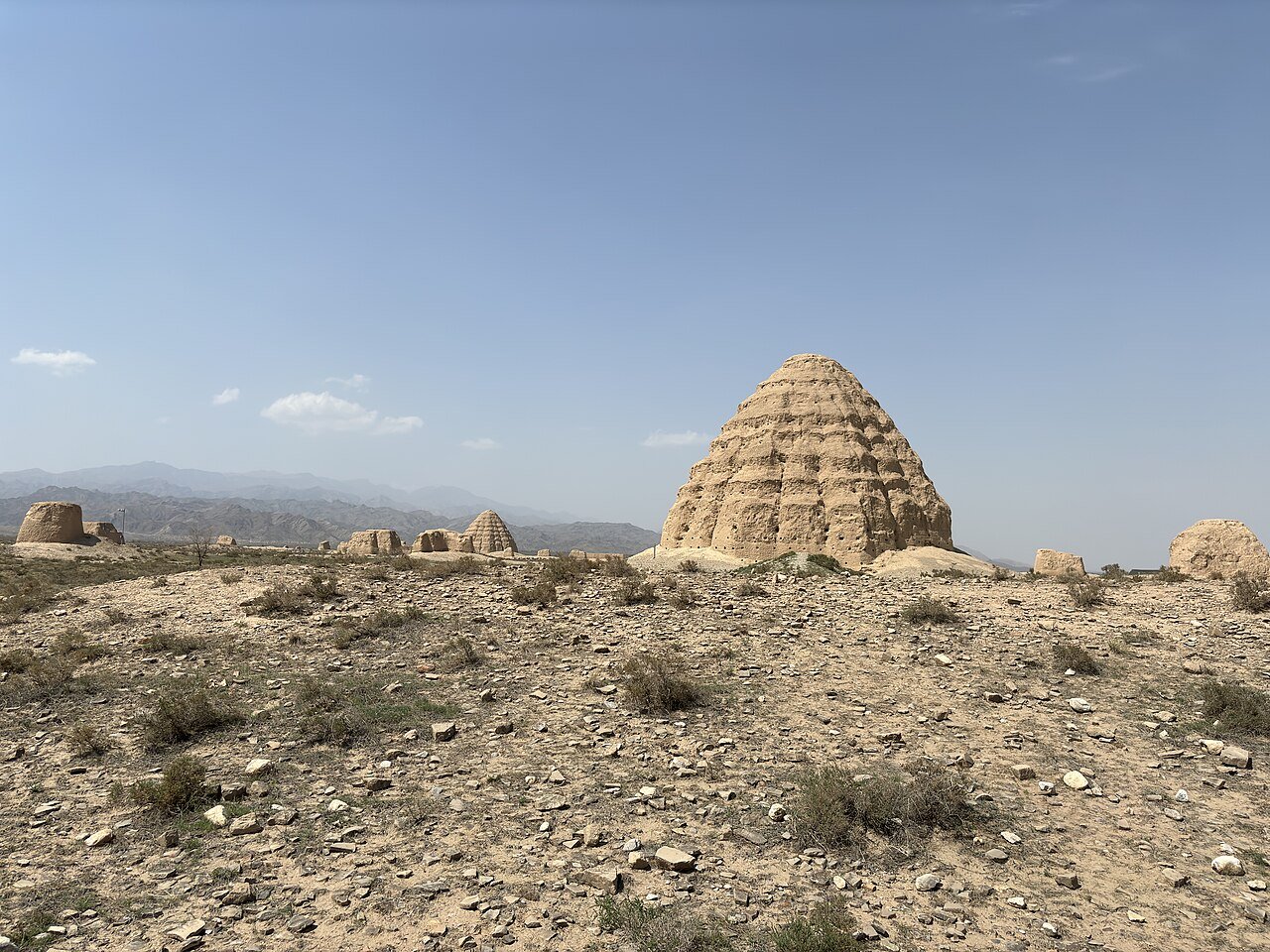
The Western Xia Imperial Tombs, also called the Xixia Tombs, lie on the gravel plain at the eastern foot of the Helan Mountains in Xixia District, about 30 kilometres west of central Yinchuan. They were the burial ground of the Tangut rulers of Western Xia, a state that controlled much of the northwest from 1038 until the Mongols destroyed it in 1227. What survives are tall earthen mounds, gate towers and wall lines spread over about 50 square kilometres. UNESCO inscribed the site on the World Heritage List in 2025 as the Xixia Imperial Tombs.
Who was buried here
Western Xia was founded by Li Yuanhao, who declared himself emperor in 1038. Chinese Wikipedia says he reburied his grandfather Li Jiqian and his father Li Deming at the foot of the Helan Mountains and gave their tombs imperial names. Every later emperor's tomb has a recorded name, although the records do not say where each one is. The last three rulers have none, probably because the state was collapsing under Mongol attack when they died. The Mongols wrecked the necropolis after the conquest in 1227.
The site was never quite forgotten. Officials in the early Ming identified it as the Western Xia tombs. In 1938 a German pilot, Wulf-Dieter Graf zu Castell, published aerial photographs of the mounds in his book Chinaflug. After 1949 local heritage officials at first took them for Tang tombs. Systematic excavation began in 1972. By 2014 archaeologists had confirmed nine imperial tombs, one mausoleum town, 254 attendant burials, dozens of kilns that made the building materials, and an ancestral temple. Only two occupants are certain. Tomb 7 belongs to Emperor Renzong, Li Renxiao, and attendant tomb 182 to a prince named Weiming Anhui. The others are assigned by their position and the historical order.
What the mounds were
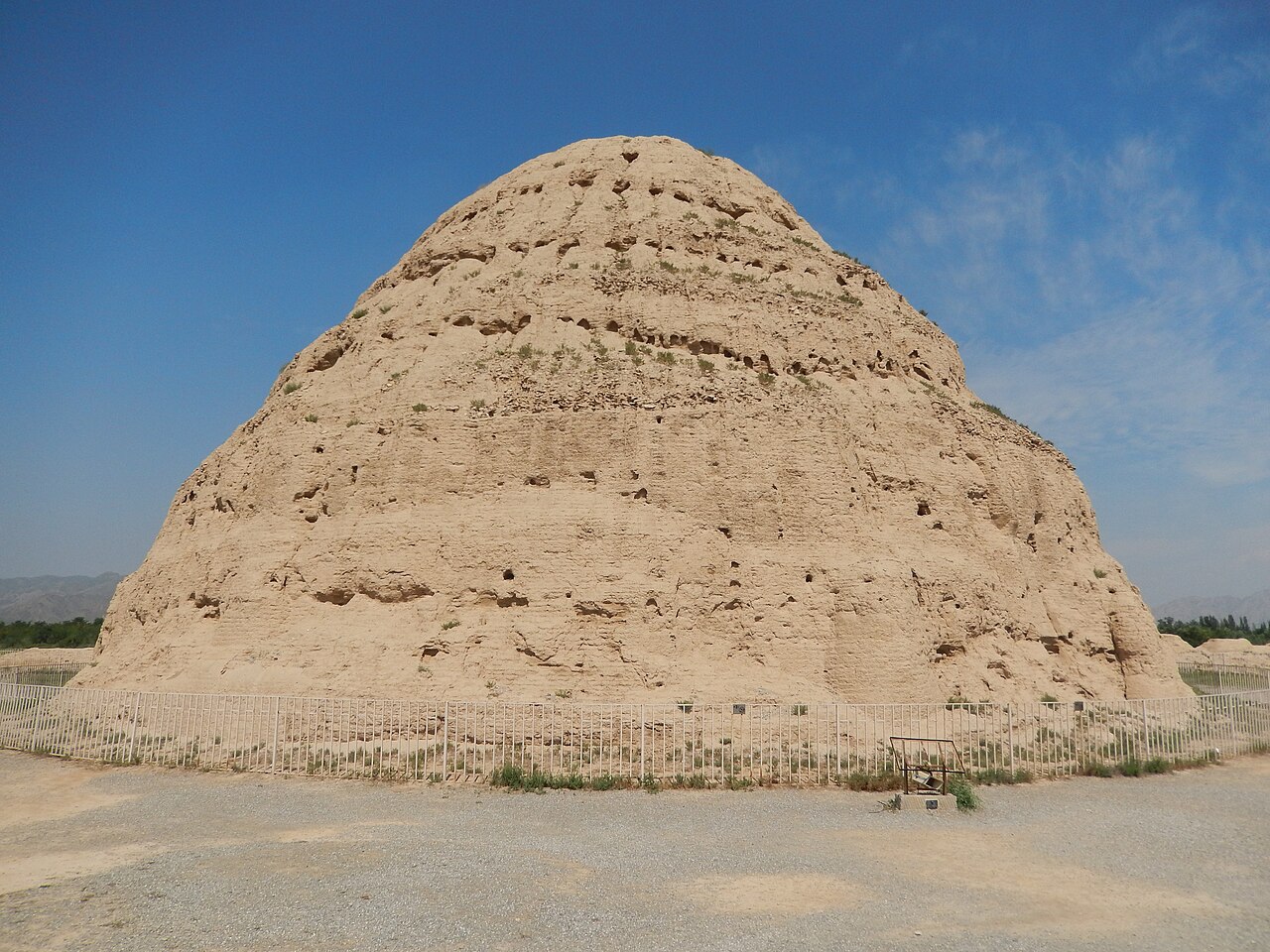
Each imperial tomb faces south in a rectangular enclosure. From the front you pass a pair of gate towers, the platforms of stele pavilions, a walled forecourt called the moon city, and then the inner enclosure. The solid mound stands off-centre in the northwest corner of that inner enclosure, above the burial chamber. English Wikipedia notes that the mounds reach up to 23 metres high and 30 metres across. They are octagonal and stepped, with seven tiers on Tomb 3.
The bare earth you see today was only the core. Rows of holes in the rammed earth once held timber beams, and excavators found large numbers of tiles, glazed fittings and decorative pieces around each mound. That suggests each one was faced with brick and roofed with tiled eaves on every level, looking more like a solid pagoda than a grassy tumulus. The popular nickname, the pyramids of the East, fits the silhouette that remains after the outer layers were burned and stripped away.
Tomb 3 and the excavations
Tomb 3 stands on open ground in the middle of the site and is generally attributed to Li Yuanhao himself. Three seasons of digging in 2000 and 2001 exposed more than 20,000 square metres. In the east stele pavilion the team found fragments of steles in Tangut script, bronze bells and armour plates. Some bricks carried single Chinese characters such as Li, Niu and Wu, family names or marks that point to Han craftsmen working on the tombs.
Tomb 6 was excavated in the early 1970s. After more than two years of work, the team reached the underground chamber and found it had been looted long before. Tombs 7, 8 and 9 at the north end were partly built over by industrial sites in the 1970s. Those buildings have since been removed, and the mounds survived.
The museum and the visit
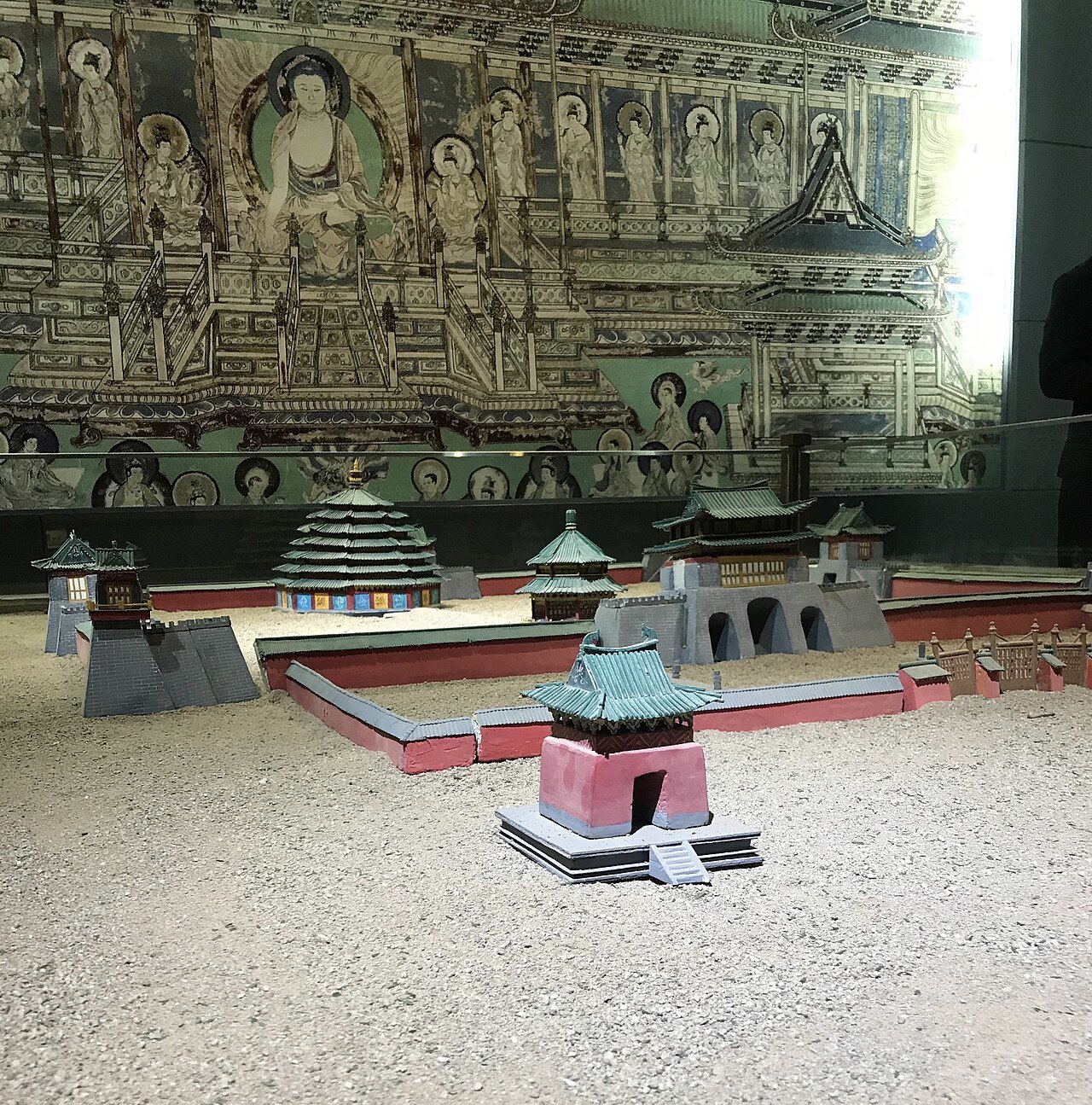
The site museum was moved outside the protected zone in 2019, as part of the World Heritage bid. It covers Tangut writing, Buddhism and court life, and it is the best place to start, because the mounds make far more sense once you have seen the reconstructions. From the museum a shuttle runs out to the heritage area, usually to Tomb 3. A visit takes half a day.
The Xixia District government published the scenic area's hours in July 2025. From April to October, tickets are sold from 8:00 to 17:30, the museum opens 8:00 to 19:00 and the heritage site 8:00 to 20:00. From November to March, ticket sales run 8:00 to 17:00, the museum 8:00 to 18:00 and the site 8:00 to 19:00. The same notice listed free entry days for 2025 and concessions for children, seniors, students and some others. It also said the 20-yuan shuttle and extras such as films and guided tours are charged separately even on free days. Prices and free-day policies change, so check the day's notice.
Getting there
According to the same notice, city bus 708 runs from the west square of Yinchuan Railway Station to the scenic area. From the airport you can take the airport rail link to Yinchuan station and change to the 708. Tourist bus line 1 runs from Xinyue Square from April to October only, and a Ningxia tourism bus also leaves from the railway station. A taxi or hired car makes it easier to combine the tombs with Zhenbeipu Western Film Studio, which is also on the Helan Mountain side of the city.
The plain has no shade. Bring water, a hat and sunscreen in summer, and warm clothes in winter, when the wind off the mountains is hard. The afternoon light across the gravel is the most photogenic.
Frequently asked questions
How far are the Western Xia Tombs from Yinchuan?
About 30 kilometres west of the city centre, at the foot of the Helan Mountains.
Are the tombs a World Heritage Site?
Yes. They were inscribed in 2025 as the Xixia Imperial Tombs.
Can you go inside a tomb?
No. The burial chambers are not open. Visitors see the museum, the enclosures and the mounds from the paths.
How long should I allow?
Half a day covers the museum and Tomb 3 by shuttle. Add time if you want to walk farther along the site.
Sources
Facts in this article were checked against the following sources, retrieved 11 October 2026.
- 西夏陵, Chinese Wikipedia
- Western Xia mausoleums, English Wikipedia
- 西夏陵景区开放时间与交通, Xixia District People's Government
Photos are from Wikimedia Commons under the licences shown in each caption.