Zhenbeipu Western Film Studio, Where Two Ruined Forts Became a Film Set
Zhenbeipu Western Film Studio, also written Zhenbeibu, stands in Zhenbeibu town, Xixia District, on the dry plain below the Helan Mountains. Ningxia's culture and tourism department puts it about 35 kilometres from central Yinchuan, with National Highway 110 running past. The studio is built inside two rammed-earth frontier forts, one from the Ming and one from the Qing, and since the early 1980s it has been the setting for many of the best-known Chinese films about the northwest. It is a 5A scenic area, the top national grade for tourist sites.
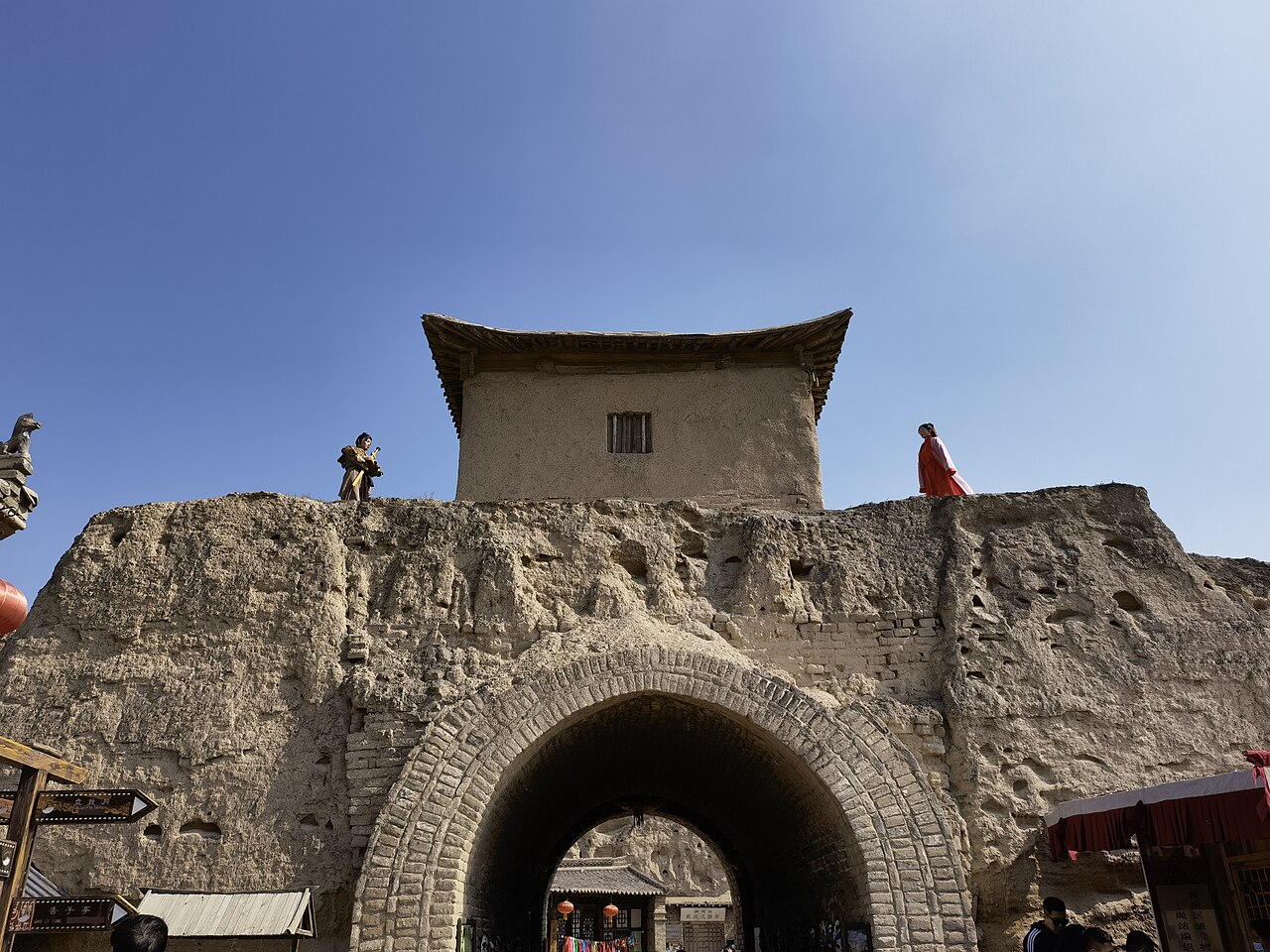
Two forts on the frontier
The name means the fort that guards the north. In August 2026 Ningxia's civil affairs department published a history of the place. It says the Ming garrison of Ningxia built the first fort in 1500, during the Hongzhi reign, on the plain thirty li from the mountains, as one of more than two hundred forts along the Helan Mountains. It held 160 soldiers and 83 horses and controlled seven beacon towers that signalled with smoke by day and fire by night.
The great Ningxia earthquake of 1738 brought the walls down. About two years later, in 1740, the Qing built a new and slightly larger fort some 200 metres to the northeast. Local people call them the old fort and the new fort, or the Ming city and the Qing city. Neither has brick or stone facing. Both were built entirely of rammed earth from the foot of the mountains. Once the frontier went quiet in the late Qing, the forts lost their military role and herders and farmers moved in.
A writer's discovery
The writer Zhang Xianliang found the ruins in the winter of 1961. He had just been sent as a farm labourer to the Nanliang farm below the Helan Mountains, and he walked to Zhenbeibu on a market day. The civil affairs department quotes his later memory of two ruined forts rising suddenly from the empty plain in the morning sun, as if they had grown out of the ground. He put the place into his 1984 novel Mimosa under the name Zhennanbu.
When the director Xie Jin filmed The Herdsman, based on Zhang's story Soul and Flesh, Zhang suggested the forts as a location. The civil affairs history counts that as the first time the forts appeared on film. The regional culture and tourism department's guide links the start to One and Eight, shot at the barbican of the fort. Both films were made in the early 1980s, so the two sources are close. In 1987 Zhang Yimou came with Gong Li and Jiang Wen to shoot Red Sorghum here. The film won the Golden Bear in Berlin in 1988, the first top prize for a Chinese film at one of the three leading European festivals.
Selling desolation
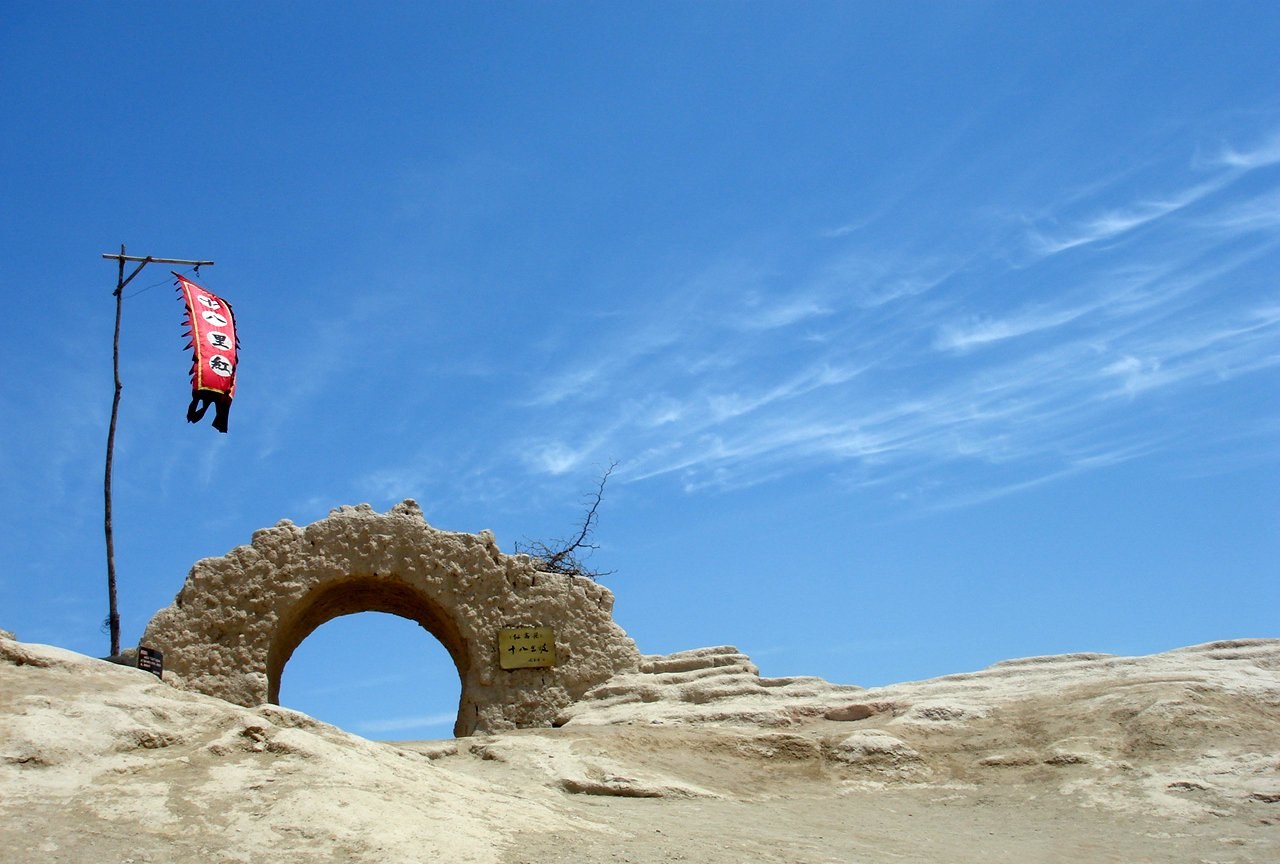
Zhang Xianliang set up the Huaxia Western Film and Television City company on 21 September 1993, with himself as chairman, and built the studio around the ruins. His idea, often summed up as selling desolation, was to keep the broken walls, the earth colour and the folk objects, and to avoid building palaces or glazed roofs. Directors were free to work on that bare background. Other films shot here include Teng Wenji's Ballad of the Yellow River, He Ping's Swordsman in Double-Flag Town, New Dragon Gate Inn, produced by Tsui Hark, and Wong Kar-wai's Ashes of Time. Jeff Lau's 1994 A Chinese Odyssey, starring Stephen Chow, made the fort's gate tower famous with a generation of young viewers. Totals vary by source, from about a hundred to over two hundred productions.
What you see inside
The studio has three parts, the Ming city, the Qing city and a street of old Yinchuan. Sets kept from the films include the Moon Gate and the wine workshop from Red Sorghum, a smithy, Jiu'er's house and a governor's office. The Dragon Gate Inn set has no windows on the ground floor and only small gun-slit windows above, a design meant to make it look secretive. The regional tourism guide also lists the Bull Demon King's palace from A Chinese Odyssey, where Zhizunbao and Zixia have their best-known exchange, a cottage from The Herdsman, and a hall Zhang Xianliang built for the Golden Rooster and Hundred Flowers film festival.
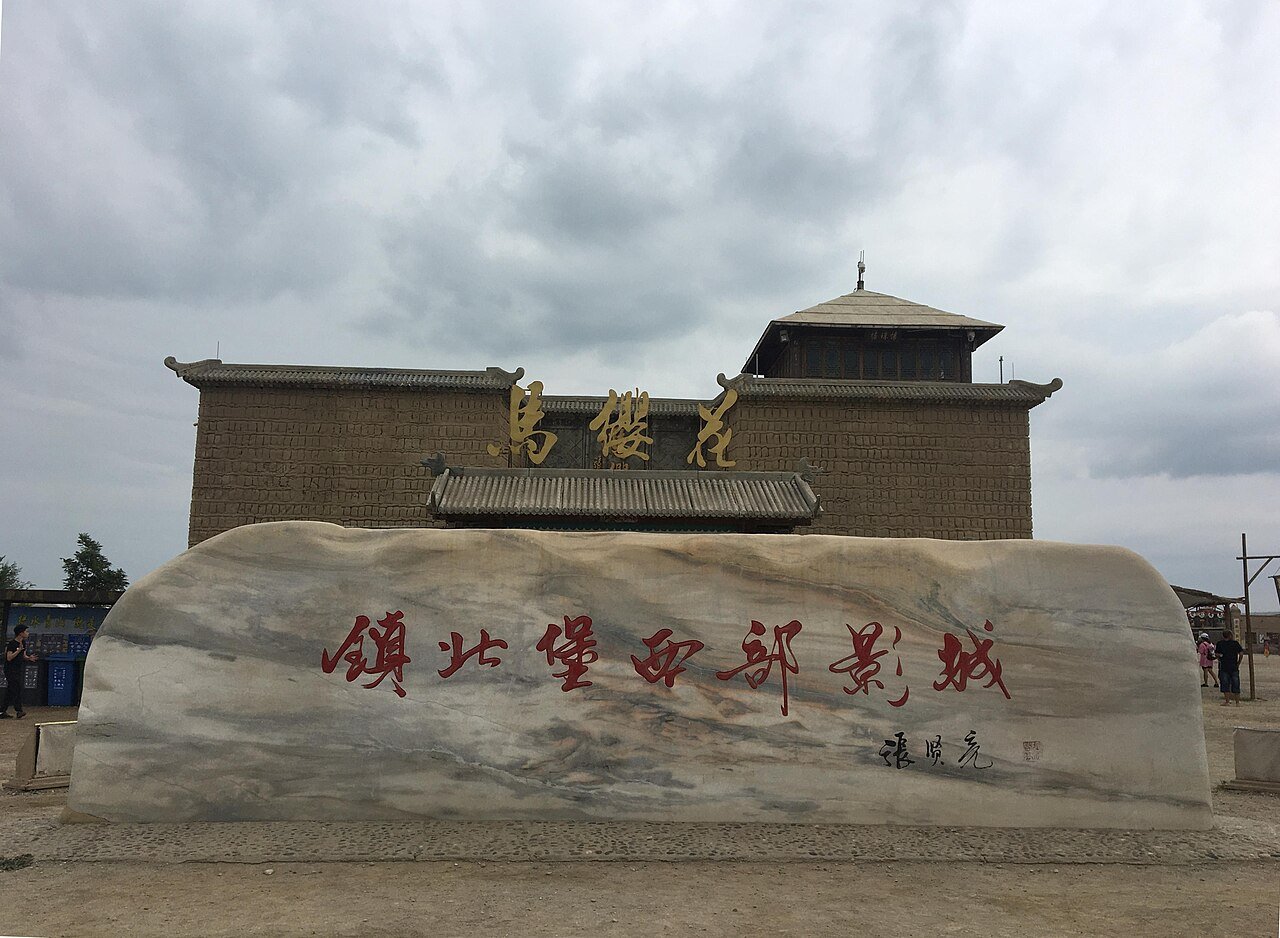
Craft stalls and folk shows run along the streets, along with costume photography and riding and archery. A filming service lets visitors record short clips in costume. The site is uneven earth and dust, so wear sturdy shoes.
Hours, tickets and getting there
Ningxia's culture and tourism department lists opening hours of 8:00 to 18:00 in summer and 9:00 to 17:00 in winter. In summer 2026 the studio announced evening opening until 22:00 from 16 July to 20 August. Travel reports put the day ticket at around 80 yuan for 2026, with a cheaper evening ticket during the late-opening season, but check the official channels for current prices. Hours change with the season, so check the day's notice.
The department gives the distance as 25 kilometres from Yinchuan Railway Station and 48 kilometres from Hedong Airport. A taxi or hired car is the simplest way to go. It also makes it easy to combine the studio with the Western Xia Imperial Tombs, which lie on the same side of the city. The Yinchuan guide adds the Helan Mountain rock art and Shuidonggou if you have a second day out west. The Helan Mountain foothills around the town are also one of Ningxia's wine districts, with many wineries close by.
Before you go
- Allow three hours for both forts and the old Yinchuan street.
- Bring sun protection, because most of the site is open earth.
- Check for evening opening in summer, when the forts are lit.
- Ask about any filming on the day, as some areas may close for crews.
Frequently asked questions
Is Zhenbeipu a real fort or a film set?
Both. The walls are a Ming fort of 1500 and a Qing fort of 1740, and the film sets were built inside and around them.
Which famous films were shot here?
Red Sorghum, A Chinese Odyssey, New Dragon Gate Inn, Ashes of Time and The Herdsman are among the best known.
How far is it from Yinchuan?
About 35 kilometres from the city centre, according to Ningxia's tourism department.
Can I combine it with the Western Xia Tombs?
Yes. Both are on the Helan Mountain side of Yinchuan, and many visitors see them on the same day by car.
Sources
Facts in this article were checked against the following sources, retrieved 11 October 2026.
- 镇北堡西部影城, Ningxia Department of Culture and Tourism
- 镇北堡:戍垒变乡邑,残堡塑靓影, Ningxia Department of Civil Affairs
- 镇北堡西部影城, Xixia District Culture and Tourism Bureau
- 镇北堡西部影城, Chinese Wikipedia
Photos are from Wikimedia Commons under the licences shown in each caption.