Yinchuan Travel Guide: Six Stops in the Land of Western Xia (with a Three-Day Itinerary)
Yinchuan is the capital of Ningxia, with the Helan Mountains rising at its west and the Yellow River flowing past the city's east; canals fed by the river have made this stretch of the northern frontier a grain land since antiquity, and locals call it the "river south beyond the passes." The old name Xingqingfu belongs to 1038, when the Tangut leader Li Yuanhao proclaimed the Western Xia dynasty here, a kingdom that lasted nearly two hundred years before vanishing and leaving nine imperial tombs under the mountains. Its earliest residents go back much further: 38,000 to 40,000 years ago the people of Shuidonggou worked stone on this land. Six places below (the Xixia Imperial Tombs, Zhenbeipu Western Film Studio, the Helan Mountains rock art, Shuidonggou, the Chengtian Temple Pagoda, and the Haibao Pagoda) have all had their origins checked against public sources.
Planning a short Yinchuan stay
Protect one signature half-day and one buffer for transport. Cut malls and duplicate viewpoints if the calendar is tight. A cut list beats a checklist when time runs short.
When to come to Yinchuan
Yinchuan has a mid-temperate continental climate, averaging 9.4°C a year with only about 186 millimeters of rain, dryness is the norm, and the sky stays improbably blue. May through October is the comfortable stretch: summers never turn muggy and the nights cool off, a proper escape from the heat; autumn's strong sun draws every wrinkle out of the Helan Mountains. Winters are cold and dry, with ice on the city lakes and snow on the ridges for a different, starker beauty. The ultraviolet is fiercer than inland cities (hat, sunglasses and sunscreen are standard) and the day-night gap is wide, so bring a jacket even in summer. Town sights run on metro and buses; the four outlying spots sit thirty-odd kilometers from the center, where a chartered car or a day tour saves the most time.
Places worth visiting
The Xixia Imperial Tombs
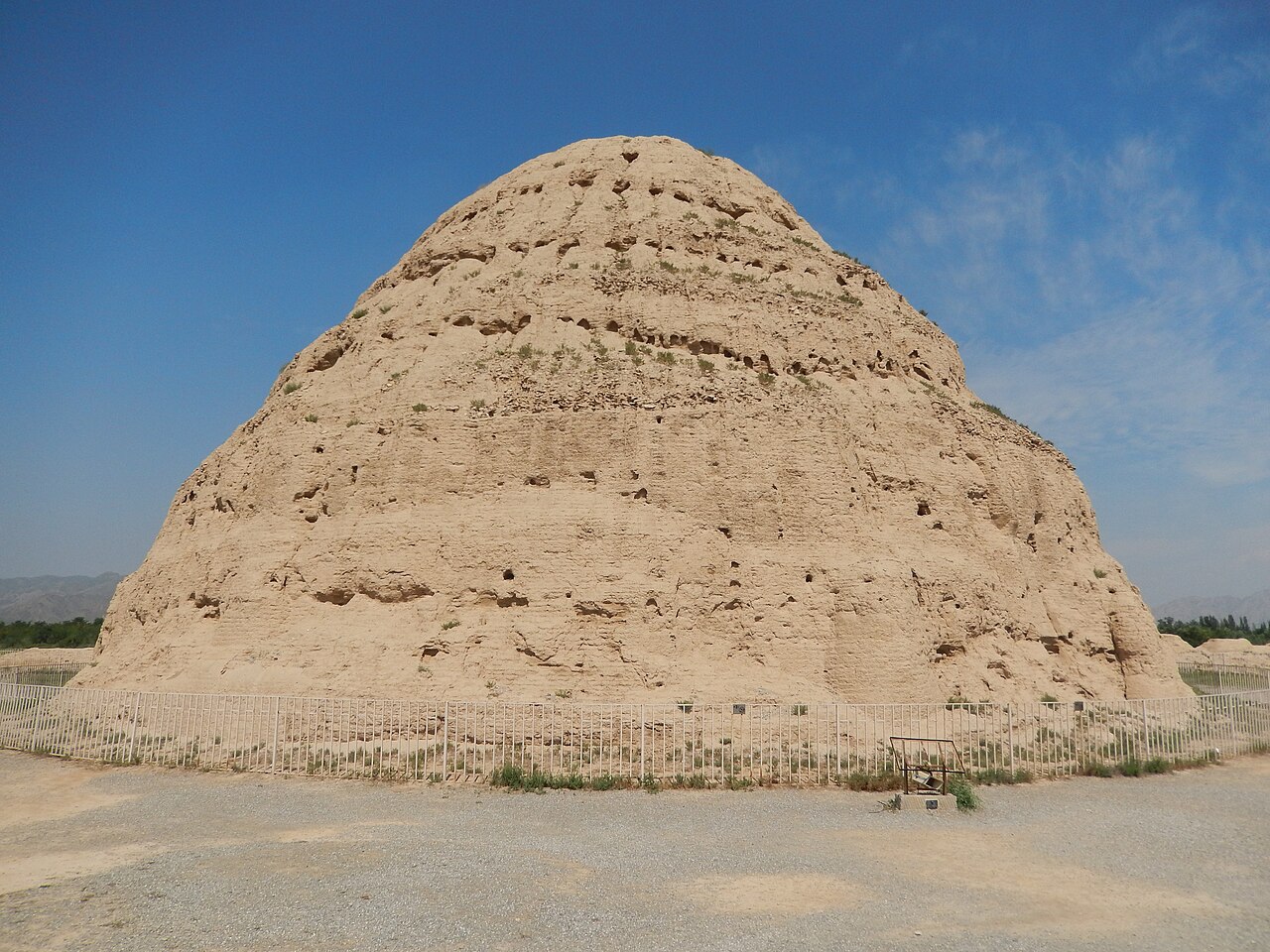
The Xixia Imperial Tombs spread across the eastern foothills of the Helan Mountains on Yinchuan's western outskirts, the royal graveyard of the Western Xia. Li Yuanhao proclaimed the dynasty in 1038 and posthumously honored his grandfather Li Jiqian and father Li Deming as emperors; his own resting place is the Tailing. When the Mongols destroyed Western Xia in 1227 they wrecked the necropolis, the timber structures vanished entirely, leaving rammed-earth mound platforms and corner-tower bases standing in the gobi, and until state archaeologists surveyed the area in 1972 nobody could say for certain what the great mounds were. The tombs became a nationally protected site in 1988, and in 2025, at the 47th session of the World Heritage Committee, they were inscribed on the World Heritage list.
The necropolis holds nine imperial tombs numbered from the 1990 survey (Tomb 3, the largest, is generally taken to be Li Yuanhao's Tailing) with clusters of attendant burials and a mausoleum-town site of nearly 100,000 square meters; sixteen stele-pavilion foundations survive. The earthen towers line up before the mountains and visitors call them the pyramids of the East; on a clear afternoon, when the light slants across the gobi, they look their best. The on-site museum explains the Western Xia script, Buddhism and court system properly, see the exhibition first, then board the shuttle, and the mounds will read like text. Seasonal hours, bus 708 and what the mounds originally looked like are on the Western Xia Imperial Tombs page.
Zhenbeipu Western Film Studio
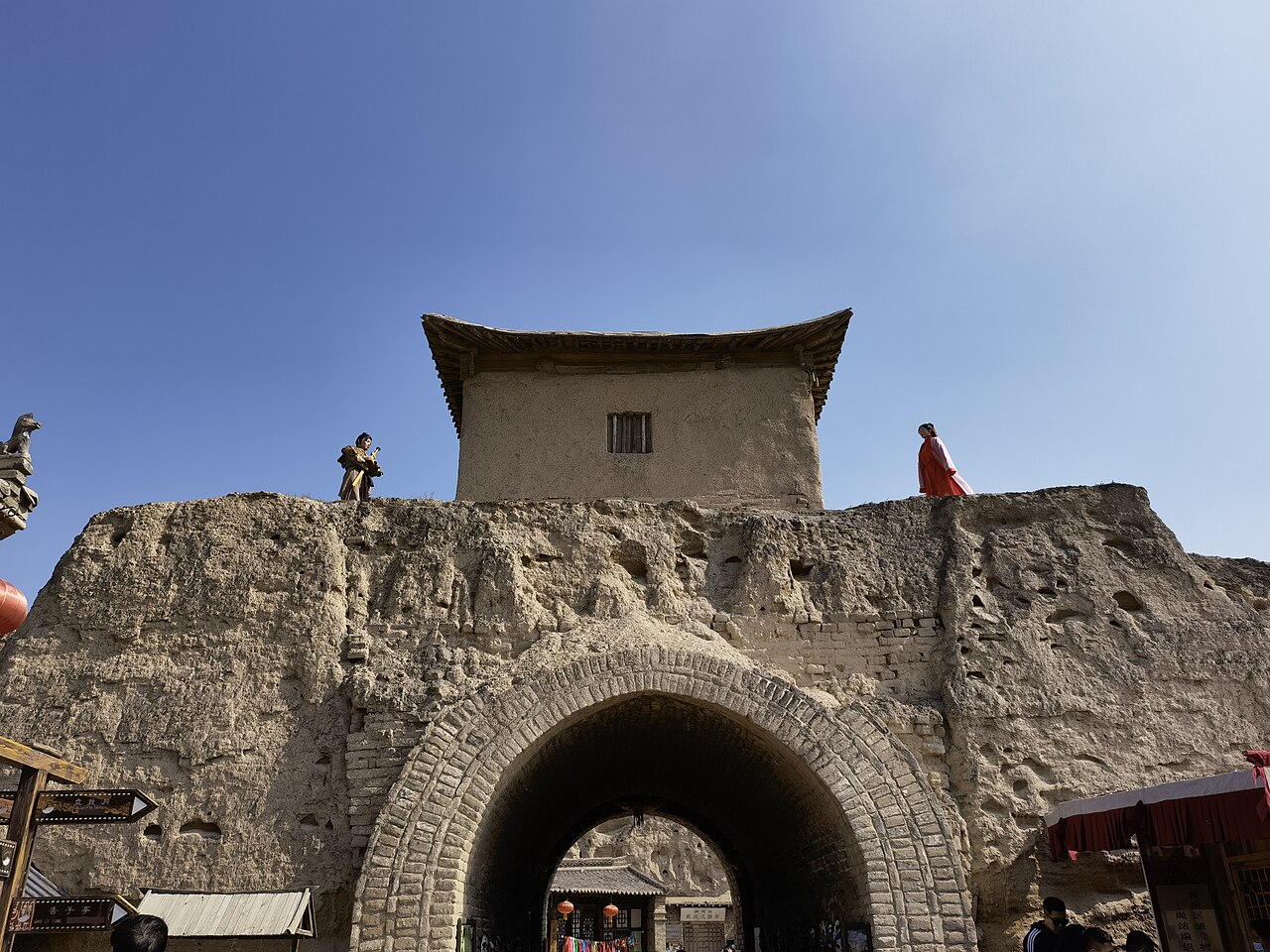
Zhenbeipu Western Film Studio sits on the gobi northwest of the city, founded in the early 1990s by the writer Zhang Xianliang, who turned two Ming-and-Qing era rammed-earth garrison forts into China's most famous western film base. The city-gate scenes of "A Chinese Odyssey Part Two" were shot here, the shot of the Monkey King and Zixia on the gate tower is burned into a generation's memory. It is now a national 5A scenic area.
The studio splits into the Ming Fort and the Qing Fort, their earthen streets, smithies and escort agencies kept as they were, with props and sets left standing in place. Nothing here is polished, the beauty is in the word desolation, yellow mud walls against a hard blue sky, and every frame looks like a still from a film. On shooting days you can watch a crew at work, and after the tour the gobi sunset outside the walls is the right way to close the afternoon. The dates of the two forts, Zhang Xianliang's story and the main film sets are on the Zhenbeipu Western Film Studio page.
The Helan Mountains Rock Art
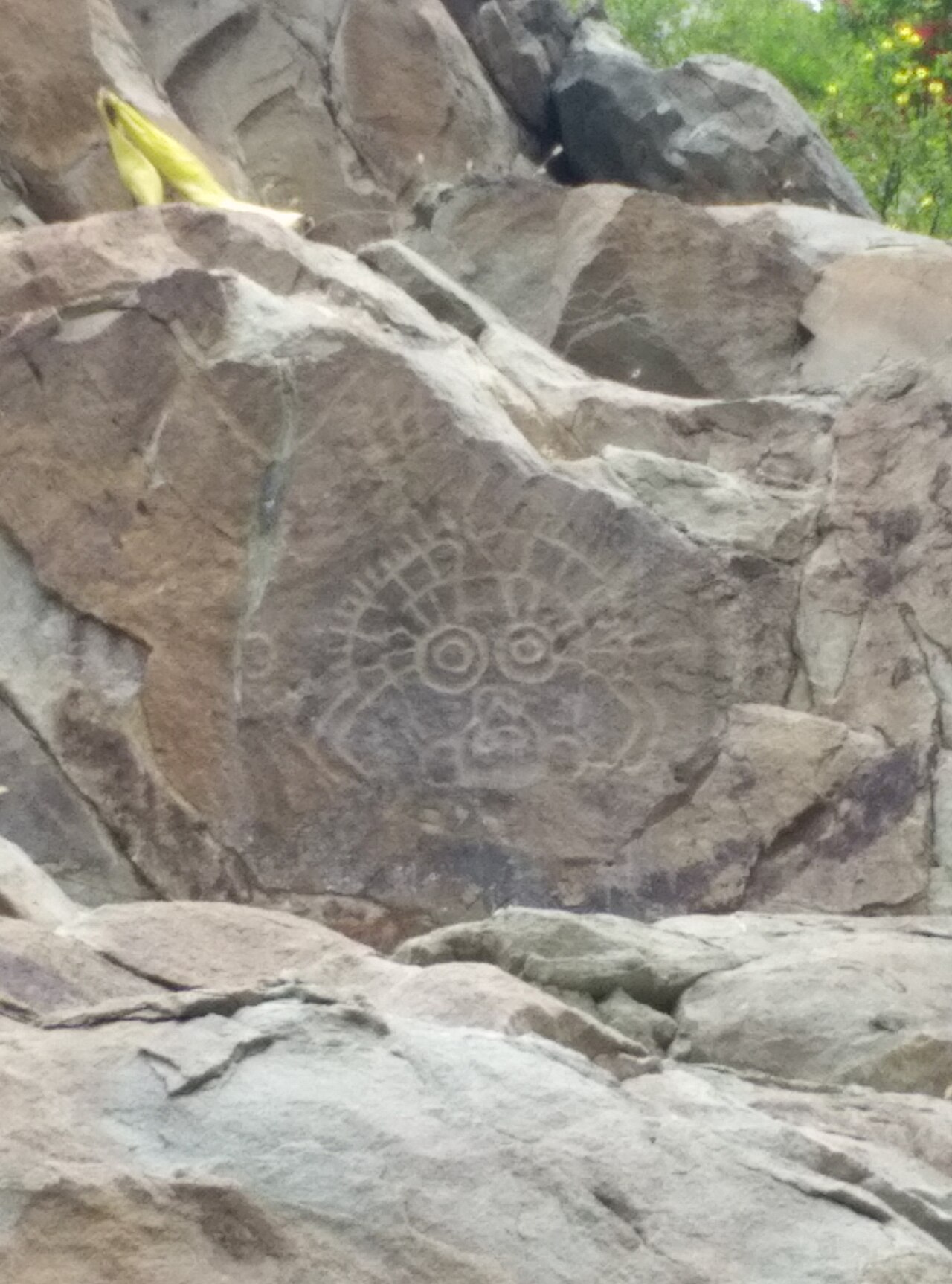
The ancient people of the Helan Mountains carved their lives into the stone for millennia. The petroglyphs run from Shizuishan in the north to Zhongwei in the south, mostly human faces and nomadic life, with some Western Xia inscriptions mixed in; they came to public attention in 1969, entered the fourth batch of nationally protected sites in 1996, and nearly 20,000 individual images have been recorded. Helankou, the gorge northwest of the city, is one of the densest sites, on the cliffs along its mouth the Sun God face radiates its rays, the signature image of the whole range.
Walk in along the gorge and the carvings line both sides of the path: hunts, dances, sun and moon, hand prints, some sharp, some needing a squint and some patience. Blue sheep bound along the crags, the valley's true residents. The rock-art museum at the mouth lays out rubbings and interpretations systematically; see it first and the valley reads better. The whole walk takes an hour or two on easy paths, fine with children, too.
Shuidonggou
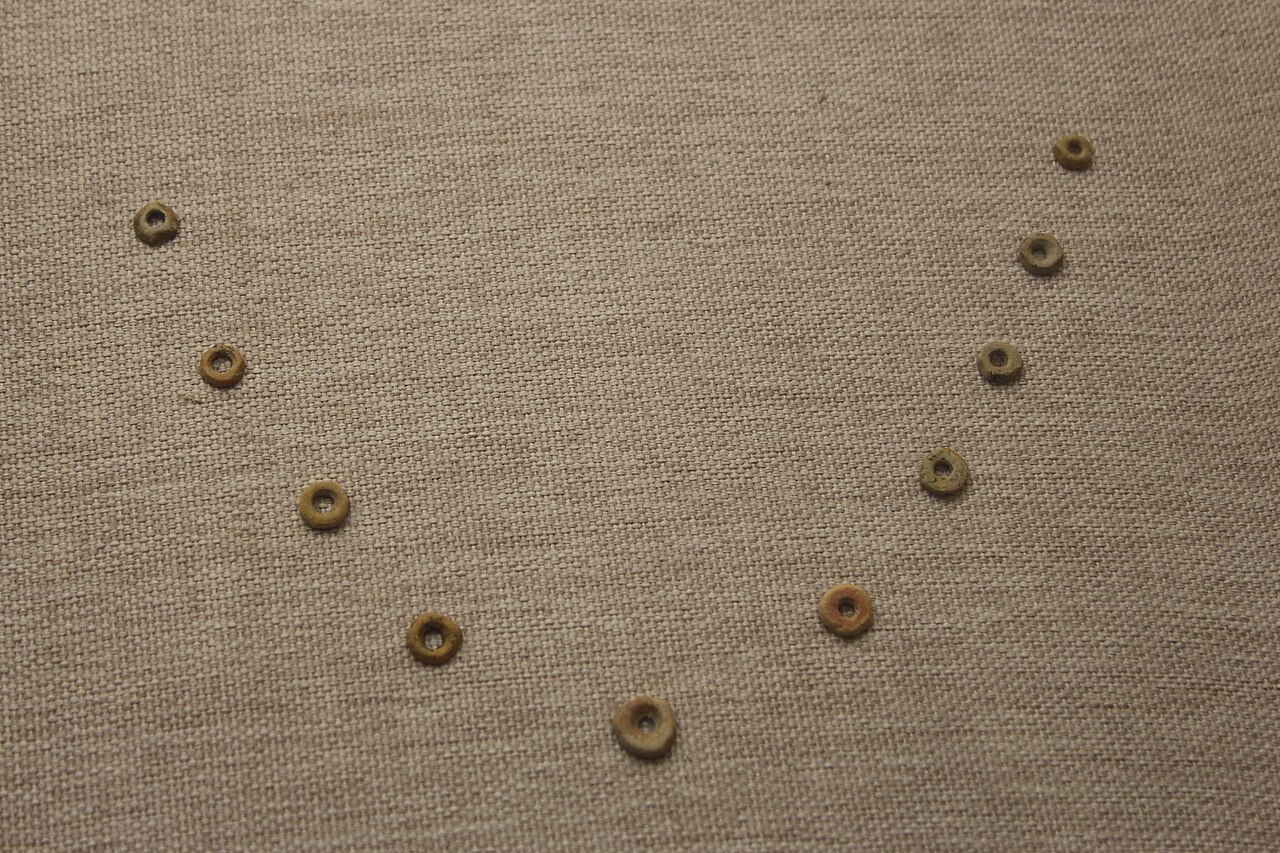
Shuidonggou lies on the desert terraces east of the city, where people were knapping stone tools 38,000 to 40,000 years ago. In 1923 the French scholars Émile Licent and Pierre Teilhard de Chardin found and excavated Paleolithic remains here, making Shuidonggou the earliest discovered and excavated Paleolithic site in China, and the only formally excavated one in the Yellow River's upper reaches; six large-scale campaigns have followed. The ornaments worked from ostrich eggshell show that hands this ancient already had a sense of beauty.
The site stacks archaeology on frontier defense: the Ming Great Wall runs along the terraces, and below the Hongshan Fort hide the Ming-era soldier caches, tunnel passages, granaries and traps connected level by level. The visitor circuit mixes them well (camel carts, boardwalks, the tunnels) and half a day to a full day fits. Hours and tickets follow official notices, and the gobi wind is serious: bring a windbreaker and sun protection.
The Chengtian Temple Pagoda
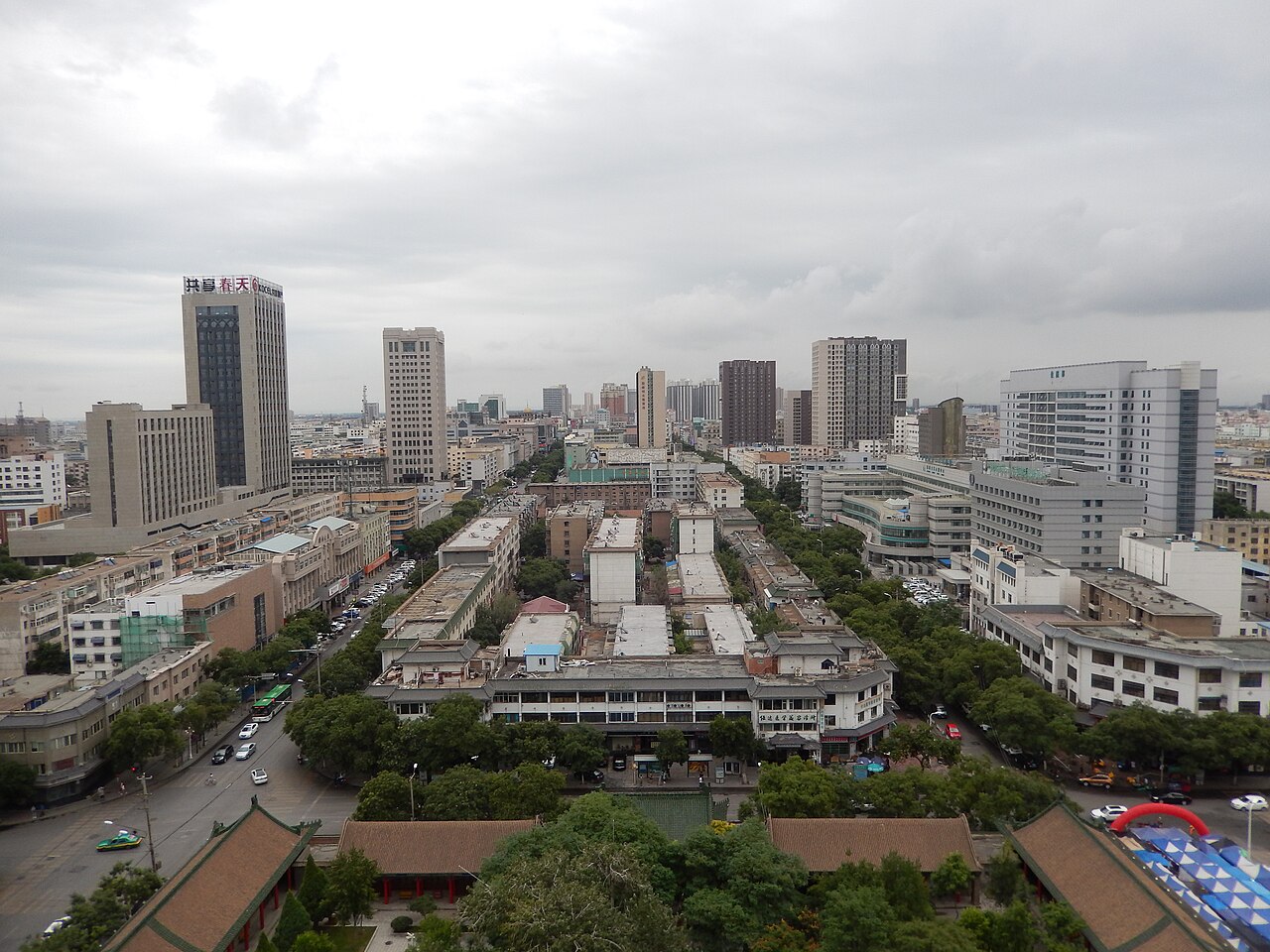
The Chengtian Temple Pagoda stands at the center of Chengtian Temple in western Yinchuan. According to the Xixia Shishi, the temple rose in the tenth month of the third year of Fusheng Chengdao under Western Xia (1055), and the pagoda is its main building, locals call it the West Pagoda. It is an octagonal brick pagoda on a square terrace 26 meters high, reaching 64.6 meters overall, the tallest ancient pagoda surviving in Ningxia.
The tower tapers evenly; the spiral stair climbs inside to a top floor that looks east over Yinchuan's high-rises all the way toward the Yellow River, and west to the Helan Mountains standing like a blue wall. Old trees shade the temple grounds, locals play chess below and drink tea, and visitors stay thin. It is the quietest observation deck in the city, open with it or close with it.
The Haibao Pagoda
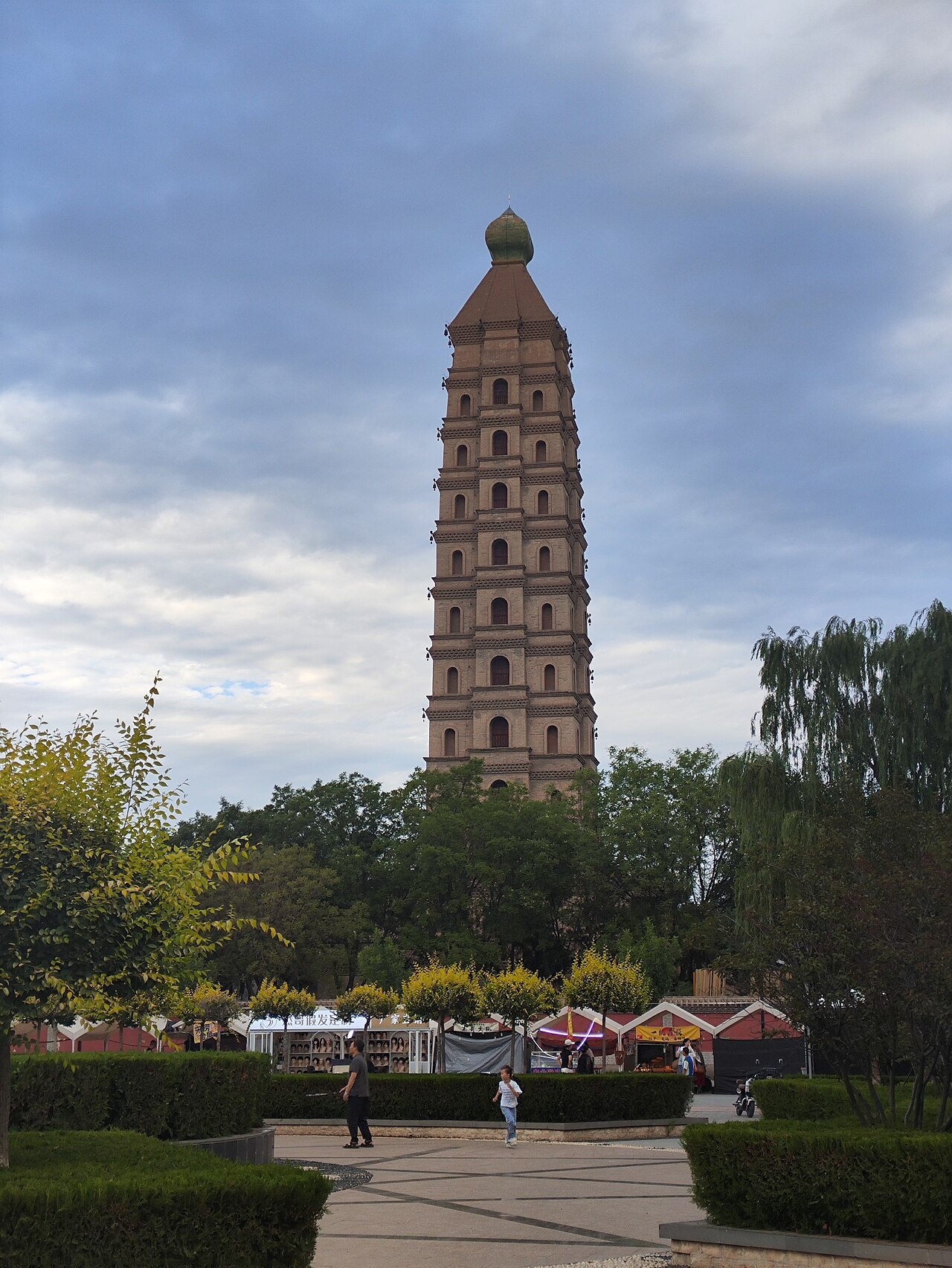
The Haibao Pagoda stands in Haibao Temple north of the city, the North Pagoda to locals, once called Heibao or Hebao. Its founding date is lost; tradition says the sixteenth-century ruler Helian Bobo restored it, and repairs are recorded in the Wanli era, a genuinely ancient site. In 1961 it entered the first batch of nationally protected sites, the same list as the Forbidden City and Jinci, with seniority older than most sights you will visit.
The pagoda rises from a square terrace 5.7 meters high and 19.2 meters on a side, about 54 meters overall (one account gives 53.9). Its square, pavilion-style body is uncommon in the northwest, sharp-edged, like a seal standing upright at the city's north end. The temple halls are orderly, the incense light, pigeons circle the tower and elders sun themselves in the cloisters. Whether admission is free follows on-site notices; after the West Pagoda, the North Pagoda completes Yinchuan's ancient-tower pair.
Eating in Yinchuan
Hand-grabbed lamb is the head of the table. Ningxia's Tan sheep carry no gaminess, so a plain boil with salt and pepper is already excellent, and good houses pour a clear broth alongside. Lamb offal soup belongs to the morning, a red-chili bowl of lung, tripe and floating oil with a fresh-baked bannock. Braised lamb and "braised snacks" are the local home cooking, and a pot of eight-treasure tea (rose, sesame, goji berries, rock sugar) rinses the meal down. Street lamb skewers come honest and big, cumin going straight at you. The night markets around Xingqing District run from dusk to late night; arrive hungry.
How to arrange the route
Day one stays in town: the Chengtian Temple Pagoda in the morning for the view, lunch and a rest, the Haibao Pagoda and its temple in the afternoon, then the night market for hand-grabbed lamb and eight-treasure tea in one sitting.
Day two runs the west line: the Xixia Imperial Tombs in the morning (museum first, then Tomb 3) lunch near the site, and Zhenbeipu Western Film Studio in the afternoon, playing extra in the Ming and Qing forts before the gobi sunset.
Day three starts early for Helankou and the rock art (find the Sun God before the crowds) then, after lunch in town, Shuidonggou for the tunnels and the Ming Wall. If time runs short, leave Shuidonggou for a return trip and let the rock art breathe.
Lanzhou is the next Yellow River city south. Xi'an is the usual start if you are coming from the old capitals.
Things to confirm before you go
- The tombs, the film studio, Helankou and Shuidonggou all sit thirty-odd kilometers out; buses are thin, so charter or join a day tour.
- The Xixia tombs are newly listed World Heritage and holiday crowds have grown; tickets and guides follow official notices.
- Shooting schedules occasionally close parts of the film studio, check the day's notice.
- The gobi wind and sun are serious: windbreaker, sunglasses and water, and watch footing on the wall sections in winter.
- Yinchuan is a Hui community heartland, respect halal customs, and mind dress and photography around mosques.
Desert-and-river days continue west to Zhongwei for Shapotou.
Frequently asked questions
How many days for Yinchuan?
Three days fits, town one day, the west line one day, and half to a full day for the east. Add two more days toward Zhongwei if Sand Lake or the Tengger appeals.
Are the Xixia tombs worth it?
Yes, among China's newest World Heritage listings (2025), the earthen mounds against the Helan Mountains are unlike anything else, and the script-and-artifact museum sets the story out clearly. Exhibition first, mounds after, no regrets.
If I can only pick one, Shuidonggou or Helankou?
Follow your interest. Deep-time archaeology, tunnels and the Ming Wall point to Shuidonggou; art and mountain scenery point to Helankou and the Sun God. With time, do both.
What must you eat in Yinchuan?
Hand-grabbed lamb and offal soup are the base, eight-treasure tea drinks alongside, and the night market's skewers close the day. Worried about gaminess? Tan sheep don't have any.
Sources
The facts in this article were checked against the following Chinese Wikipedia entries, retrieved September 2, 2026.
- Yinchuan (city) https://zh.wikipedia.org/wiki/银川市
- Xixia Imperial Tombs https://zh.wikipedia.org/wiki/西夏陵
- Zhenbeipu Western Film Studio https://zh.wikipedia.org/wiki/镇北堡西部影城
- Chengtian Temple Pagoda https://zh.wikipedia.org/wiki/承天寺塔
- Haibao Pagoda https://zh.wikipedia.org/wiki/海宝塔
The Chinese Wikipedia entry for Shuidonggou is not yet established; its discovery and excavation history were verified against reports by the Institute of Vertebrate Paleontology and Paleoanthropology (CAS) and Xinhua. The Helan Mountains rock art entry is limited in coverage; its distribution, discovery and protection were verified against Wikipedia and Xinhua's December 2022 report, with the recorded count of nearly 20,000 individual images used as the main figure.
All photos are from Wikimedia Commons, used under CC licenses; re-use requires attribution.
- yinchuan-city.jpg from File Skyline of Jinfeng District, Yinchuan (53724463112).jpg, by xiquinhosilva, CC BY 2.0
- yinchuan-xixia.jpg from File XiXia Tomb 3 F.jpg, by BabelStone, CC BY-SA 3.0
- yinchuan-zhenbeipu.jpg from File 镇北堡西部影城.jpg, by Yanxutong1215, CC BY-SA 4.0
- yinchuan-helan.jpg from File 贺兰山岩画太阳神.jpg, by 霧島聖, CC BY-SA 4.0
- yinchuan-shuidonggou.jpg from File Shuidonggou Eggshell Ornaments IVPP.jpg, by Jonathan Chen, CC BY-SA 4.0
- yinchuan-chengtian.jpg from File View of Yinchuan looking east from top of Chengtian Temple Pagoda.jpg, by BabelStone, CC BY-SA 3.0
- yinchuan-habaota.jpg from File Haibao pagoda 2025.jpg, by Phlins Chen, CC BY-SA 4.0