Linzi, the Old Qi Capital in Zibo
Linzi District in eastern Zibo sits on the site of Linzi city, capital of the state of Qi for most of the Zhou period and one of the largest cities in the ancient world. Little stands above ground, so the story is told through a cluster of museums and excavated sites. The Qi Culture Museum and its Football Museum are free, the Duke Jing horse pit hall reopened in September 2026, and the Ancient Chariot Museum shows a Spring and Autumn chariot burial in place. The Zibo guide treats Qi history as the second reason to stay after Zhoucun.
The ancient city
The walls of the Qi capital enclosed about 15 square kilometres in two parts. The small city in the southwest held the palaces, and the large city to the northeast held homes and workshops, with eleven gates and a moat around the whole. A raised earth platform known as Huangong Tai, about 14 metres high, survives in the palace area. Archaeologists have traced streets, workshop sites and large tombs inside the large city. The site is a national key protected monument, and the museums below sit on or near it.
Qi Culture Museum and Football Museum
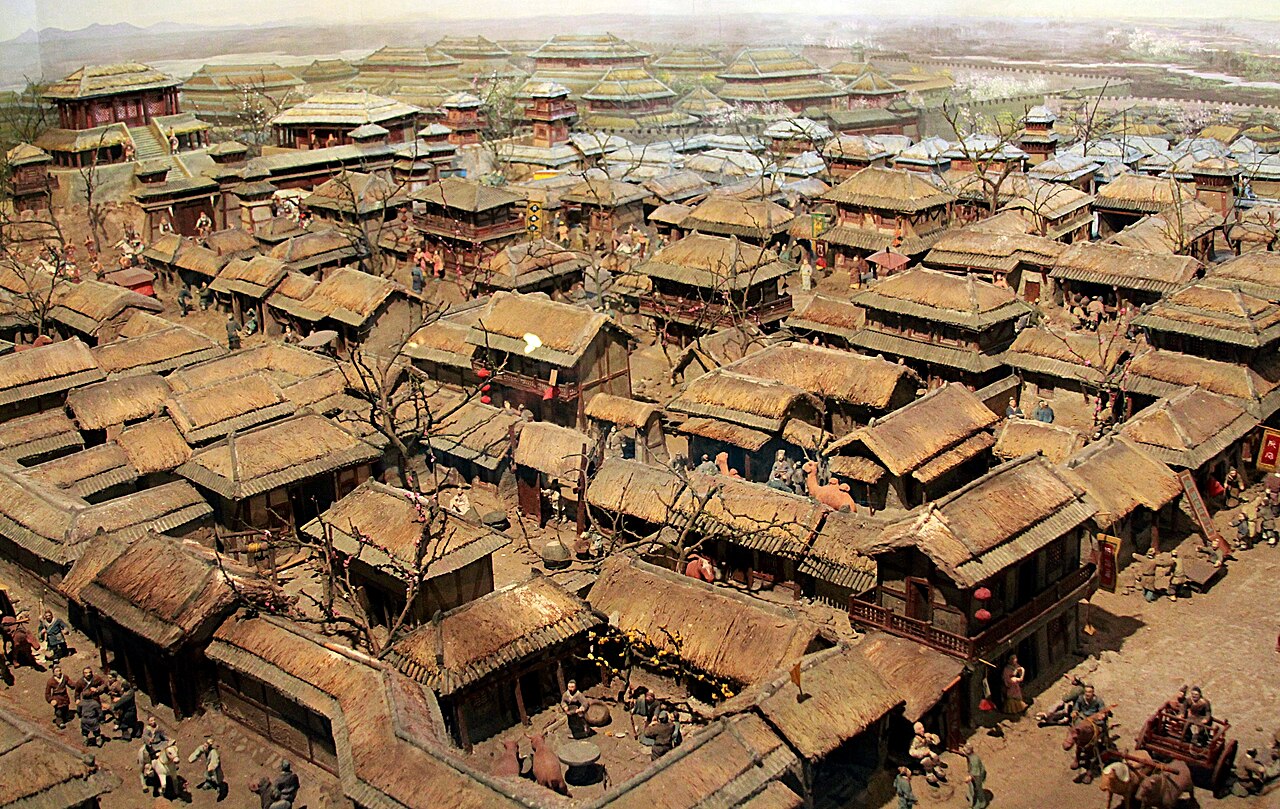
The Qi Culture Museum opened in September 2016 at 308 Linzi Avenue, replacing an older site museum. Reports give it about 35,000 square metres of floor space and a collection of some 30,000 objects, with around 4,100 on display. The core galleries tell the history of Qi, and themed rooms cover archaeology, ceramics and calligraphy among other subjects. A scale model like the one pictured below, photographed in the older Qi museum in 2010, is the easiest way to picture a city you cannot see on the ground.
The Football Museum shares the complex. In July 2004 FIFA's then president Sepp Blatter announced that football's origins lay in China, citing the ancient ball game cuju in Linzi. Linzi opened its first football museum in 2005 and the present one in January 2016. Its displays centre on cuju and the long history of ball games in China.
The museum's visitor page lists hours of 9:00 to 17:00, Tuesday to Sunday, with last entry at 16:30, closed on Mondays except public holidays. Both museums are free apart from special exhibitions. Chinese ID cards work at the self-service gates, and other valid documents are handled at the staffed window, which is where a passport holder should go. Still photos without flash or tripods are allowed in the galleries, and video is not.
Duke Jing horse pit
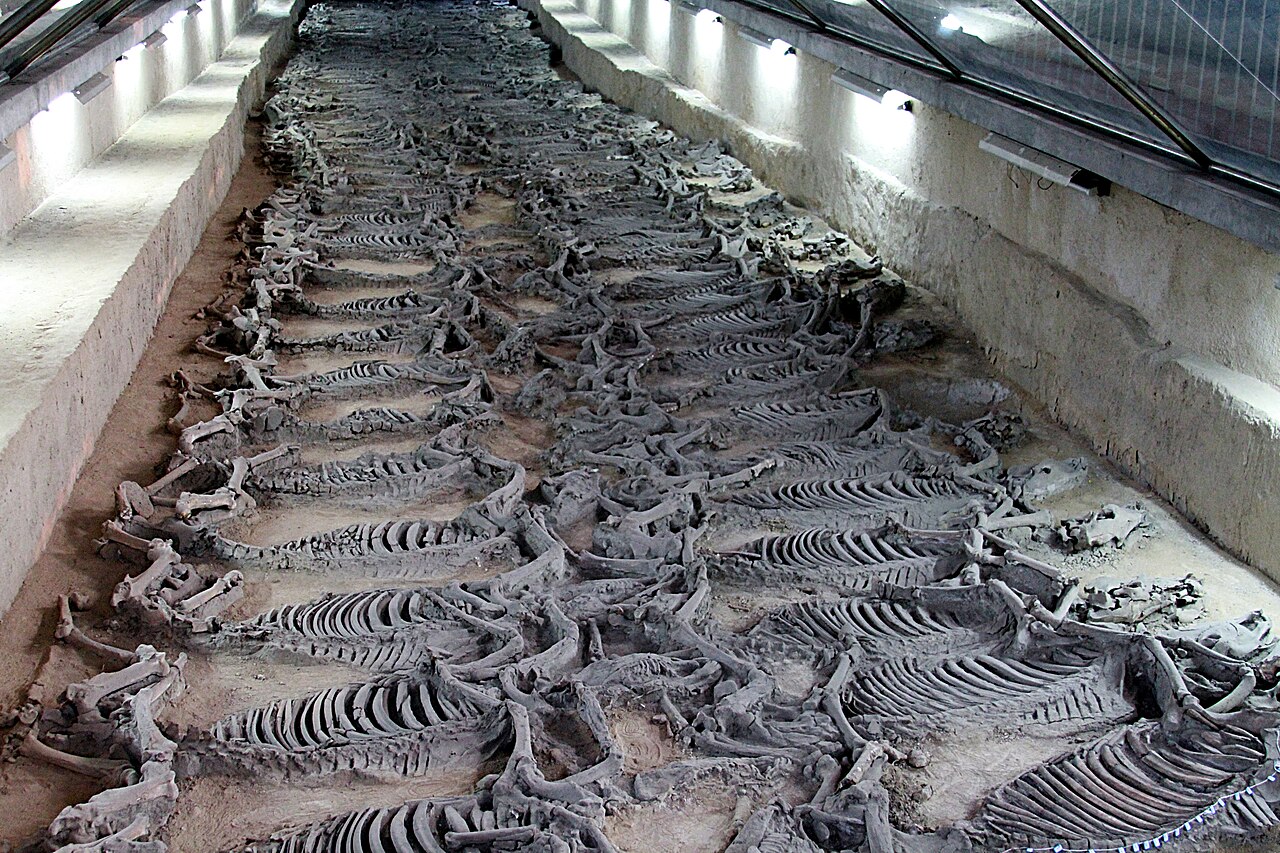
The horse pit is the most striking sight in Linzi. It lies in the northeast of the large city near Heyatou village and belongs to a tomb traditionally attributed to Duke Jing of Qi, who ruled from 547 to 490 BC. The pit wraps around three sides of the main tomb in a U shape about 215 metres long and almost five metres wide. The horses lie in two rows on their sides, heads facing outward. A 2026 report says the full pit is estimated to hold more than 600 horses, around six years old at death, making it the largest horse burial of the Eastern Zhou found in China.
After an upgrade, the Duke Jing Horse Burial Exhibition Hall reopened on 11 September 2026, together with a display of the No. 10 Warring States palace foundation in the small city. Both were free during the Qi Culture Festival that week. Regular hours and ticketing after the festival were not clear in the reports used for this page, so check before you go.
Ancient Chariot Museum
Outside the town centre, at Houli in Qiling subdistrict, the Ancient Chariot Museum was built over a Spring and Autumn chariot burial found during construction of the Qingdao to Yinchuan expressway. The museum opened in 1994, and part of it lies beneath the expressway bridge. One pit about 30 metres long held ten chariots and 32 horses. The wood has rotted away, leaving outlines in the soil with bronze fittings still in place. A second hall traces Chinese vehicles from early times to the Qing with nineteen reconstructed carts.
The museum's own price page lists 30 yuan, with free entry for seniors, minors, students and several other groups, though it notes the rules are written for Chinese citizens. Its posted hours read Tuesday to Thursday, 9:00 to 17:00, closed Mondays, which may be a typo for Tuesday to Sunday, so call ahead on the listed booking number.
Planning a Linzi day
Linzi is east of central Zibo, a taxi or ride-hailing ride from Zibo station. A practical order is the Qi Culture Museum and Football Museum in the morning, a taxi to the horse pit for midday, then the chariot museum if energy remains. Each site is spread out, so do not plan on walking between them. Avoid Mondays.
Before you go
- Carry your passport for free museum entry.
- Avoid Mondays, when the museums close.
- Check the horse pit hall's post-festival hours.
- Pair Linzi with Zhoucun on a two-day stay.
- See the Zibo travel guide for evenings and food.
Frequently asked questions
Is the Qi Culture Museum free?
Yes, the core galleries and the Football Museum are free. Special exhibitions may charge.
Did football really start in Linzi?
FIFA recognised cuju in Linzi as an early form of football in 2004. The modern game developed separately in England.
How long should I spend in Linzi?
A full day covers the main museum, the horse pit and the chariot museum.
Can I visit Linzi and Zhoucun in one day?
It is possible but rushed. They are on opposite sides of the city.
Sources
Facts in this article were checked against the following sources, retrieved 17 October 2026.
- Qi Culture Museum, visitor information
- Qi Culture Museum, Ancient Chariot Museum ticket page
- Report on the reopened Duke Jing horse pit hall, September 2026
- China Daily, FIFA hails China as football birthplace, July 2004
- Linzi Qi state ancient city, Chinese Wikipedia
- Ancient Chariot Museum, Chinese Wikipedia
- Zibo travel guide on this site
Photos are from Wikimedia Commons under the licences shown in each caption.