Zhoucun Ancient Market Town, the Old Merchant Streets of Zibo
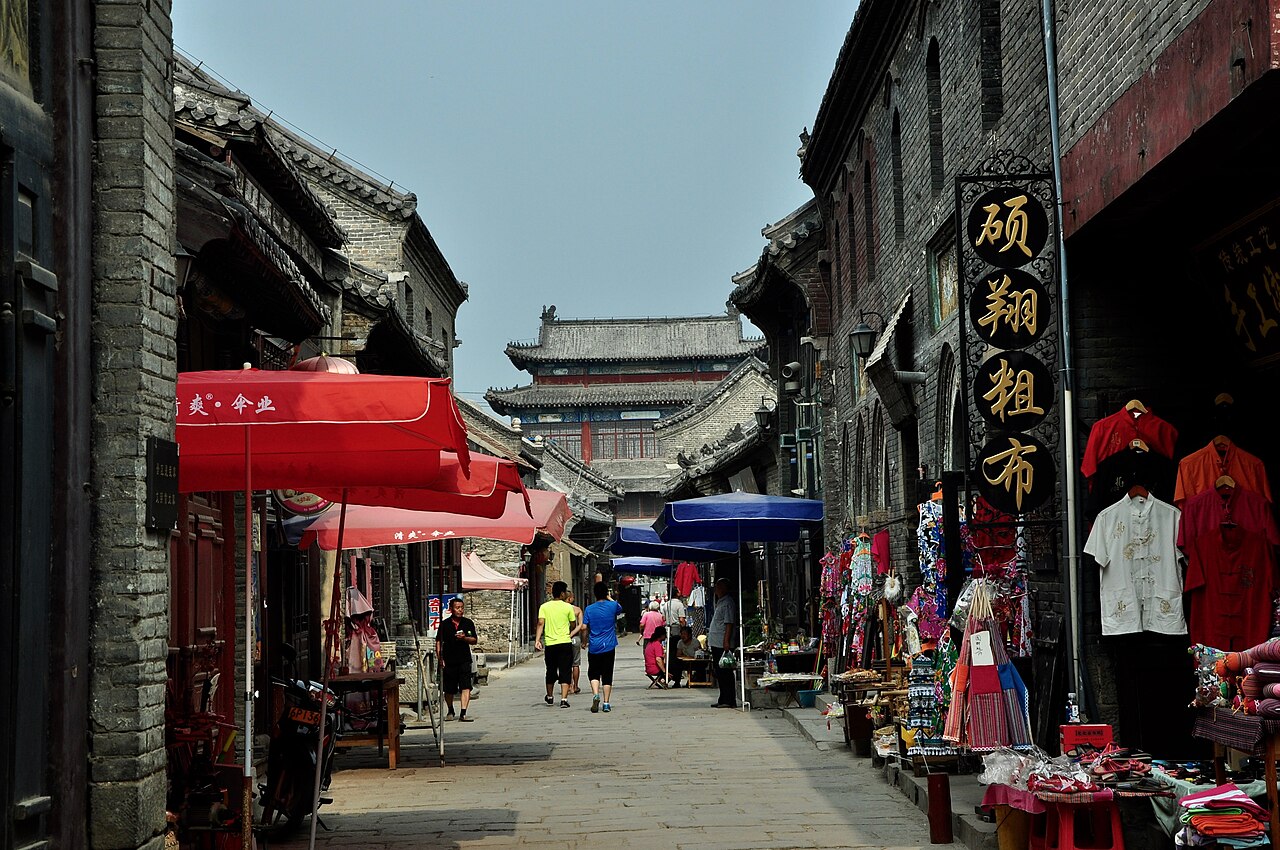
Zhoucun, a district on the western side of Zibo, keeps one of the best-preserved Ming and Qing commercial quarters in northern China. Its old main street and the lanes around it hold shopfronts, banks, dye works and merchant houses that once served a busy inland trading town. The streets are free to walk, a handful of halls charge, and the famous thin sesame shaobing biscuit was born here. The Zibo guide names Zhoucun as the steadiest reason to stop in the city, ahead of the barbecue craze.
A dry port without a river
Zhoucun had no great river or canal, yet it became a trading hub for silk, cloth and other goods moving across Shandong. That earned it the nickname of a dry port, and the scenic area's own material places it alongside Foshan, Jingdezhen and Zhuxian town as famous commercial towns of the late imperial period. Locals also called it Golden Zhoucun. The scenic area says the Qianlong Emperor passed through on a southern tour in 1775 and named it the first village under heaven, a phrase now printed everywhere in the town.
The best-known story is about taxes. In 1654, the eleventh year of the Shunzhi reign, the official Li Huaxi, a Zhoucun native, set up a stele at the north end of the main street carved with the words No Tax Today. English Wikipedia retells the local version of the tale, in which Li persuaded the court to grant the town relief from levies and then made the relief permanent by carving it in stone. Whatever the details, the stele became a symbol of the merchant town, and promoters now describe Zhoucun as China's first free-trade zone.
What to look for on the streets
The scenic area says around 50,000 square metres of Ming and Qing buildings survive, and calls the district a living museum of old commercial architecture. Start at the north gate on Xinjian Middle Road, find the No Tax Today stele near the north end of the main street, then walk south.
Points named on the official site include the Lu merchant culture hall, with five galleries on Shandong traders, and the original shop of Ruifuxiang, the silk and cloth firm founded on this street. The scenic area says the first national flag raised at Tiananmen in 1949 was made by Ruifuxiang. The Dyehouse was a filming location for the television drama Da Ran Fang and shows how cloth was woven and dyed. The Yang family compound appeared in the dramas Han Ma Tou and Chuang Guan Dong. The Kuixing Pavilion joins three small temples of Confucian, Buddhist and Daoist tradition. Some of the filming for Zhang Yimou's film To Live also took place in the district. Qianmo Bookstore, opened in 2014, is a popular stop for a coffee and a browse.
Zhoucun shaobing
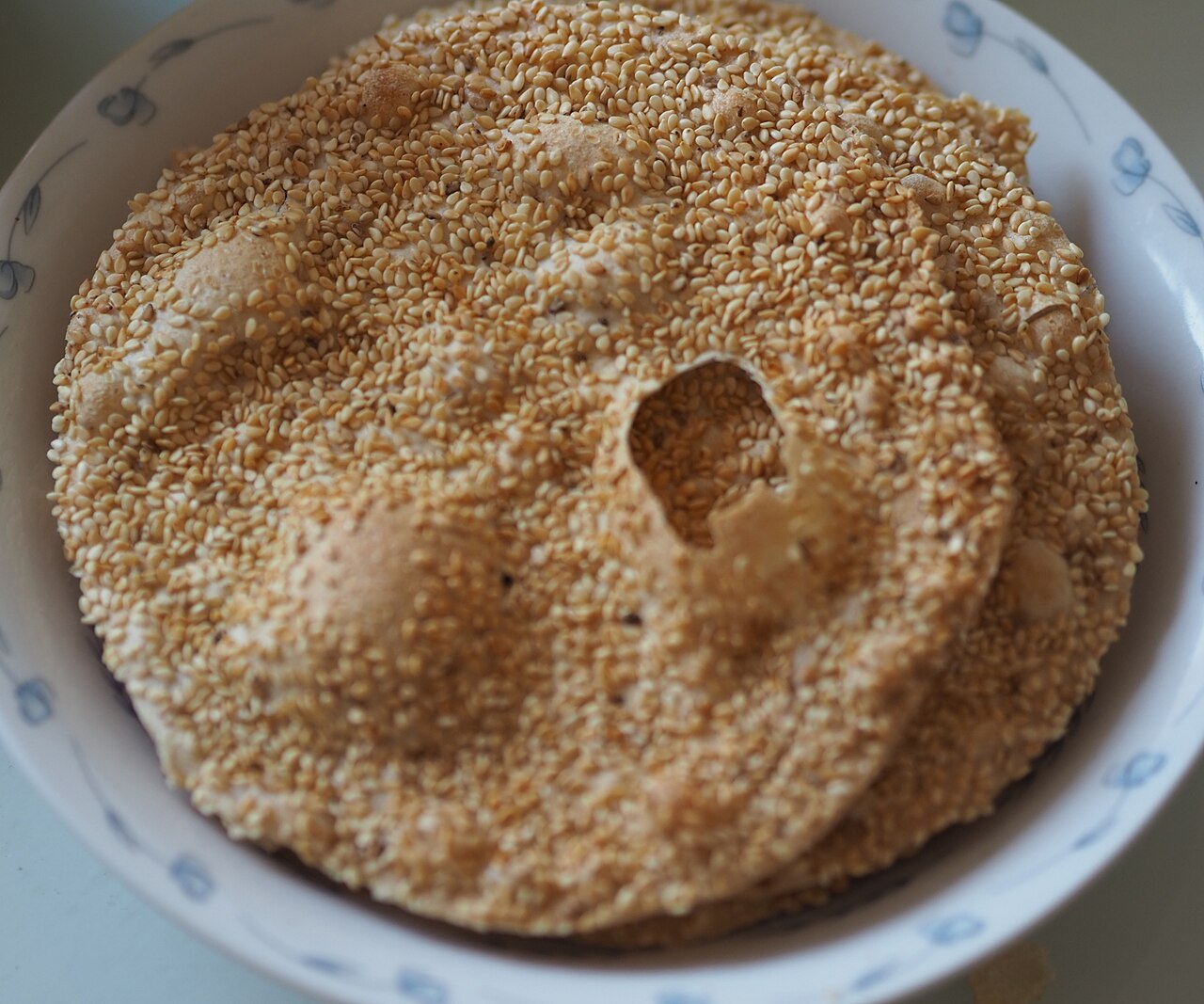
Zhoucun shaobing is a crisp, paper-thin round of dough covered in sesame seeds and baked against the wall of a clay oven. The town describes it as round like an autumn moon and thin as an autumn leaf, and its making is listed as intangible heritage. The Zhoucun Shaobing Museum on the main street bakes them on site, and the scenic area calls it China's first museum dedicated to an intangible-heritage local snack. Boxes travel well, which makes them the obvious souvenir.
Tickets and hours
According to the scenic area's own ticket page, the streets and most attractions are free. Since March 2023 only five halls still charge. They are the folk customs hall, the Zhuangyuan mansion, the exchange bank hall, the Dyehouse and a photo studio, with a combined ticket of 50 yuan and half price for students. Seniors, small children and several other groups enter free. The streets are open all day. Paid halls follow a timetable that Zibo Bendibao gave in August 2026 as 8:30 to 17:30 in summer and 8:30 to 17:00 in winter. Check the day's notice for changes.
Getting there and how long to stay
Zhoucun lies west of central Zibo, a drive of roughly half an hour or more depending on traffic. The district has its own railway stops, though most travellers arrive at Zibo station and take a taxi or ride-hailing car to the north gate. Allow half a day. Two to three hours covers the main street, the stele and a couple of halls, and more time goes easily on side lanes and snacks.
The city guide suggests Zhoucun by daylight and the barbecue streets in the evening. For a second Zibo day, the Linzi Qi culture sites east of the city add the deeper history of the ancient state of Qi.
Before you go
- Decide whether the combined ticket is worth it, since the streets themselves are free.
- Arrive in the morning on weekends to avoid the busiest hours.
- Buy shaobing at the museum or a busy shop, and keep them flat in your bag.
- Combine Zhoucun with Linzi on a two-day stay.
- See the Zibo travel guide for barbecue tips.
Frequently asked questions
Is Zhoucun ancient town free?
The streets are free. Five halls charge, with a combined ticket reported at 50 yuan.
How long do I need?
Half a day suits most visitors.
What is the No Tax Today stele?
A stele from 1654 at the north end of the main street, linked to a local story about tax relief for merchants.
Can I combine Zhoucun with Zibo barbecue?
Yes. See the town by day and head to the barbecue streets in the evening.
Sources
Facts in this article were checked against the following sources, retrieved 17 October 2026.
- Zhoucun Ancient Commercial Town official site, ticket information
- Zhoucun Ancient Commercial Town official site, sights
- Zibo Bendibao, Zhoucun opening hours, August 2026
- Zhoucun District, English Wikipedia
- Zibo travel guide on this site
Photos are from Wikimedia Commons under the licences shown in each caption.