Qingguo Lane
Qingguo Lane is the best preserved old street in central Changzhou, a lane of grey brick walls and courtyard houses that runs east to west along the north bank of the Nanshi River. The river was once part of the Grand Canal through the city, and the lane grew rich on canal trade. Then it became famous for its people. So many scholars, officials and modern public figures came from these few hundred metres that Changzhou calls it the first lane of Jiangnan notables.
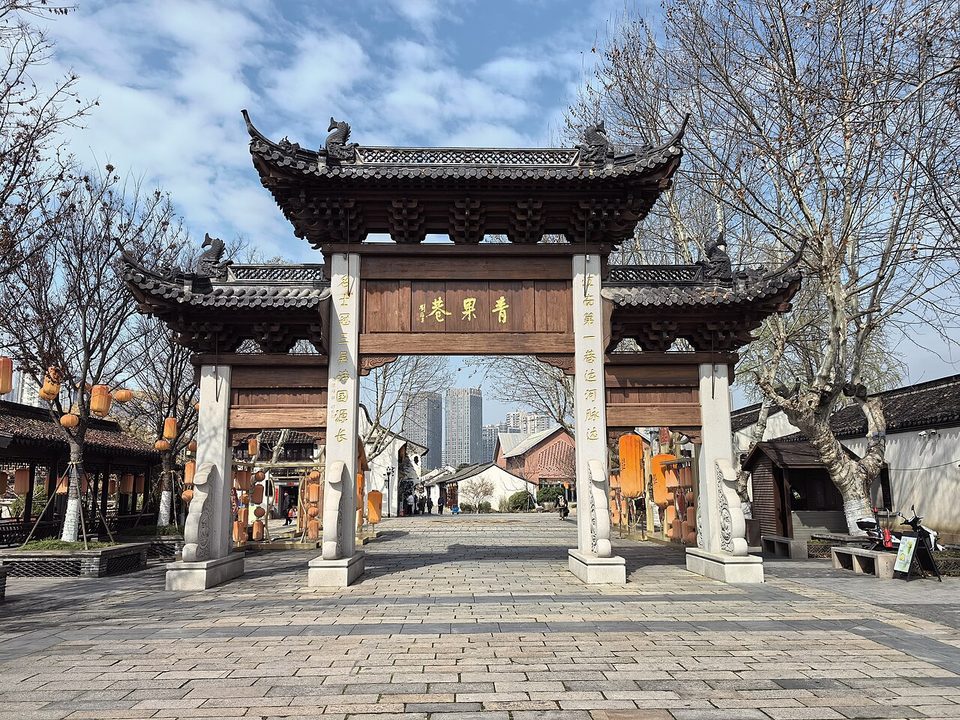
The thousand fruit lane
The name comes from the fruit trade. Boats on this stretch of the canal unloaded fruit along the bank, and the lane became a market known as Qianguo Xiang, the lane of a thousand fruits. A Qing rhapsody on Changzhou by Chu Bangqing describes entering the thousand fruit lane and finding peaches, plums, apricots and damsons laid out in every kind. In the Changzhou dialect qian and qing sound alike, and the lane ended up as Qingguo, the lane of green fruit. Changzhou Bendibao dates the lane to before 1581, in the Wanli reign of the Ming.
The houses stand close to the water. The old description of the place is a lane threaded through the town with families pillowed on the river, the classic Jiangnan picture of homes backing onto a canal with steps down to the water. Jiangsu named the Qingguo Lane historic and cultural district in 2014. Chinese Wikipedia gives the protected area as 8.2 hectares.
The people of the lane
Changzhou counts close to a hundred successful imperial examination candidates from the lane and nearly half of the city's surviving residences of famous people. A handful of names explain why visitors come.
Tang Shunzhi, known by his literary name Tang Jingchuan, was a Ming scholar, essayist and official. His residence is a provincial protected site made up of several halls, among them Zhenhe Hall, Junxing Hall, Lihe Hall and Songjian Hall.
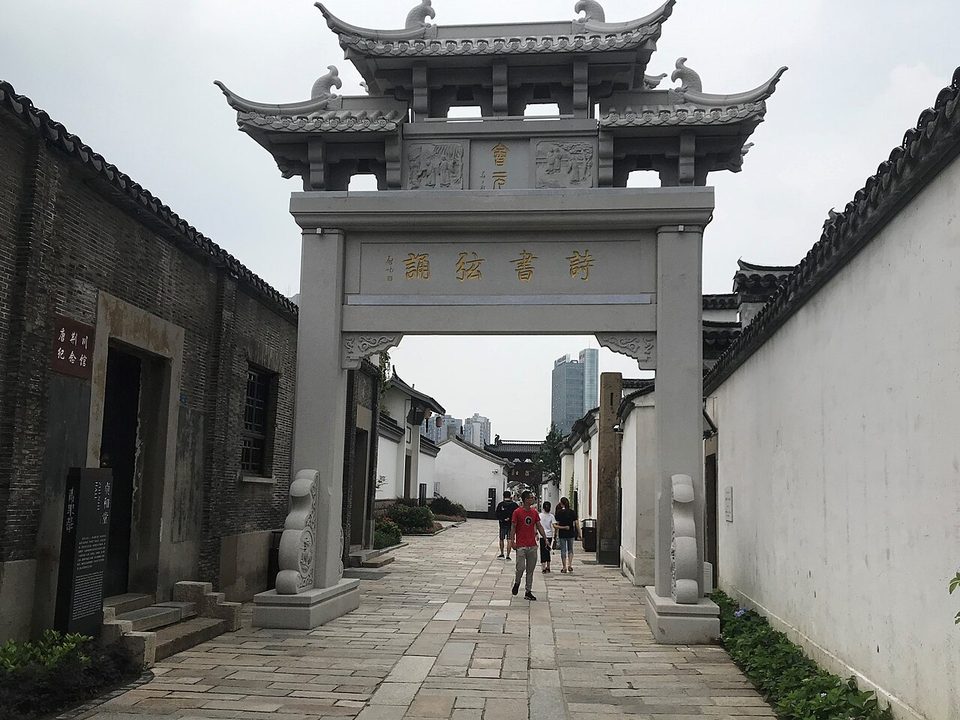
Zhou Youguang was born in 1906 in Lihe Hall, part of the Tang residence. Trained as an economist, he became a linguist and is credited as the father of Hanyu Pinyin, the romanisation adopted by China in 1958 and by the International Organization for Standardization in 1982. He lived to 111. A library in his name now stands in the lane.
Zhao Yuanren, the linguist, composer and pioneer of Chinese dialect study, has a former residence here. Sheng Xuanhuai, the late Qing industrialist who founded banks and universities, has a residence nearby on Damayuan Lane. The lawyer and politician Shi Liang has a former residence on Heping North Road at the lane's edge.
The most protected building of all is Bagui Hall with the Tianxiang Lou, at No. 82, the birthplace of Qu Qiubai. Qu was a writer, translator and for a time in the late 1920s and early 1930s the leader of the Chinese Communist Party, and he was executed by the Nationalist government in 1935. The house is a major national protected site. It also forms the last courtyard of the former residence of the industrialist Liu Guojun.
Walking the lane
Start at the east gate near Nan Dajie and walk west with the river on your left. The lane holds a mix of museums, cafes, restaurants and craft shops, and the side alleys lead to the halls of the Tang residence and the old opera stages. Two Qing theatre stages survive in the district, one at the former Yanghu County City God Temple and one in a family house on Dongxiatang. The Qingguo storytelling house stages long-form storytelling, and the Banyuan garden has hosted an immersive Xi opera show called Pearl Pagoda, so ask locally what is on that week.
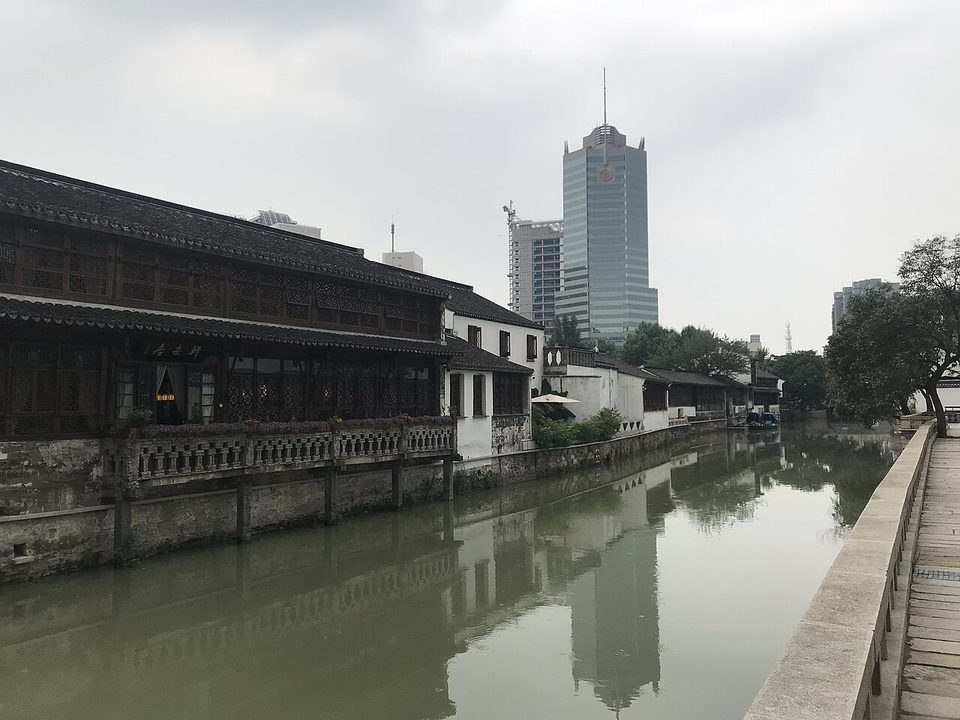
Cross to the south bank of the Nanshi River for the view back at the houses on the water, the best photo of the district. Evening is the lively time, when the shops and restaurants stay open late. A morning visit is better for the museums and the quiet courtyards.
Hours
The lane is open 24 hours and free. Changzhou Bendibao lists shop hours of 10:00 to 21:00 from Sunday to Thursday and 10:00 to 21:30 on Friday and Saturday. The museums in the lane, including the Qingguo Lane Cultural Memory Hall, the Zhou Youguang Library, the Shi Liang former residence, the Changzhou Democratic League history hall and the Tang Jingchuan memorial hall, are listed at 9:30 to 17:30 and close on Mondays except public holidays. Individual halls can close for maintenance or special events, so check the day's notice at the door.
Getting there and pairing it
Changzhou Metro Line 1 stops at Tongjiqiao station, and Bendibao gives exit 2 as the closest. Bendibao also lists bus routes 302, 68 and 219. From Tianning Temple it is a short taxi ride west, and the two together make an easy day, with the temple in the morning and the lane into the evening.
Frequently asked questions
Is Qingguo Lane free?
Yes. The lane is free and open around the clock. Some performances charge.
Which day should I avoid?
Monday, when most of the museum halls are closed.
How long does it take?
An hour for a walk through, two to three hours with the museums.
Sources
Facts in this article were checked against the following sources, retrieved 21 October 2026.
- 青果巷, Chinese Wikipedia
- Changzhou Bendibao, Qingguo Lane opening hours
- Zhou Youguang, English Wikipedia
- Yuen Ren Chao, English Wikipedia
- Qu Qiubai, English Wikipedia
- Sheng Xuanhuai, English Wikipedia
- Changzhou travel guide on this site
Photos are from Wikimedia Commons under the licences shown in each caption.