Zhenjiang Travel Guide: Jinshan, Vinegar, and the River Hills (with a Two-Day Itinerary)
Zhenjiang’s planning problem is that three famous “hills” compete for the same short stay: Jinshan (temple island-turned-hill by the city), Jiaoshan (calligraphy and river monastery vibe), and Beigu (Three Kingdoms cliff lore). Most visitors also come for Zhenjiang fragrant vinegar as a culinary souvenir. Pick Jinshan as the hero half-day, then choose one more hill; stacking all three plus a vinegar museum sprint usually means tired stairs and thin memory.
Planning Jinshan first (then one more hill)
Jinshan Temple is the postcard and the crowd magnet. Cihu Pagoda, halls, and the White Snake legend tourism layer sit in one compact paid area. Do this while legs are fresh.
Jiaoshan vs Beigu is the main tradeoff. Jiaoshan leans monastery, forest, and cliff calligraphy culture across the river logic; Beigu is the shorter Three Kingdoms overlook story. On a two-day plan, pick one deep, not both rushed.
Vinegar is a tasting and factory-shop theme. Pair it with lunch downtown or a short museum stop; it does not replace a hill morning.
Stay near the river/Jinshan side for walking, or near the high-speed station if Nanjing and Yangzhou are next.
When to come to Zhenjiang
Jiangsu riverside climate: hot humid summers, damp chilly winters, best temple walking in April–May and October–November. Summer heat on stone stairs is punishing by midday; winter mist can look atmospheric on the river yet make pagoda photos dull. Avoid national-holiday temple crush if you want hall space. Bring rain cover in plum-rain weeks.
How to get in and where to stay
Zhenjiang sits on the Shanghai–Nanjing high-speed corridor with convenient station options; buses and taxis cover Jinshan quickly. Ferries or bridges factor into Jiaoshan plans depending on current access rules. Read which Zhenjiang station your ticket names.
Stay downtown/Jinshan for temple mornings; station hotels only for same-day transfers to Nanjing or Yangzhou.
Places worth visiting
Jinshan half-day: temple visit order
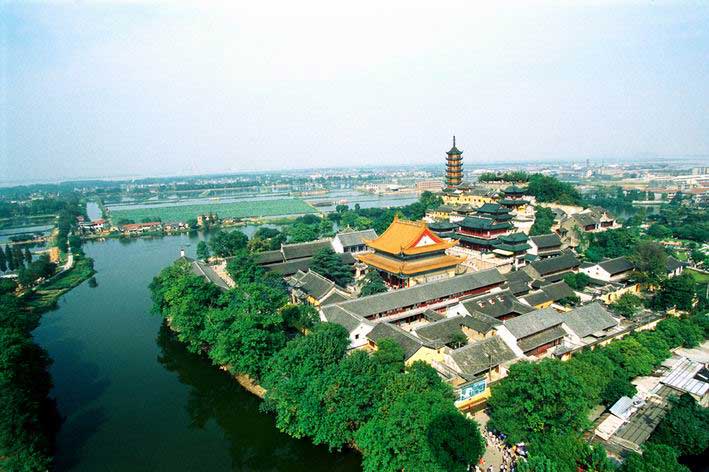
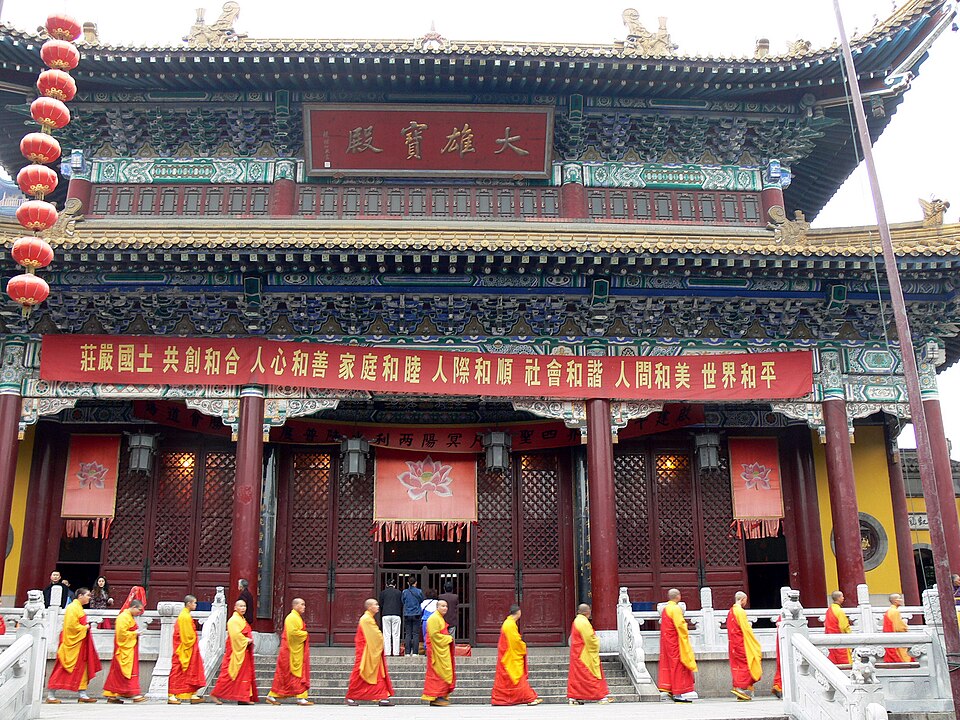
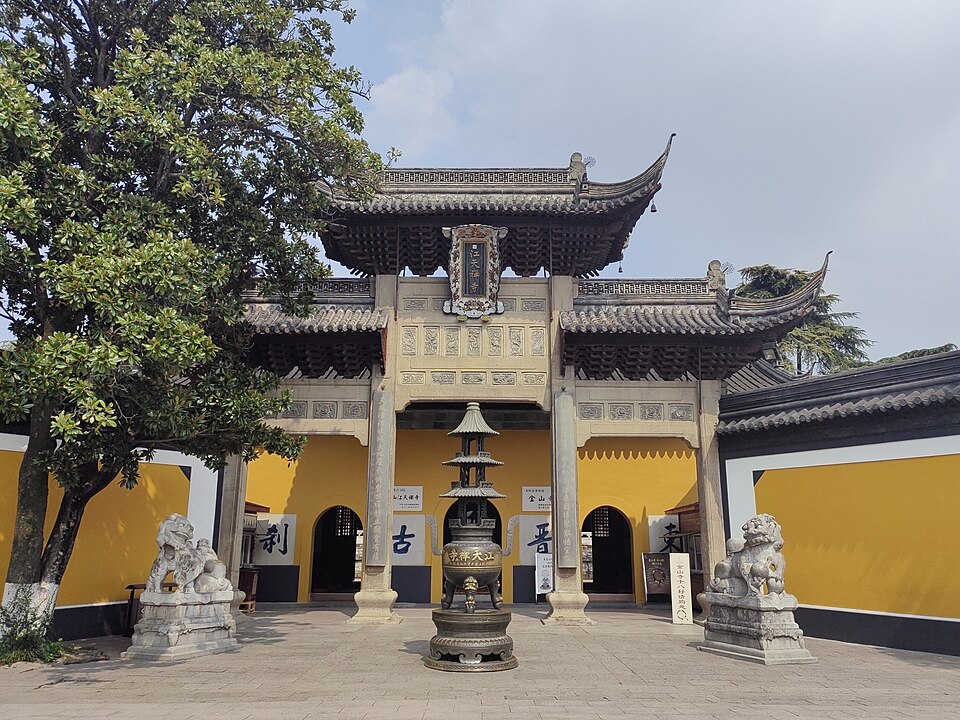
Enter for the main halls, work toward Cihu Pagoda views, and leave time for the legend-tourism exhibits without treating them as primary history class. Jinshan Temple is Zhenjiang’s best-known Buddhist complex, long tied to river traffic and folklore. Stairs are continuous; wear decent shoes. Tickets and open halls follow official notice. Lunch downtown afterward; do not race to Jiaoshan the same morning unless a car is already waiting. History, Cishou Pagoda and the White Snake sites are on the Jinshan Temple page.
Jiaoshan vs Beigu
| Jiaoshan | Beigu Hill | |
|---|---|---|
| Role | Monastery + forest + cliff inscriptions | Three Kingdoms overlook / shorter hill |
| Time | Half-day with access buffer | 1–2 hours |
| Choose when | You want quieter temple-forest pace | You want story viewpoint after Jinshan |
Pick based on mood: calligraphy-and-woods versus cliff narrative. Both are “also famous”; neither replaces Jinshan for first-timers. The Jiaoshan page covers the ferry, the stele forest with the Yiheming crane inscription and seasonal ticket prices.
Who should skip a third hill
Skip forcing Jinshan + Jiaoshan + Beigu into one calendar day if stairs already hurt, if vinegar shopping and river walks matter more, or if you arrived afternoon-only. Keep a strict two-hill maximum for comfort. The third hill is ego completion, not better memory.
Also on the map
Xijin Ferry historic district. Atmospheric lanes, the Yuan-era Zhaoguan pagoda over the street and the old British consulate hill; good evening walk when open and lively.
Vinegar culture displays / brand shops. Taste before you commit bottles to luggage.
Riverfront parks. Sunset filler after temples.
Eating in Zhenjiang
Zhenjiang fragrant vinegar is the edible emblem: try it on local dishes rather than only as a gift bottle. River-town cooking includes noodles, pot dishes, and Jiangsu sweetness-savory balances. Follow busy lunch spots near Jinshan or Xijin rather than empty hotel restaurants. If you continue to Yangzhou, leave room for that city’s breakfast culture later.
How to arrange the route
Two days fit Jinshan, one other hill, vinegar, and Xijin walking.
Day one: Jinshan Temple morning; Xijin or vinegar afternoon; river evening.
Day two: Jiaoshan or Beigu; depart toward Nanjing or Yangzhou.
Day three: only as a buffer or if you insist on the third hill slowly.
Zhenjiang is a compact Jiangsu river stop between Nanjing’s capital weight and Yangzhou’s garden-and-breakfast fame.
What to cut if short on time
Drop in this order:
- Third hill (whichever you did not pick as #2).
- Vinegar museum depth, keep a tasting instead.
- Xijin evening, if trains force an early exit.
- Keep: Jinshan Temple. That is the minimum honest Zhenjiang.
With one day only: Jinshan + vinegar tasting, skip the second hill.
Things to confirm before you go
- Jinshan tickets and pagoda access rules follow official notice.
- Jiaoshan access (ferry/bridge/hours) before you leave downtown.
- Station name on high-speed tickets.
- Luggage space if buying vinegar bottles.
- Summer stair heat and winter damp.
Frequently asked questions
How many days for Zhenjiang?
One full day for Jinshan plus food; two days if you want Jiaoshan or Beigu properly. Rarely needs three.
Jinshan or Jiaoshan if I can only pick one temple?
Jinshan for the classic postcard and legend tourism; Jiaoshan for quieter monastery-forest mood. First visit: Jinshan.
Is Zhenjiang just a vinegar stop?
No. Vinegar is the souvenir story; Jinshan is the place story. Do both lightly rather than vinegar alone.
What must you eat?
Something dressed with Zhenjiang vinegar once, plus a busy local noodle or pot lunch near the temples.
Sources
The facts in this article were checked against the following Wikipedia and encyclopedia entries, retrieved September 18, 2026.
- Zhenjiang https://en.wikipedia.org/wiki/Zhenjiang
- Jinshan Temple https://en.wikipedia.org/wiki/Jinshan_Temple
- Zhenjiang vinegar https://en.wikipedia.org/wiki/Zhenjiang_vinegar
- Zhenjiang (Chinese) https://zh.wikipedia.org/wiki/镇江市
- Jinshan Temple (Chinese) https://zh.wikipedia.org/wiki/金山寺_(镇江)
Temple tickets change; this article does not invent yuan amounts.
All photos are from Wikimedia Commons, used under stated licenses; re-use requires attribution.
- zhenjiang-jinshan.jpg from File:Zhenjiang Jinshan.jpg, by China's Zhenjiang government, Public domain
- zhenjiang-jinshan-hall.jpg from File:Hall of Sakyamuni Zhenjiang Jinshan Temple.JPG, by Gisling, CC BY 3.0
- zhenjiang-jinshan-stairs.jpg from File:20240806 Jinshan Si.jpg, by Yumeto, CC BY-SA 4.0