The Iron Pagoda of Chongjue Temple, a Song Casting in Central Jining
In a quiet courtyard of the Jining Museum's old Guhuai Road branch stands a pagoda made of cast iron. It was cast in 1105 for Chongjue Temple, which locals have long called Tieta Si, the Iron Pagoda Temple. Next to it rises the Shengyuan Tower, a bell tower that still holds a Song iron bell weighing several tonnes. The pair make a compact stop in Jining city, best combined with Taibai Tower on the old canal. The Jining guide keeps Qufu as the main event, and this courtyard suits a spare morning or afternoon in the city.
A temple older than the pagoda
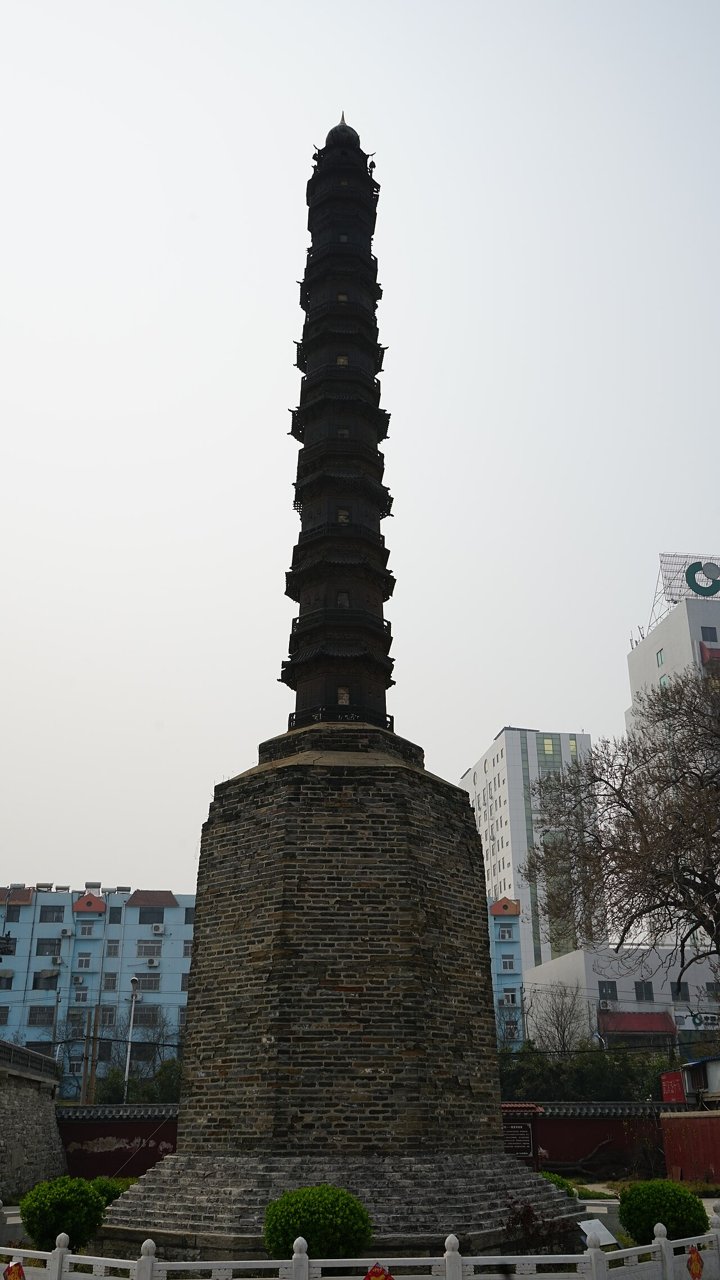
Chongjue Temple was founded in 560, in the first year of the Huangjian era of the Northern Qi, and was repaired many times over the following dynasties. The iron pagoda came much later, in 1105, the fourth year of the Chongning reign of the Northern Song. The pagoda was left without a finial at first. In 1581, under the Wanli Emperor of the Ming, two more storeys and a gilded finial were cast and added, completing the structure.
Sources count its storeys differently. Chinese Wikipedia describes an octagonal pagoda of nine storeys about 23.8 metres high on a brick octagonal base. The museum's own 2024 notice says the original had seven storeys, two more were added in 1581, and counts eleven levels in all. The difference comes from whether the base and the finial are counted, so do not worry if a sign gives a different number. The site became a national key protected monument in 1988, and Shandong's canal heritage plan lists Chongjue Temple as part of the old canal city of Jining.
The iron pagoda up close
Surviving cast-iron pagodas are uncommon in China, and the Jining example is one of the better known. It is built in the pavilion style, which imitates a multi-storey wooden tower with eaves on every level, here rendered in iron. The museum praises its casting work and detailed patterns. Walk all the way around it, since the panels and small figures differ from side to side and the light changes the detail through the day.
Shengyuan Tower and its bell
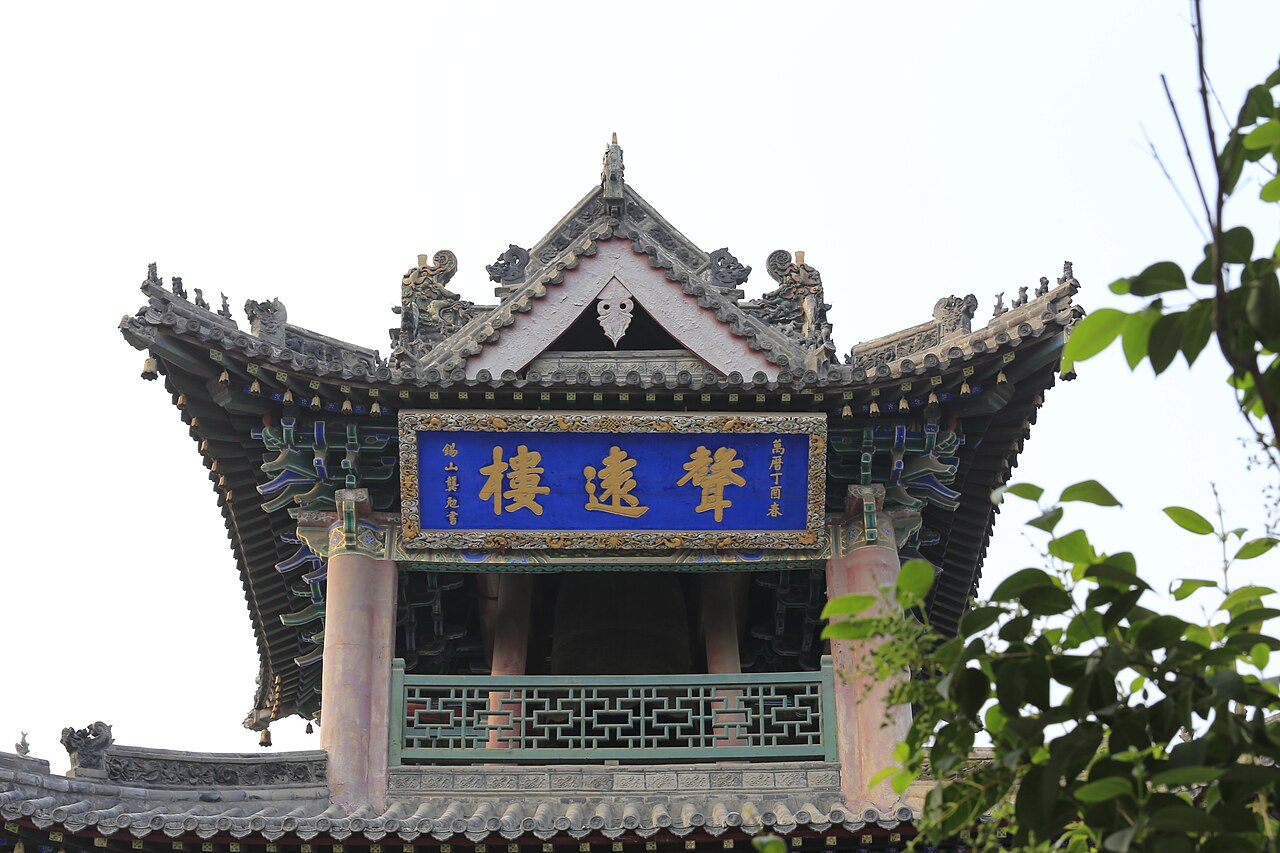
The Shengyuan Tower, whose name means the tower whose sound travels far, stands on a platform 4.5 metres high and reaches 16 metres in total. It is a square two-storey pavilion of brick and timber with a cross-shaped roof, held up by twelve square stone pillars. A Ming plaque with its name hangs on the upper floor, written by the Wanli-era official Gong Mian. The museum dates the tower to the middle of the Northern Song, with repairs through the Yuan, Ming and Qing and major restorations in 1978 and 2006.
Inside hangs a Song iron bell about 2.2 metres tall and weighing around 7.5 tonnes. The museum says its sound carried across the whole city, and that in Ming Jining, when the town had about 100,000 people and a steady flow of traders, the bell marked the opening and closing of the city gates. Other buildings in the courtyard include the main Buddha hall, a room of Han dynasty steles and a shrine to the Qing prince Sengge Rinchen.
Tickets and hours
In June 2024 work began on repairs to the pagoda's base and the Shengyuan Tower, and the museum announced that the iron pagoda courtyard reopened on 1 October 2024. Jining's municipal museum branches are reported as free to enter with ID. During the 2026 National Day holiday the Guhuai Road branch opened 9:00 to 18:00 with last entry at 17:30. An older museum timetable listed closure on Mondays except public holidays and a midday break. Since times have shifted with repairs and seasons, check the museum's notices or ask at the gate.
Getting there and how long to stay
The branch is on Guhuai Road in Rencheng District, close to Tietasi Street and a short taxi ride from Taibai Tower and the old canal. Do not confuse it with the larger new Jining Museum at the culture centre in Taibaihu New District, which is a separate visit. Allow forty-five minutes to an hour for the courtyard.
Before you go
- Avoid Mondays and check for a lunchtime closure.
- Bring a zoom lens or phone for detail on the upper storeys.
- Combine the courtyard with Taibai Tower for a half day.
- Keep Qufu's Confucius Temple for a separate full day.
- See the Jining travel guide for the wider plan.
Frequently asked questions
How old is the iron pagoda?
It was cast in 1105, with two storeys and the finial added in 1581.
Is it the same as the Jining Museum?
It stands in the courtyard of the museum's old Guhuai Road branch. The new main museum is elsewhere.
Can I climb the pagoda?
No. Visitors view it from the courtyard.
How long should I plan?
About an hour, longer if the main museum building has an exhibition open.
Sources
Facts in this article were checked against the following sources, retrieved 17 October 2026.
- Iron Pagoda of Chongjue Temple, Chinese Wikipedia
- Jining Museum, repair project for the pagoda base and Shengyuan Tower, June 2024
- Jining Museum, reopening of the iron pagoda courtyard, September 2024
- Jining Museum, the story of Shengyuan Tower, August 2024
- Iqilu, Jining venues open over National Day, October 2026
- Jining travel guide on this site
Photos are from Wikimedia Commons under the licences shown in each caption.