Mount Emei: Golden Summit, Baoguo Temple, Buses and Cable Cars
Mount Emei rises on the southwest rim of the Sichuan Basin in Emeishan City, a county-level city under Leshan. It is the highest of China's four sacred Buddhist mountains, and tradition makes it the seat of the bodhisattva Samantabhadra, Puxian in Chinese. The top of the range, Wanfo Ding, reaches 3,099 metres; the Golden Summit next to it, at 3,077 metres, is where almost every visitor ends up. Emei and the Leshan Giant Buddha share one World Heritage listing from 1996, and the mountain needs a full day at least, ideally with a night near the top.
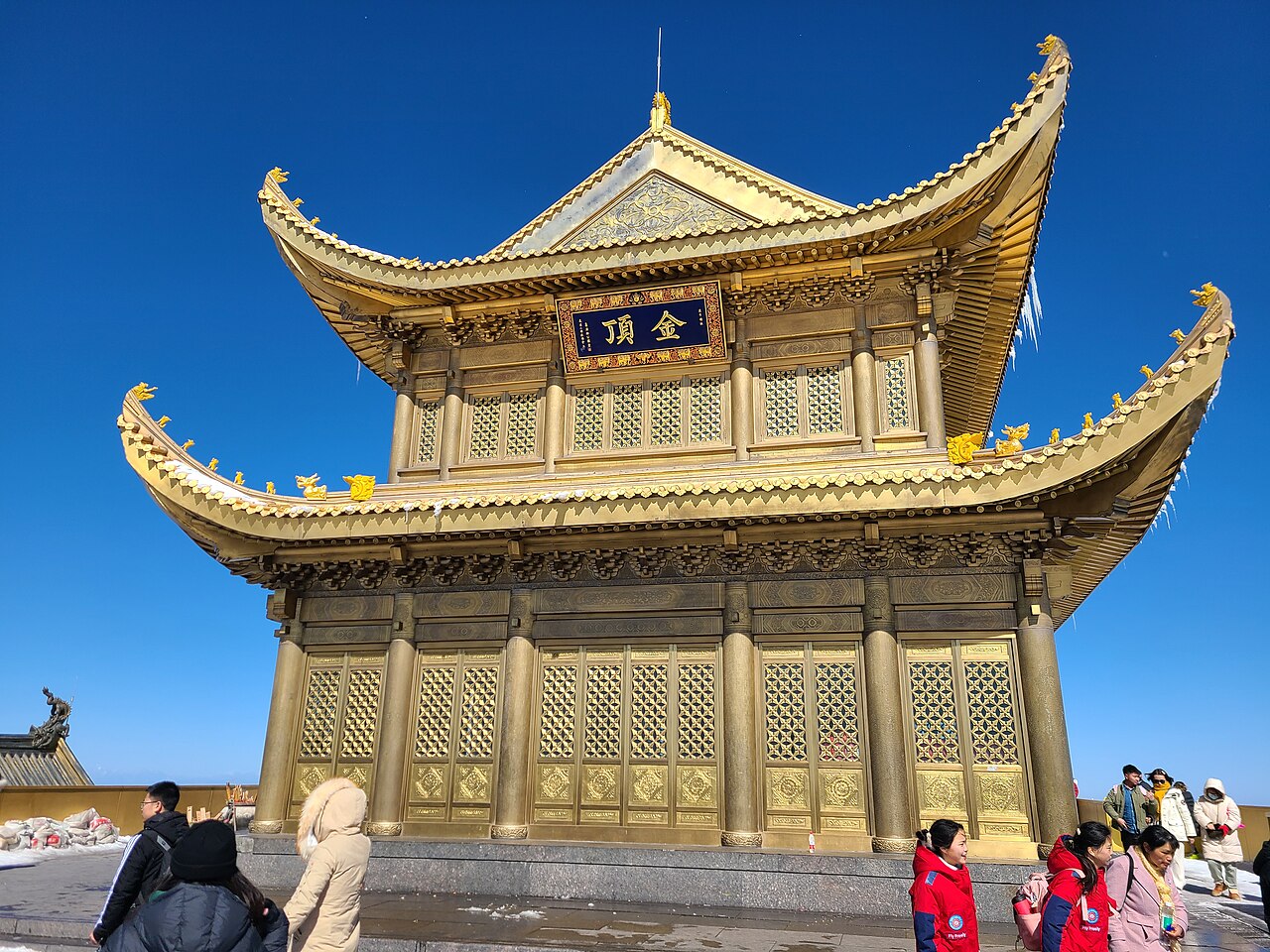
How the mountain is laid out
Think of Emei as a foot zone, a long bus ride and a summit zone. Baoguo Temple and the visitor centre are at the foot, close to Emeishan high-speed station. From there scenic-area buses climb for about two hours to Leidongping, the upper bus terminus. A stepped walk leads on from Leidongping to Jieyin Hall, where the Golden Summit cable car starts. The cable car or another stretch of steps brings you to the summit.
The old pilgrim path runs the whole way on foot. English Wikipedia puts the winding footpath at about 50 kilometres, which takes several days if you walk all of it. Most people walk only a section, often from Wannian Temple or Qingyin Pavilion in the lower half, and use buses and cable cars for the rest.
The Golden Summit
The summit monastery is Huazang Temple, founded in the Tang. Its roof was once covered in tin tiles, which is why the Yuan called it the Silver Summit. Today the skyline is dominated by a gilded statue of Samantabhadra with heads facing in ten directions, standing on elephants above the cliff edge.
People come for four sights the summit is known for. Sunrise and the sea of clouds are the common ones. Buddha's light, a rainbow halo that can appear around your own shadow on the cloud below, needs sun behind you and cloud in front. The sacred lamps, points of light seen over the valleys at night, are the rarest. Fog is frequent, and many visitors see none of the four. Staying overnight on or near the summit gives you an evening and a dawn, which roughly doubles the chance.
The summit is cold. Chinese Wikipedia says land above 2,000 metres is under ice and snow for about half the year, usually October to April, and English Wikipedia gives a July average of 11.6 °C at the top. Bring a warm layer even in summer, and grips for your shoes in winter.
Baoguo Temple and the lower mountain
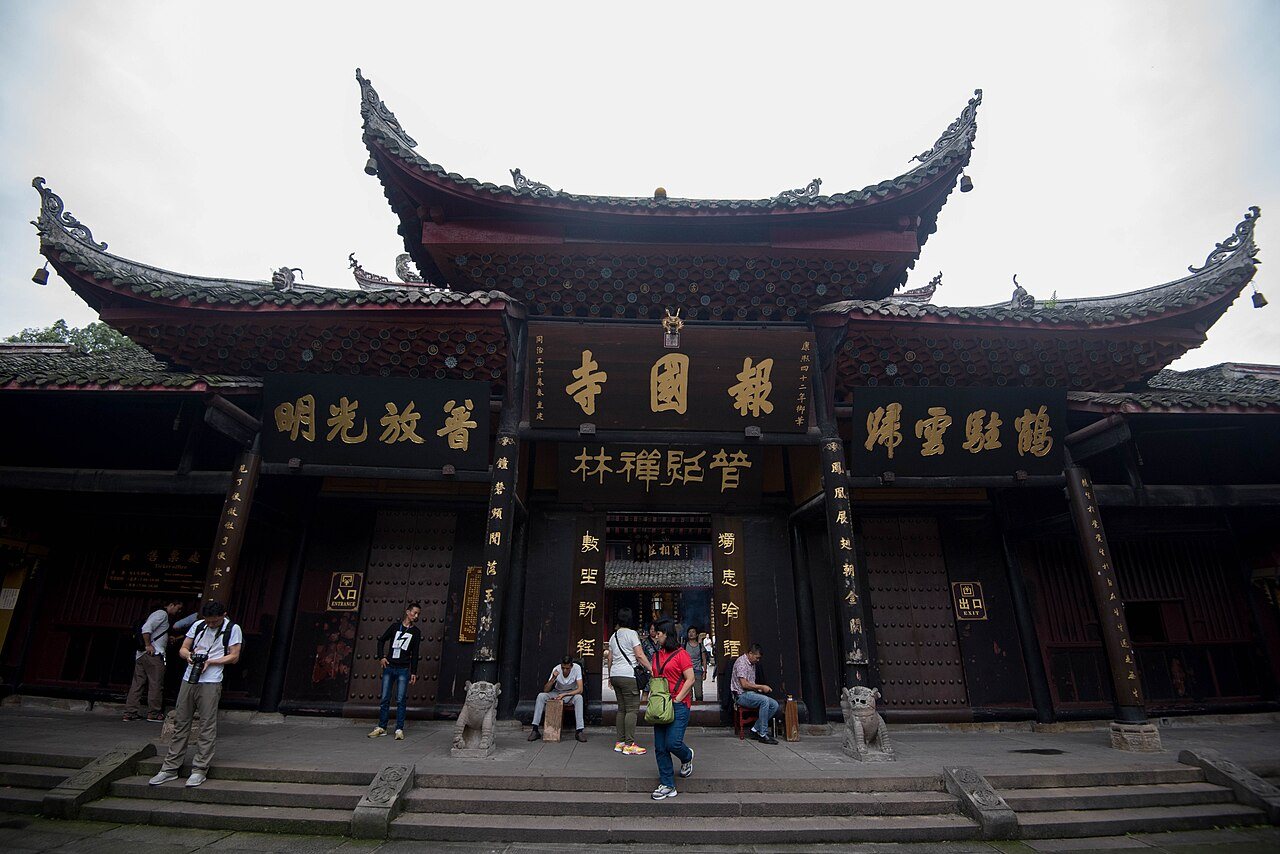
Baoguo Temple is the gateway. It was built in the Wanli reign of the Ming as Huizong Hall, a shrine where Buddhist, Daoist and Confucian figures were worshipped together, and the Kangxi emperor renamed it Baoguo, which means repaying the nation. It holds a Ming bronze Huayan pagoda covered with some 4,700 small Buddhas and the text of the Avatamsaka Sutra. The temple sits outside the main ticket line, so it works as an evening stop on arrival.
Qingyin Pavilion, at about 710 metres where the Black and White Dragon streams meet, is the classic lower-mountain stop, with a rock in the stream called the Ox Heart Stone and a pair of bridges called the Double Flying Bridges. Wannian Temple sits above it and has its own cable car. Fuhu Temple is the next temple up the old path from Baoguo. These lower temples are where the mountain's other reputation, for green and wet forest, makes most sense; English Wikipedia counts around a hundred plant species endemic to the area.
Macaques
Tibetan macaques live along the middle trails and are used to people. They take food, grab bags and can bite if provoked. Keep snacks and drinks inside a closed bag, do not hold food out, and walk on calmly if a group approaches. Chinese Wikipedia notes several designated monkey zones on the mountain, where you are most likely to meet them.
Tickets, buses and cable cars
The prices below come from 2026 listings of the official tariff and should be checked at booking. Mountain entry is 160 yuan in the long peak season, from 16 January to 14 December, and 110 yuan from 15 December to 15 January, with half-price tickets at 80 and 55 yuan. The 2026 concession list includes foreign nationals holding a valid passport among the half-price groups, with a second check at the gate, so ask about it when you book. Temple entry fees are separate, and the ticket is valid for two calendar days.
Buses are sold separately. A full round trip is listed at 90 yuan, and the one-way ride from Baoguo or Huangwan to Leidongping at 50 yuan. In peak season the Golden Summit cable car is 65 yuan up and 55 yuan down, and the Wannian cable car 65 yuan up and 45 yuan down; winter fares are much lower. The Golden Summit cable car is listed as starting 20 minutes before sunrise and closing at 18:00. Booking runs through the scenic area's official platform, ciotour.com, and its WeChat account, as well as major travel platforms. If you are not walking up, buy the bus ticket together with the entry ticket.
Opening hours are listed as 06:00 to 18:30 from 1 May to 7 October and 07:00 to 17:30 from 8 October to 30 April, and night walking is banned in the ice and snow season. Check the day's notice, because bus and cable car times shift on holidays.
Getting there
High-speed trains run from Chengdu to Emeishan station in about an hour, and some continue to Leshan. From Emeishan station, city bus 12 and a free shuttle have run to the Baoguo Temple visitor centre. From the Leshan Giant Buddha, bus 601 runs to Baoguo Temple, and a dedicated Buddha to Emei scenic line has also run from the Jiadingfang area. Confirm current routes locally.
How long and when
One long day is enough for the bus, the summit and the cable car, if you start early. Two days lets you sleep near the top for sunrise or walk a section of the lower mountain. Summer is much cooler at height than on the plain, and crowded; autumn is clearer; winter brings snow and ice on the summit and cheap cable car fares. Avoid the national holidays, when bus queues alone can take hours.
Things to confirm before you go
- Your entry ticket date, and whether you qualify for a half-price ticket.
- Bus and cable car times for the day, especially the last bus down from Leidongping.
- Accommodation on or near the summit if you want sunrise.
- Weather at the top, which can differ completely from the city.
Frequently asked questions
How much does Mount Emei cost in total?
In peak season, 160 yuan for entry, 90 yuan for the round-trip bus and 120 yuan for the Golden Summit cable car up and down comes to 370 yuan before temple fees and food. Walking parts of the route cuts the cable car cost.
Can I do Mount Emei in one day?
Yes, by bus and cable car to the Golden Summit and back. You will not see sunrise unless you stay overnight.
Is it safe with the monkeys?
Generally, if you keep food out of sight and do not feed them. Bites happen when people tease or hand-feed.
Should I visit the Leshan Giant Buddha first?
Many people do the Buddha in the morning and reach Baoguo Temple by evening, then climb the next day.
Sources
Facts in this article were checked against the following sources, retrieved 7 October 2026.
- 峨眉山, Chinese Wikipedia
- Mount Emei, English Wikipedia
- 报国寺 (峨眉山), Chinese Wikipedia
- Mount Emei ticket prices and concessions 2026, Chengdu Bendibao
- Mount Emei cable car fares and hours 2026, Chengdu Bendibao
- UNESCO World Heritage Centre, Mount Emei Scenic Area
Photos are from Wikimedia Commons under the licences shown in each caption.