Chengdu Travel Guide: Pandas, Three Kingdoms History and a Three-Day Route
Three days is the right length for a first visit to Chengdu: two in the city and one outside it. Day one starts at the giant panda base when it opens (07:30 from March to October), because the pandas are most active in the cool early morning. The rest of the city is Three Kingdoms history at the Wuhou Shrine, the poet Du Fu's garden, rebuilt old lanes at Kuanzhai Alley or Jinli, and a lot of very good, very spicy food. For the third day, take the train out to the Dujiangyan irrigation system, a working piece of engineering more than 2,000 years old. Little needs booking far ahead. Panda base tickets (55 yuan) can be booked up to 14 days ahead, and you should do that for weekends and holidays.
Planning: pandas, one old street and a day trip
Do the pandas first thing in the morning. In the afternoon the animals mostly sleep. Arrive at opening, stay two to three hours, and keep the rest of the day light: Kuanzhai Alley in the afternoon and hotpot in the evening.
Pick one old street. Kuanzhai Alley is a set of Qing dynasty lanes, rebuilt and reopened in 2008. Jinli is a lantern-lit street built in 2004 beside the Wuhou Shrine. They feel alike, so on a short trip most people do one. Choose Kuanzhai for a calmer afternoon with tea. Choose Jinli if you're visiting the shrine anyway and want to be there at night.
Decide on the day trip. Dujiangyan, Li Bing's irrigation system from around 256 BC, is the stronger single day out. Mount Qingcheng, the Daoist mountain listed with it by UNESCO, needs a separate day because of the climbing. On a two-week China trip, many people skip both and keep Chengdu to two days.
- Two days: pandas, Wuhou Shrine, one old street, food.
- Three days: add Dujiangyan.
- Four days: add Mount Qingcheng or the Du Fu Thatched Cottage at a slower pace.
When to come to Chengdu
Annual mean temperatures sit between about 15.2 and 16.6°C. Winters are milder than in northern China, and summers are less fierce than in Chongqing or Wuhan. Spring (March to May) and autumn (September to November) are the most comfortable. Summer is hot and humid, with frequent rain. Winter is grey and damp but rarely freezing. The city is famously overcast, so don't count on blue skies in any season.
Crowds are the bigger issue. During national holidays, especially the first week of October and the Spring Festival, the panda base and Kuanzhai Alley are extremely busy. Go on a weekday morning if you can.
How to get in and where to stay
Check which airport is on your ticket. Chengdu has two:
- Shuangliu (CTU), about 16 km south-west of the centre, on metro Lines 10, 19 and 30.
- Tianfu (TFU), in Jianyang about 51 km from the centre, opened on 27 June 2021 and served by metro Lines 18 and 19. Allow an hour or more by metro to the centre.
Many international flights now use Tianfu, so check before booking a hotel near the old airport.
By train, high-speed services from Xi'an, Chongqing and elsewhere mostly arrive at Chengdu East station, on metro Lines 2 and 7. Some trains use other stations. Check your ticket.
Where to stay. The area around Chunxi Road and Tianfu Square is central for shopping and the metro. Qingyang District, near Kuanzhai Alley and the Du Fu Thatched Cottage, is quieter, and the Wuhou area suits a stay close to the shrine and Jinli. Don't stay near the panda base or Tianfu airport for a city trip. The panda base is an early taxi or metro ride from the centre.
Places worth visiting
The Chengdu Panda Base: go at opening
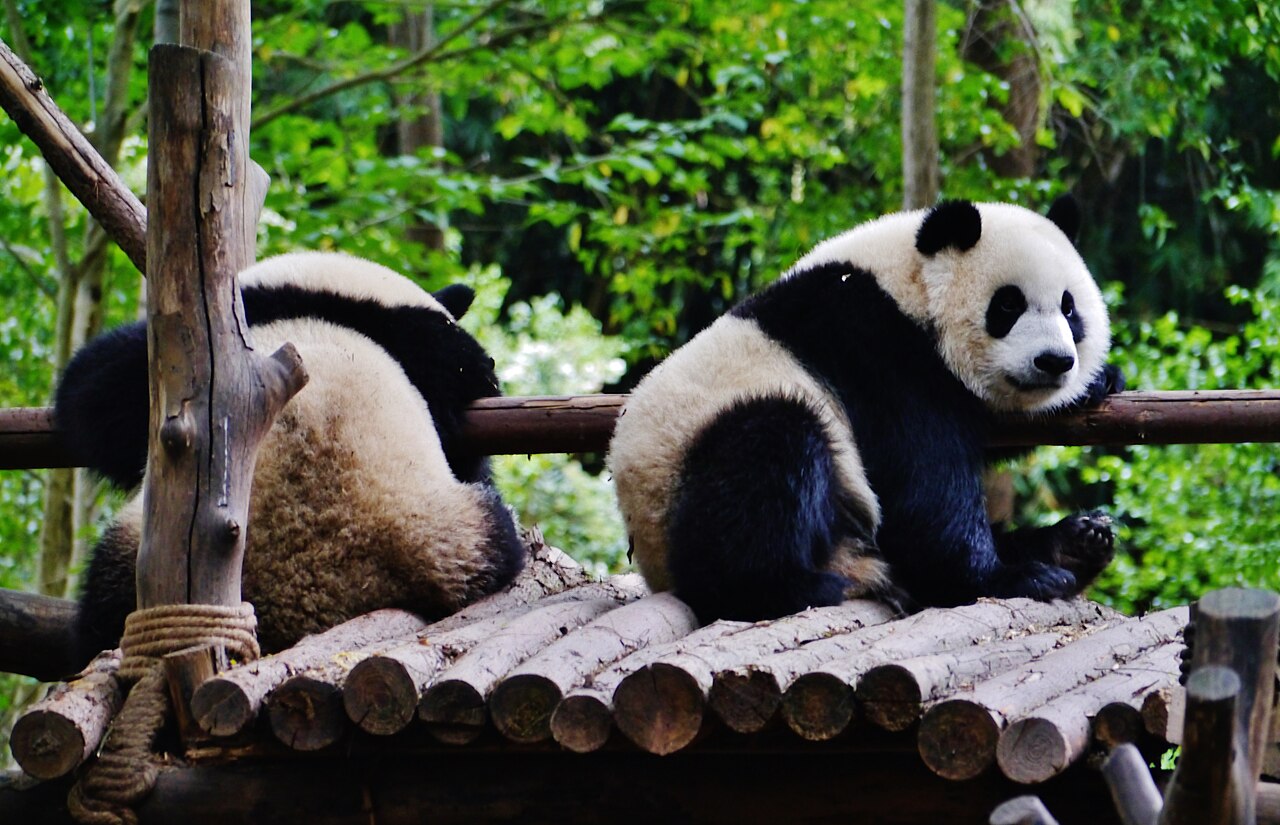
The Chengdu Research Base of Giant Panda Breeding opened in November 1987 with six rescued pandas. By the end of 2024 it was home to 260. The park covers 3.07 km² of bamboo and hills in the northern suburbs, with zones such as Adventure Valley, Infinite Hills and Treasure Lake. Tickets cost 55 yuan, opening is at 07:30 from March to October and 08:00 the rest of the year, and the cubs and adults are most active before about 10:00. By metro, take Line 3 to Junqu Zongyiyuan, Exit B, then bus 409 to the West Gate. Alternatively, go to Xiongmao Dadao and take bus 408 to the South Gate. A taxi is simpler at that hour. Gates, routes and the best order are on the Chengdu Panda Base page.
Kuanzhai Alley or Jinli?
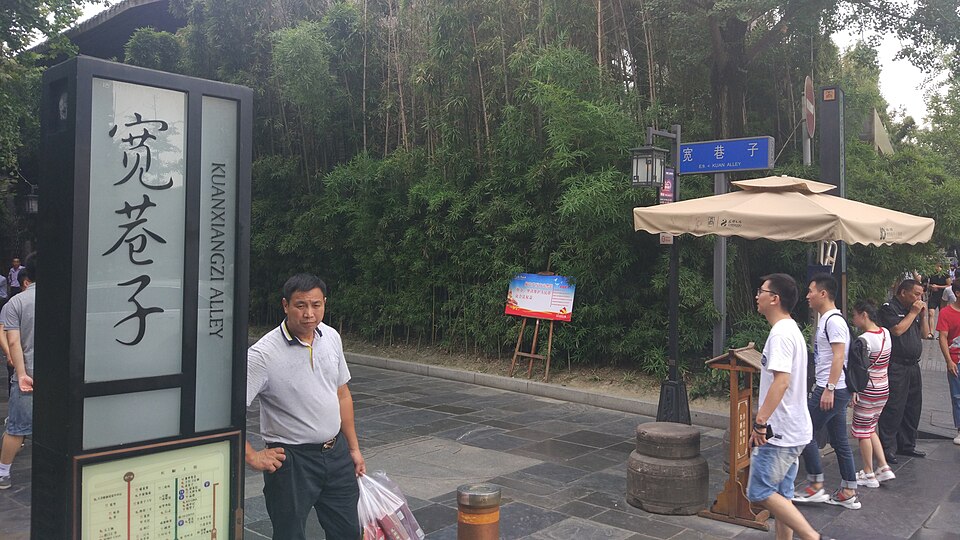
| Kuanzhai Alley | Jinli | |
|---|---|---|
| Origin | Qing Eight Banners housing; rebuilt 2007, reopened 14 June 2008 | New street built 2004 beside the Wuhou Shrine; waterside phase 2009 |
| Layout | Three parallel lanes: Kuan, Zhai and Jing | One street of about 550 m |
| Best time | Afternoon tea to early evening | After dusk, for the lanterns |
| Nearest metro | Kuanzhai Xiangzi (Line 4) | Wuhouci (Jinli) (Line 10) |
| Entry | Free | Free |
Both are reconstructions with tea houses, snacks and souvenirs at tourist prices. Kuanzhai has more real history in its lane plan and is calmer. Jinli is the better night scene and is next to a major sight. Walking notes for each are on the Kuanzhai Alley and Jinli pages.
The Wuhou Shrine
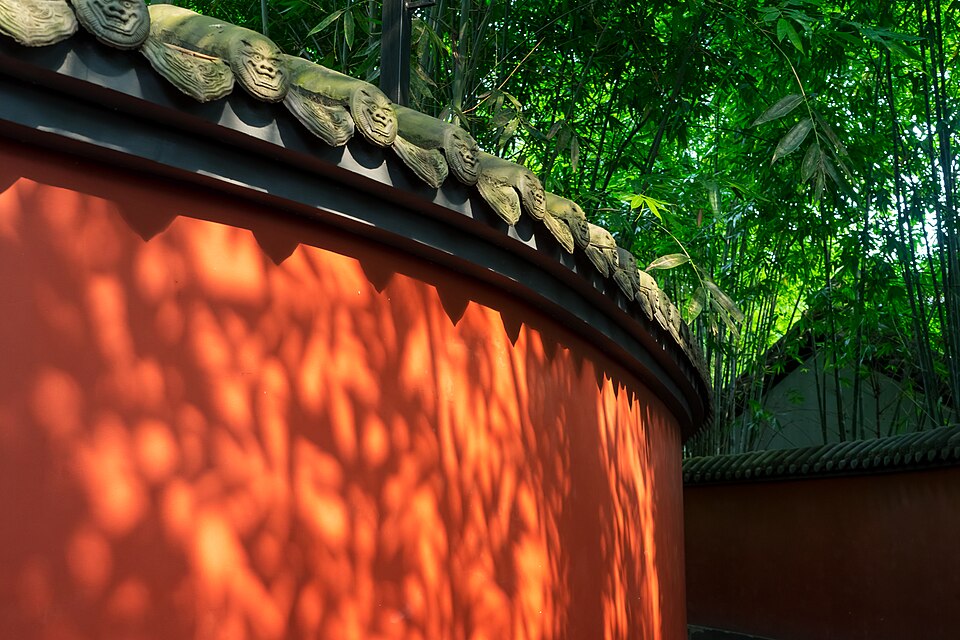
The shrine honours Zhuge Liang, the Three Kingdoms strategist, alongside the temple and tomb of Liu Bei, the emperor he served. It is unusual in China to see a ruler and his minister honoured together like this. Most of the halls date from a 1672 rebuilding under the Kangxi Emperor, and the site has been a museum since 1984. Tickets cost 50 yuan, the shrine opens 09:00 to 18:00 with last entry at 17:00, and it is three minutes from Wuhouci (Jinli) station on Line 10. Its red-walled bamboo lane is the most photographed corner in Chengdu. Leave through Jinli as the lanterns come on. See the Wuhou Shrine page for the hall-by-hall route.
Jinli after dark
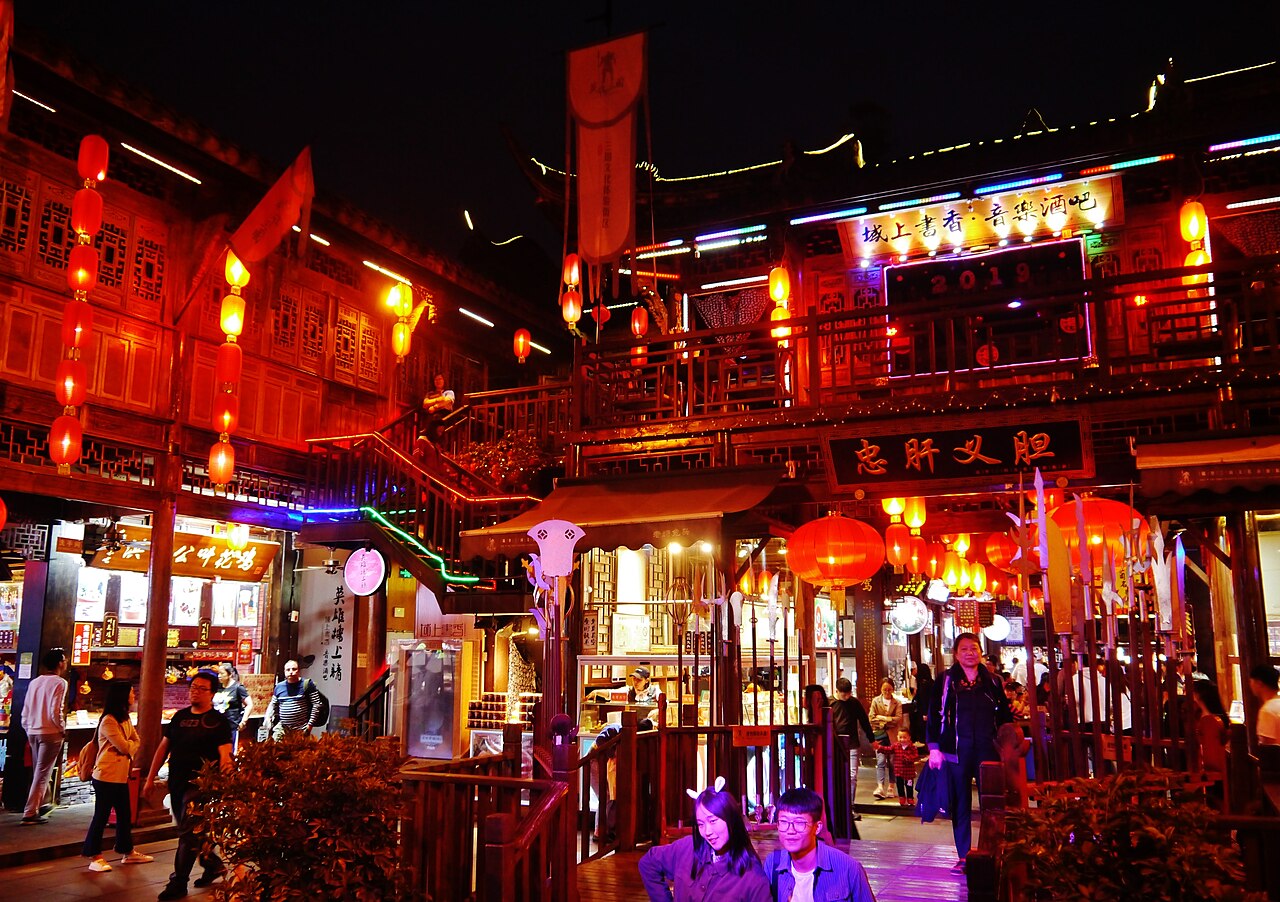
Jinli wraps around the east side of the shrine and is free to walk. Come at dusk for the lanterns, eat san da pao and skewers from the busiest stalls, and take the metro home, since taxis are scarce late on weekends. By day it is an ordinary souvenir street. Snack ideas and timing are on the Jinli page.
The Du Fu Thatched Cottage
The Tang poet Du Fu built a simple house on Huanhua Creek in 759, after fleeing war in the north. What stands today is a memorial garden rebuilt over the centuries, with the Daya Hall, the Gongbu Shrine, a reconstructed thatched cottage and a lot of bamboo. It has been nationally protected since 1961. The garden is the quietest of the city sights. Tickets cost 50 yuan, it opens 09:00 to 18:00, and Line 13 to Dufu Caotang station (Exit C2) brings you to the north gate. Bus 82 links it with the Wuhou Shrine. See the Du Fu Thatched Cottage page.
Dujiangyan: the best day trip
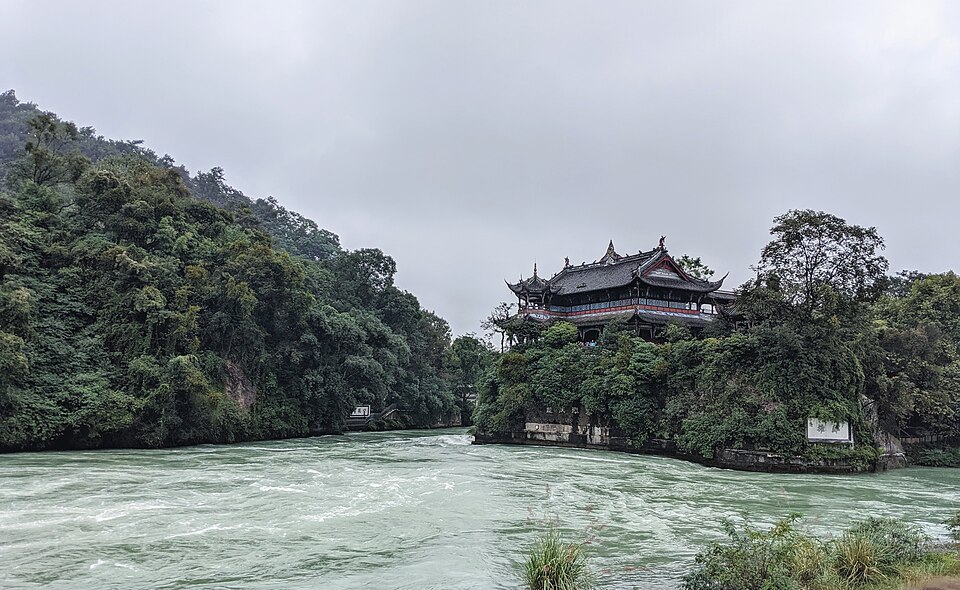
Around 256 BC, the Qin governor Li Bing built a system that splits the Min River at the Fish Mouth embankment, spills floods and sand at the Feishayan weir, and feeds the Chengdu Plain through the rock-cut Baopingkou channel. It still works, without a high dam. The walk links all three with the Anlan rope bridge and the hillside Erwang Temple. The ticket costs 80 yuan, and the site opens 08:00 to 18:00 from March to October. Take an intercity train from Xipu station to Dujiangyan, then a bus, taxi or shuttle to the gate, about one to one and a half hours each way. The Dujiangyan page has the walking route and train details.
Mount Qingcheng
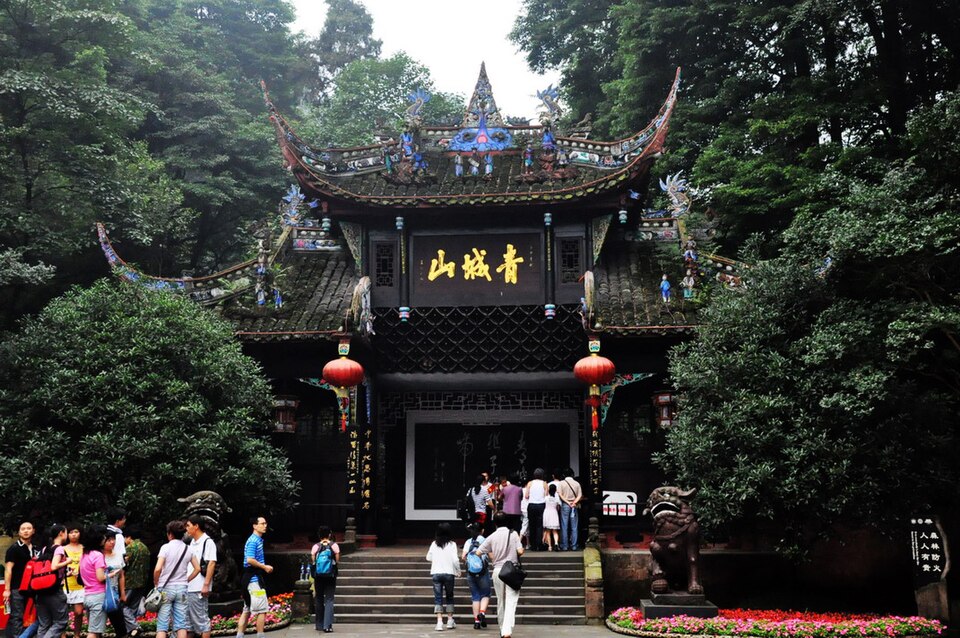
A forested Daoist mountain, its peaks around 1,600 metres, known as "the most secluded place under heaven". The front mountain (80 yuan) climbs past Jianfu Palace, Tianshi Cave and Shangqing Palace, with a ferry and cable car to save your legs. The back mountain is quieter and better for gorge hikes. Trains run to Qingchengshan station. Give it its own day rather than squeezing it in after Dujiangyan. See Mount Qingcheng for front versus back.
Eating in Chengdu
Chengdu became Asia's first UNESCO City of Gastronomy, and food is a big reason to come. Sichuan cooking is known for mala, the numbing heat of Sichuan pepper combined with chilli. You will find it at its fullest in hotpot, which locals eat all year. Order a split pot (yuanyang) if anyone in your group is unsure about the spice. Classic dishes include mapo tofu, twice-cooked pork and fuqi feipian (sliced beef and offal in chilli oil). For snacks, try dandan noodles, zhong dumplings in sweet chilli sauce, and chaoshou (wontons in chilli oil).
The best-value meals are in ordinary neighbourhood restaurants, not in Kuanzhai or Jinli. If you can't handle much chilli, say so when ordering. "Wei la" means mildly spicy, and even that is hot by most standards.
How to arrange the three-day route
Day 1: Panda base at 07:30, back to town by noon, lunch, then Kuanzhai Alley and a tea house in the afternoon. Hotpot for dinner.
Day 2: The Du Fu Thatched Cottage in the morning (from 09:00). Take bus 82 or a taxi to the Wuhou Shrine for the afternoon, entering by 17:00. Finish in Jinli after dark. If you already walked Kuanzhai, skip Jinli and eat elsewhere.
Day 3: Early train from Xipu to Dujiangyan, a morning on the irrigation works, then back to Chengdu by late afternoon. With a fourth day, spend it on Mount Qingcheng.
Onward travel. Leshan, for the Giant Buddha and Mount Emei, is about an hour by high-speed train. Chongqing is a short high-speed run east. Xi'an is a few hours north by train, and Guilin is usually a flight. On a two-week China itinerary, Chengdu often gets two days, with no day trip.
What to cut if short on time
Drop things in this order:
- Jinli, if you've done Kuanzhai. Keep the Wuhou Shrine itself.
- Mount Qingcheng, before Dujiangyan, if you have only one free day.
- The Du Fu Thatched Cottage, if the pandas and the Wuhou Shrine already fill your culture time.
- Dujiangyan, on a two-day city stay or a tight two-week loop.
The irreducible core is the panda base at opening, the Wuhou Shrine or Kuanzhai Alley, and one proper Sichuan meal.
Things to confirm before you go
- Your airport: CTU or TFU. They are far apart.
- Panda base: book for weekends and holidays, up to 14 days ahead, and arrive at opening.
- Wuhou Shrine and the Du Fu Thatched Cottage: last entry at 17:00, and booking up to 14 days ahead on the official channels.
- Dujiangyan and Mount Qingcheng: real-name booking, train times out and back, and weather notices.
- Kuanzhai Alley and Jinli are free streets. During national holidays, crowd control may apply.
- Payment: set up Alipay or WeChat Pay before you arrive. Cash is accepted less and less.
Frequently asked questions
How many days do you need in Chengdu?
Three days: two in the city for the pandas, the Wuhou Shrine, an old street and food, and one for Dujiangyan. Four days lets you add Mount Qingcheng.
What is the best time to see pandas in Chengdu?
At opening (07:30 from March to October, 08:00 the rest of the year). The pandas are most active in the early morning and usually sleep through the afternoon.
Kuanzhai Alley or Jinli: which is better?
Kuanzhai if you want calmer lanes with more history and a tea house. Jinli if you're visiting the Wuhou Shrine and want lanterns at night. On a short trip, choose one.
Can you visit Dujiangyan and Mount Qingcheng in one day?
You can, but it is rushed. Dujiangyan needs about half a day and the Qingcheng front mountain four to five hours. Give them separate days, or choose Dujiangyan if you have only one.
Which Chengdu airport is closer to the city?
Shuangliu (CTU), about 16 km from the centre. Tianfu (TFU) is about 51 km away. Both are on the metro.
Sources
The historical and geographic facts were checked against these Chinese Wikipedia entries. Sight pages were retrieved 11 August 2026; transport pages 5 September 2026.
- Chengdu (city) https://zh.wikipedia.org/wiki/成都市
- Chengdu Research Base of Giant Panda Breeding https://zh.wikipedia.org/wiki/成都大熊猫繁育研究基地
- Kuanzhai Alley https://zh.wikipedia.org/wiki/宽窄巷子
- Jinli https://zh.wikipedia.org/wiki/锦里
- Chengdu Wuhou Shrine https://zh.wikipedia.org/wiki/成都武侯祠
- Du Fu Thatched Cottage https://zh.wikipedia.org/wiki/杜甫草堂
- Dujiangyan https://zh.wikipedia.org/wiki/都江堰
- Mount Qingcheng https://zh.wikipedia.org/wiki/青城山
- Chengdu Shuangliu International Airport https://zh.wikipedia.org/wiki/成都双流国际机场
- Chengdu Tianfu International Airport https://zh.wikipedia.org/wiki/成都天府国际机场
- Chengdu East railway station https://zh.wikipedia.org/wiki/成都东站
Ticket prices, hours and booking rules were rechecked on 9 October 2026 against the official sites of the Chengdu Research Base of Giant Panda Breeding, the Chengdu Wuhou Shrine Museum and the Du Fu Thatched Cottage Museum (cddfct.cn), and 2026 listings for the Qingcheng-Dujiangyan scenic area and the Chengdu-Dujiangyan intercity railway. The official notice on the day takes priority.
All photos are from Wikimedia Commons, used under CC licenses; re-use requires attribution.
- chengdu-panda.jpg from File Chengdu Chengdu Panda Reserve Base Große Pandas 24, by Zairon, taken April 13, 2019, CC BY-SA 4.0
- kuanzhai-alley.jpg from File 宽巷子入口, by 蓝芷怡, CC BY-SA 4.0
- jinli-night.jpg from File Chengdu Jinli-Straße bei Nacht 02, by Zairon, CC BY-SA 4.0
- wuhou-wall.jpg from File 成都武侯祠 红墙竹影, by JianEn Yu, CC BY 2.0
- dujiangyan.jpg from File 都江堰宝瓶口, by Jason, CC BY 2.0
- qingcheng.jpg from File 四川青城山 - panoramio, by panoramio user (ID 2753547), CC BY-SA 3.0