Leshan Travel Guide: The Giant Buddha, Mount Emei and Three Days of Eating
Leshan, about an hour by high-speed train from Chengdu, is where the Min, Qingyi and Dadu rivers meet, and where a Tang monk carved a 71-metre Buddha into the cliff to calm the water. The Giant Buddha and Mount Emei, 3,077 metres at the Golden Summit, were inscribed together by UNESCO in 1996. Give the Buddha a day, Emei a day (or a night on top for the sunrise), and use a third day for the Jiayang steam train or the Thousand-Buddha Cliff in Jiajiang. Leshan is also one of Sichuan's best food towns.
Leshan Giant Buddha
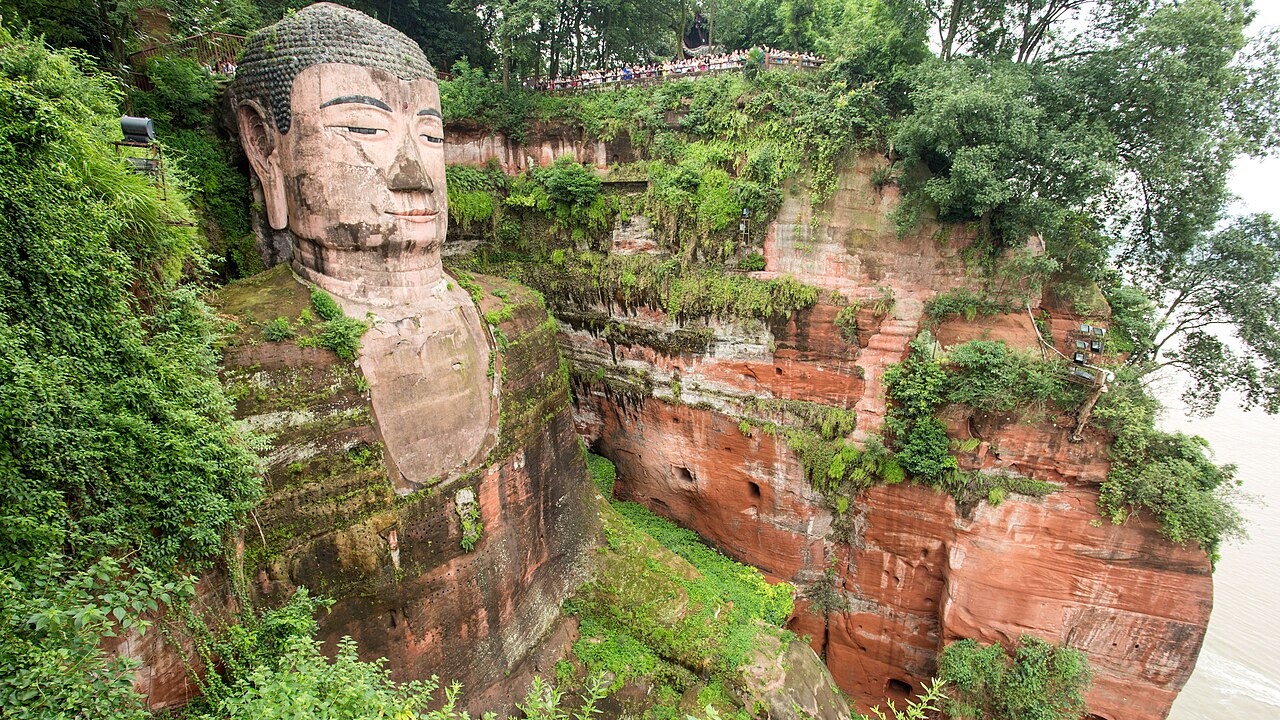
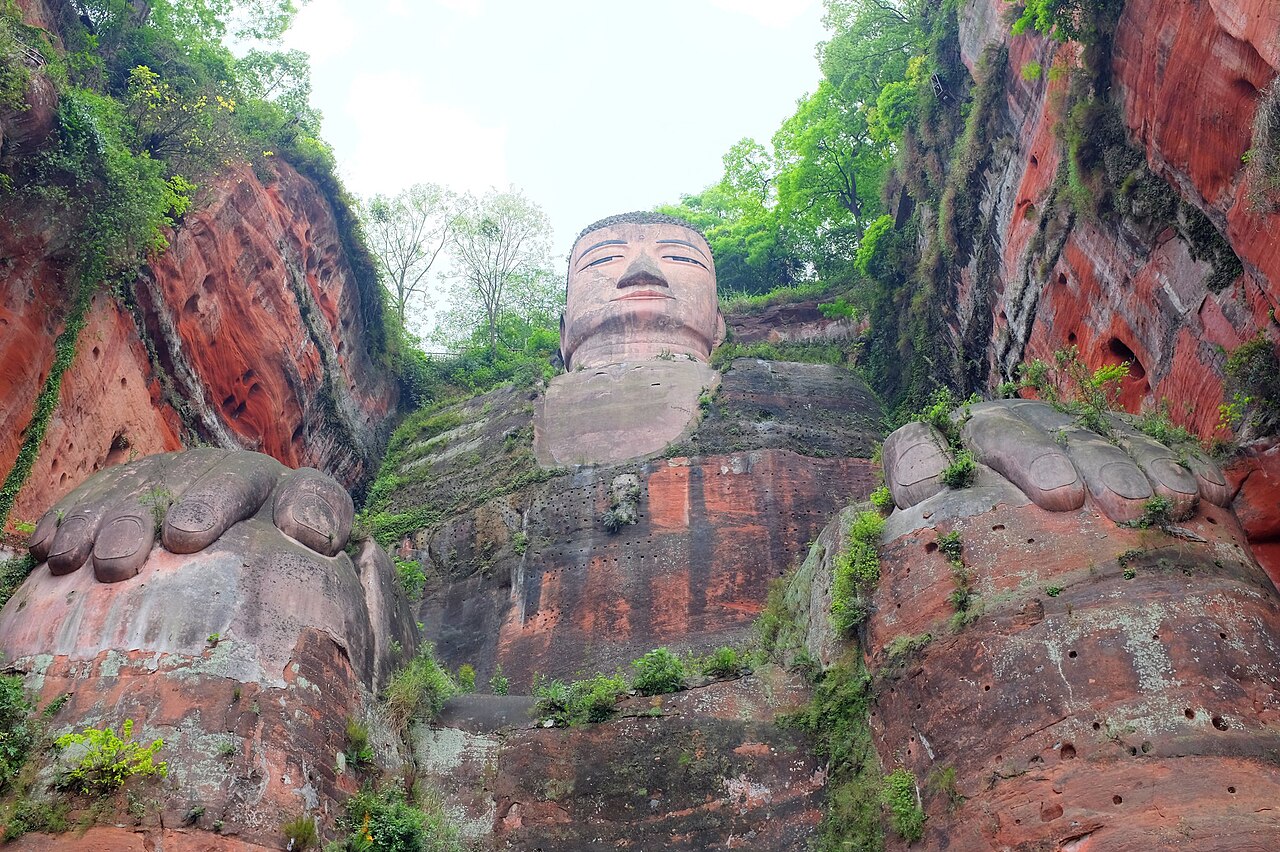
Its formal name is the Great Maitreya Stone Image of Lingyun Temple in Jiazhou. The monk Haitong from Guizhou began it in 713, hoping the Maitreya would protect the boats lost where the three rivers collide, and it was finished in 803 after about ninety years and three project leaders. It is the largest ancient seated stone Buddha in the world, 71 metres tall.
Plank road or boat
- The Nine-Turn Plank Road, on the walking ticket, starts at the Buddha's head and drops down the cliff beside the body to the platform at its feet: about 500 metres and 217 steps. It gives you the scale. The queue is the main time cost, and on holidays it runs for hours. It's narrow and steep, so skip it if you're afraid of heights.
- The boat is a separate 30 to 40-minute trip to mid-river, the only way to see the whole figure and the two 16-metre guardian kings beside it. Departures change with water level and weather.
If you can, do both. If you have to pick, the plank road gives scale and the boat gives the picture. The 2026 official notice lists the daytime walking ticket at 80 yuan and the boat at 70 yuan, with entry by timed, real-name booking (passport for foreign visitors); slots aren't valid outside their time. From 8 October to 31 March the hill opens 08:00 to 17:30. Arrive at opening to beat the queue. Full details are on the Giant Buddha page.
Wuyou Temple and the Mahao tombs
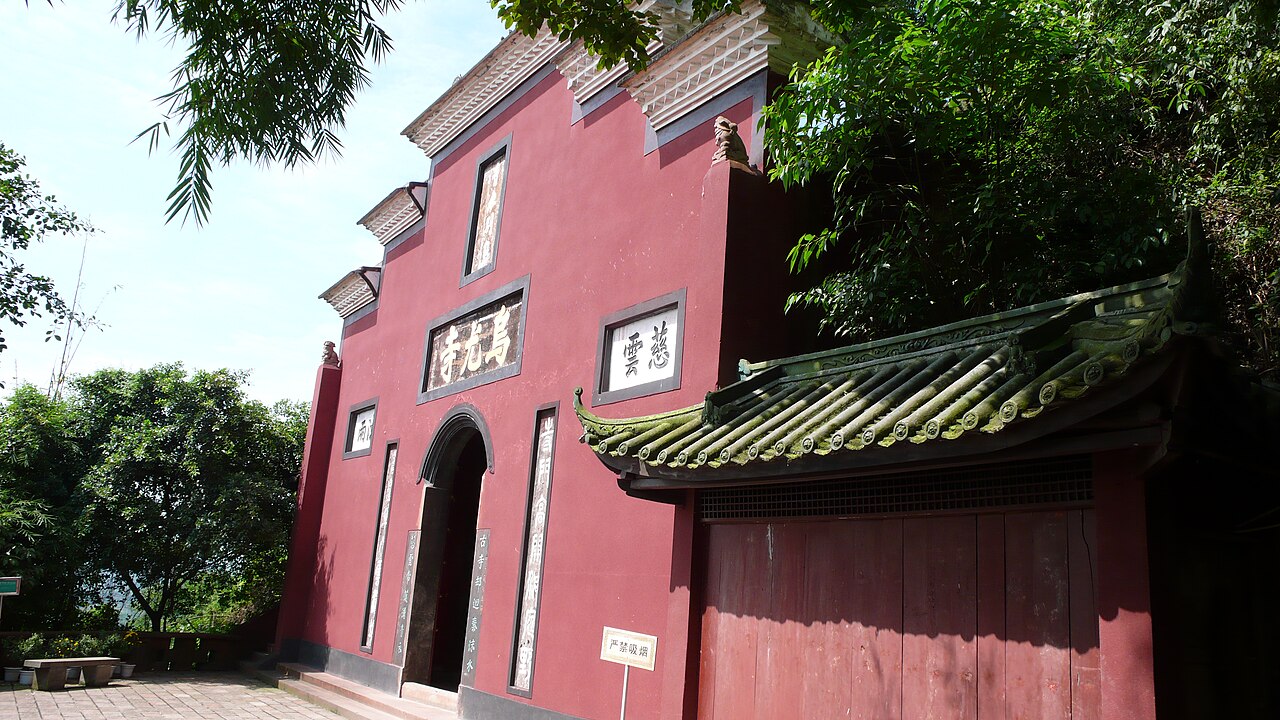
The walking ticket also covers Wuyou Temple on the next hill south. It was founded in the Tang by the monk Huijing as Zhengjue Temple, renamed for its hill in the Northern Song, and made a national key temple in 1983. Its Arhat Hall holds five hundred figures remade in the 1980s, and the Erya Terrace looks over the rivers. After the crowds at the Buddha it's quiet, a good place for tea. On the way, the Mahao cliff tombs are Eastern Han burial chambers cut into the rock, a national protected site since 1988.
Mount Emei
The mountain
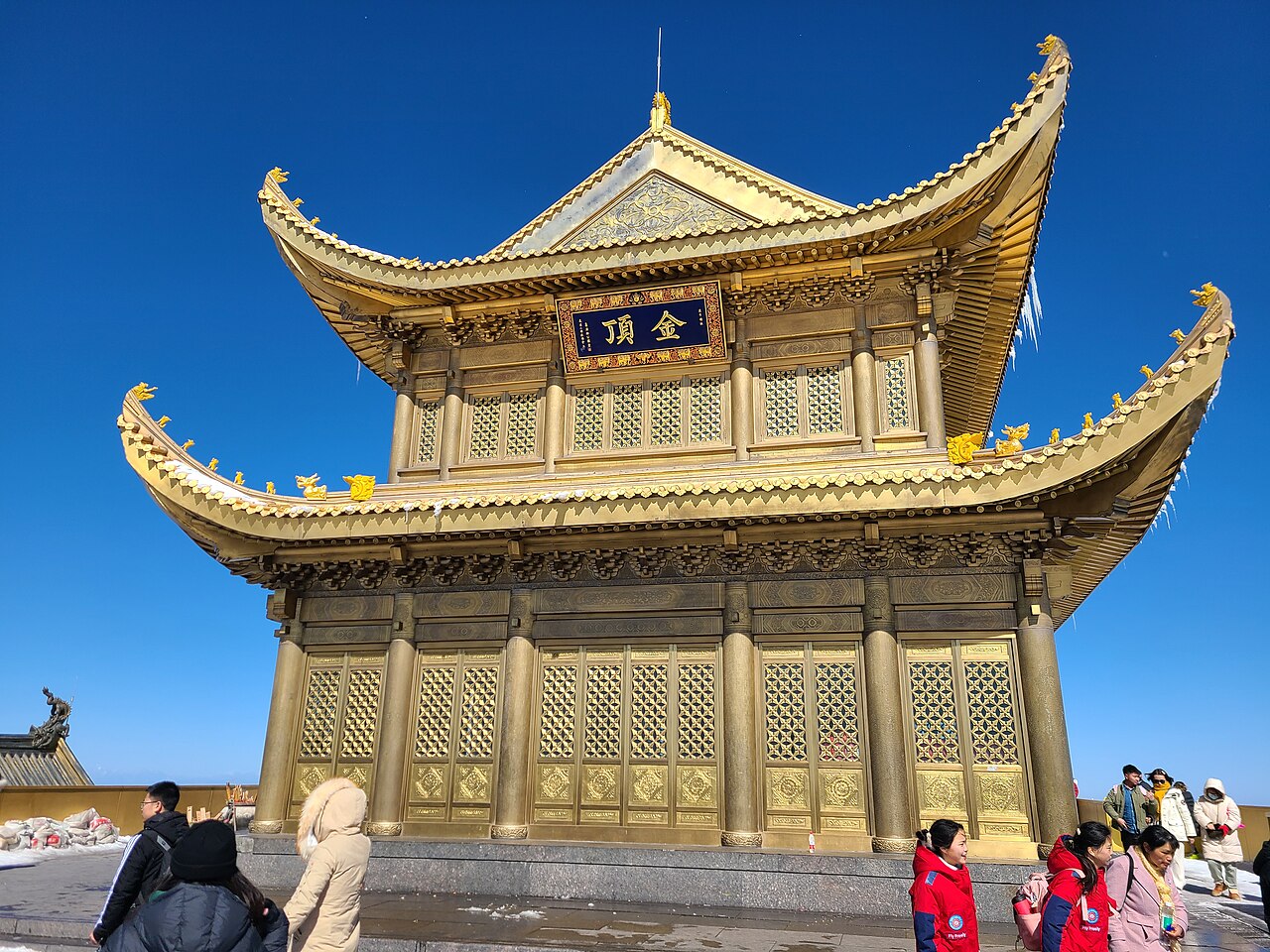
Emei, in Emeishan City, is the highest of China's four sacred Buddhist mountains and the seat of the Bodhisattva Samantabhadra, with about 26 temples, eight of them major. The Golden Summit at 3,077 metres has the gilded ten-faced Samantabhadra on its cliff edge and four famous sights: sunrise, the sea of clouds, "Buddha's light" (a halo on the clouds) and the "sacred lamps".
How to do it
- Start at Baoguo Temple, near Emeishan high-speed station.
- Take the scenic-area bus, about two hours, to Leidongping.
- Walk up to Jieyin Hall and take the Golden Summit cable car, or keep climbing.
The old pilgrim path is about 50 km and takes several days; most people walk a lower section, from Qingyin Pavilion or Wannian Temple, and ride the rest. Sleep on the summit for sunrise; rooms there book out early in season. 2026 listings put entry at 160 yuan from 16 January to 14 December and 110 yuan in midwinter, with buses and cable cars extra. Check at booking.
The macaques along the trail beg in gangs, so keep food out of sight and don't tease them. The summit is far colder than the base, so bring a coat in summer, and expect ice in winter. More on the Mount Emei page.
Two quieter day trips
Jiayang steam train
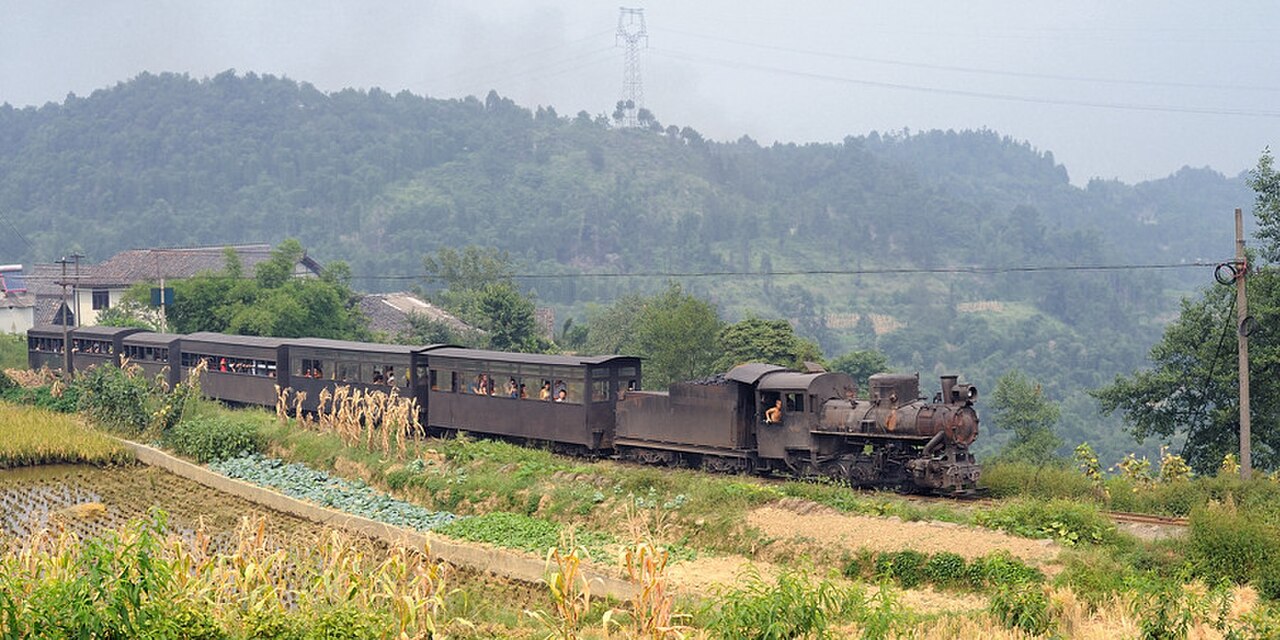
In Qianwei County, the 762 mm Bashi railway opened on 12 July 1959 to haul coal from the Jiayang mines. Coal traffic ended in 2003, but locals still needed it, and it survived as one of the last passenger steam narrow-gauge lines, a Sichuan provincial protected site since June 2007. Tourist specials now leave from Yuejin station (which replaced Shixi in 2011), zig-zag up through Mifengyan and end at Bajiaogou, an old mining town of red-brick blocks; a short electric tram continues to the Huangcunjing mine. The full special takes about two and a half hours. In March the line runs through yellow rapeseed and gets packed. Yuejin is a little over an hour by road from Leshan, so hire a car or take a tour. Fares and timetable are on the steam train page.
Jiajiang Thousand-Buddha Cliff
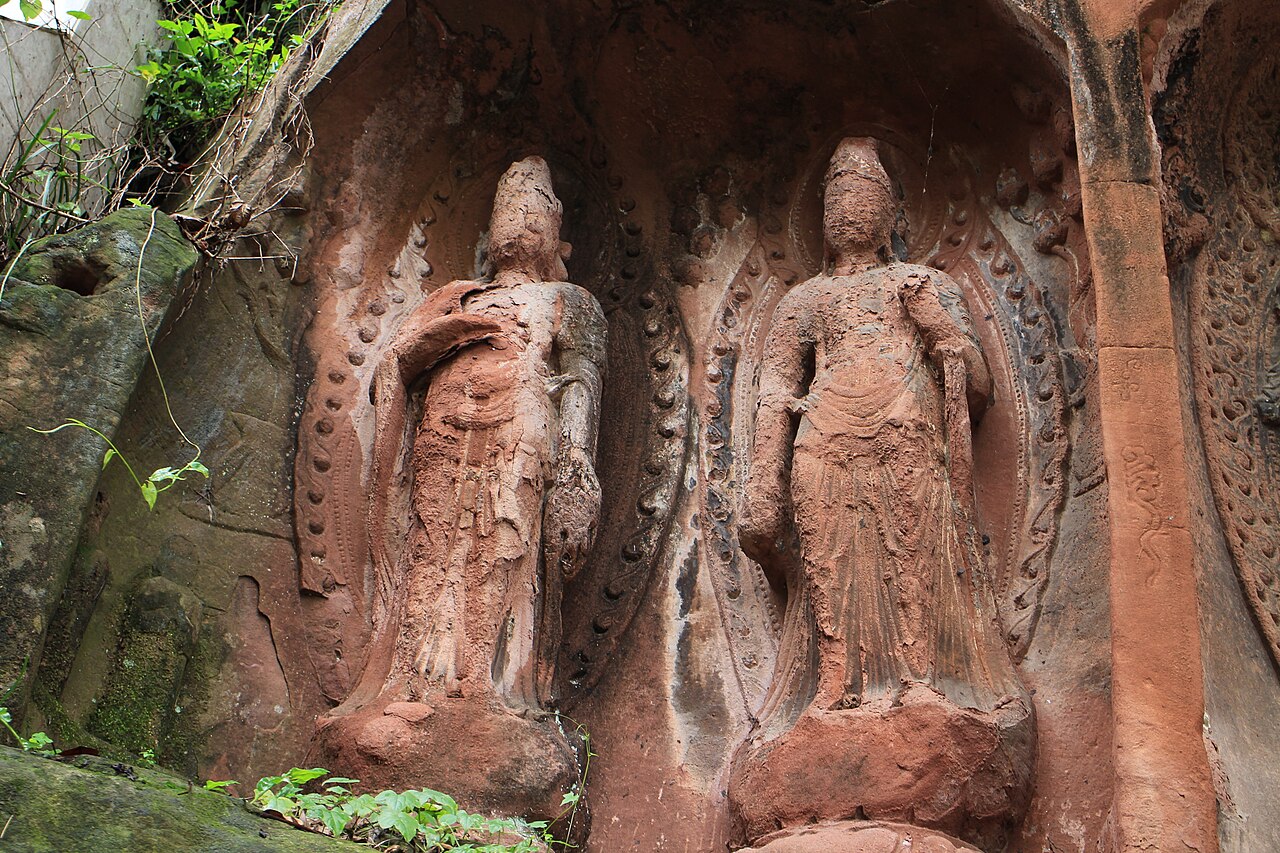
Three kilometres west of Jiajiang county town, the Qingyi River cliffs hold more than 160 niches and over 2,000 Tang figures, mostly from the High Tang, a national protected site since 2006. The Giant Buddha is one huge imperial statement; this is folk devotion spread along the rock, smaller and quieter. A plank path follows the cliff, so go slowly when wet. Jiajiang is also a papermaking town, with bamboo paper on the national intangible heritage list, and the Dongfeng Weir irrigation works nearby is a World Heritage Irrigation Structure. It's about an hour from Leshan and makes a half day.
When to come to Leshan
March to May and September to November. Summer is hot in town but about ten degrees cooler on Emei, and winter brings snow and clouds to the Golden Summit, with icy paths. It rains a lot year-round, and the plank road is slippery when wet. Avoid the May Day and National Day weeks, when the Buddha queue can take hours. Book Buddha slots and summit rooms early in any busy period.
Getting in and where to stay
- High-speed rail: Leshan station is about an hour from Chengdu; Emeishan station is near Baoguo Temple.
- Buses: City buses have run from Leshan station to the Buddha, but routes changed in June 2026, so check a map app or take a taxi. Bus 601 links the Buddha with Baoguo Temple.
Stay in central Leshan near the river for the Buddha and food, then move to Baoguo or the summit for Emei.
Eating in Leshan
Sichuan people come here to eat. Tiaojiao beef, a beef-and-offal broth with a dry chili dip, is the signature, with Suxi town's version the original. Sweet-skin duck is crisp under a sugar glaze. Bobo chicken is cold skewers in a pot of red chili oil or green Sichuan pepper. Also look for tofu pudding, fried skewers, white-cut chicken and Qianwei's thin tofu sheets. Zhanggongqiao food street covers most of it in one strip. The flavour is hot and numbing with a sweet edge.
How to arrange the route
Day 1: The Buddha at opening, down the plank road, the Mahao tombs, tea at Wuyou Temple, then the boat if the queue was short. Tiaojiao beef at Zhanggongqiao for dinner.
Day 2: Mount Emei: bus to Leidongping, cable car to the Golden Summit, and either back down or a night on top for sunrise.
Day 3: The Jiayang steam train for rail lovers, or the Thousand-Buddha Cliff for carving. Sweet-skin duck back in town.
Most people come from Chengdu. Heading east, Chongqing is the next big stop.
What to cut if short on time
In two days: the Buddha and Wuyou on day one, Emei on day two. With one day, do the Buddha only, because Emei can't be rushed. Cut the boat if the plank road was enough.
Things to confirm before you go
- Buddha time-slot booking and the day's boat departures.
- Emei bus, cable car and summit weather.
- Jiayang train timetable; flower-season weekends sell out.
- City bus routes after the June 2026 changes.
- Rain gear and a warm layer for the summit.
Frequently asked questions
How many days for Leshan?
Three is comfortable: the Buddha, Emei, and the train or cliff. Two covers the Buddha and Emei.
How do I get to the Golden Summit?
Bus from Baoguo Temple to Leidongping, then walk to Jieyin Hall and take the cable car or climb. Walking the whole way takes days.
Where do I board the Jiayang train?
Tourist specials leave from Yuejin station in Qianwei County and run to Bajiaogou.
Is the Giant Buddha worth the queue?
Yes. Descending the cliff beside a 71-metre Tang Buddha is unlike anything else; go at opening time to keep the wait short.
Sources
The facts in this article were checked against the following sources, retrieved August 31, 2026, and rechecked on October 18, 2026.
- Leshan (city) https://zh.wikipedia.org/wiki/乐山市
- Leshan Giant Buddha https://zh.wikipedia.org/wiki/乐山大佛
- Mount Emei https://zh.wikipedia.org/wiki/峨眉山
- Wuyou Temple https://zh.wikipedia.org/wiki/乌尤寺
- Jiayang Steam Train https://zh.wikipedia.org/wiki/嘉阳小火车
- UNESCO World Heritage Centre, Mount Emei Scenic Area, including Leshan Giant Buddha Scenic Area https://whc.unesco.org/en/list/779/
The Chinese Wikipedia entry for the Jiajiang Thousand-Buddha Cliff is still incomplete; its basic facts were additionally verified against local government and cultural-relic protection sources. 2026 prices and hours come from the official notices cited on the linked sight pages.
All photos are from Wikimedia Commons, used under CC licenses; re-use requires attribution.
- leshan-dafo.jpg from File Leshan Giant Buddha, 20161102.jpg, by 王计, CC BY 2.5
- leshan-emei.jpg from File Jinding.jpg, by Zhou Yuji1028, CC BY-SA 4.0
- leshan-wuyou.jpg from File 烏尤寺.jpg, by Urga, CC BY-SA 3.0
- leshan-jiayang.jpg from File Shibanxi-10-01.jpg, by MBxd1, CC BY-SA 3.0
- leshan-qianfo.jpg from File Qianfo Cave Jiajiang.JPG, by Xin, CC BY-SA 4.0
- leshan-city.jpg from File Leshan Giant Buddha View from below.jpg, by Blarandion, CC BY-SA 4.0