Dongchang Lake, the Old Moat That Turned Liaocheng into a Water City
Dongchang Lake wraps around the walled old city of Liaocheng like a very wide moat, which is what it started as. The city tourism bureau gives its area as about 6.3 square kilometres with a shoreline of around 16 kilometres, split by roads into ten lake areas and twenty separate sheets of water. It is free to walk, it frames Guangyue Tower in the middle of the island, and it is the main reason Liaocheng markets itself as the water city north of the Yangtze.
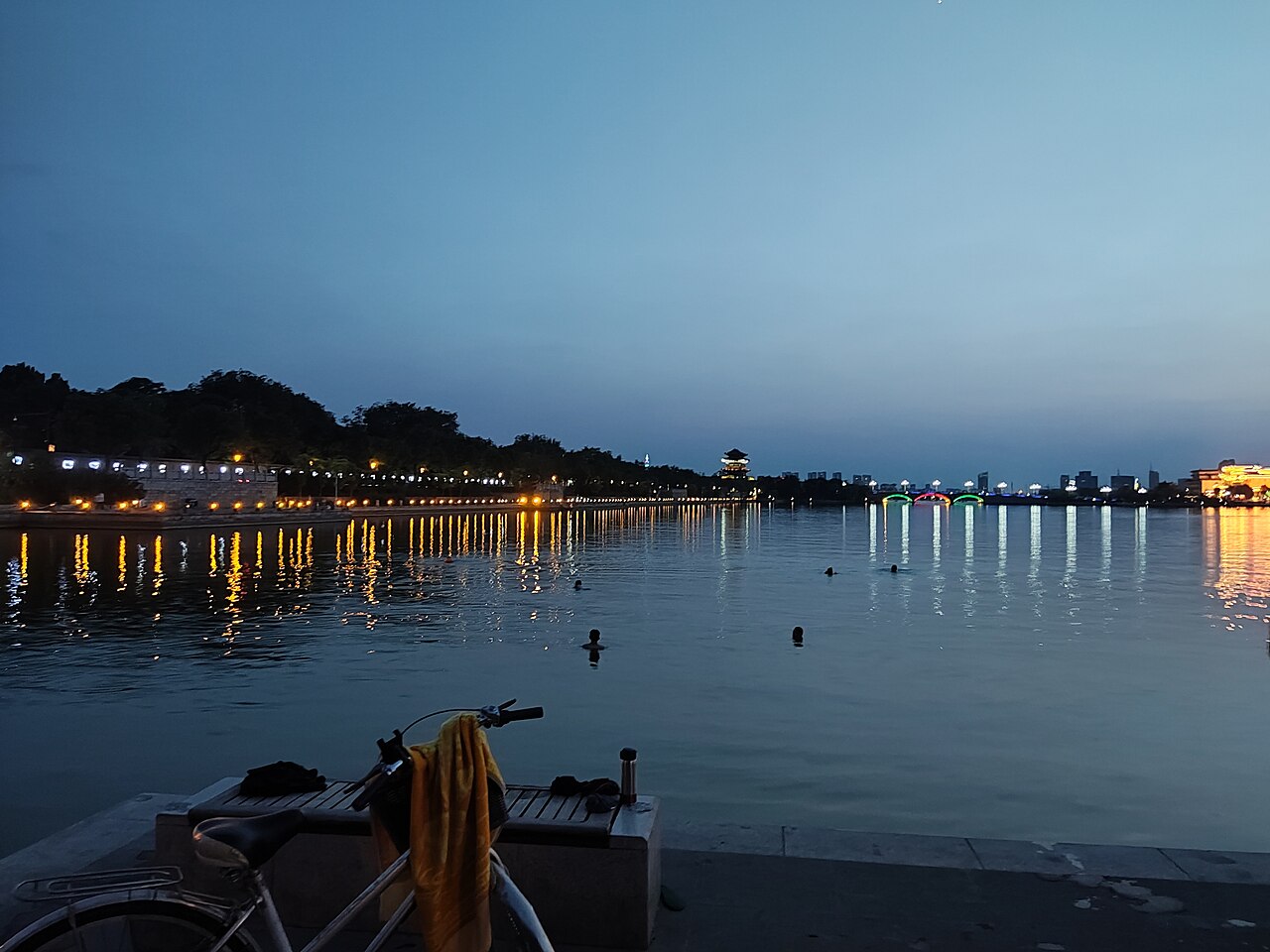
From moat to lake
The lake began in 1070, in the Northern Song dynasty, when earth was dug to build the city wall and its embankment and the pits filled with water. It was widened again in 1076 and several times under the Ming, including when the wall was faced with brick in the 1370s. People living in the city kept digging clay for bricks and houses, which slowly pushed the water outward. Through the Ming and Qing the level was regulated by the Grand Canal, which runs past the east side.
The modern lake took shape after 1949. Dredging in the 1960s and 1970s enlarged the water, and the supply was later switched to Yellow River water through an irrigation channel. The name changed with it. Locals called it the Huancheng Lake, the lake around the city, from 1973, and the current name Dongchang Lake was adopted in 1995 after the old prefecture name. Average depth is around three metres. The Shandong canal heritage plan lists the lake among the canal's water reservoirs, and today it is a national AAAA scenic area.
How the lake is laid out
The old city in the middle is a square of about one kilometre per side, with Guangyue Tower at the centre and two pedestrian streets crossing beneath it. Around that island the water spreads unevenly. The bureau describes ten lake areas, and in 2014 city planners gave eight of the larger sheets their own names drawn from local history. Lakeside parks run along the western shore, and the old canal curves past on the east, close to the Shanshaan Guild Hall.
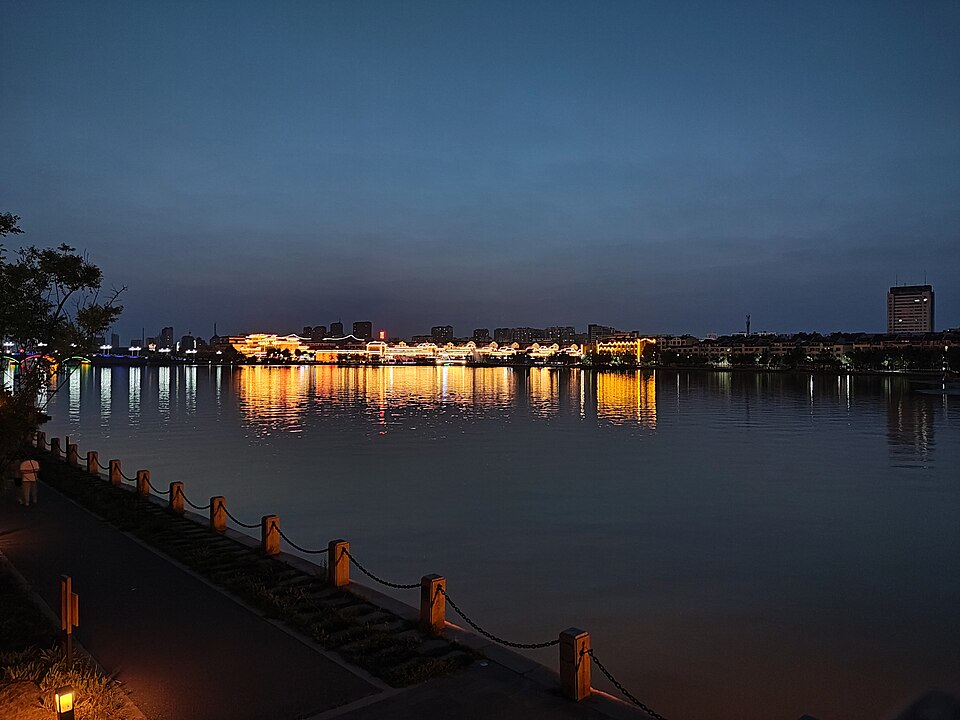
Sixteen kilometres is a long walk on flat paving, and much of the outer shore runs along busy roads. A better plan is one continuous segment close to the old city. Walking the inner ring around the island, between the old walls and the water, keeps the tower in view and leaves plenty of exits for food or a taxi. The tourism bureau suggests about three hours for the scenic area as a whole.
Ways to see the water
Walking is free, and the lake is open all day. Boats run on set routes in the warmer months, priced separately from the lake itself. Booking sites list boat tickets but sailing times are not published in detail, so ask at the piers or call the scenic area line given by the tourism bureau before planning around a boat.
Evening is the lake's best time. The tower and the old city edges are lit after dark, the water calms, and the shore paths fill with people out walking after dinner. In summer the midday glare off the water is harsh, so early morning and late afternoon are kinder.
Pairing the lake with the old city
A sensible single day in Liaocheng starts at Guangyue Tower when it opens, carries on east to the guild hall, and leaves the lake for late afternoon and dusk. With two days, walk one segment each evening and use a daytime boat on the second. The Liaocheng guide suggests keeping county canal sites such as Linqing for a separate clear day.
Getting there and seasons
Every part of central Liaocheng is close to the lake. From the railway station, a taxi or ride-hailing car reaches the old city in a short ride, and the H1 bus runs a loop around the lake. Spring and autumn suit long walks. Summer brings heat and storms that can close boat services. Winter wind across open water is sharp, and some years the lake freezes at the edges.
Before you go
- Pick one segment near the old city and resist the full sixteen kilometres.
- Check boat status at the pier or by phone on the day.
- Plan dusk by the water after Guangyue Tower and the Shanshaan Guild Hall.
- Bring a windproof layer outside summer.
- See the Liaocheng travel guide for the full route.
Frequently asked questions
Is Dongchang Lake free?
Yes, the shore paths are free and open all day. Boats and some attractions inside the old city charge separately.
How big is the lake compared with West Lake in Hangzhou?
Local sources put it at a little over six square kilometres, slightly smaller than West Lake.
How long should I spend at the lake?
Two to three hours covers a good segment with a rest stop. An evening walk of an hour is enough if time is short.
Is the lake natural?
No. It grew from the Song-era moat and was enlarged by digging over the centuries, then by modern dredging.
Sources
Facts in this article were checked against the following sources, retrieved 17 October 2026.
- Liaocheng Culture and Tourism Bureau, Dongchang Lake scenic area
- Dongchang Lake, Chinese Wikipedia
- Dongchang Lake, Baidu Baike
- Shandong Department of Culture and Tourism, Grand Canal heritage in Shandong
- Liaocheng Bendibao, free lake visit notes
- Liaocheng travel guide on this site
Photos are from Wikimedia Commons under the licences shown in each caption.