Shanshaan Guild Hall, Where Canal Merchants Built Their Temple in Liaocheng
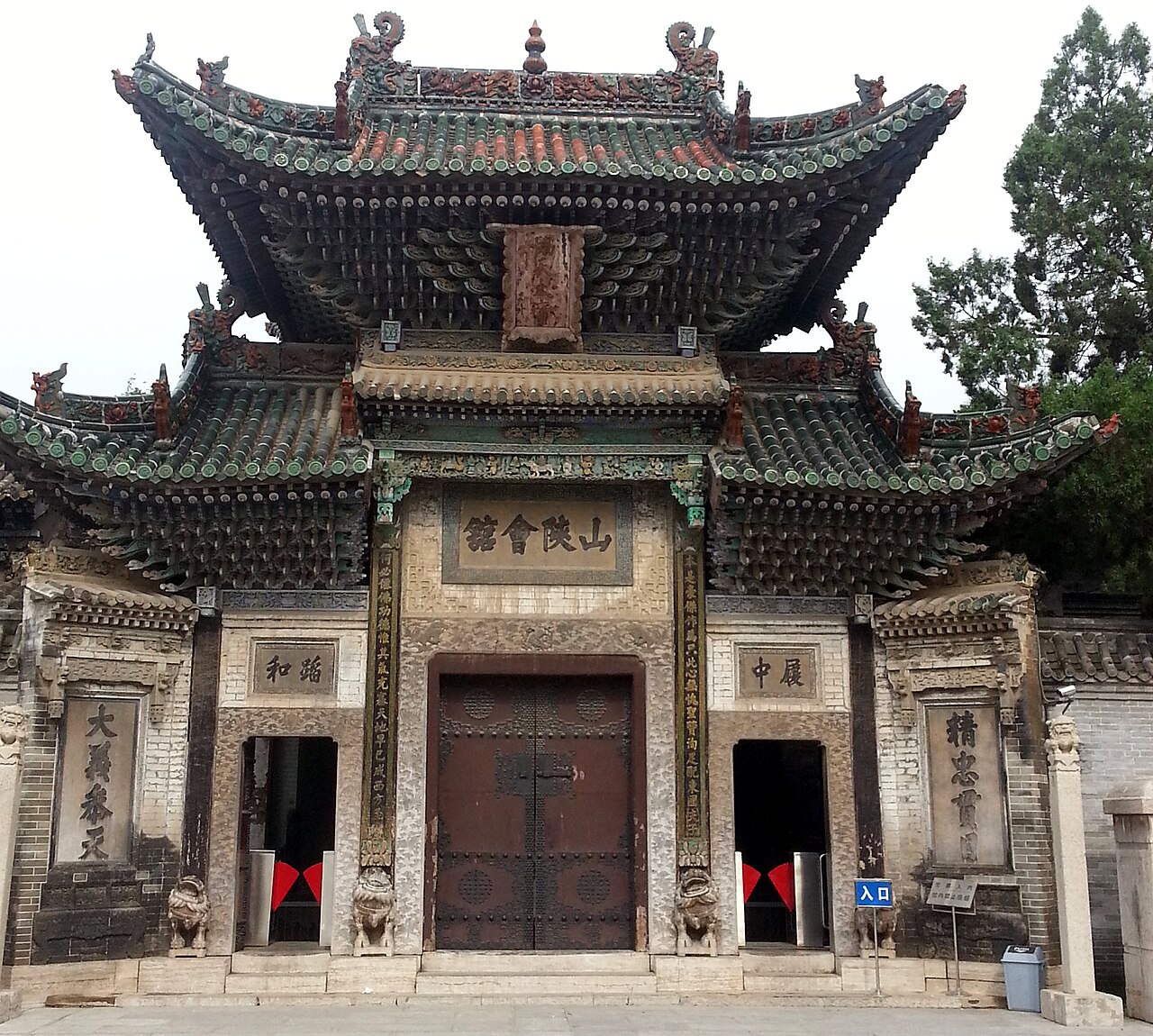
The Shanshaan Guild Hall sits just east of the old city of Liaocheng, between the moat lake and the line of the old Grand Canal. Merchants from Shanxi and Shaanxi who traded along the canal paid for it in the eighteenth century. They used it as a meeting house, a temple to Guan Yu and a theatre all at once. The city tourism bureau describes it as the first of Liaocheng's eight historic guild halls and the only one that survives. Most visitors combine it with Guangyue Tower on one walk.
Why merchants from the west built here
In the Ming and Qing periods the Grand Canal made Liaocheng, then called Dongchang, a busy stop for grain barges and trade goods moving between the south and Beijing. Traders from Shanxi and Shaanxi, often grouped together as the Shanshaan merchants, were among the most organised commercial networks of the time. Wherever they settled in numbers they built a hall that worked as club, hostel, business exchange and shrine.
The Liaocheng hall was started in 1743 under the Qianlong Emperor and the opera stage was finished by 1746. Building went on in stages until about 1809, when the complex reached its present size of roughly 3,800 square metres. It faces east toward the canal. Shandong's canal heritage plan lists it among the canal-related monuments of the Huitong section, and it has been a national key protected site since 1988.
The opera stage
The first thing you walk under is the stage. It is a street-spanning design, with the stage on the upper level and the entrance passage below, so the gate and theatre share one building. The stage faces the Guan Yu hall across the courtyard, which allowed plays to be performed for the deity as well as for the merchants.
A 2026 Guangming Daily feature on the hall explains the acoustics. The octagonal caisson ceiling above the stage, painted with cranes and clouds, gathers sound. Stone wing walls on either side throw it back toward the courtyard, and the hollow passage under the stage acts as a resonance chamber. The courtyard also rises step by step from the stage to the main hall, so spectators look up at the stage from below and down at it from the higher galleries. The same article notes that traditional opera, Shandong storytelling and comic dialogues still go on stage at temple fairs and on major holidays, with craft demonstrations in the yard.
The halls behind the courtyard
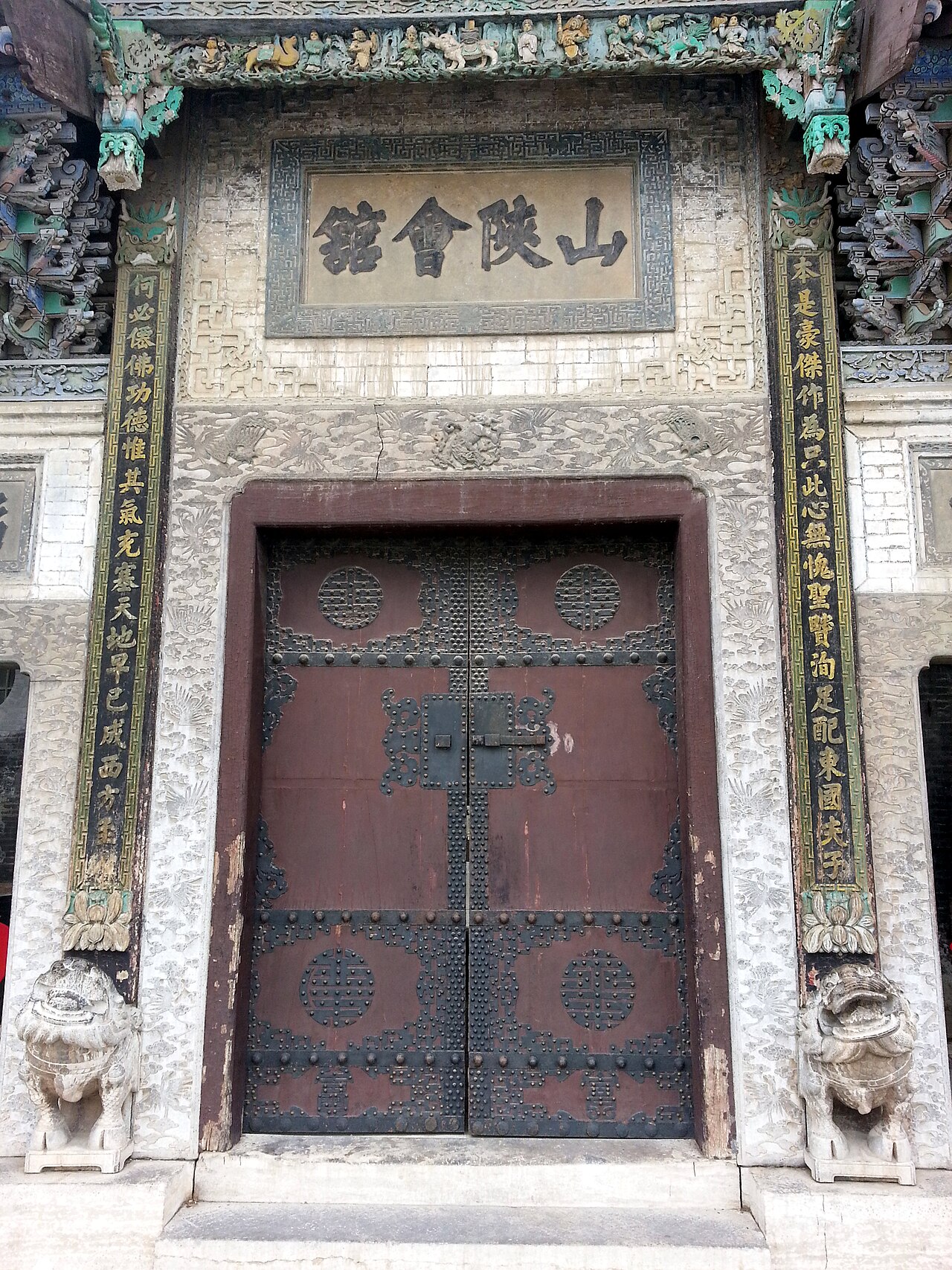
The central axis runs from the gate and stage past bell and drum towers to the main hall and the Chunqiu Pavilion at the back. The main hall is a pair of buildings joined at the eaves. The front hall was for offerings and meetings. The rear hall holds a statue of Guan Yu about three metres tall, flanked by his son Guan Ping and the general Zhou Cang. A tourism bureau article from 2025 describes green glazed roof tiles on the central hall and grey tiles on the side halls, a difference that signalled rank under the old ritual rules.
The carving is the reason many people come. Stone column bases, openwork wooden beams and painted brackets cover the complex. Panels show peonies, phoenixes, qilin and figures from stories, chosen for their lucky meanings. The tall Chunqiu Pavilion at the rear is named for the Spring and Autumn Annals, the classic Guan Yu was said to read, and it holds more woodwork and stone inscriptions. The bureau counts more than 160 rooms, towers and pavilions in total.
Tickets and hours
Liaocheng Bendibao listed a summer timetable of 8:30 to 17:30 and a winter timetable of 8:30 to 17:00, with an adult ticket of 30 yuan and half price for full-time students. A Spring Festival 2026 notice gave 8:30 to 17:30 with entry stopping at 17:00. Seniors, children under 1.4 metres and several other groups were listed as free with ID. These are reported figures, so check the day's notice at the gate. A paid guided tour has been offered and helps a lot with the carvings.
Getting there and how long to stay
The address given by Bendibao is 55 Shuangjie in Dongchangfu District, a short walk east of Guangyue Tower along Dongguan Street. The H1 lake-loop bus has a stop named for the hall. Plan sixty to ninety minutes. People who like carving or opera can easily double that, and holiday performances are worth timing a visit around.
Before you go
- Look up the holiday programme if you want to see opera on the old stage.
- Bring a small zoom or phone camera for carving details high on the beams.
- Walk here from Guangyue Tower and finish at the Dongchang Lake shore.
- Use the Liaocheng travel guide to fit the hall into a two or three day stay.
Frequently asked questions
Why is it spelled Shanshaan?
The name joins Shanxi and Shaanxi, the two home provinces of the merchants. You will also see Shanshan in English signage and older guidebooks.
Is this a temple or a guild hall?
Both. The merchants worshipped Guan Yu as a patron of loyalty and fair dealing, so the shrine, the meeting rooms and the stage belonged to one institution.
Can you still see performances?
Reports from 2026 describe opera and folk performances at temple fairs and on major holidays. On ordinary days the stage is usually empty.
How far is it from Guangyue Tower?
Roughly a fifteen to twenty minute walk east through the old city and across to the canal side.
Sources
Facts in this article were checked against the following sources, retrieved 17 October 2026.
- Liaocheng Shanshaan Guild Hall, Chinese Wikipedia
- Liaocheng Culture and Tourism Bureau, main hall article, May 2025
- Liaocheng Culture and Tourism Bureau, guild hall overview
- Guangming Daily, the opera stage and canal memory, September 2026
- Liaocheng Bendibao, visitor guide with hours and tickets
- Shandong Department of Culture and Tourism, Grand Canal heritage in Shandong
Photos are from Wikimedia Commons under the licences shown in each caption.