Linfen Travel Guide: Hukou Waterfall, Xiaoxitian and the Land of Emperor Yao
Linfen, in the Fen River valley of southern Shanxi, is the base for one of China's great natural sights and one of its most talked-about temples. Hukou Waterfall, where the Yellow River funnels through a narrow gorge on the Shanxi–Shaanxi border, needs a full day out west in Ji County. Xiaoxitian in Xi County, a small Ming temple crammed with nearly 2,000 gilded clay figures, became famous after appearing in the game Black Myth: Wukong in 2024. Add the Yao Temple in the city and Guangsheng Temple in Hongtong, and three days is about right.
Places worth visiting
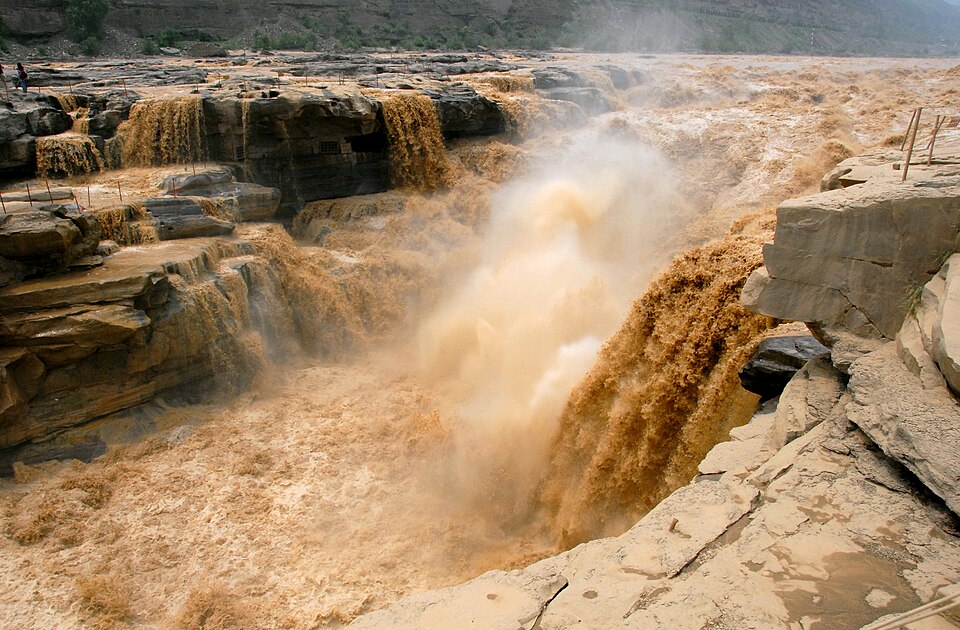
Hukou Waterfall
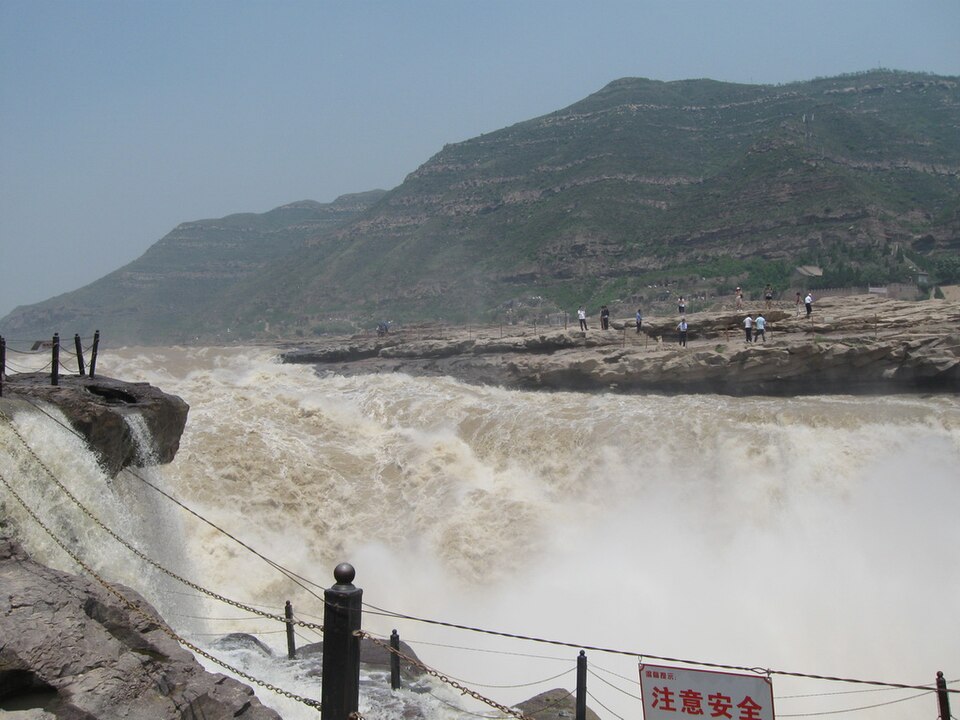
Hukou is the largest waterfall on the Yellow River and the second largest in China. The river, more than 500 metres wide upstream, is squeezed into a channel about 30 metres across, then drops into a deep slot in the gorge. The name means "kettle spout". The roar and the yellow spray are the experience. On sunny days the mist throws rainbows over the Qilangwo Bridge downstream, which links Shanxi and Shaanxi. A rock just below the falls, the guishi, seems to rise and fall with the water level, and stays at least partly visible however high the river runs. The falls appeared on the old 50-yuan note.
Shanxi or Shaanxi bank? The falls sit between Ji County in Linfen and Yichuan County in Shaanxi, and each side runs its own scenic area. From Linfen, the Shanxi side, about 25 km southwest of Ji County town, is the natural choice. Don't plan to visit both sides on the same day unless you have a car and have checked the crossing.
Timing: Water volume changes through the year and with upstream releases. Spring thaw and the autumn after summer rains are usually the most powerful; in winter the edges freeze into dramatic ice. Bring a rain jacket even on sunny days, because the spray soaks you, and wear shoes with grip on the wet rocks. Tickets and shuttles follow the scenic area's notice.
Xiaoxitian, Xi County
Originally called Qianfo An, this temple on a hill in Xi County was founded in the Chongzhen reign at the end of the Ming. Its Mahavira Hall is tiny, just 169.6 square metres, yet holds nearly 2,000 gilded "hanging" clay sculptures arranged in tiers of heavenly palaces, from Buddhas over three metres tall to figures the size of a thumb. After Black Myth: Wukong featured it in 2024, Xi County's scenic areas drew 5.1 times as many visitors as the year before. The hall admits groups of at most 40 at a time. Since 20 January 2025 entry has been by advance booking through the scenic area's WeChat account or major travel platforms; in peak periods book one to three days ahead. Summer hours in 2025 were 7:30 to 18:00 with last entry at 17:30. Xi County is also known for its Yulu fragrant pears, sold outside the gate.
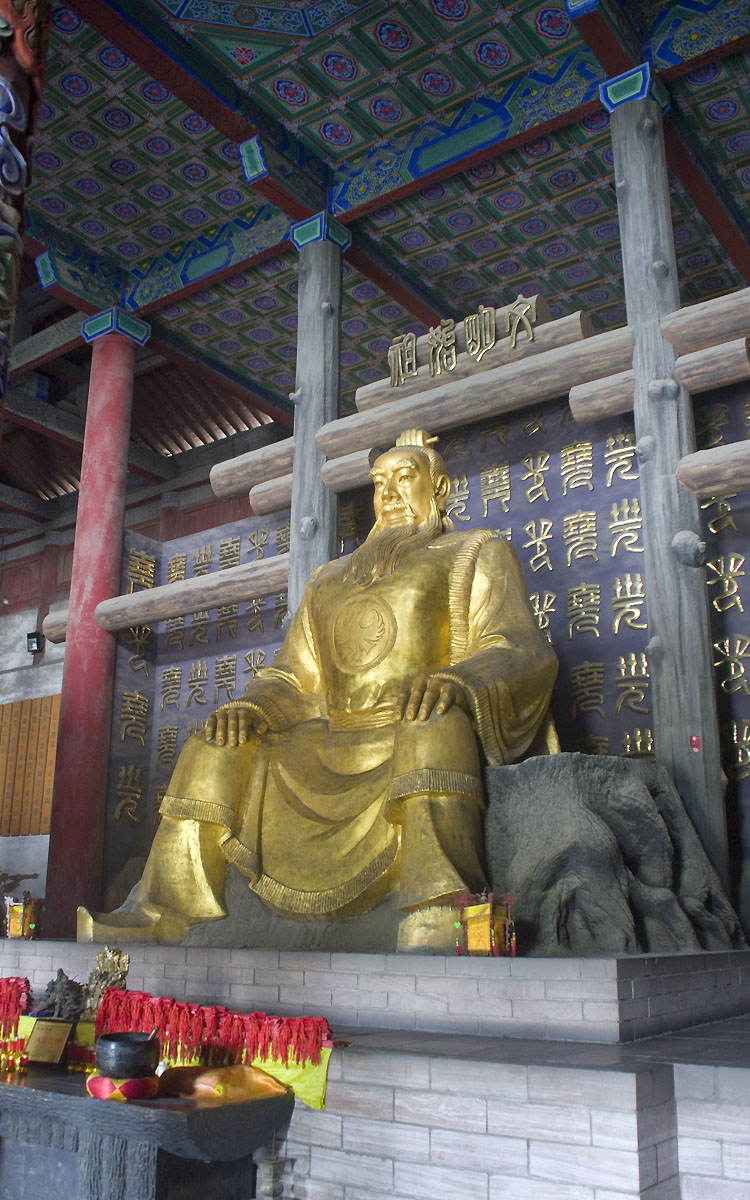
Yao Temple
On the southern edge of Linfen city, the temple honours Emperor Yao, the legendary sage-king said to have ruled from here, which is why the main district is called Yaodu. It was founded in the Western Jin, moved to this site in 658, and rebuilt after the great 1303 earthquake. The main Guangyun Hall was rebuilt in Ming style in the 1980s, burned in a 1998 arson attack and rebuilt again in 1999, so much of what you see is recent. It's a good half day on arrival or departure.
Guangsheng Temple and the Great Pagoda Tree, Hongtong
North of the city in Hongtong County, Guangsheng Temple sits at the foot of Mount Huoshan, 17 km northeast of the county town. Founded in 147 and renamed in the Tang, it has upper and lower temples and a water god temple, and its glazed-tile pagoda is a highlight for architecture fans. The Zhaocheng Jin Tripitaka, a famous printed Buddhist canon, was found here in 1933. In Hongtong town, the Great Pagoda Tree root-seeking park marks the spot from which Ming-era migrants were sent across northern China; many Chinese families trace their ancestry here, so the site matters more to them than to most foreign visitors.
Taosi
In Xiangfen County south of the city, Taosi is a late Longshan site (about 2300 to 1900 BC) with a 280-hectare walled town and what archaeologists interpret as an ancient observatory. Some scholars link it to the age of Yao. It's an archaeological site rather than a polished attraction, so check what is open first.
When to come to Linfen
April to October. Southern Shanxi has hot summers, cold dry winters and dusty spring winds. For Hukou, spring and autumn usually bring the most water, while winter gives ice formations but harder travel. Recent reports are the best guide to the falls in any given week.
Getting in and where to stay
- High-speed rail: Linfen West, opened in 2014 on the Datong–Xi'an high-speed railway, has direct trains to Taiyuan, Xi'an, Beijing and Shijiazhuang.
- Conventional rail: Linfen station, on the old Tongpu railway, dates from 1935.
- Air: Linfen Yaodu Airport reopened for flights in January 2016.
- To Hukou and Xi County: Both are long drives west into the Lüliang hills. A hired car or tour is far easier than buses.
Stay in central Linfen for transport. For an early start at the falls or a sunrise visit, sleep in Ji County.
Eating in Linfen
Southern Shanxi is wheat and vinegar country: hand-cut and pulled noodles, flatbreads, steamed buns and hearty braised meats, with aged vinegar on every table. Restaurants in the city have clearer menus than snack stalls at the falls. In Xi County, try the Yulu pears in autumn.
How to arrange the route
Day 1: Arrive at Linfen West, Yao Temple in the afternoon.
Day 2: Hukou Waterfall all day, staying in Ji County or returning to Linfen.
Day 3: Xiaoxitian in Xi County with a booked slot, or Guangsheng Temple and Hongtong if Xiaoxitian is full.
Further afield, Pingyao and the Jinzhong merchant towns are north towards Taiyuan, and Yuncheng is south.
What to cut if short on time
Keep Hukou. Then choose Xiaoxitian (book ahead) over the Yao Temple. Cut Hongtong and Taosi first.
Things to confirm before you go
- Hukou water levels and the scenic area's notices.
- A Xiaoxitian booking, made days ahead in busy periods.
- Transport to Ji County and Xi County.
- Rain gear for the falls.
Frequently asked questions
Is Hukou Waterfall in Linfen city?
No. It's in Ji County on the Yellow River, a long drive west of the city.
Do I need to book Xiaoxitian?
Yes. Advance real-name booking has been required since January 2025, and slots sell out at busy times.
How many days for Linfen?
Three: one for Hukou, one for Xiaoxitian or Hongtong, and arrival time for the Yao Temple.
Sources
The facts in this article were checked against the following sources, retrieved September 19, 2026, and rechecked on October 18, 2026.
- Linfen https://en.wikipedia.org/wiki/Linfen
- Hukou Waterfall https://en.wikipedia.org/wiki/Hukou_Waterfall
- Hukou Waterfall (Chinese) https://zh.wikipedia.org/wiki/壶口瀑布
- Yao Temple (Chinese) https://zh.wikipedia.org/wiki/尧庙
- Guangsheng Temple https://en.wikipedia.org/wiki/Guangsheng_Temple
- Taosi https://en.wikipedia.org/wiki/Taosi
- Xiaoxitian and Xi County, Xinhua, March 2025 https://www.news.cn/20250320/6f33db23661e47e49912fb1a4ddf974d/c.html
- Xiaoxitian booking rules, Taiyuan Bendibao http://ty.bendibao.com/tour/2025115/76502.shtm
- Linfen West station (Chinese) https://zh.wikipedia.org/wiki/临汾西站
Tickets change; this article does not quote yuan amounts.
All photos are from Wikimedia Commons, used under CC licenses; re-use requires attribution.
- linfen-hukou.jpg from File:Hukou Waterfall.jpg, by Leruswing, CC BY-SA 3.0
- linfen-yao.jpg from File:J81929 Linfen 20140706-094434.58 36.05346,111.49097 TempleEmpereurYao.jpg, by Emdx, CC BY-SA 4.0
- linfen-hukou2.jpg from File:Hukou waterfalls on Huanghe River 壶口瀑布 - panoramio (5).jpg, by sylvannus, CC BY-SA 3.0