Qujing Travel Guide: Luoping's Canola Fields, Jiulong Falls and Eastern Yunnan
The reason most travellers come to Qujing prefecture is Luoping County, where canola fields turn the karst valleys yellow for a few weeks each year, usually from late February to mid-March. The Jiulong Waterfalls, a stairway of cascades northeast of Luoping town, are worth the trip in any season. Qujing city itself, in Qilin District, is mainly a rail stop between Kunming and Guizhou. Base yourself in Luoping, hire a car or driver for the scattered viewpoints, and plan two to three days.
The bloom calendar
Flowers do not keep to a fixed date, and that is the first thing to get right. The bloom moves through the county in stages, roughly in this order:
- Jinji Peak Cluster (Jinjifengcong), the famous field of conical hills, peaks first, typically from the last week of February into early March. Go at sunrise.
- Niujie spiral terraces (Luosi Tian), terraced fields in curving rings, follow a few days later. Afternoon light suits them.
- Around Jiulong Waterfalls, fields bloom a little later still, into mid-March.
These are typical windows; each year's timing depends on winter weather. Check the Luoping culture and tourism accounts for live flower reports the week before you go. Outside February and March, the fields are ordinary green farmland, and the waterfalls become the main reason to visit.
Places worth visiting
Luoping canola fields
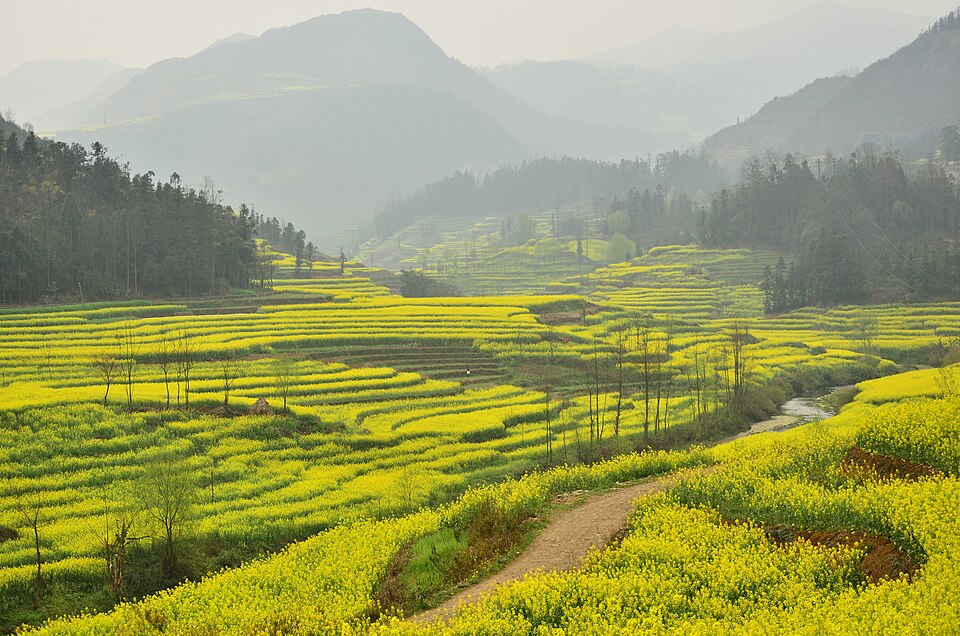
Low sun makes the yellow glow; midday light flattens it. Viewing platforms at Jinji and Niujie charge their own fees, and peak weekends are very busy, with tour buses arriving from mid-morning. Stay on paths and do not walk into private fields for photos: they are farmers' crops. Luoping has hosted spring flower festivals, which fill hotels, so book early if you are coming in late February.
Jiulong Waterfalls
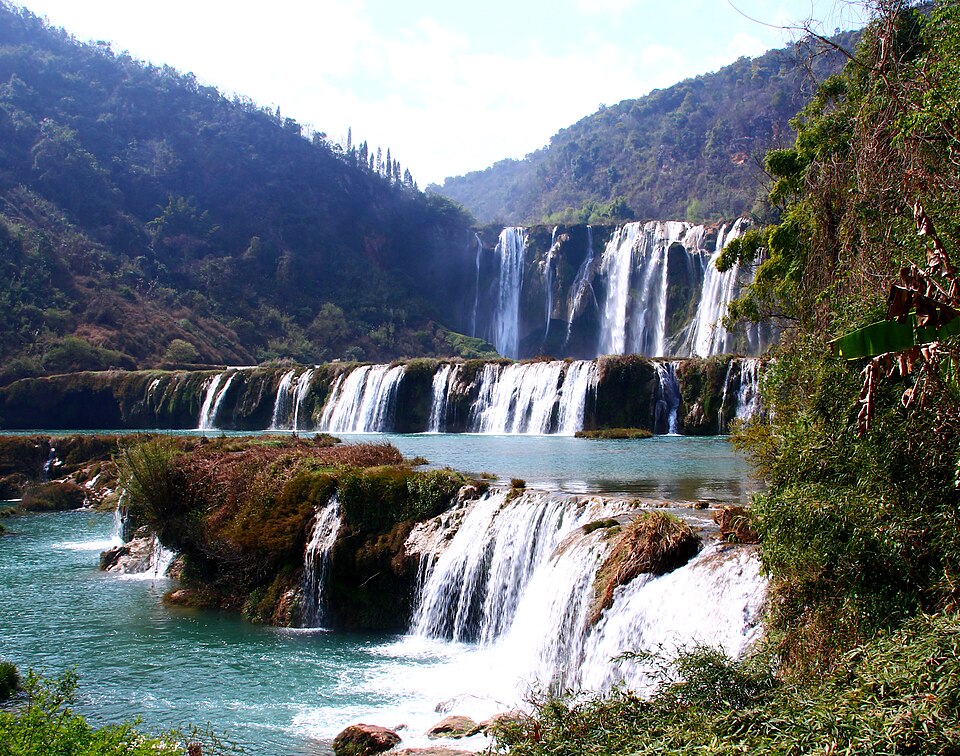
The "Nine Dragons" falls drop through a series of tiers on the Jiulong River, with paths and bridges that let you walk along the whole sequence. Allow half a day. A common tip is to enter at the west gate and leave by the east, so the walk runs downhill and you finish near transport. Water volume is highest in the summer rainy season, when the falls are most dramatic but the paths are wet and slippery. In the dry season they are gentler but still attractive.
Paths and bridges along the falls
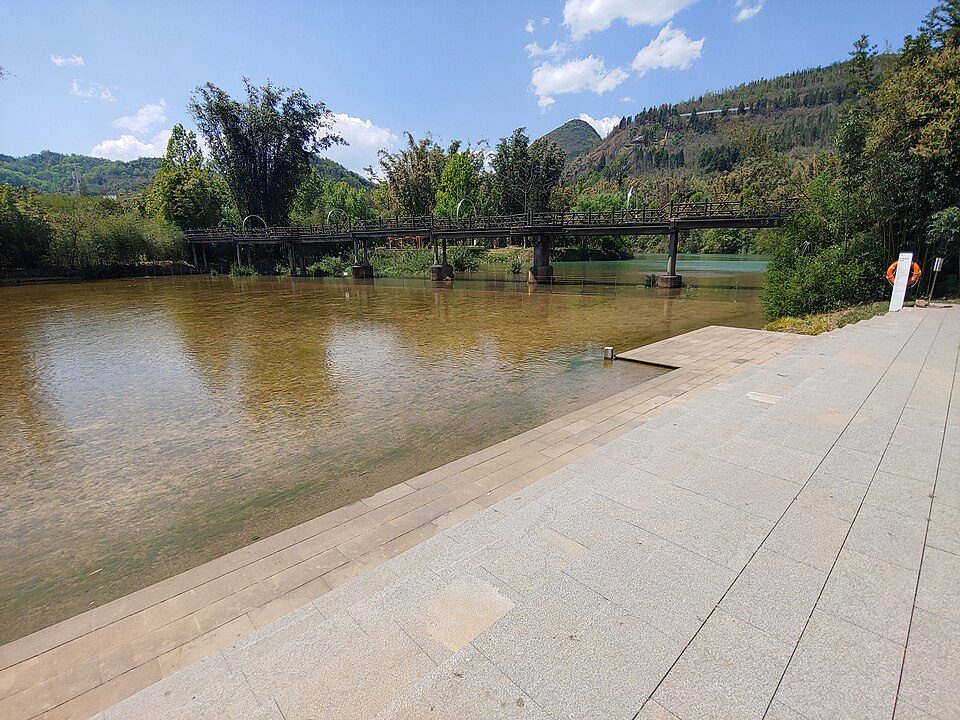
Between the big cascades the trail passes pools and smaller drops, with places to sit and rest. Bring shoes that grip on wet stone, a rain jacket in summer, and something to keep your camera dry near the spray.
Duoyi River and Buyi villages
The Duoyi River, a clear stream through bamboo and Buyi villages east of Luoping, is the gentle third half-day. Bamboo rafts and riverside walks are the usual activities, and village restaurants serve Buyi dishes such as five-colour rice.
Qujing city and the Cuan steles
Qujing's history goes back to the Cuan clan, who ruled eastern Yunnan in the centuries after the Han. Their legacy is a pair of steles prized by calligraphers: the Cuan Baozi stele in the city and the Cuan Longyan stele in Luliang County. Further afield, Maxiong Mountain in Zhanyi is promoted as the source of the Pearl River, and the Luliang Colorful Sand Forest offers striped sand formations. These are for travellers with spare time or a specific interest.
When to come to Qujing
Late February to mid-March for canola. April to May and September to November for mild weather and quieter roads, with the waterfalls still worth seeing. June to August is the rainy season: the falls are at their fullest, but expect showers and slippery paths. Winters are dry and cool. The plateau sun is strong all year, so bring sun protection.
Getting in and where to stay
- To Qujing city: high-speed trains on the Shanghai–Kunming line stop at Qujing North, a short ride from Kunming.
- To Luoping: Luoping is on a conventional line, and trains from Kunming take roughly three to six hours depending on the service; during flower season extra sightseeing trains have been added. Coaches also run from Kunming.
- Getting around Luoping: viewpoints are spread out, so a hired car or driver is much more efficient than local minibuses. Agree the route and price before you set out.
- Where to stay: Luoping town for flowers, falls and the Duoyi River. Qujing city only if you are passing through by high-speed train.
Kunming is the gateway, with the Stone Forest on the way. Zhaotong to the north has the Dashanbao wetlands; Liupanshui and Anshun in Guizhou lie across the border to the east.
Eating in Qujing
Eastern Yunnan cooking is spicy and sour, with plenty of fresh vegetables and pickles. Look for Buyi five-colour rice around Luoping, claypot rice and local noodles in county towns, and honey from the canola fields, which is sold everywhere in season. Restaurants near Luoping's main streets fill up on bloom weekends; eat early.
How to arrange the route
In bloom (three days): Day 1, arrive in Luoping, Niujie terraces in the afternoon light. Day 2, sunrise at Jinji Peak Cluster, Jiulong Waterfalls after lunch. Day 3, Duoyi River or a second sunrise, then back to Kunming.
Out of season (two days): Day 1, Jiulong Waterfalls. Day 2, Duoyi River and a Buyi village, then onward.
What to cut if short on time
In bloom, keep one sunrise at Jinji and the waterfalls, and drop the Duoyi River. Out of bloom, keep the waterfalls and skip the viewpoints. Qujing city sights are the first cut in any season.
Things to confirm before you go
- Live flower reports from Luoping's tourism channels.
- Waterfall opening hours and ticket arrangements.
- Train times from Kunming to Luoping, including any seasonal trains.
- Hotel bookings in Luoping during peak bloom.
Frequently asked questions
When do the Luoping canola fields bloom?
Usually from late February to mid-March, with Jinji Peak Cluster first and the fields near Jiulong Waterfalls last. Check live reports each year.
Is Luoping worth visiting outside canola season?
Yes, for the Jiulong Waterfalls and the Duoyi River, but plan a shorter trip.
How do I get from Kunming to Luoping?
By conventional train, taking roughly three to six hours, or by coach. High-speed trains go to Qujing North, which is not where the flowers are.
Sources
The facts in this article were checked against the following sources, retrieved September 18, 2026, and rechecked on October 20, 2026.
- Qujing https://en.wikipedia.org/wiki/Qujing
- Luoping County https://en.wikipedia.org/wiki/Luoping_County
- Qujing (Chinese) https://zh.wikipedia.org/wiki/曲靖市
- Luoping (Chinese) https://zh.wikipedia.org/wiki/罗平县
- 2026 Luoping canola bloom guide (LY.com) https://m.ly.com/trip/detail/5293726
- Kunming to Luoping train timetable (Ctrip) https://trains.ctrip.com/TrainBooking/kunming-luoping/gaotie
Scenic tickets change; this article does not quote yuan amounts, so check the official notice for your date.
All photos are from Wikimedia Commons, used under CC licenses; re-use requires attribution.
- qujing-luoping-canola.jpg from File:Canola field in Luoping.JPG, by Fanghong, CC BY-SA 3.0
- qujing-jiulong.jpg from File:Jiulong waterfalls in Luoping, Yunnan, China.jpg, by Zhangmoon618, CC BY-SA 3.0
- qujing-jiulong-park.jpg from File:九龙瀑布风景区-园内风景.jpg, by 储油站, CC0