Longyou Grottoes
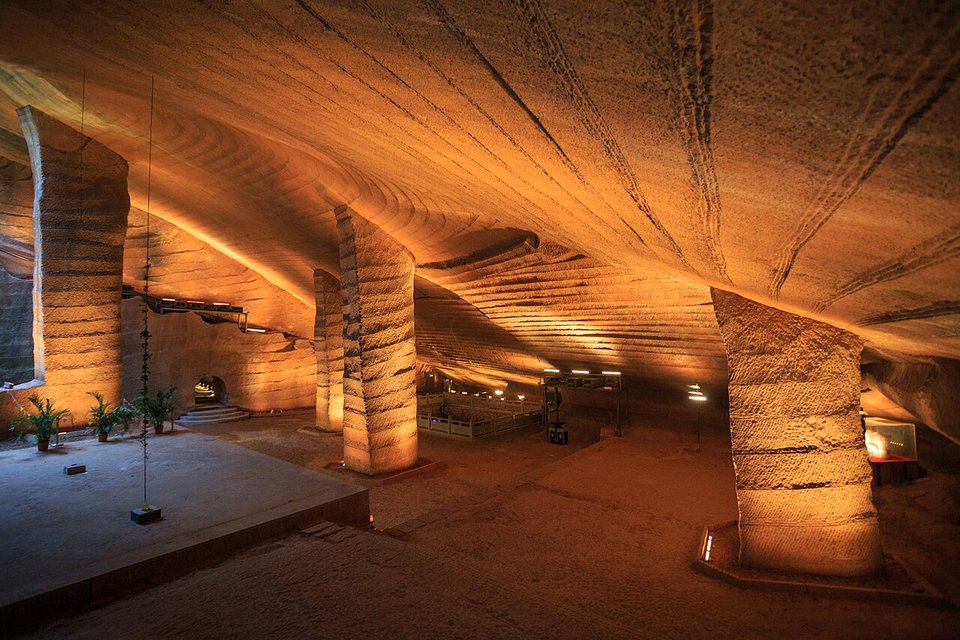
For generations the villagers of Shiyanbei, on the north bank of the Qu River in Longyou County, drew water from a few deep ponds that were said to have no bottom. In June 1992 a handful of them decided to pump one dry to catch the fish. What they found was a vast room cut by hand into the sandstone, with a sloping ceiling, standing pillars and walls covered in neat chisel marks. The Longyou Grottoes, half an hour's drive east of Quzhou city, have puzzled archaeologists ever since. Nobody knows for certain who made them, when, or why.
The discovery
Chinese Wikipedia tells the story in some detail. On 9 June 1992 a villager called Wu Anai and three others set four pumps running and kept them going for 17 days. When the water was gone they were looking at a huge underground structure. At first it was taken for an old quarry and attracted little interest. Only around 1998 did archaeologists begin to study the site seriously.
Further searching found many more chambers. English Wikipedia counts 24 caverns on Fenghuang Hill. Chinese Wikipedia says 7 have been opened, 2 of them later flooded again from surface water, and 5 have been fully drained and cleared. The scenic area became a national 4A site in 2003 and the caves were listed as a major national protected site in 2013.
What makes them strange
The size is the first surprise. English Wikipedia gives an average floor area of more than 1,000 square metres per cave and ceilings up to 30 metres high, with the total area of the group above 30,000 square metres. The caves are cut down from above like wells, and stone stairs inside stop short of the opening.
The finish is the second. Ceilings, walls and pillars are all dressed in parallel bands about 60 centimetres wide, each filled with chisel marks set at about 60 degrees to the band. The pattern is so regular that people often say it looks machine made.
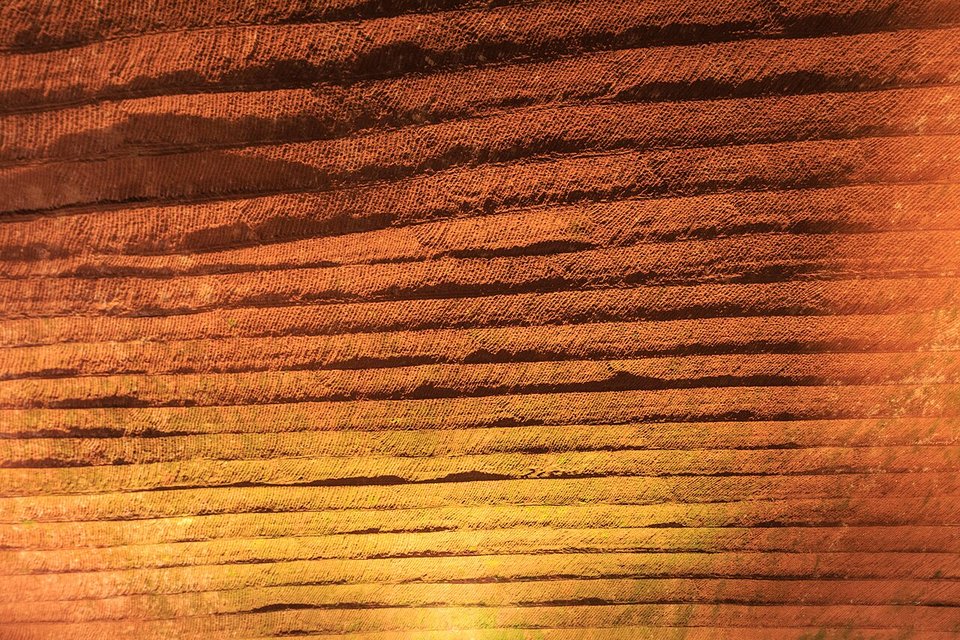
Then there are the puzzles that guides like to point out. Neighbouring caves sometimes share a wall only about half a metre thick, yet none of them were broken through and no tunnels link them. Chinese Wikipedia notes that there is no smoke blackening from torches or lamps, which leaves open the question of how the workers saw what they were doing. The amount of rock removed across the caves has been put at more than two million cubic metres, and no historical record mentions the work.
The theories
English Wikipedia says the caves are mentioned in a 17th century poem and that pottery fragments dated between 206 BC and AD 23 were found in silt inside them. That points to the caves being at least two thousand years old, and Chinese Wikipedia gives a likely range from the Spring and Autumn period to the Han.
A quarry is the obvious explanation, though the layout makes little sense for cutting building stone. Chu Liangcai of Zhejiang University argued after many site visits that the caves began as granaries and stores in the Western Han, built under a policy of storehouses in border commanderies. Yang Hongxun of the Chinese Academy of Social Sciences proposed that the king of Yue, Goujian, cut them to hide troops. Guides on site enjoy the Goujian story, but none of the theories is proven, and the caves flood easily, which is awkward for any idea about storing grain or weapons. The mystery is honestly the main attraction.
Visiting
The caves sit inside a landscaped park with a lake and pavilions. Ctrip reviewers point out that you only show a ticket at the caves themselves, so the park is free to stroll. The tour runs through the opened caves on lit walkways and stairs, and reviewers say the caves themselves take half an hour to an hour. The official site warns that the caves are dim with many steps, and that the temperature inside stays around 16 to 18 degrees, so carry a light jacket in summer. Audio guides can be rented.
Tickets and hours
The official Longyou Grottoes site lists an adult ticket of 85 yuan and a half price ticket of 42 yuan for minors, full time students up to bachelor's level and people aged 60 to 69, with free entry for people aged 70 and over, children 6 and under or below 1.2 metres, serving soldiers and people with disabilities. It gives daily hours of 8:00 to 16:30, with last entry to the caves at 16:10 during free opening periods. Ctrip gives 16:20 as the end of ticket sales the rest of the year. The official site says tickets are sold at the scenic area window, and online tickets from partner platforms must be booked by 23:59 the day before.
Quzhou's free travel scheme includes the Longyou Grottoes. A city document says entry is free from January to March, except the Spring Festival holiday, and in November and December, with booking through the Quzhou culture and tourism WeChat account. A Tide News guide from April 2026 lists the grottoes at 65 yuan, so the price on the day may differ from the official list. Check the day's notice before you go.
Getting there
The grottoes are at Shiyanbei village in Xiaonanhai town, about 3 kilometres from Longyou town. The official site says a taxi from Longyou Station takes about 15 minutes, and that the drive from central Quzhou takes about half an hour. There is free parking. City buses and tourist routes run from Longyou town; check the last bus back.
The grottoes pair well with the Southern Confucius Family Temple in Quzhou on the same day, and the cool interior makes them a good choice for a hot afternoon. Jianglang Mountain is in the opposite direction and needs its own day.
Frequently asked questions
How old are the caves?
Pottery in the silt suggests at least two thousand years, though the date they were cut is still debated.
Are they worth the ticket?
Opinions differ. The caves are impressive and the tour is short, so they suit a visit in a free month or as part of a day in Quzhou.
Is it suitable for children?
Yes, with care on the stairs in the dark.
Sources
Facts in this article were checked against the following sources, retrieved 23 October 2026.
- 龙游石窟, Chinese Wikipedia
- Longyou Caves, English Wikipedia
- Longyou Grottoes official site, visitor information
- Ctrip, Longyou Grottoes listing
- Quzhou culture and tourism bureau, free travel scheme rules (PDF)
- Tide News, Quzhou travel guide, April 2026
- Quzhou travel guide on this site
Photos are from Wikimedia Commons under the licences shown in each caption.