Hangzhou Travel Guide: West Lake, Lingyin and a Three-Day Plan
Hangzhou comes down to two things: West Lake, which is free and takes as long as you give it, and Lingyin Temple with the carved cliffs of Flying Peak in the hills to the west. Two days covers both at a decent pace, and three lets you add the Qiantang River and the old town. The one thing to arrange in advance is Lingyin. Since 1 December 2025 it has been free, but every visitor needs a real-name booking on the 「杭州灵隐飞来峰」 mini-program (WeChat or Alipay), released at 08:00 up to seven days ahead. Book as soon as your dates are fixed, then plan the lake around it.
Planning: the lake, Lingyin and everything else
Give the lake at least half a day, on foot. The causeways are the point, and you only feel them by walking. Half a day covers one causeway, Gu Hill and the south shore for sunset at Leifeng Pagoda. A full day adds the second causeway and a boat to the island of Three Pools Mirroring the Moon. Walking the whole shore is about 15 km.
Do Lingyin on a separate morning. The booking gives you a morning (07:30 to 12:00) or afternoon (12:00 to 17:00) slot. On weekdays mornings are busier. At weekends and holidays the crowds peak around 14:00. Either way, don't put Lingyin on the same morning as a full lake walk. The Yue Fei Temple is on the way back from Lingyin towards the lake, and it is the natural add-on.
The rest is optional. Liuhe Pagoda, on the Qiantang River south of the lake, costs half a day in transport. Hefang Street is an evening stroll in the old town. Both are first to go on a short trip.
When to come to Hangzhou
Hangzhou has a subtropical monsoon climate with an annual mean of about 17.5°C. Spring and autumn are short, and summer and winter long. October and November are the best months: clear skies, mild days and the lake at its best. Spring (late March to April) is lovely too, with the willows coming into leaf, though Lingyin and the causeways are crowded. The plum rains run from about mid-June to mid-July, and August can bring typhoons. Both wipe out boat trips and make pagoda terraces unpleasant. Winter is cold and damp by the water, but quiet.
National holidays fill every path around the lake. If your dates include the first week of May or October, book Lingyin the moment slots open, accept a shorter lake walk, and use the metro.
How to get in and where to stay
By air: Hangzhou Xiaoshan International Airport (HGH) is east of the city, across the Qiantang. Metro Line 1 runs straight to Longxiangqiao on the east shore of the lake in about 40 minutes. Line 19 is the fast link to Hangzhou East station, about 23 minutes.
By train: most high-speed trains use Hangzhou East, which has metro connections to the lake. Some also stop at Hangzhou station (城站) in the old town, close to Hefang Street, or at the newer Hangzhou West. From Shanghai Hongqiao it is under an hour on the fastest trains, and from Suzhou South station the newer Shanghai–Suzhou–Huzhou line gets you to Hangzhou West in 45 minutes to an hour.
Where to stay: the east shore around Hubin and Longxiangqiao station is the most convenient base, with the lake at one end of the street and the metro at the other. The quieter north shore along Beishan Road is closer to Lingyin. Avoid staying near Hangzhou East for a sightseeing trip. It is a metro ride from everything.
Places worth visiting
West Lake: one causeway or two
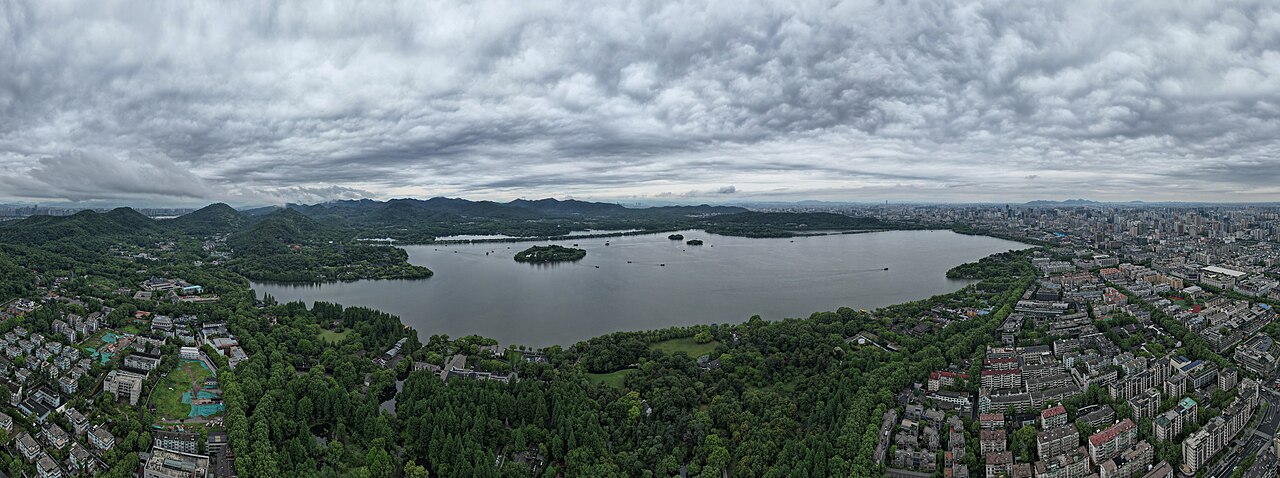
The lake covers about 6.39 km² and is split by two long causeways, both named after poet-governors who dredged it: the Bai Causeway for Bai Juyi in the Tang, and the Su Causeway for Su Shi in the Song. Gu Hill, the lake's largest natural island, sits at the end of the Bai Causeway. West Lake became a UNESCO cultural landscape in 2011, and it was the first 5A scenic area in China with no entry fee. Walking the shore and causeways costs nothing. Boats, pagodas and some gardens charge.
Start at the Broken Bridge at the east end of the Bai Causeway early in the morning, before the crowds. Then walk to Gu Hill and either carry on along the north shore or cross to the Su Causeway, which runs nearly 3 km north to south. The boat to Three Pools Mirroring the Moon, the scene on the back of the 1-yuan note, costs 55 yuan in 2026, including the 20-yuan island fee. Order, boats and timing are on the West Lake page.
Lingyin Temple
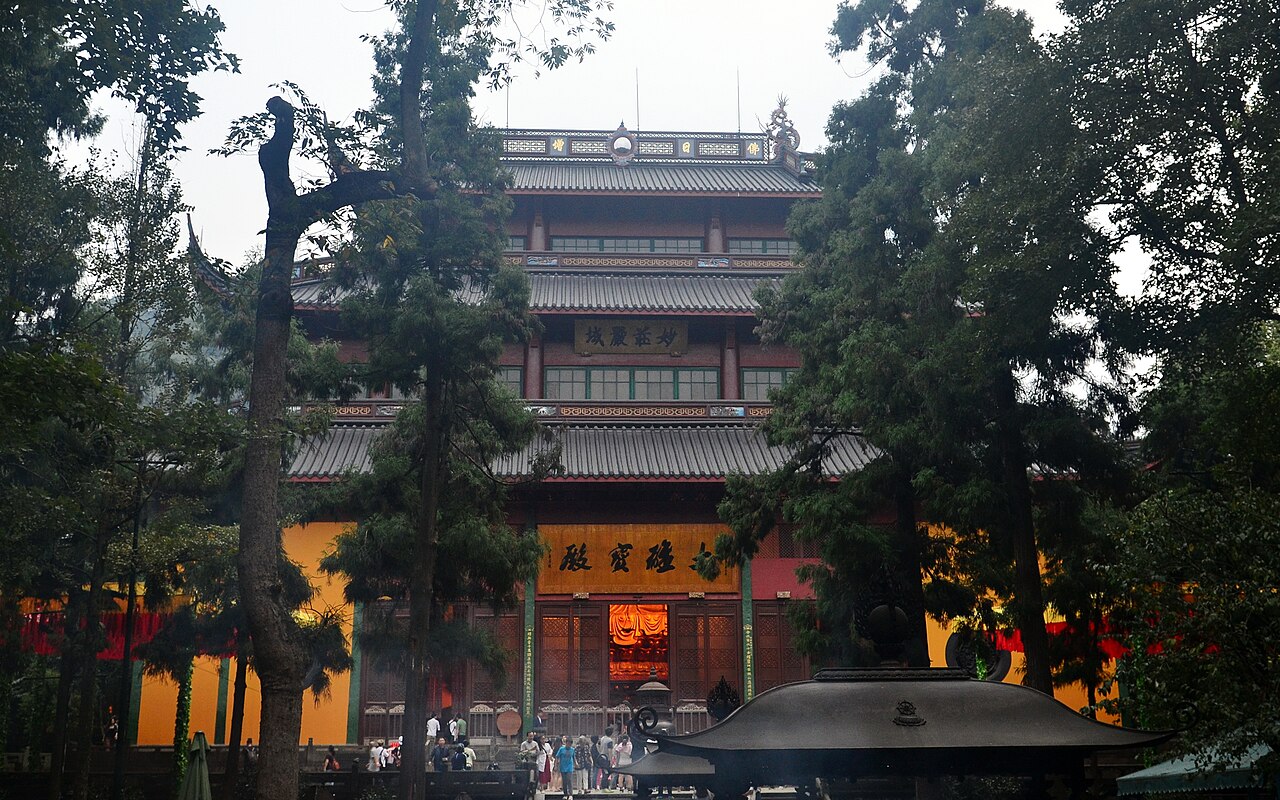
Lingyin was founded in 326, under the Eastern Jin, by the monk Huili. The Kangxi Emperor renamed it Yunlin Chan Temple, but everyone still calls it Lingyin. It remains a working monastery. The great camphor-wood Shakyamuni in the Mahavira Hall dates from 1956, not from antiquity. Your free booking covers Lingyin, Flying Peak and the smaller Yongfu and Taoguang temples further up the valley. Bring the original passport you booked with: there is no QR code to show, and staff match your face to the document at the gate.
Getting there takes a little thought, as there is no metro station at the gate. Bus 7 runs from Hangzhou station (城站, metro Lines 1 and 5) to the Lingyin terminus. Weekend traffic is heavy and parking is scarce, so leave the car. The Lingyin Temple page has the booking rules, the no-show penalty and a route through the valley.
Flying Peak carvings
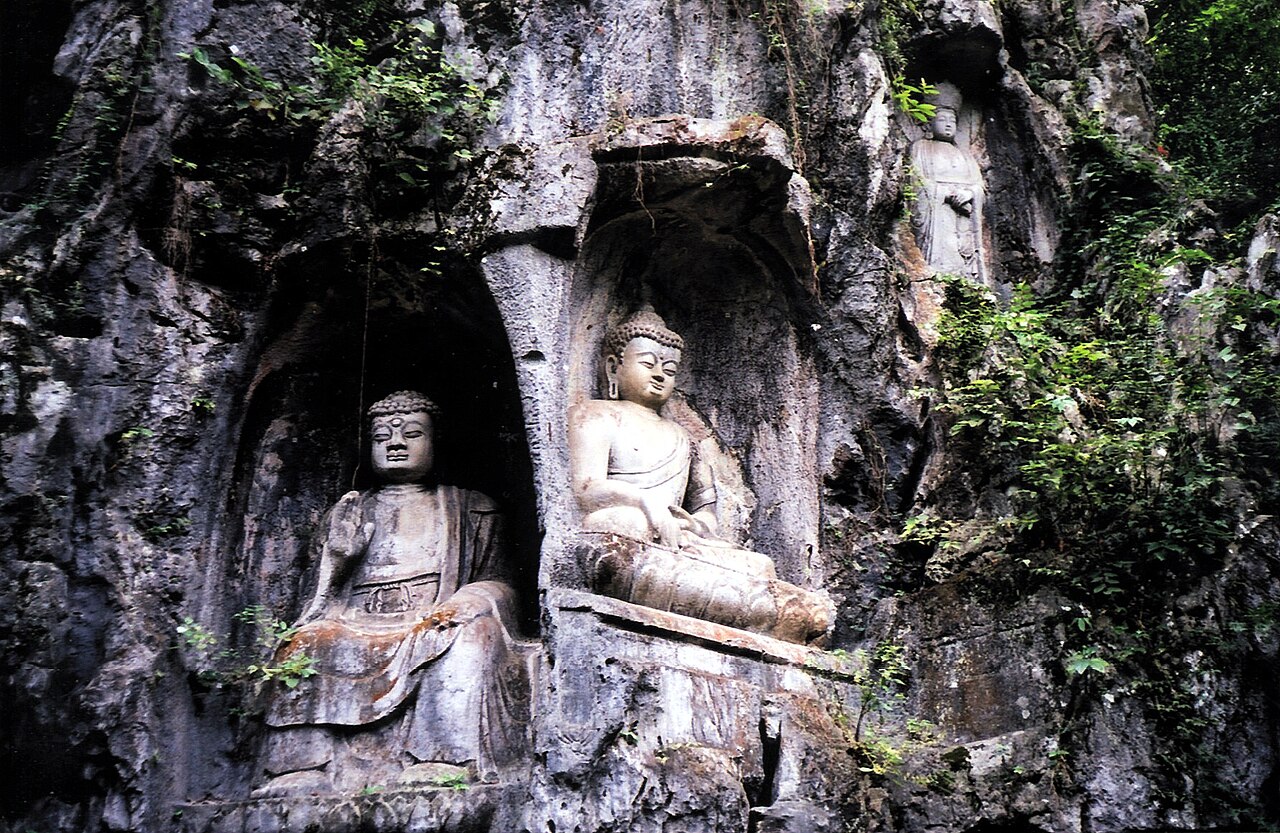
The limestone hill opposite the temple, across a stream, carries more than 400 carved Buddhist figures from the Five Dynasties to the Yuan, in caves and on the cliffs beside the path. The Song carvings are the most numerous, and the Yuan figures show the influence of Tibetan Buddhism. You pass them on the way to the temple, so give them time rather than hurrying past.
Leifeng Pagoda at sunset
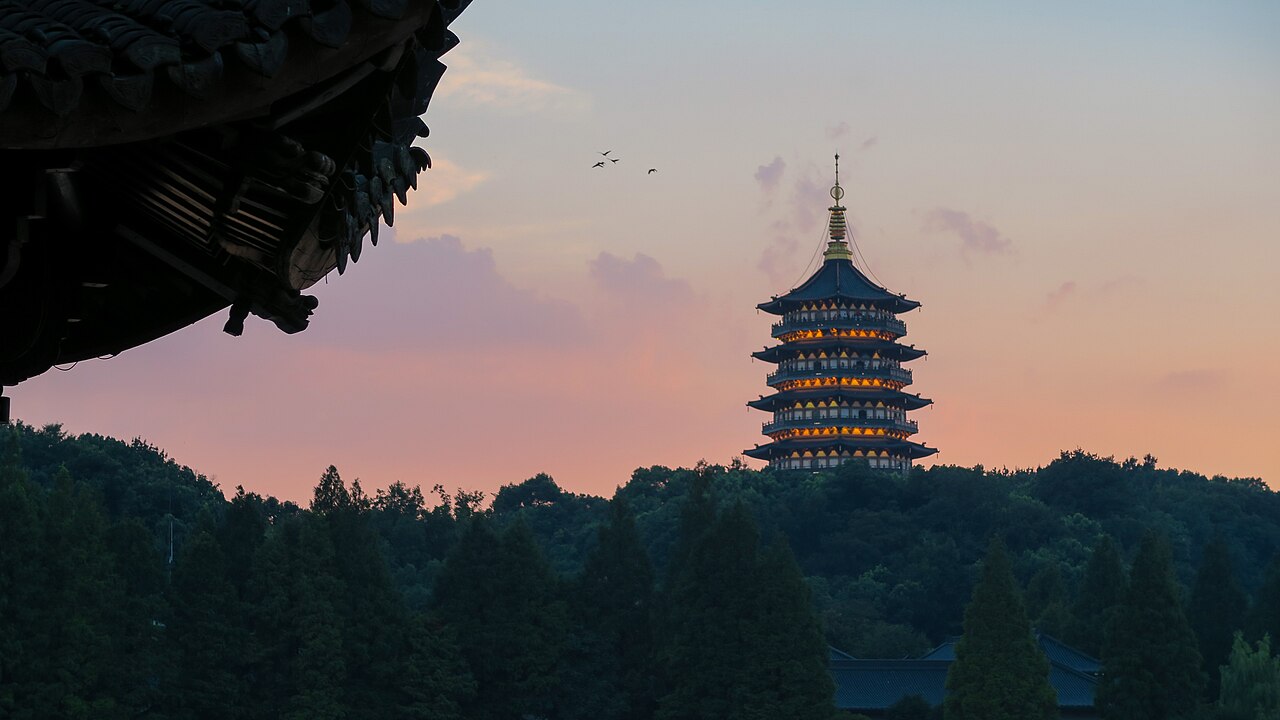
"Sunset glow at Leifeng" has been one of the Ten Views of West Lake since the Southern Song. The first pagoda was built in 977 by Qian Chu, king of Wuyue, and it is the setting of the Legend of the White Snake. It collapsed on 25 September 1924, and the present tower, completed in 2002, stands over the old foundations, which you can see under glass. Tickets cost 40 yuan, and from May to October it opens 08:00 to 20:00, with last entry at 19:30. Climb about an hour before sunset. Or skip the ticket and watch from the shore, which is where the classic photo is taken. See Leifeng Pagoda.
Yue Fei Temple
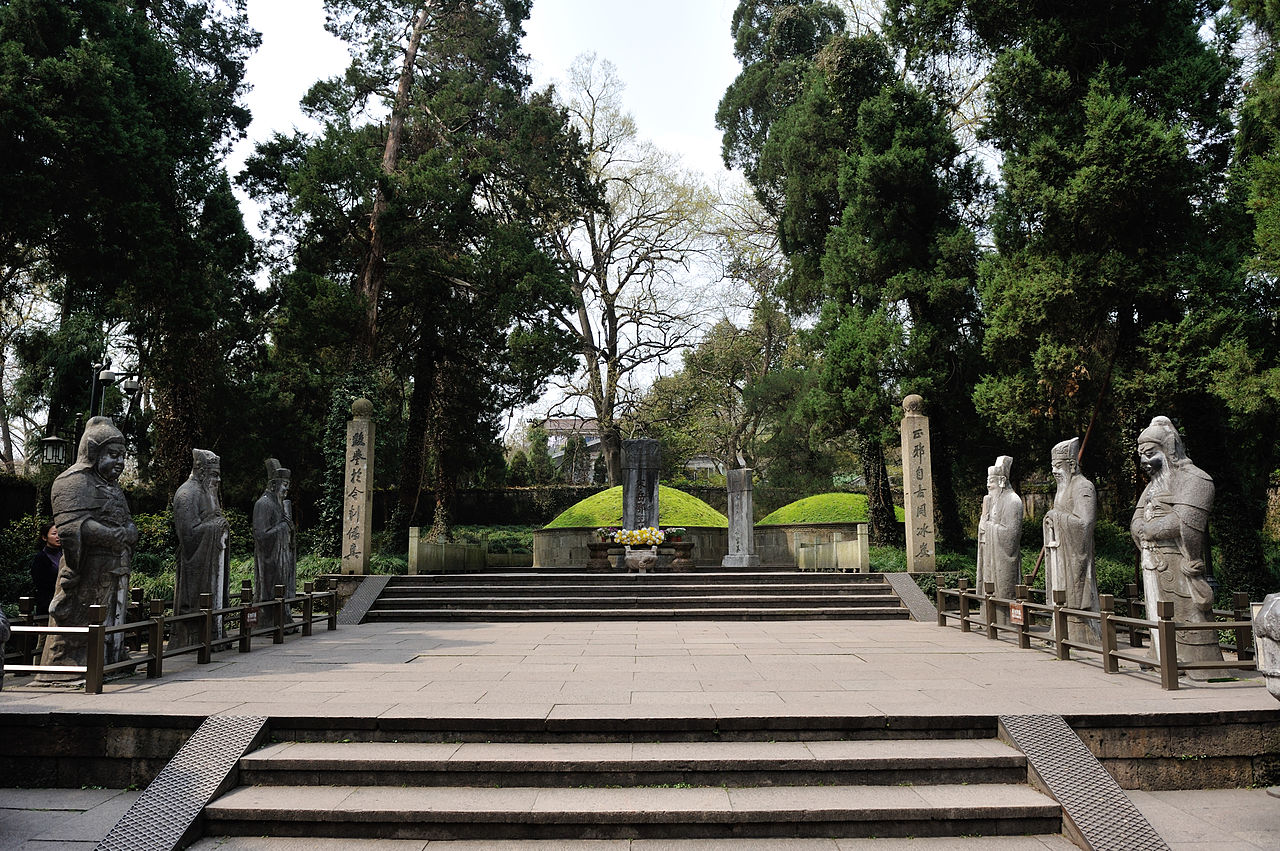
The memorial temple and tomb of Yue Fei, the Southern Song general executed in 1142 on false charges, stands at the foot of Qixia Hill on the north shore. The temple dates from 1221. It was badly damaged in the Cultural Revolution and restored in 1979. Inside, the main hall has his statue under the words "Give me back my rivers and mountains". In front of the tomb kneel iron figures of the four people blamed for his death, among them the chancellor Qin Hui and his wife. Tickets cost 25 yuan, and under-18s go free. It opens 07:30 to 17:30, and an hour is enough. See Yue Fei Temple.
Liuhe Pagoda and the Qiantang
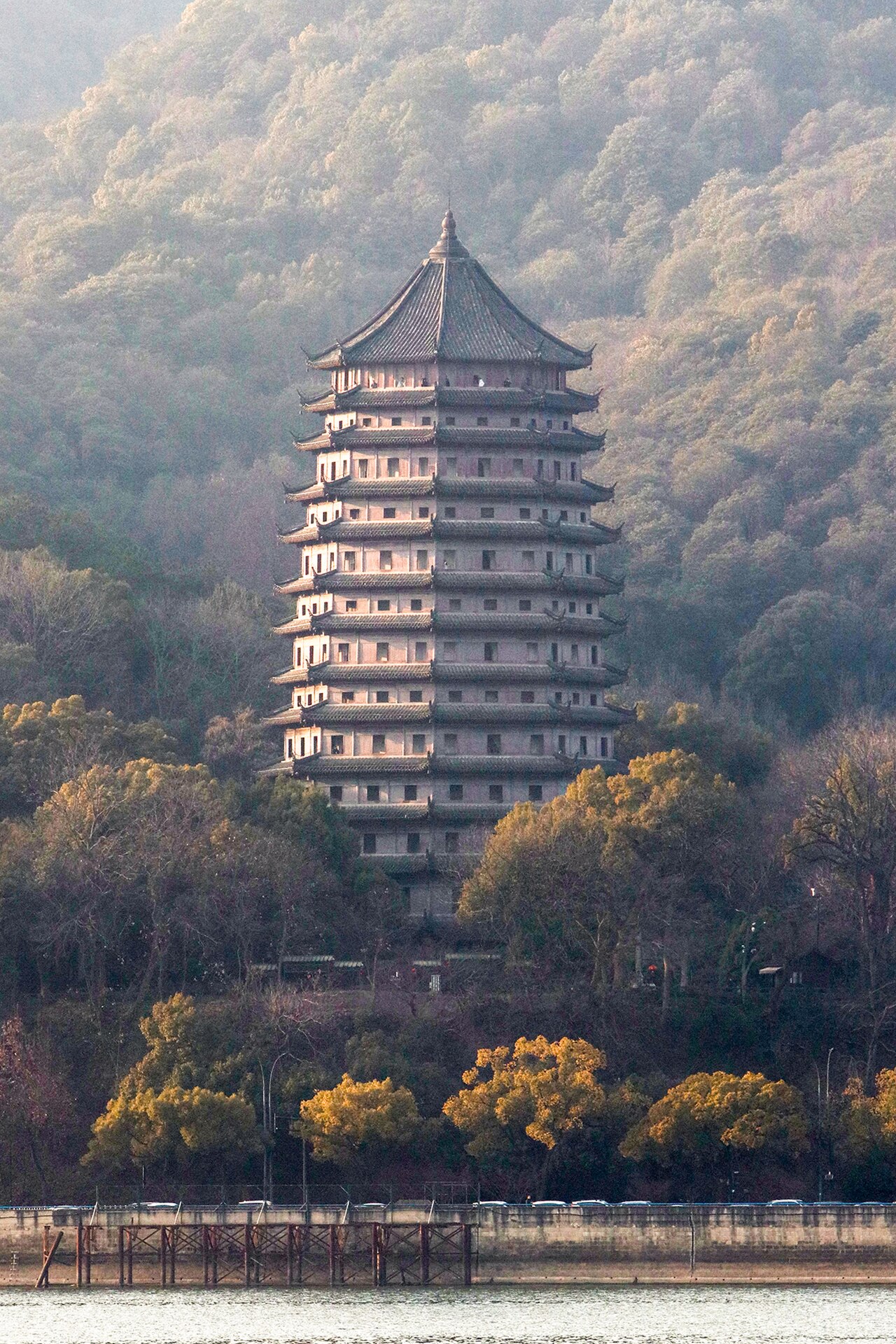
The Six Harmonies Pagoda was founded in 970 to calm the Qiantang River's tides, and its present body dates from the Southern Song. It stands on Yuelun Hill, next to the Qiantang River Bridge, a short bus ride south of the lake. In 2026 entry is 20 yuan and the climb another 10, and it opens 07:00 to 17:30. The pagoda is a popular place to watch the tidal bore around the 18th day of the eighth lunar month. Otherwise, it is the first thing to cut on a short trip. See Liuhe Pagoda.
Hefang Street
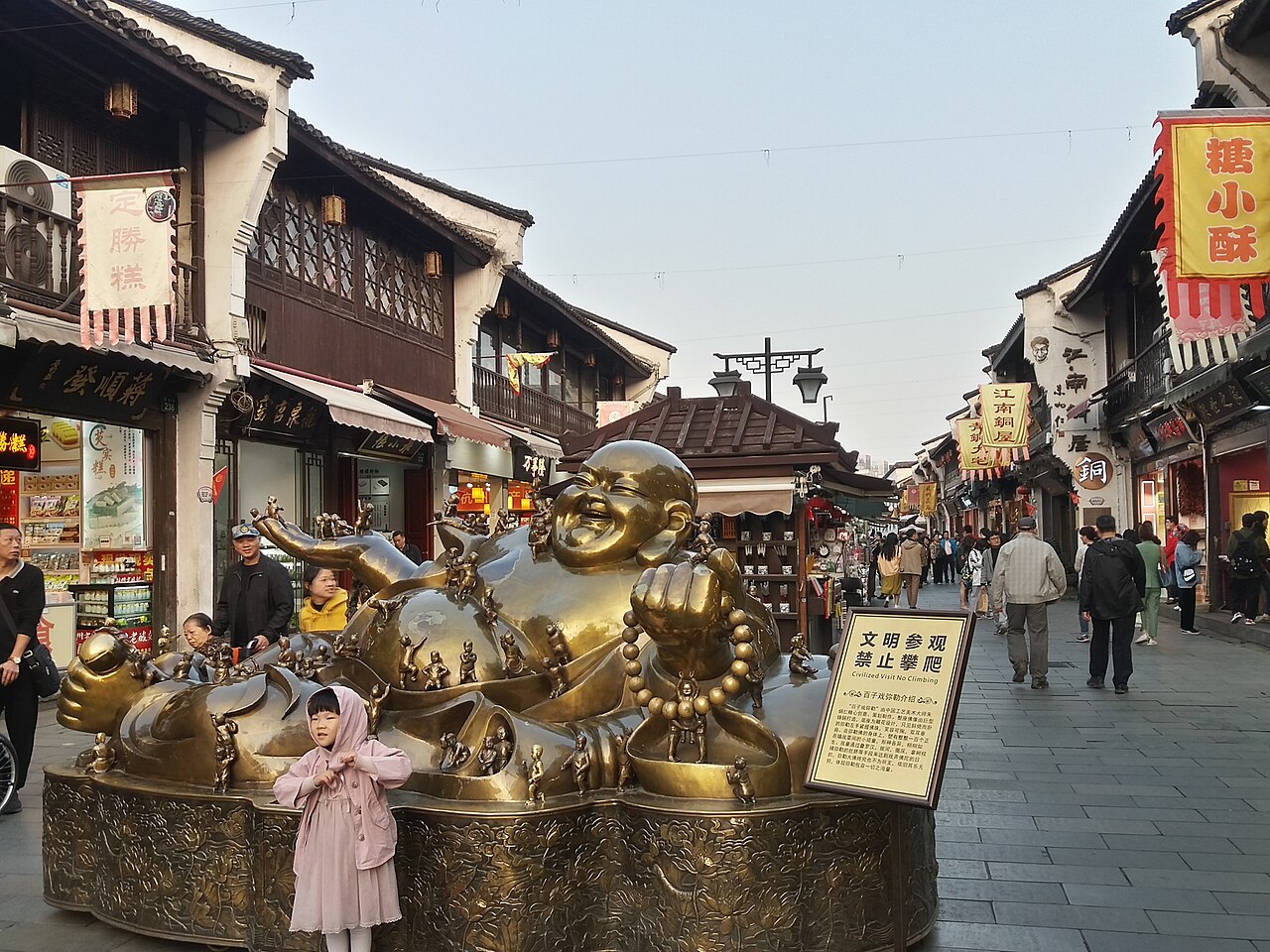
From the Song to the early Republic this was the heart of commercial Hangzhou, at the foot of Wu Hill where it met the old Imperial Way. Today it is a free pedestrian street of snacks, tea, old shops and souvenirs, and is busiest in the evening. The one proper sight is the Hu Qing Yu Tang pharmacy, founded by the merchant Hu Xueyan and now a museum of Chinese medicine (10 yuan). Take metro Line 7 to Wushan Square or Line 1 to Ding'an Road. See Hefang Street.
Eating in Hangzhou
Hangzhou cooking is light and slightly sweet, built around freshness more than spice. The signature dishes are West Lake fish in vinegar sauce, Dongpo pork (slow-braised belly named after Su Shi) and shrimp stir-fried with Longjing tea leaves. The old lakeside restaurants such as Louwailou and Zhiweiguan all serve them. Also look for beggar's chicken baked in clay, "Sister Song's" fish soup and old duck stew.
For cheap eating, try pian'er chuan noodles with pickled greens and bamboo shoots, small steamed buns, and congbao hui'er, a Hangzhou snack of fried dough and spring onion rolled in a thin pancake, pressed on a griddle and brushed with sweet bean sauce.
Tea matters here. The city has over 700 teahouses, and West Lake Longjing is grown in the hills around the lake, traditionally in four areas known by the hills of the Lion, Dragon, Cloud and Tiger. A slow pot at a tea house is a good way to spend a hot afternoon, or a wet one.
How to arrange the route
Day 1, West Lake. Broken Bridge and the Bai Causeway at 07:00 or 08:00. Gu Hill late morning, then lunch. Walk the Su Causeway south in the afternoon, or take the boat to Three Pools Mirroring the Moon. Finish at Leifeng Pagoda for sunset, and have dinner at Hefang Street or near the east shore.
Day 2, Lingyin. Morning slot at Lingyin and Flying Peak, three hours or so. Bus or taxi back towards the lake for the Yue Fei Temple in the early afternoon, then the north shore along Beishan Road. Spend the evening by the lake on the east shore, or rest.
Day 3, river and old town. Liuhe Pagoda in the morning, back to the old town for lunch, the Hu Qing Yu Tang museum and Hefang Street in the afternoon. Or spend the day in the tea villages of Longjing and Meijiawu instead.
Onward travel. Shanghai is under an hour by fast train, and Suzhou, for the classical gardens, is a similar time from Hangzhou West. Shaoxing is closer still, for Lu Xun's old streets and yellow wine. Ningbo, with the Tianyi Pavilion and its old bund, is about an hour by train. South and west lie Huangshan, roughly one and a half to two hours by high-speed rail, Quzhou for the Jianglang Danxia, and Taizhou for Tiantai and Shenxianju.
What to cut if short on time
Drop in this order:
- Liuhe Pagoda, unless you're there for the tidal bore.
- Hefang Street, which is pleasant but not essential.
- The Yue Fei Temple, if Lingyin has used up your morning and your appetite for halls.
- The second causeway and the island boat. Keep one causeway and the Leifeng sunset.
With one day only: Lingyin in the morning slot, then the Bai Causeway, Gu Hill and Leifeng at sunset.
Things to confirm before you go
- Lingyin booking: free, real-name, on the 「杭州灵隐飞来峰」 mini-program, released daily at 08:00 up to seven days ahead. Cancel by 17:00 the day before. A no-show suspends your account for 30 days.
- Visitors aged 70 and over don't need to book Lingyin, and nor do some other priority groups. Bring ID.
- Paid sights (Leifeng, Yue Fei Temple, Liuhe) can be booked ahead through the official 「雷峰塔景区」 and 「西湖旅游」 channels, and their hours change by season.
- Boats stop selling tickets earlier in autumn (16:30 from September to mid-November) and are cancelled in strong wind.
- Weather: plum rains in June and July, typhoons in August.
- Payment: set up Alipay or WeChat Pay before arriving. You'll need one of them for the Lingyin booking anyway.
Frequently asked questions
How many days do you need in Hangzhou?
Two days covers West Lake and Lingyin properly. Three lets you add Liuhe Pagoda, the old town and the tea villages without rushing.
Is Lingyin Temple free?
Yes, since 1 December 2025, but you must book a free real-name slot on the 「杭州灵隐飞来峰」 mini-program, up to seven days ahead.
Is West Lake free to visit?
Yes. The shore, the causeways and most lakeside parks are free. Boats, Leifeng Pagoda and some gardens and museums charge.
When is the best time to visit Hangzhou?
October and November for clear skies and mild weather, or late March to April for spring. Avoid the plum rains of June to July and national holidays if you can.
Where can you watch the Qiantang tidal bore?
Around Liuhe Pagoda is one popular spot. The bore is biggest around the 18th day of the eighth lunar month. Stay behind the barriers, as the water can surge over the banks.
Sources
The historical and geographic facts were checked against these Chinese Wikipedia entries, retrieved 11 August 2026.
- Hangzhou (city) https://zh.wikipedia.org/wiki/杭州市
- West Lake https://zh.wikipedia.org/wiki/西湖
- Lingyin Temple https://zh.wikipedia.org/wiki/灵隐寺
- Flying Peak carvings https://zh.wikipedia.org/wiki/飞来峰(杭州)
- Leifeng Pagoda https://zh.wikipedia.org/wiki/雷峰塔
- Liuhe Pagoda https://zh.wikipedia.org/wiki/六和塔
- Hangzhou Yue Fei Temple https://zh.wikipedia.org/wiki/杭州岳王庙
- Hefang Street https://zh.wikipedia.org/wiki/河坊街
Ticket prices, hours, booking rules and transport were rechecked on 10 October 2026 against the West Lake Scenic Area's Lingyin management notices (November 2025 and 26 January 2026), Hangzhou Daily's Hangzhou.com.cn, and 2026 listings compiled by Hangzhou Bendibao for Leifeng Pagoda, Liuhe Pagoda, the Yue Fei Temple and West Lake boats. The official notice on the day takes priority.
All photos are from Wikimedia Commons, used under CC licenses; re-use requires attribution.
- hangzhou-xihu.jpg from File 20250509西湖鸟瞰.jpg, by MasaneMiyaPA, taken May 9, 2025, CC BY-SA 4.0
- hangzhou-lingyin.jpg from File Hangzhou_Lingyin-Temple_20161003.jpg, by Tyg728, taken October 3, 2016, CC BY-SA 4.0
- hangzhou-feilaifeng.jpg from File Feilai_Feng_grottos.jpg, by Gisling, taken October 2004, GFDL, CC BY-SA 3.0/2.5/2.0/1.0
- hangzhou-leifeng.jpg from File Leifeng_Pagoda_at_Dusk.jpg, by Yinweichen, taken July 21, 2017, CC BY-SA 4.0
- hangzhou-liuhe.jpg from File 20240128_Liuhe_Pagoda_01.jpg, by Windmemories, taken January 28, 2024, CC BY-SA 4.0
- hangzhou-yuewang.jpg from File Yue_Fei_Temple,_2015-03-22_36.jpg, by Siyuwj, taken March 22, 2015, CC BY-SA 4.0
- hangzhou-hefang.jpg from File Hefang_Street.jpg, by 钉钉, taken November 8, 2019, CC BY-SA 4.0