The Chen Cihong Residence, Shantou: 506 Rooms of One Family
The Chen Cihong Residence is the largest of the overseas-Chinese mansions around Shantou — a walled sprawl of courtyards at Qianmei village in Chenghai district, built by a family that made its fortune in the Bangkok rice trade and shipped its taste home: Chaoshan courtyard plans under Western facades, imported enamel tiles, porcelain-sharp roof inlay. The complex covers about 25,400 square metres and 506 halls and rooms, and it rewards an unhurried two hours. It sits north of the city, so it pairs naturally with the Nan'ao Island bridge route or, with a car, as its own half-day out of Shantou.
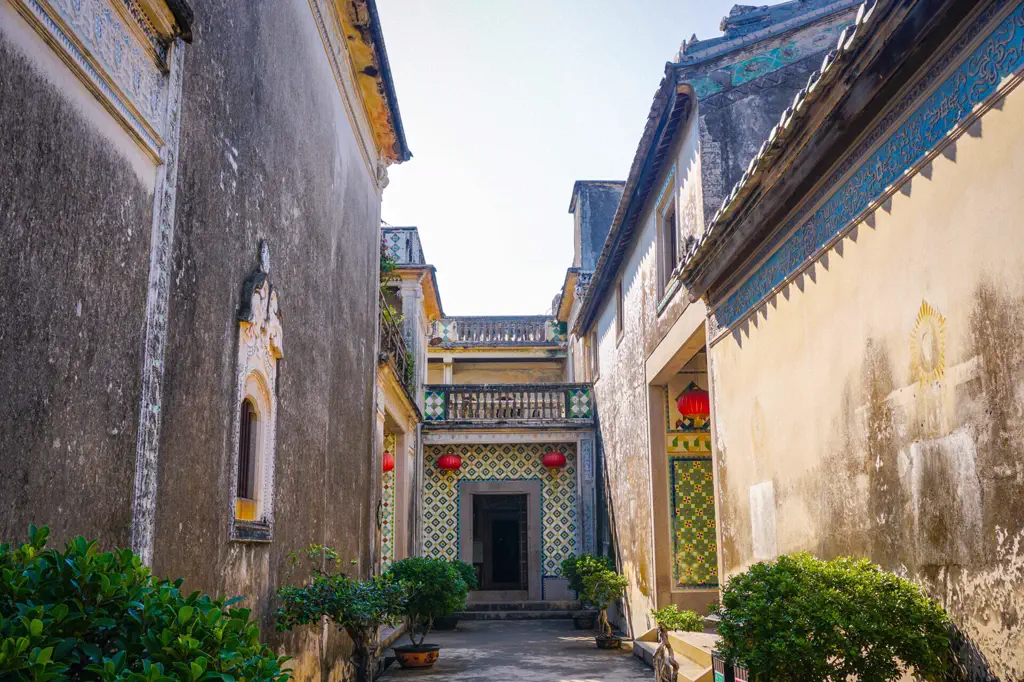
Who built it and why
Chen Cihong's family rose through the rice trade of Bangkok in the late nineteenth century, and like the great merchant families of Chaoshan they built their monument at home. Work began around 1910 and ran on and off for more than thirty years, in stages that trace the family's fortunes: the Langzhong Di and Shoukang Li compounds first, then the Shanxiju, the largest of the houses, which was still unfinished when the war stopped the work.
The result is a complex of four main residences — Langzhong Di, Shoukang Li, Shanxiju and the Sanlu study — with 506 halls and rooms in all, so large that the epithet attached to it, the "first overseas-Chinese mansion of Lingnan," sounds more like arithmetic than flattery. The compound was among the first such houses in Guangdong to open as a tourism site, in the late 1990s, and it joined the provincial register of protected cultural sites in 2002.
What the architecture is doing
The plan of each compound is the classic Chaoshan "four horses dragging a cart" — a main hall axis with flanking side houses — but every surface shows the century's traffic with the world. Doorways arch in Western curves; facades wear tiles fired in Europe and Southeast Asia; roof ridges carry qiangci, the sharp little sculptures cut from coloured porcelain shards; plaster relief runs along the eaves. The same room can hold Chaoshan wood carving under a Western arch, on a floor of imported tiles — the whole argument of the house: money earned at sea, spent on craft at home.
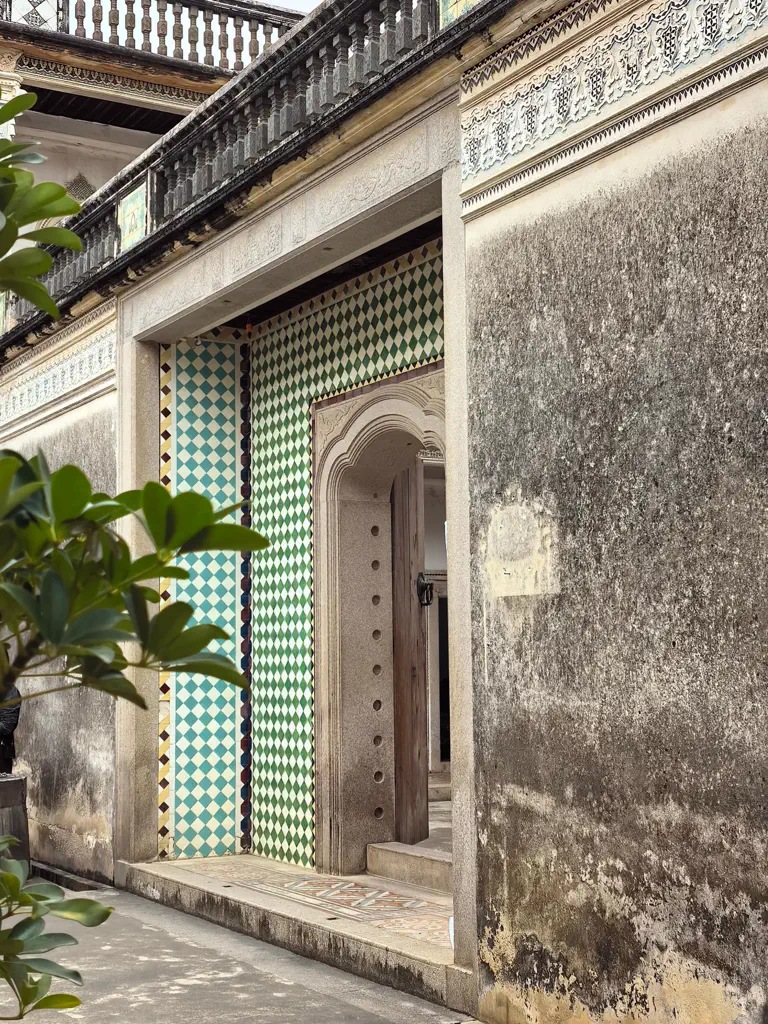
Look down as well as up: the tile floors repeat almost nowhere, because each batch was ordered and shipped separately, and walking the corridors reads like a catalogue of distant factories.
Visiting: what is open and what it costs
One of the four compounds, the Shanxiju, is the part open to visitors; the rest is village housing and shuttered halls, which is worth knowing before expecting the full 506 rooms. Tickets have drifted over the years — around 40 yuan at the gate in earlier listings, closer to 55 through online agencies in recent ones — so treat the posted price as the truth and the agencies' as an approximation. Opening hours have generally run through the daytime with last entry before late afternoon; confirm the day's notice.
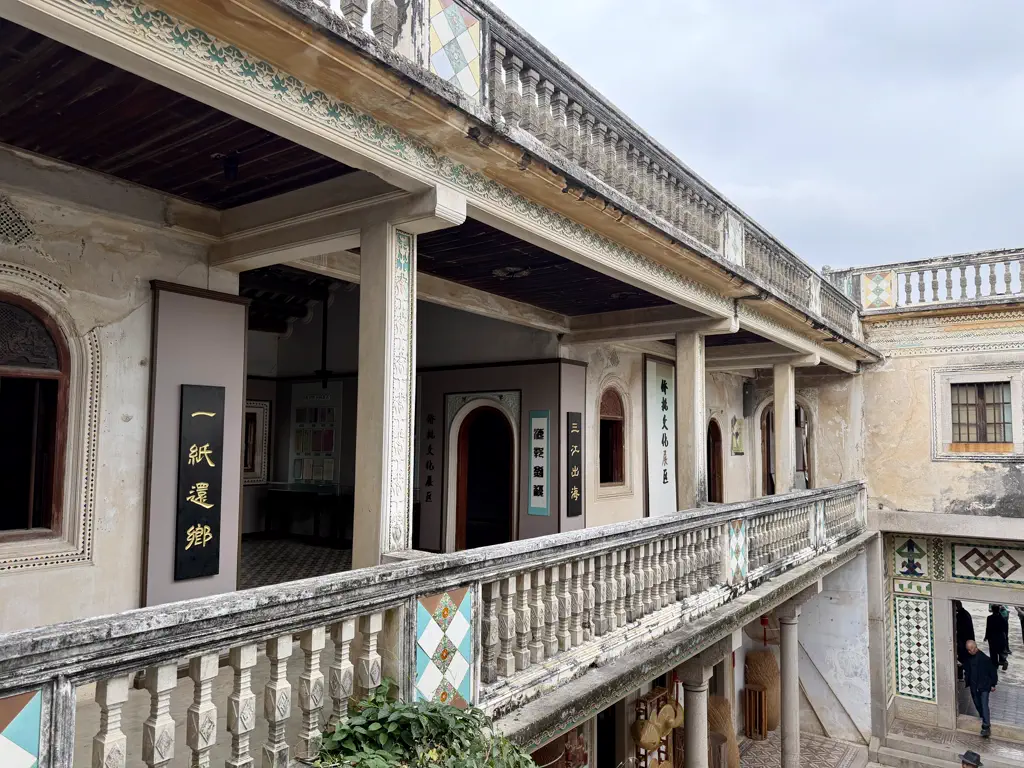
Inside, half the pleasure is getting lost: corridors loop through nearly identical courtyards, and the guides — quoted around 60 yuan locally — earn their fee by keeping the family story attached to the right rooms. Without one, two hours still goes quickly.
The village around the house
Qianmei is a functioning village with other remnants of the same era: the Yongning Fort, a walled enclosure older than the mansion and free to enter, and lanes of grey-brick houses that give the place scale. On festival years the village stages Chaoshan customs at full volume — the "coming of age" rituals and the great pig offerings that the district is known for — and visitors who time those weeks see the house the way it was meant to work, surrounded by family processions.
Getting there and pairing the day
The residence sits in Longdu town, Chenghai, north of downtown Shantou. A car or ride-hail is the practical way — roughly half an hour to an hour from the city centre depending on traffic — and public buses toward Chenghai and Longdu run but need a change. The clean pairing is the Nan'ao day: the mansion lies near the road to the bridge, so a morning among the courtyards and an afternoon over the water makes one coherent loop; otherwise bring it back to the city for an evening in the Small Park arcades.
Things to confirm before you go
- Ticket prices differ between the gate and online agencies; the posted price on the day is the one that counts.
- Only the Shanxiju compound is open; the other residences are not part of the visit.
- Opening hours and last entry follow the seasonal notice.
- Guides are local and informal; agree the fee before starting.
- Weekday mornings are quiet; holiday weeks fill the courtyards.
Frequently asked questions
Is the Chen Cihong Residence worth visiting?
Yes, if architecture or overseas-Chinese history is why you came to Chaoshan. It is the region's largest qiaozhai, the tile and carving detail is the draw, and two hours from the city covers it. Visitors who only want beaches should spend the day on Nan'ao instead.
How do I get to the Chen Cihong Residence?
To Qianmei village, Longdu town, in Chenghai district north of Shantou — easiest by car or ride-hail, roughly half an hour to an hour from downtown, and convenient with the Nan'ao Island bridge route.
How much is the ticket?
Around 40 yuan at the gate in earlier listings, closer to 55 through online agencies more recently; hours and price both move, so check the day's posted notice.
How much time should I plan?
An hour and a half to two hours for the open compound and the courtyards, longer with a guide. Add the Yongning Fort and the village lanes if the morning is going well.