Shantou Travel Guide: Old Arcades, Nan'ao Island and a Serious Food City
Shantou is a port city in eastern Guangdong with three good reasons to visit: the Small Park district, the largest surviving area of arcade houses (qilou) on the Chinese mainland; Nan'ao Island, reached by an 11 km bridge; and Chaoshan food, beef hotpot above all. Three days covers the old town, the island and the overseas-Chinese mansions of Chenghai. Since the Shantou–Shanwei high-speed line opened in December 2025, the fastest trains from Guangzhou East take under two hours.
A treaty port's leftovers
Shantou opened as a port in 1860, the third in China to set up a customs office, and for decades its port throughput ranked third in the country. The trade money built the arcade streets of the old town, and Chaoshan emigrants who made fortunes in Southeast Asia sent money home to build mansions in villages like Qianmei in Chenghai. The old city, the customs island of Mayu and the Chen Cihong Residence are all parts of the same story, and seeing them in that order makes the city make sense.
When to come to Shantou
Shantou has a subtropical monsoon climate: January averages 13.8°C, July 28.3°C, and the year 21.5°C. Winter needs only a light jacket, and summer heat is eased by sea breezes at night. The one season to avoid is typhoon season in summer and early autumn, when ferries, beaches and the island can all shut down at short notice. Spring and autumn are the most comfortable, with thinner crowds outside holidays.
Sights in the city worth a visit
Small Park arcade district
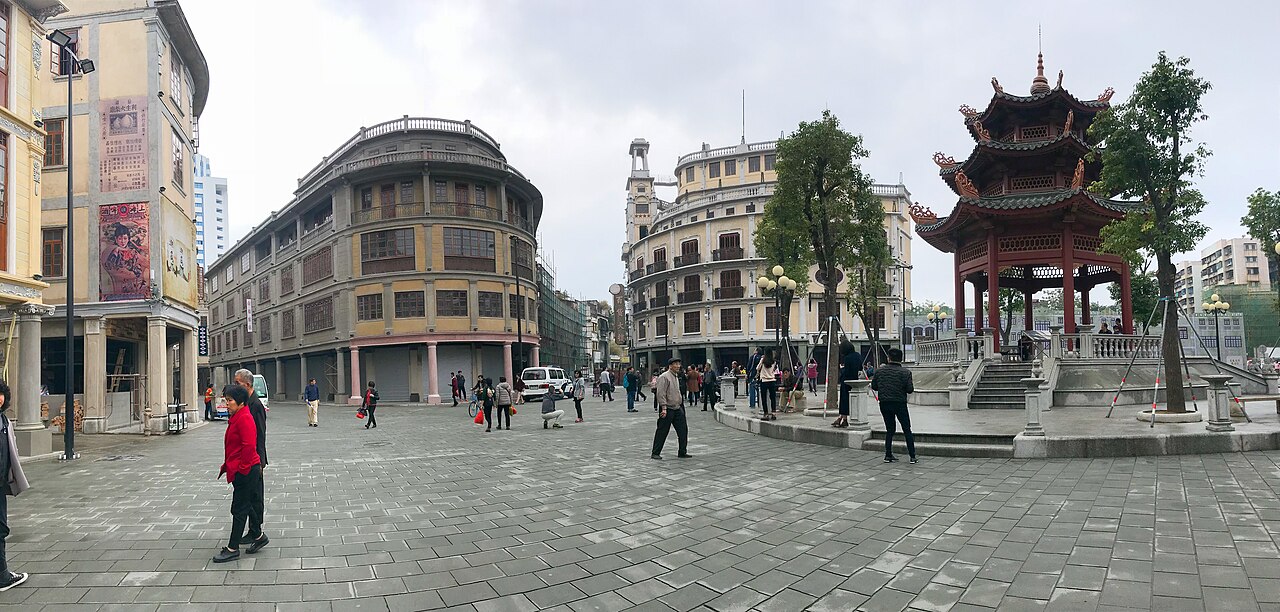
Small Park (Xiaogongyuan) is the centre of Shantou's old town. The Sun Yat-sen Memorial Pavilion stands at its hub, and Anping, Shengping and Guoping roads radiate from it in a fan, a street pattern that still looks much as it did in the 1930s. A qilou is a building whose upper floors project over the pavement, so the ground-floor shops sit behind a shaded colonnade that keeps off sun and rain, a common arrangement in the old trading ports of Fujian and Guangdong.
Walking the district is free. Come in the late afternoon, eat your way along the colonnades, and stay for the evening, when the pavilion and the streets around it are lit up. The Nansheng Company building and other Republic-era landmarks are worth a look; opening times of individual buildings vary, so go by the notice on the door. Our page on Small Park covers the arcades, museums and food in detail.
Queshi Scenic Area
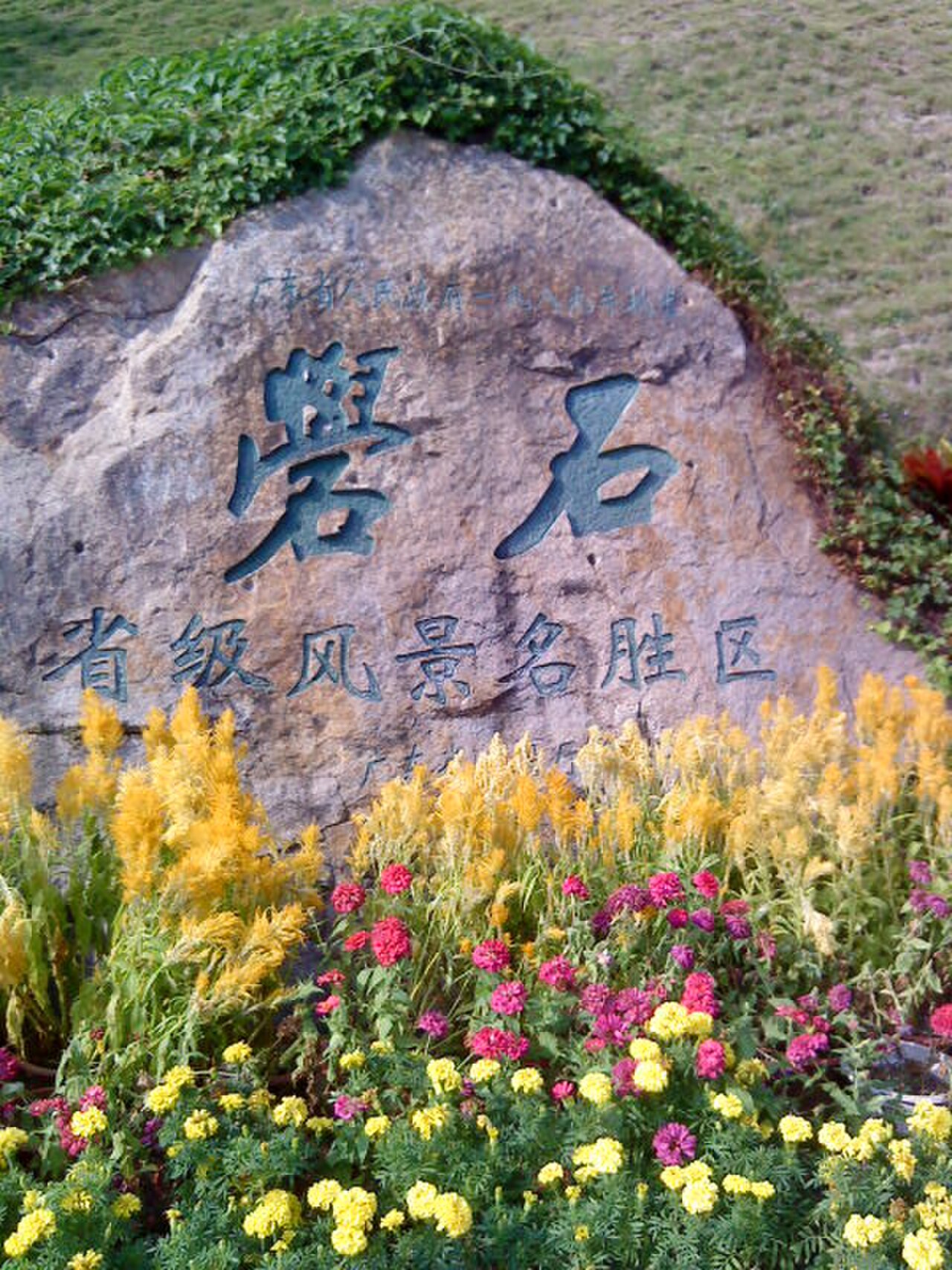
Queshi faces the city across a branch of the Rong River, close to where the Han, Rong and Lian rivers reach the South China Sea. Its hills, "Queshi Mountain Light" among Shantou's Eight Scenes, carry cliff inscriptions from many dynasties and were made a provincial scenic area in 1989. The best way across is the ferry from Guangchang (Square) Pier to Queshi Pier: in 2025 it ran daily from 6:20 to 20:00, every 20 minutes, with extra sailings on holidays. The alternative is the Queshi Bridge. Half a day gives time to climb for the views back over the river mouth and the city. See Queshi Scenic Area for the walking route.
Nan'ao Island
Qing'ao Bay
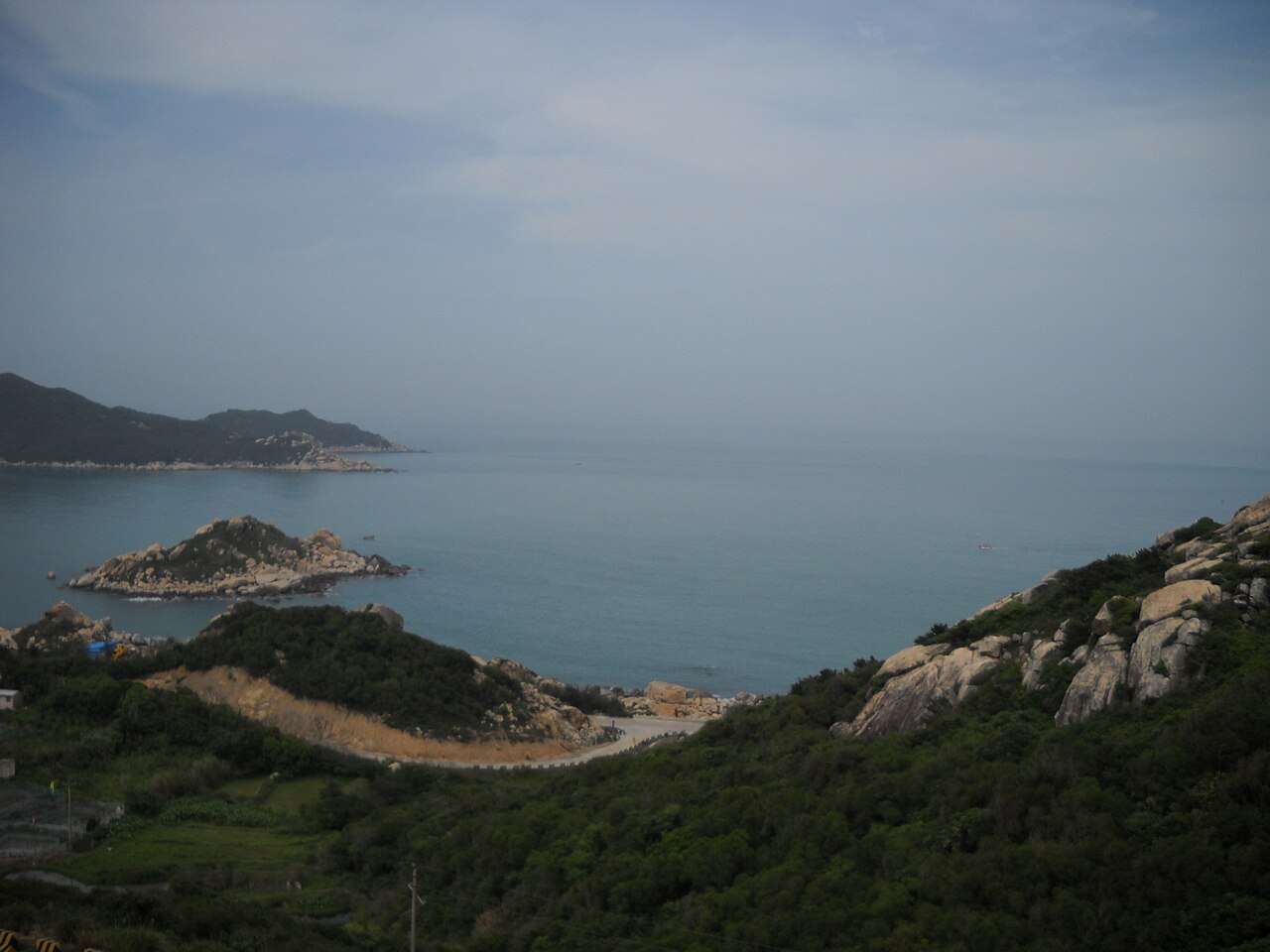
Nan'ao is Shantou's largest island and the only island county in Guangdong, lying more than 30 km from the city; the Tropic of Cancer crosses it. Qing'ao Bay, its best-known beach, has fine sand and clear water and is rated a provincial AA bathing beach. The island became a national AAAA tourist attraction in 2015.
The Nan'ao Bridge and the rest of the island
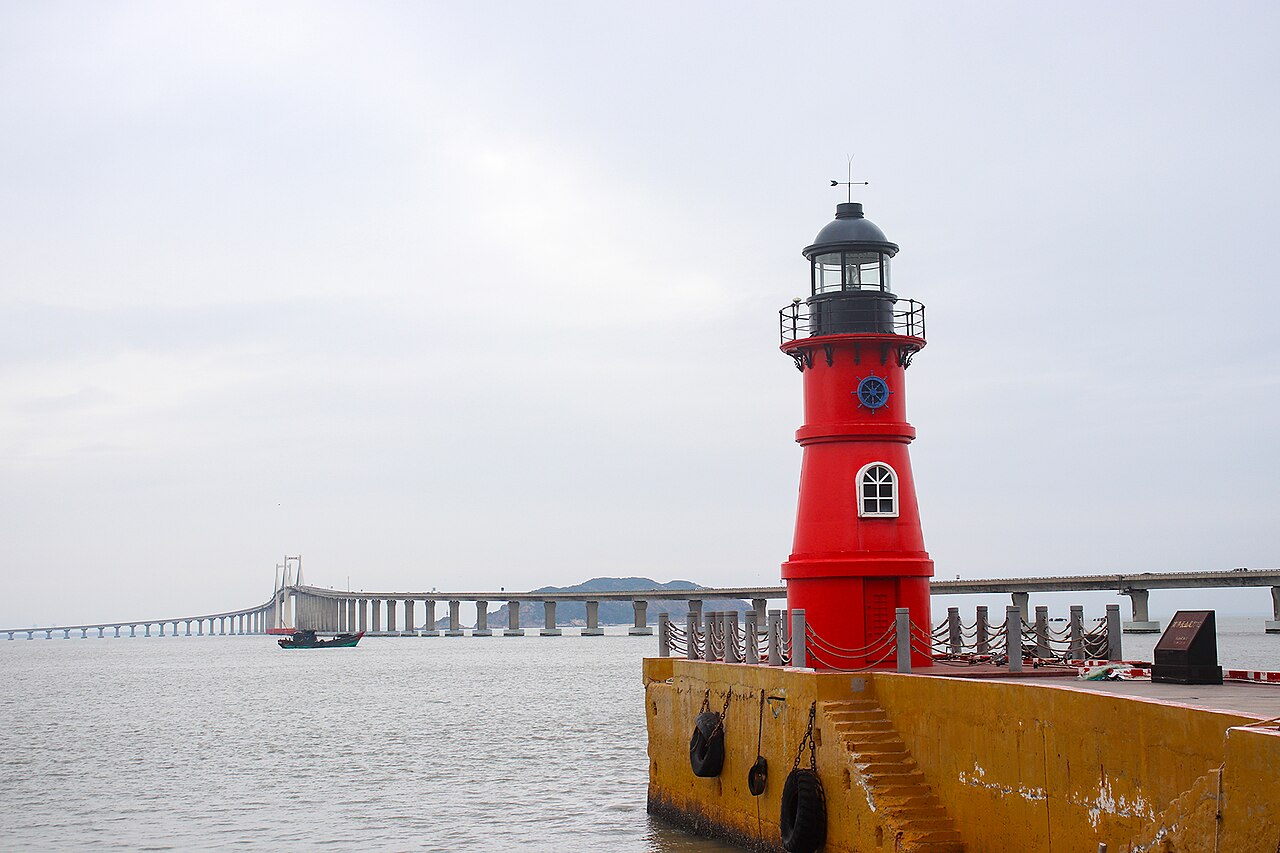
The 11.08 km Nan'ao Bridge opened on January 1, 2015, and is the island's only land link; before it, the crossing was a ferry of about 50 minutes. City buses, including routes 105, 105B, 161 and 162, run from Shantou to the island; the last 161 back left around 18:30 in 2025, so check before you commit to a day trip. Traffic on the bridge is heavy on holidays.
Beyond the beach, history fans can visit the Song Well and the General's Mansion (Zongbingfu). By legend the last Song emperor, Zhao Bing, retreated to Nan'ao, and the island keeps the Song Well and the Prince's Tower among its relics; outside the General's Mansion stands a tree where Zheng Chenggong is said to have recruited soldiers. The island is so windy it is nicknamed the "wind county", and the ridges lined with wind turbines are a sight in themselves. Local produce, the "Three Treasures of Nan'ao", is squid, seaweed and golden sweet potato. Stay a night if you can: drive the coast road, watch the sunrise and slow down. Nan'ao Island has the loop and a two-day plan.
Overseas-Chinese mansions of Chenghai
Former Residence of Chen Cihong
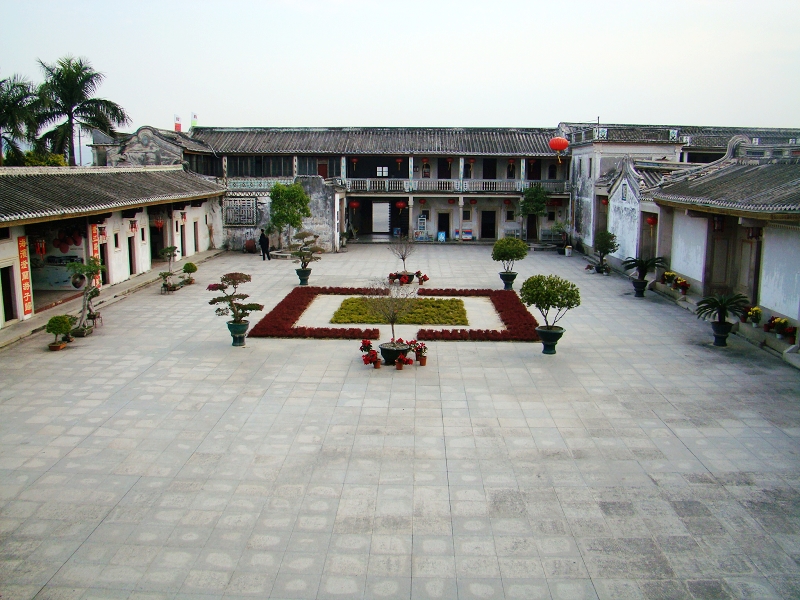
In Qianmei Village, Longdu Town, Chenghai District, the family of Chen Cihong, a Chaoshan merchant who made his fortune in Thailand, built a vast residence in stages from 1910 onward. It covers 25,400 square metres and is often called the finest overseas-Chinese mansion in Lingnan; it opened to the public in 1999 and was listed as a Guangdong protected site in 2002. The main halls follow the Chaoshan "four horses pulling a cart" layout, but doors and windows use Western round arches, and the walls mix coloured ceramic tiles, porcelain-shard inlay and plaster relief. The four residences together have 506 halls and rooms, and it is easy to lose your way. Check tickets and hours on the official notice. Chen Cihong Residence covers the family, the building and the visit.
Mayu Island
Mayu and the old customs house
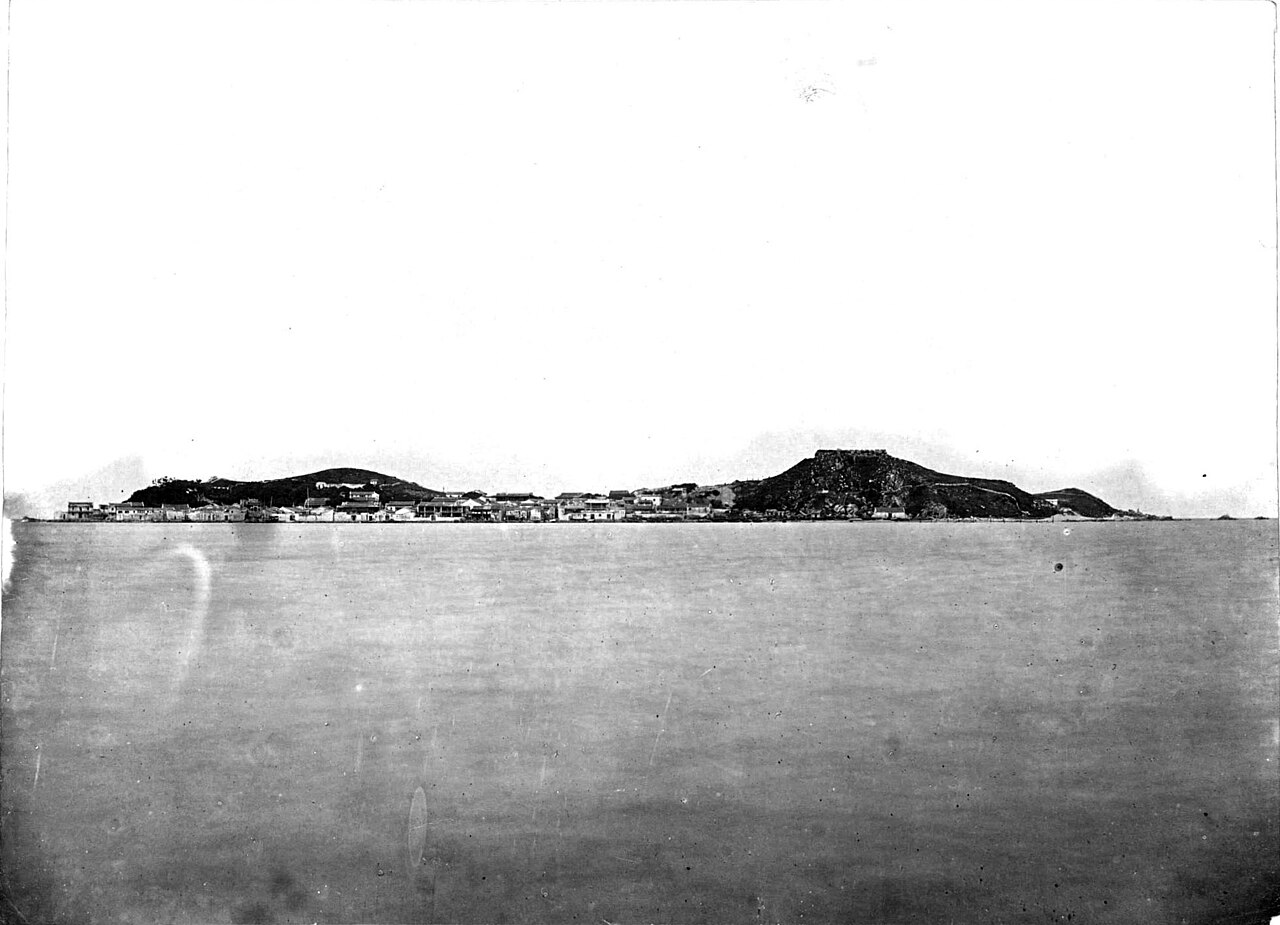
Mayu sits at the mouth of Shantou harbour and covers less than a square kilometre. It is named after its two Mazu temples, old and new; because fishermen released live chickens after praying to Mazu, it is also known as "Released Chicken Mountain" (Fangji Shan). On January 1, 1860, the Chao Customs Office was set up here, the moment Shantou opened as a port. The Mayu Tianhou Temple and the site of the old customs house remain, and in the 1930s "Watching the Tide at Mayu" was voted one of Shantou's Eight Scenes. The city designated the island a sightseeing area in 1979. Access is via the route near the Bay Bridge; check the current arrangements. Half a day is plenty.
Eating in Shantou
Chaozhou (Chaoshan) cuisine, added to the national intangible cultural heritage list in 2021, is the foundation of eating here: seafood-led, light, focused on the flavour of the ingredients, and clearly different from Cantonese cooking. Beef hotpot comes first on every list: freshly cut beef, a quick dip in clear broth and a dab of shacha sauce. Oyster omelette, guotiao rice-noodle soup and braised goose are everyday staples. The arcade streets are the best place to graze: guotiao in the morning, beef hotpot at lunch, braised meats at night. Between meals, sit down for gongfu tea, which Chaoshan people drink before and after eating.
How to arrange the route
Day 1: Small Park in the morning; the ferry to Queshi in the afternoon; back to the old town for beef hotpot.
Day 2: cross the Nan'ao Bridge in the morning; Qing'ao Bay in the afternoon; night on the island.
Day 3: loop the island in the morning for the General's Mansion and the wind turbines, leave at midday, then the Chen Cihong Residence or Mayu, whichever fits your route.
What to cut if short on time
With two days, keep Small Park, Queshi and one day on Nan'ao, and drop Mayu. With one day, stay in the old town and take the Queshi ferry; Nan'ao needs a full day of its own because of the bridge traffic and the last buses.
Getting in and where to stay
- By high-speed rail: Shantou Station is on the Shantou–Shanwei line, fully open since December 22, 2025; the fastest trains take about 1 hour 50 minutes from Guangzhou East. Trains on the Xiamen–Shenzhen line use Chaoshan Station, between Shantou and Chaozhou, so check which station is on your ticket.
- Where to stay: near Small Park for the old town and food; on Nan'ao for the island.
Most people come from Guangzhou or Shenzhen. Chaozhou and Jieyang are next door, Shanwei is west along the coast, and Xiamen, the next island city up the coast, is about two hours by high-speed rail.
Things to confirm before you go
- Traffic on the Nan'ao Bridge on holidays; leave a buffer for getting back.
- The Queshi ferry, the Chen Cihong Residence and the Qing'ao bathing beach all charge; prices and hours change, so go by the official notice.
- Summer typhoons: check the forecast and do not plan island days when one is coming.
Frequently asked questions
How many days do I need in Shantou?
Three days covers the city and Nan'ao comfortably. Two days fits the highlights but is tiring.
How do I get to Nan'ao Island?
Over the 11.08 km Nan'ao Bridge, opened in 2015, by car or by city bus from Shantou. It is the island's only land link.
Where is Small Park?
In the centre of the old town in Jinping District, the fan of arcade streets around the Sun Yat-sen Memorial Pavilion. It is free and best explored on foot.
Sources
The facts in this article were checked against the following sources, retrieved August 11, 2026, and rechecked on October 20, 2026.
- Shantou (city) https://zh.wikipedia.org/wiki/汕头市
- Nan'ao Island https://zh.wikipedia.org/wiki/南澳岛
- Former Residence of Chen Cihong https://zh.wikipedia.org/wiki/陈慈黉故居
- Mayu https://zh.wikipedia.org/wiki/妈屿
- Chaozhou cuisine https://zh.wikipedia.org/wiki/潮州菜
- Shantou–Shanwei high-speed line fully opens (Xinhua, December 2025) https://www.news.cn/politics/20251222/78e8a94ac3c7429b865c40981b744a82/c.html
- Shantou ferry guide (Shantou Bendibao) http://st.bendibao.com/tour/2024424/20825.shtm
- Nan'ao Island transport guide (Shantou Bendibao) http://st.bendibao.com/tour/202467/21263.shtm
All photos are from Wikimedia Commons, used under CC licenses; re-use requires attribution.
- shantou-xiaogongyuan.jpg from File Xiaogongyuan.jpg, by Sgnpkd, taken December 25, 2018, CC BY-SA 4.0
- shantou-queshi.jpg from File Queshi.JPG, by CAL1994, taken October 17, 2010, CC BY-SA 4.0
- nanao-qingao-bay.jpg from File 青澳湾 - panoramio.jpg, by 燕难飞, taken May 1, 2010, CC BY-SA 3.0
- nanao-bridge.jpg from File 20230205 Changshanwei Lighthouse and Nan'ao Bridge.jpg, by Windmemories, taken February 5, 2023, CC BY-SA 4.0
- chen-cihong-residence.jpg from File Former residence of Chen Ci-Hong.jpg, by Alexchen4836, taken February 17, 2008, CC BY-SA 3.0
- mayu-island.jpg from File Double Island, Entrance to Swatow Harbor.jpg, by 赖阿芳, taken between 1860 and 1880, public domain