Small Park, Shantou: Walking the Arcade Quarter of the Old Treaty Port
Small Park — Xiaogongyuan in Chinese, though there is hardly anything "small" about it — is the old heart of Shantou: a fan-shaped quarter of arcade houses radiating from the Sun Yat-sen Memorial Pavilion, built up in the decades after the port opened to foreign trade on January 1, 1860. It costs nothing to enter, takes two to three hours to walk properly, and rewards an evening visit more than a midday one. If the Shantou itinerary keeps only half a day inside the old town, this is the half day.
What Small Park actually is
An arcade house — qilou — puts a covered corridor over the sidewalk: the upper floors project out on columns, the ground floor opens as shops, and the shopper walks in the shade and out of the rain. The form swept the treaty ports of Fujian and Guangdong a century ago, and Shantou, whose customs returns once ranked among the top three in the country, built arcades at a scale few rivals matched. The block around the pavilion is often called the largest surviving arcade district on the Chinese mainland, and the street pattern is still the one laid out in the 1930s: Anping, Shengping and Guoping roads running outward like the ribs of a fan from the round central square.
The quarter is not a museum piece behind gates. People live in the upper floors, shops trade below, scooters thread the colonnades, and a long restoration programme has been re-plastering facades street by street — most frontages are done, but expect scaffolding and a fresh-looking wall standing beside an untouched one. That mixture is part of the visit, not a flaw in it.
The pavilion at the centre
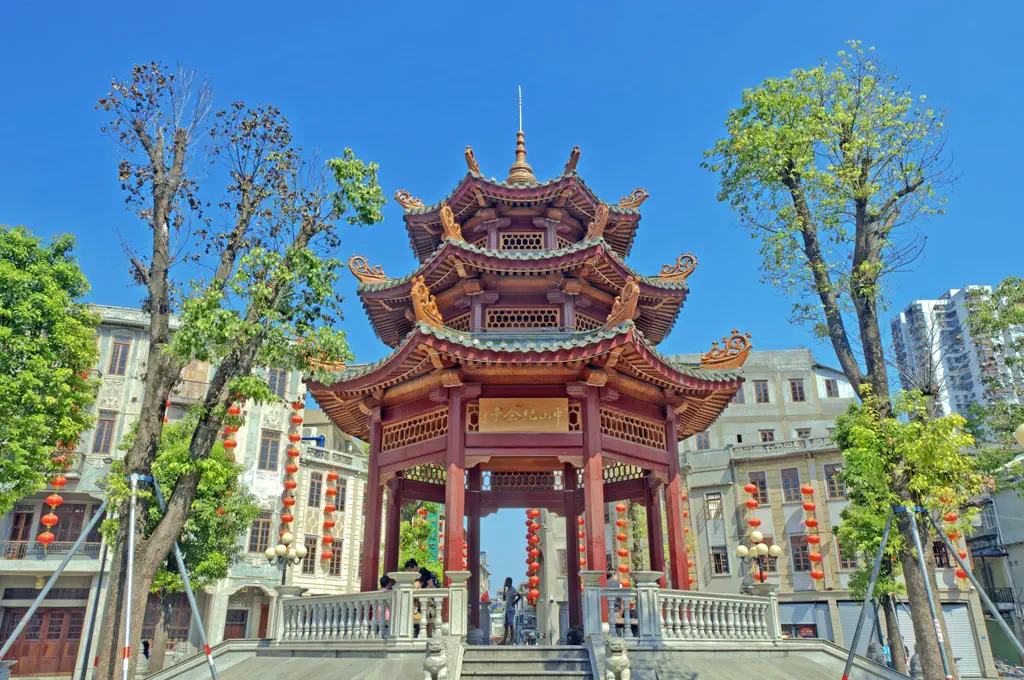
The pavilion is the district's origin marker and its third incarnation. The first was raised in 1934 and gave the crossroads its name; it was torn down in the Cultural Revolution years. A second version went up in the 1990s, and the timber pavilion standing today was rebuilt again after a reconstruction launched in October 2016, close to the 1934 design. Around it the streets keep their radiating geometry, and the quarter's most photographed corners — the old Nansheng Company department store and its neighbours — all sit within a few minutes' walk of the square.
The museums around the square
Two small museums anchor the history, both a short walk from the pavilion and both free.
The Shantou Treaty Port Culture Exhibition Hall, in a three-storey European-style building on Yongping Road opposite the customs clock tower, compresses the story of the port from January 1, 1860 onward — the customs house, the foreign firms, the remittance letters. An hour and a half covers it.
The Shantou Qiaopi Cultural Relics Museum explains qiaopi, the letters-plus-remittances overseas Chinese sent home through a network of specialist brokers; the archive they belong to was inscribed on UNESCO's Memory of the World register in 2013, and the museum holds more than 110,000 items. Read a few letters — the amounts are small, the sentences short, and together they carry the whole story of why these arcade streets were built at all.
Hours and any reservation requirement for both museums go by official notice, and closures shift without much warning.
How to walk the quarter
Start at the pavilion, then take the streets in any order — the fan makes it hard to get lost for long.
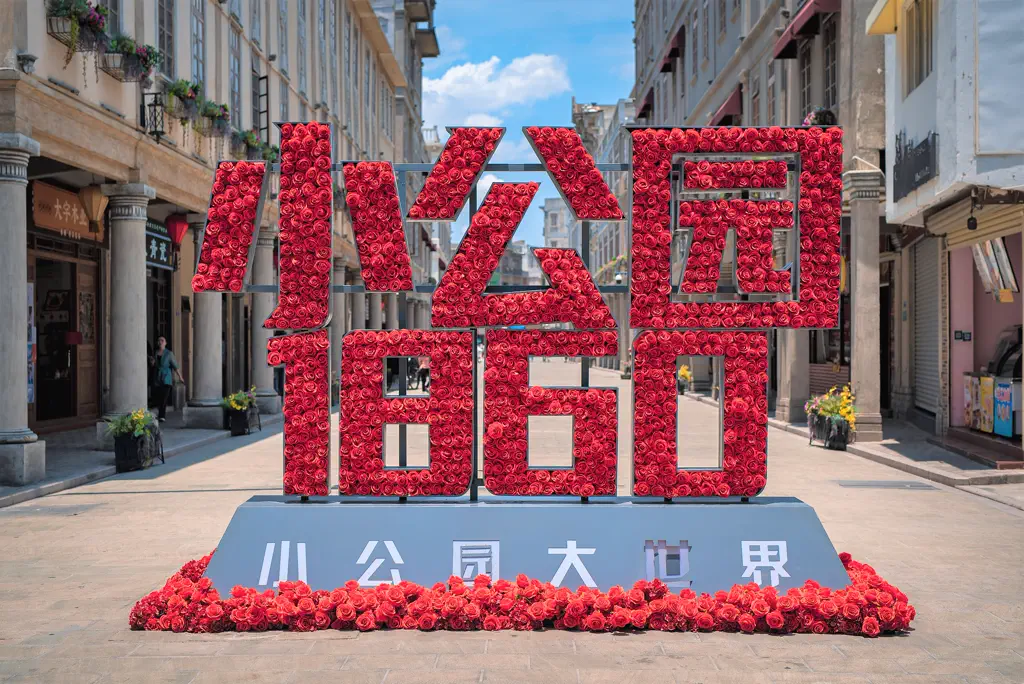
A sensible loop runs: the square itself, with the pavilion and the 1860 marker; down Shengping Road to the Nansheng Company building, the district's department store of its day; along the colonnades as the shops thin out to see the untouched facades; then north to the Old Mama's Temple (Laomagong) and its stage, the waterfront end of the quarter. Slots of shade move with the sun; the arcade corridors keep most of the walk out of the weather anyway.
Eating around the arcades
The old town is Shantou's eating quarter as much as its architectural one. Laomagong zongqiu — the rice dumplings from the shop by the temple — come with both sweet and savoury fillings in one package; oyster omelets and guotiao (rice-noodle) soup fill the gaps between meals; and somewhere in the day a beef hotpot has to happen, freshly sliced beef swished in clear broth and dipped in shacha sauce. Between stops, accept any offer of gongfu tea: in Chaoshan the small cups are part of the street's metabolism, not a ceremony.
When to come and how long to stay
Come late in the day. The arcades light up after dark, the square fills, and the quarter shows the face that photographs well:
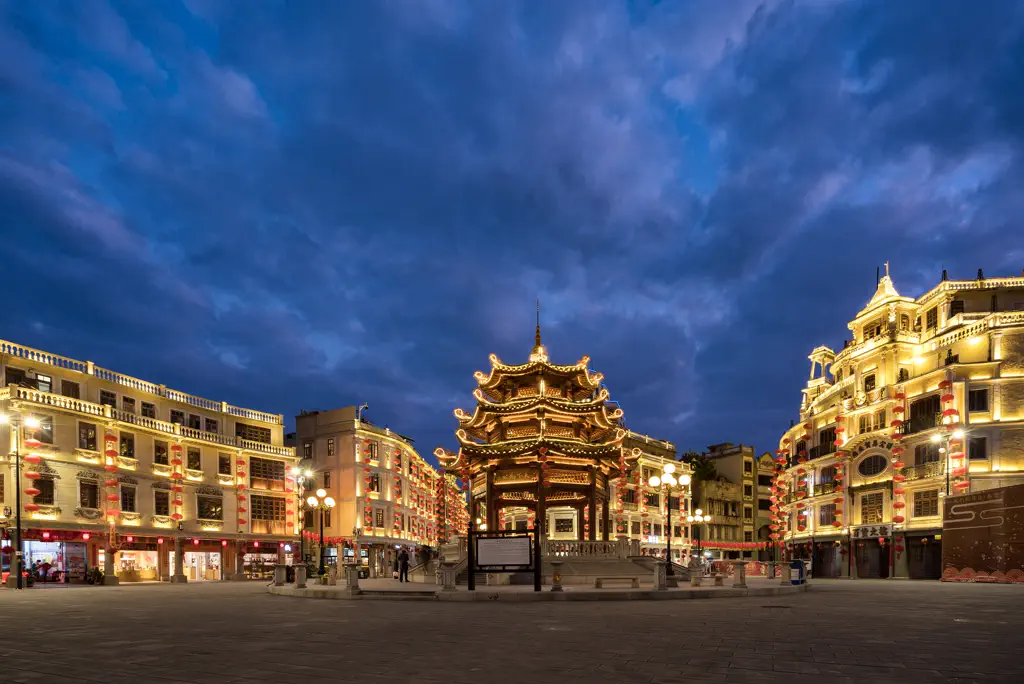
Two to three hours covers the streets and one museum; a full evening adds dinner and a second museum. The quarter also stitches neatly into the rest of the city: the one-yuan ferry from Guangchang Pier crosses to the Queshi hills in minutes, and the Nan'ao Island drive starts from the city's east.
Things to confirm before you go
- Both museums are free but keep irregular hours; check the day's official notice before promising them to an itinerary.
- Restoration work continues in patches; some facades are scaffolded and some streets are closed to through traffic.
- Evening lighting schedules vary by season and are set by the district, not published far ahead.
- Holiday weekends pack the square and the queue for the famous snack shops; weekday mornings are the quiet version.
Frequently asked questions
Is Small Park free to visit?
Yes. The quarter is a living street district, open at all hours and free to walk. Only the two museums and the food are paid items, and the museums are free too — they just keep their own hours.
How much time does Small Park need?
Two to three hours for the square, the arcades and one museum. Add an evening if the lights are on; the block changes character completely after dark.
Where is Small Park and how do I get there?
In the old town of Jinping District, centred on the square with the Sun Yat-sen Memorial Pavilion. A taxi or ride-hail from the railway station or anywhere central is the simplest way; the Guangchang ferry pier at the waterfront edge connects the quarter to Queshi across the water.
What should I eat in Small Park?
Laomagong zongqiu by the temple, oyster omelet, guotiao soup and — on some table, at some point — beef hotpot. The arcade streets hold most of it; follow the queues.