Shanwei Travel Guide: Fengshan Ancestral Temple, the Bay and Jieshi
Shanwei is a coastal city in eastern Guangdong, and since the Guangzhou–Shanwei high-speed line opened in September 2023 it has been an easy weekend from the Pearl River Delta: the fastest trains take 70 minutes from Shenzhen North and 73 minutes from Guangzhou East. In town, the hill-top Fengshan Ancestral Temple, dedicated to the sea goddess Mazu, looks over Shanwei Bay. A second day takes you to Jieshi in Lufeng, where the old Xuanwu Mountain temple stands near the coast.
A city of two halves
Shanwei proper, the town on the bay, is compact: the Mazu temple, the waterfront and the seafood restaurants are close together. The rest of the prefecture is spread along the coast and needs transport. Lufeng, with Jieshi, is to the east, and Haifeng, inland from Shanwei, is known for the history of the 1920s peasant movement. Treat Jieshi as its own half-day at least, not a quick stop.
Places worth visiting
Shanwei Bay from Fengshan
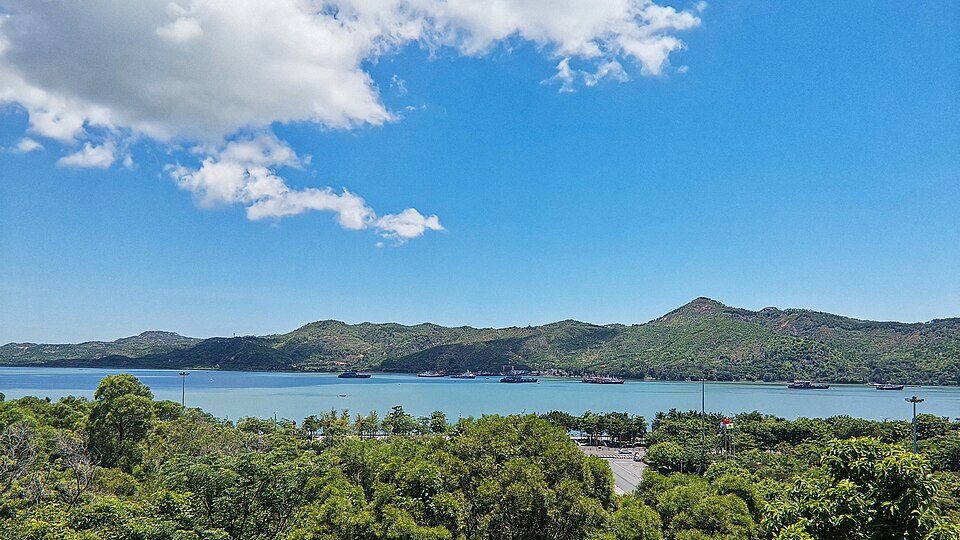
Fengshan hill rises above the bay at the edge of the city, and its terraces are the best place to see the curve of the waterfront and the fishing boats. Come in the late afternoon, when the light is softer and it is cooler, and walk down to the seafront afterwards.
Fengshan Ancestral Temple
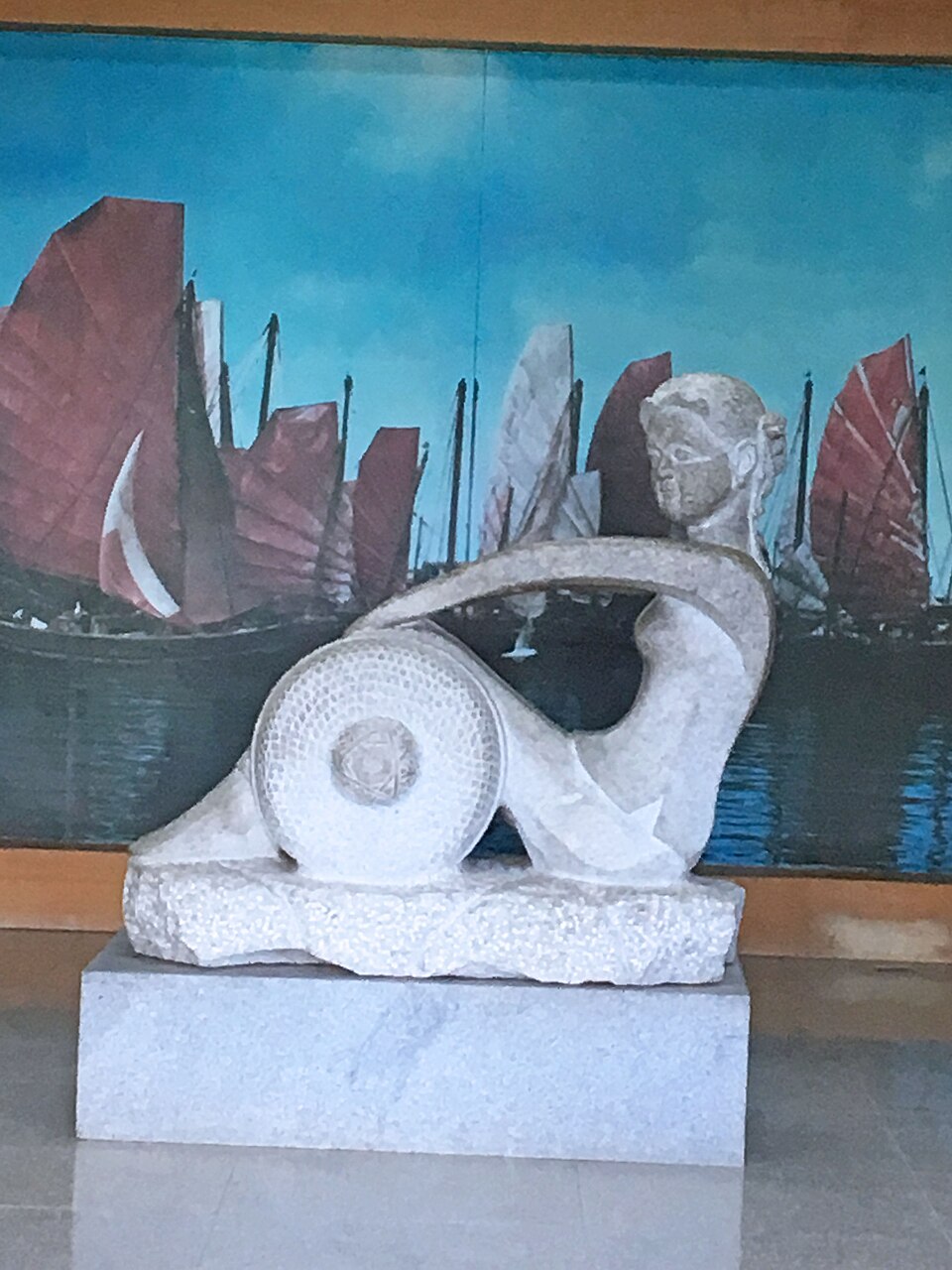
The temple is dedicated to Mazu, protector of fishermen and sailors, and it is still an active place of worship: expect incense, offerings and families visiting, especially around Mazu's festival days. Below it, the Fengshan Mazu Culture Square is the bus stop for city buses 2, 108 and 117; bus 7 to the City People's Hospital leaves a walk of about 460 m. The scenic area opens from 08:30 to 18:00.
Xuanwu Mountain at Jieshi
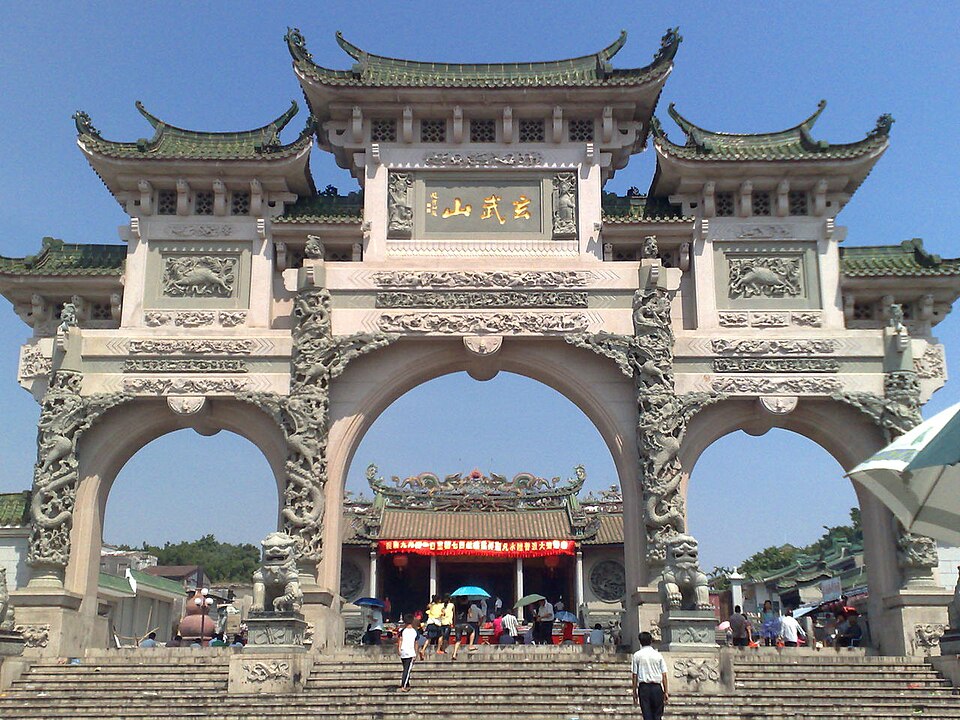
Jieshi is an old coastal town in Lufeng, and its Xuanwu Mountain is the site of a long-established temple to the Taoist god Xuanwu, a major pilgrimage site in eastern Guangdong. The temple halls and carving are the reason to go; the town around it is busy and workaday. Direct buses run from Shanwei Station to Jieshi roughly every hour. Allow half a day, more if you continue along the coast.
Haifeng and the coast
Haifeng is linked to Peng Pai and the peasant movement of the 1920s, and its memorial sites draw history-minded visitors. Along the coast, beaches such as those around Red Bay are popular in summer.
When to come to Shanwei
November to April is the most comfortable time, mild and dry. Summer is hot, humid and the beach season, but typhoons can hit between July and October and stop coastal travel; check the forecast. Mazu festival days and the Spring Festival make the temple very busy.
Getting in and where to stay
- By high-speed rail: fastest trains take 70 minutes from Shenzhen North and 73 minutes from Guangzhou East on the Guangzhou–Shanwei line. Shanwei Station is also on the coastal railway toward Chaoshan and Xiamen.
- From the station: a sightseeing bus via the Fengshan Mazu temple runs roughly hourly, and direct buses to Jieshi run about every hour.
- Where to stay: near Fengshan and the waterfront for an evening walk and seafood; near the station for an early train.
Shenzhen and Huizhou are west. Shantou, Jieyang and Chaozhou are east, along the coast.
Eating in Shanwei
Seafood is the point: fish, shellfish and squid fresh from the boats, cooked simply. The local cooking is close to Chaoshan food, with fish balls and rice noodle dishes. Seafood restaurants price by weight, so ask before you order.
How to arrange the route
Day 1: morning train from Shenzhen or Guangzhou, Fengshan Ancestral Temple and the bay in the afternoon, seafood dinner.
Day 2: bus to Jieshi and Xuanwu Mountain, back in the afternoon, then the train home or on to Chaoshan.
What to cut if short on time
A day trip from Shenzhen covers Fengshan and the bay. Jieshi needs the second day; Haifeng is only for travellers interested in the history.
Things to confirm before you go
- Train times, especially on holidays.
- Bus times from Shanwei Station to Jieshi.
- Temple opening hours and festival days.
- Typhoon warnings in summer and autumn.
Frequently asked questions
How long is the train from Shenzhen to Shanwei?
About 70 minutes from Shenzhen North on the fastest trains.
How do I get to Fengshan Ancestral Temple?
City buses 2, 108 or 117 to the Fengshan Mazu Culture Square stop. The temple opens from 08:30 to 18:00.
Is Jieshi worth the trip?
Yes, if you are interested in temples; plan half a day from Shanwei.
Sources
The facts in this article were checked against the following sources, retrieved September 19, 2026, and rechecked on October 20, 2026.
- Shanwei https://en.wikipedia.org/wiki/Shanwei
- Guangzhou Government, Guangzhou–Shanwei high-speed line opens https://www.gz.gov.cn/zwfw/zxfw/jtfw/content/post_9229372.html
- Shenzhen North to Shanwei in 70 minutes https://hmo.sz.gov.cn/zx/gqdt/content/post_1103388.html
- Shanwei Station bus transfers (Shanwei Bendibao) http://m.sw.bendibao.com/traffic/4184.shtm
- Fengshan Ancestral Temple hours and transport (Shanwei Bendibao) http://sw.bendibao.com/tour/202199/1207.shtm
- Shanwei Government, travel by high-speed rail https://www.shanwei.gov.cn/shanwei/swly/lysc/content/post_1008729.html
Tickets change; this article does not quote yuan amounts, so check the official notice for your date.
All photos are from Wikimedia Commons, used under CC licenses; re-use requires attribution.
- shanwei-bay.jpg from File:View of Shanwei Bay at Fengshan, Shanwei, Aug 2022.jpg, by HMGiovanniV, CC BY-SA 4.0
- shanwei-fengshan.jpg from File:Shanwei Fengshan Ancestral Temple 2018 11 part4.jpg, by Qwer132477, CC BY-SA 4.0
- shanwei-jieshi.jpg from File:Xuanwu Mountain,Jieshi,Lufeng.jpg, by 林维岳, Public domain