Songyuan Travel Guide: Chagan Lake's Winter Fishing, Summer Lotus and the Fish Feast
Songyuan, in western Jilin, is visited for one place: Chagan Lake, Jilin's largest natural lake, where fishermen still pull a net about 2 km long from under the ice with horse-turned capstans each winter. The fishing festival opens in early January (the 24th edition opened on 8 January 2026), and Chaganhu station on the Changchun–Baicheng–Ulanhot high-speed line has shuttle buses to the lake. In summer the same lake is a quiet place of reeds, lotus and birds. Plan a day at the lake and a night in Songyuan or the county town.
Chagan Lake in brief
Chagan means "white" or "holy" in Mongolian, and locals call it Holy Water Lake. It lies in the Qian Gorlos Mongol Autonomous County northwest of Songyuan city, at the end of the Huolin River: roughly 38 km long and 14 km wide, with a maximum surface of about 307 km² (some sources say 420). After upstream dams shrank it to about 50 km², water was brought in from the Songhua River to restore it; a monument to that canal stands by the lake. It has been a national nature reserve since 2007, with 68 species of fish and shrimp and plenty of migrating birds.
Places worth visiting
The winter fishing (dongbu)
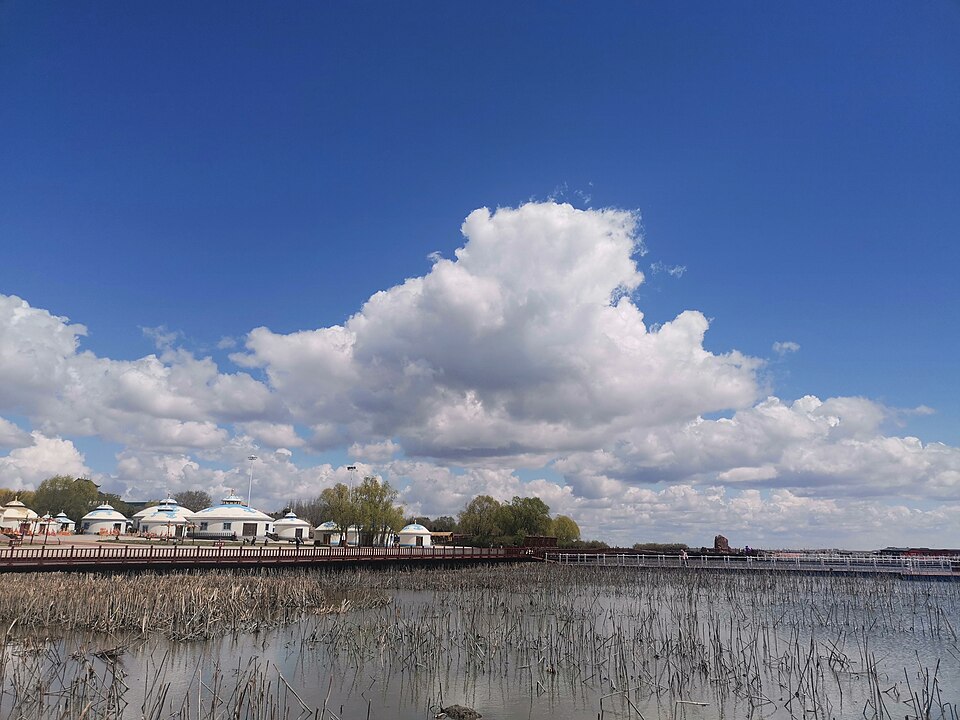
The method is the oldest Mongolian way of fishing that survives, recorded as far back as the Liao dynasty and listed as national intangible cultural heritage. The fish master reads the colour of the ice and the sound of the chisel to find the shoals; teams cut a line of holes, feed a net of about 2 km under the ice, and haul it out of the biggest hole with a capstan turned by horses. A single haul set a Guinness record of 104,500 kg in 2006 and beat it with 168,500 kg in 2009. About 80 % of the catch is bighead carp (pangtouyu), much of it bought for Spring Festival.
The opening day is ceremonial and crowded, with rituals on the ice and the first big haul; roads around the lake are closed from early morning to evening on that day, and free shuttles run. The festival then continues for weeks with smaller hauls you can watch with fewer people around. Dress for temperatures far below freezing on open ice: thermal layers, insulated boots and a face covering.
Lotus and reeds in summer

From July into August the lotus ponds by the lake are in flower, and the reed beds hold breeding waterbirds. Summer is quiet compared with January, and it is the better season if you want to walk and look at birds rather than watch a spectacle.
The canal monument
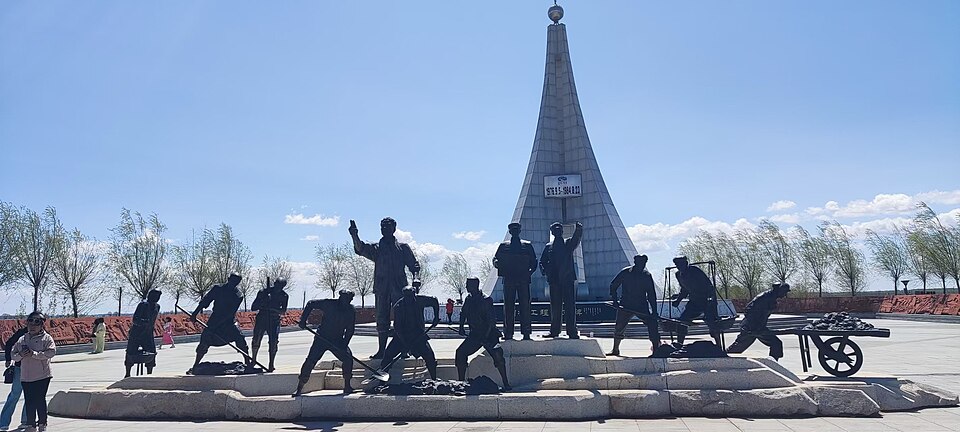
The monument by the lake commemorates the canal that brought Songhua water back into Chagan Lake. It takes a few minutes, and it explains why a dry plain has a lake this big.
Getting in and where to stay
- High-speed rail: Chaganhu station has about eight trains a day stopping on the line between Changchun, Baicheng and Ulanhot; during the festival the station runs a shuttle to the scenic area and even hands out long foam boxes for frozen fish. Songyuan station serves the city.
- By road: Changchun and Harbin airports are about ninety minutes away by car. Songyuan Chaganhu Airport has limited flights.
- Where to stay: Songyuan city has the most hotels. Lakeside guesthouses fill up for the festival opening; book early.
Neighbours: Xianghai and Momoge wetlands in Baicheng, the provincial capital Changchun, and Harbin for the ice festival.
When to come
Late December to February for the winter fishing; the opening date is announced each autumn or early winter. July and August for lotus. Spring and autumn bring migrating birds but are windy and bare.
Eating in Songyuan
Eat the fish. The lakeside restaurants serve a whole-fish banquet built around bighead carp; the headline dish is a fish of around 5 kg stewed slowly with soybean paste, ginger and chilli. Chagan Lake fish are also sold frozen to take home. In town, the usual northeastern stews and dumplings.
How to arrange the route
Festival trip: day one, train from Changchun to Chaganhu, settle in; day two, the opening haul or a regular haul on the ice in the morning, fish feast at lunch, back to the city.
Summer: a half-day at the lake for the lotus and reeds, then on to Baicheng's wetlands.
What to cut if short on time
The festival opening day is the busiest, coldest and most restricted; a regular haul later in the season gives you the same method with space to see it. If you only have a day in summer, skip the city entirely.
Things to confirm before you go
- The festival opening date and any road closures for the 2026–27 season.
- Train times to Chaganhu on 12306.
- Ice safety and where spectators are allowed to stand.
- Scenic area tickets and shuttle prices; these are set each season.
Frequently asked questions
When is the Chagan Lake winter fishing festival?
It opens in late December or early January and runs for several weeks. The 2026 festival opened on 8 January.
Is the big catch guaranteed?
No. Hauls vary with the ice and the fish; the record hauls are exceptions.
How do I get to Chagan Lake from Changchun?
Take a high-speed train toward Baicheng or Ulanhot and get off at Chaganhu, then use the shuttle or a taxi.
Sources
The facts in this article were checked against the following sources, retrieved September 21, 2026, and rechecked on October 21, 2026.
- Songyuan https://en.wikipedia.org/wiki/Songyuan
- Chagan Lake https://en.wikipedia.org/wiki/Chagan_Lake_(China)
- 查干湖 (Chinese Wikipedia) https://zh.wikipedia.org/wiki/查干湖
- China Railway on Chaganhu station services during the 23rd festival (Beijing Daily, January 2025) https://xinwen.bjd.com.cn/content/s677f7e76e4b068c68f0e49a4.html
- Traffic notice for the 24th festival opening (Tencent News, 5 January 2026) https://view.inews.qq.com/a/20260105A01OP700
Ticket and package prices are set each season, so they are not quoted here.
All photos are from Wikimedia Commons, used under CC licenses; re-use requires attribution.
- songyuan-chagan.jpg from File:Chagan Lake - 2025.jpg, by 纳瓦拉的亨利, CC BY-SA 4.0
- songyuan-reeds.jpg from File:Lotus in Chagan Lake-2018-01.jpg, by 纳瓦拉的亨利, CC BY-SA 4.0
- songyuan-plain.jpg from File:Monument for Chagan Lake-Songhua River canal, Songyuan.jpg, by 纳瓦拉的亨利, CC BY-SA 4.0