Lanzhou Travel Guide: The Yellow River City in Three Days
Lanzhou, the capital of Gansu, is built in a long, narrow valley with the Yellow River running straight through the middle, and almost everything worth doing is on the riverbank. Walk the riverside corridor from the 1909 Zhongshan Bridge past the waterwheels and the Yellow River Mother statue, climb White Pagoda Hill for the view, and spend a morning with the bronze galloping horse at the Gansu Provincial Museum. Then eat beef noodles for breakfast. Two days covers the city; a third gives you a day trip or a slower pace before you head west along the Hexi Corridor.
Lanzhou sits near the geographic centre of China's land area, at about 1,500 to 1,600 metres, on the old Silk Road where the route turns into the Hexi Corridor. The Longhai, Lanzhou–Xinjiang, Lanzhou–Qinghai and Baotou–Lanzhou railways all meet here.
Along the river
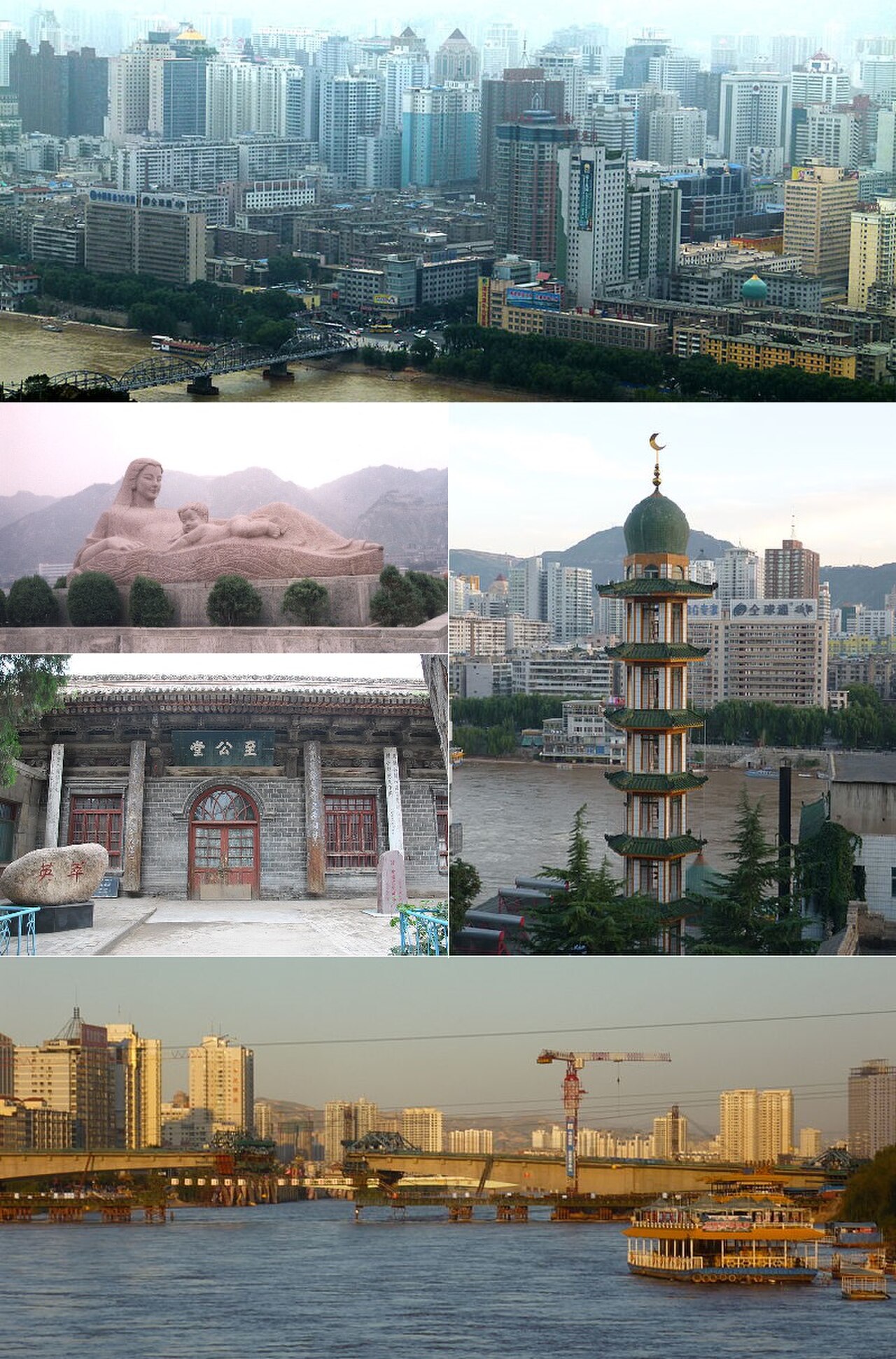
The Yellow River scenic corridor
Both banks have been landscaped into a long riverside promenade that links the bridge, White Pagoda Hill, the Waterwheel Garden and the Yellow River Mother statue. Don't try to walk all of it. The stretch from Zhongshan Bridge west to the Mother statue is enough, and takes in the waterwheels on the way. Go late in the afternoon and stay into the evening, when the bridge and both banks light up and locals come out to play chess, sing and cool off. That evening scene is the best of Lanzhou.
At the wharves you can ride a sheepskin raft, the old upper Yellow River ferry made of a dozen inflated sheepskins lashed under a wooden frame. Ask about safety equipment and wear the life jacket. The wind along the river is strong, so keep back from the edge.
Zhongshan Bridge
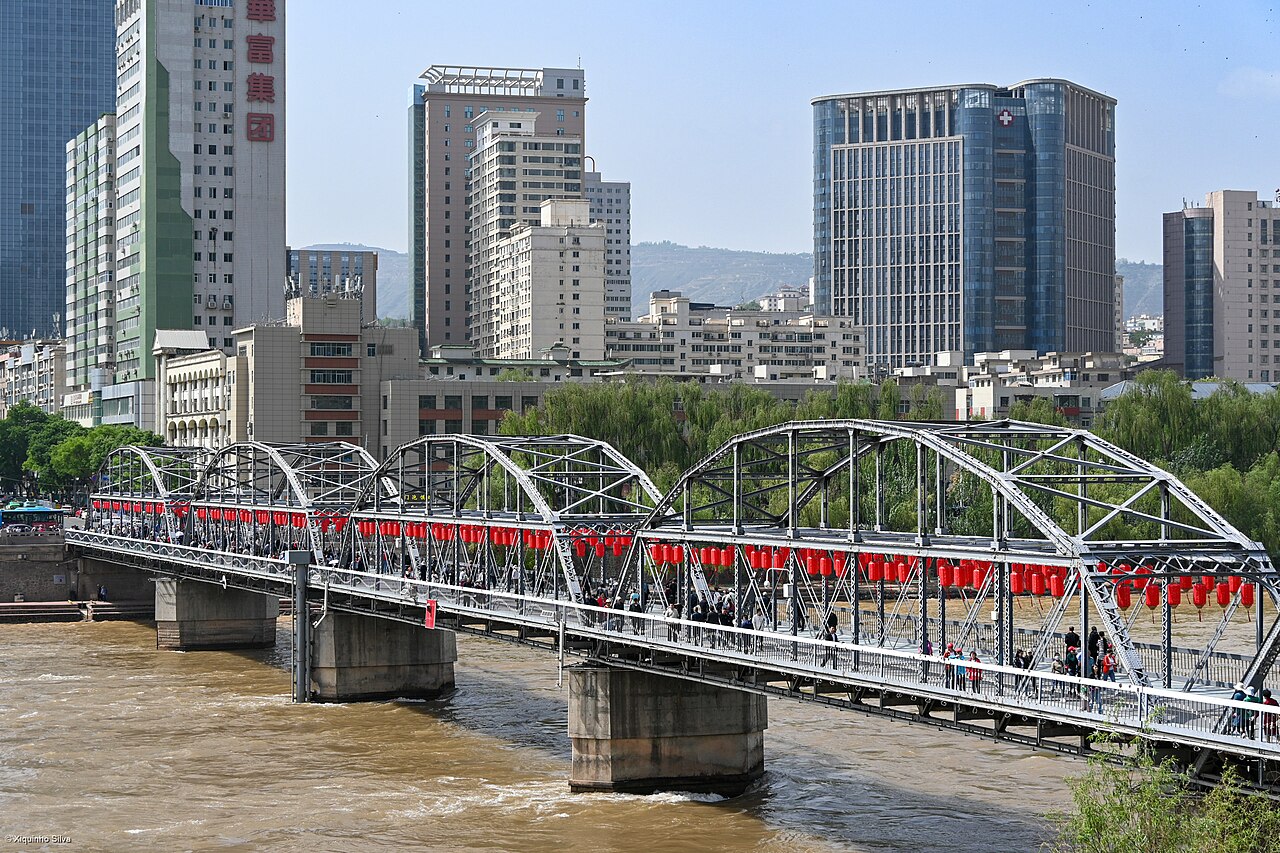
Opened on 19 August 1909, this was the first permanent bridge over the Yellow River in Lanzhou, hence its old name, the First Bridge. Gansu's foreign-affairs bureau contracted German merchants, and the steel was shipped from Germany; work took just over a year. It was renamed for Sun Yat-sen in 1928, and during the war its orange-red paint was covered in leaden grey to hide it from Japanese bombers. The colour stuck. The arches were added in 1954.
Today it's a footbridge and a national protected relic (since 2006). Walk across towards White Pagoda Hill and come back after dark for the lights. Metro Line 1 stops at Xiguan, about 600 metres south. The Zhongshan Bridge page has the full history.
White Pagoda Hill
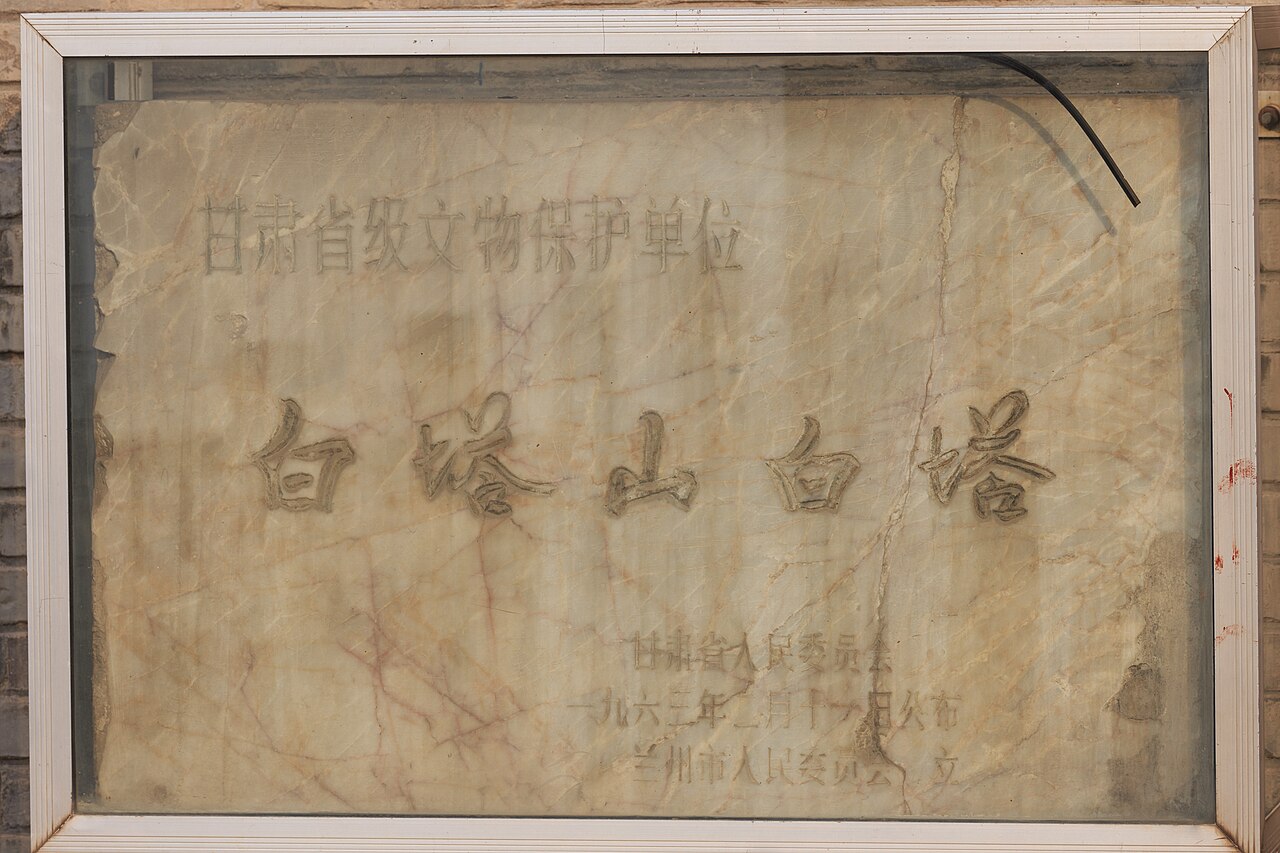
Across the bridge on the north bank, the hill rises to about 1,700 metres. The white pagoda on top dates back to the Yuan dynasty, and the temple beside it was rebuilt in the Ming, with later halls and pavilions stepping up the slope. The park, opened in 1958, is free. You come for the view: the river, the bridge and the whole long city from above. There's a footpath and a cable car; ride up and walk down if you'd rather save your legs.
Waterwheel Garden
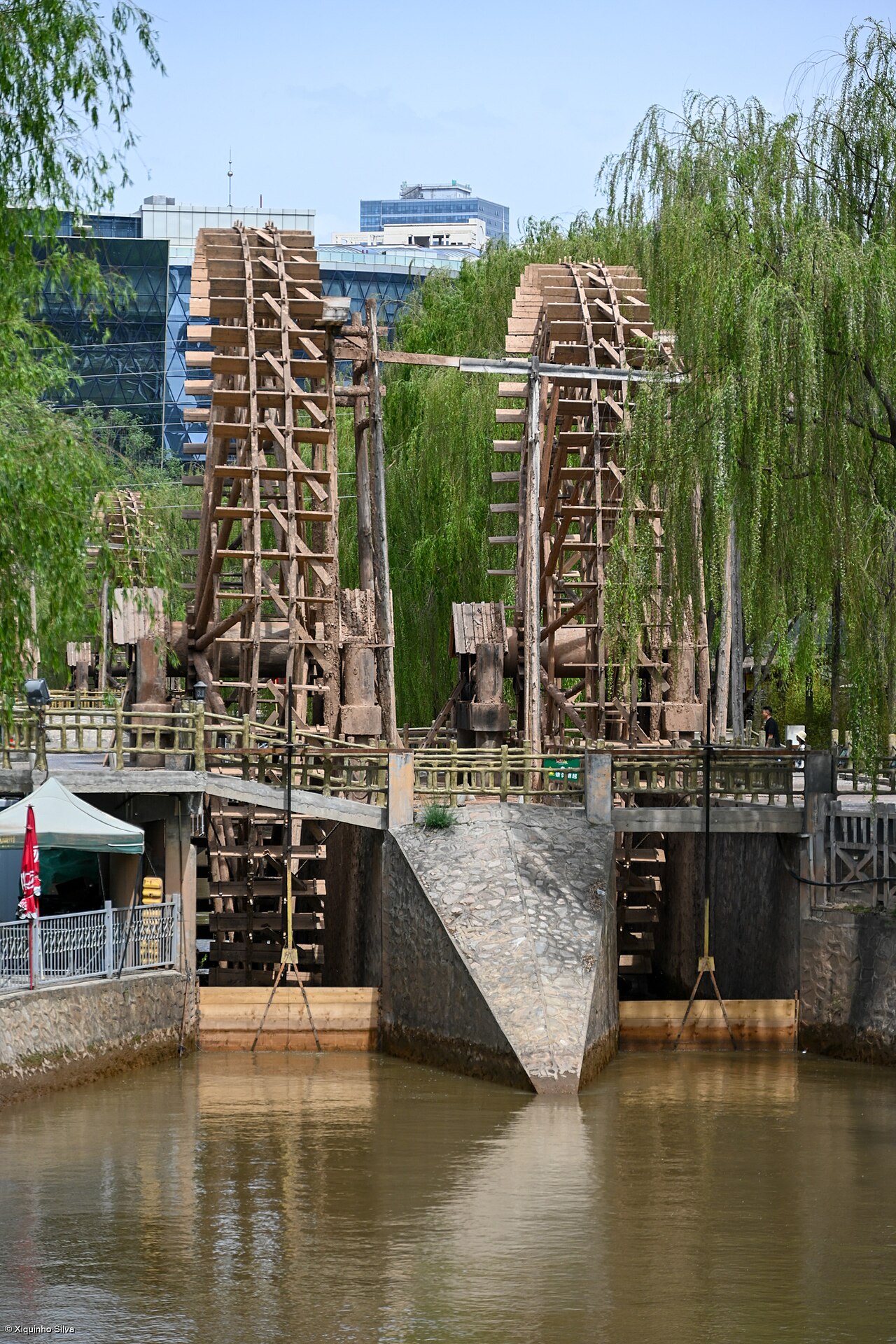
Lanzhou was once known as the city of waterwheels. The technology was brought back from the south by Duan Xu, a Ming-era Lanzhou native, and huge wheels driven by the current lifted river water into irrigation channels on both banks. The garden, west of the bridge on the riverside road, has wheels of different sizes, with the largest still turning and lifting water bucket by bucket, plus displays on how they were built. It's free and quick.
Yellow River Mother statue
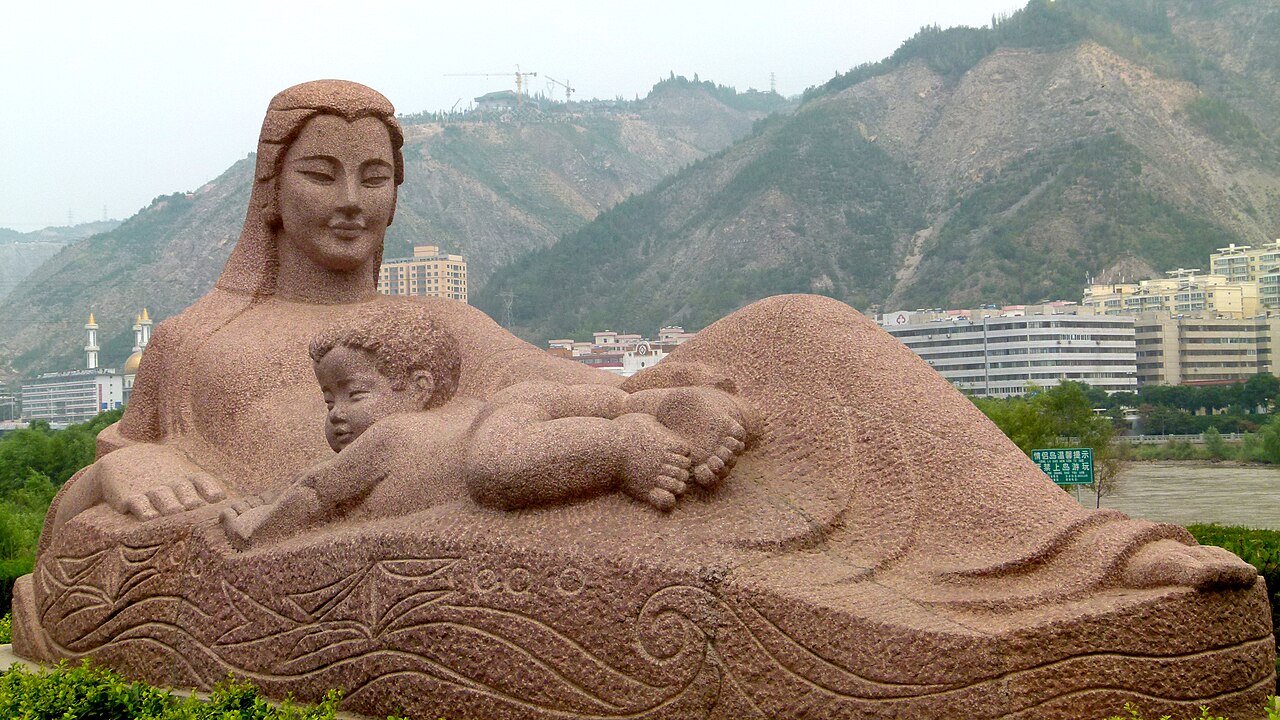
On the middle section of South Binhe Road, the Gansu sculptor He E's granite statue, six metres long and over forty tons, shows a reclining mother cradling a baby boy, a symbol of the river nursing the Chinese nation. It's the city's best-known public art. Stop for a photo on your corridor walk rather than making a special trip.
Gansu Provincial Museum
The collection
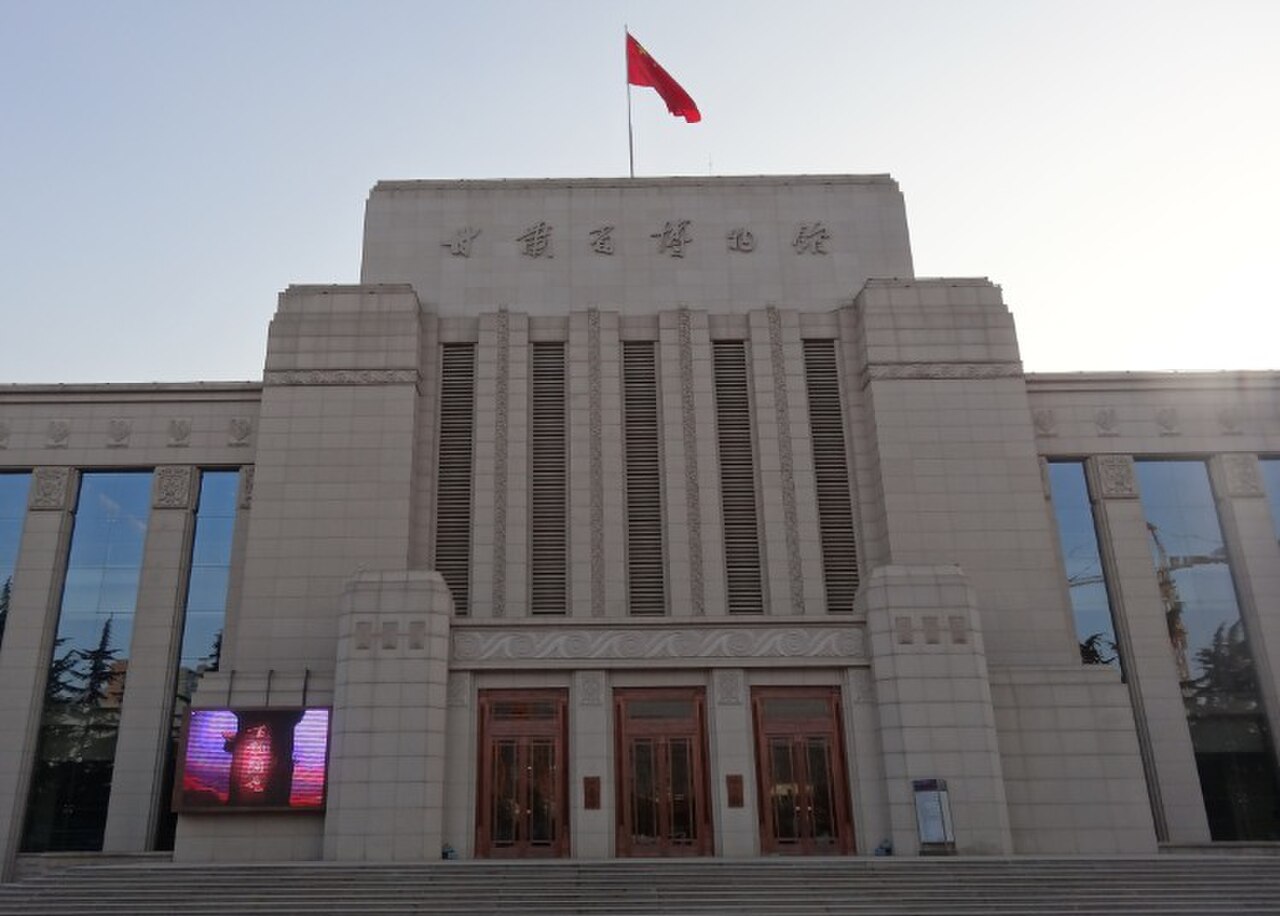
The best indoor hours in Lanzhou. The museum traces its roots to 1939 and was rated a national first-grade museum in 2012. It holds more than 350,000 objects and specimens, sixteen of them national treasures. The star is the Bronze Galloping Horse, often called the Horse Treading on a Flying Swallow, found in the Leitai tomb in Wuwei in 1969 and now the emblem of Chinese tourism. Leave time for the painted Neolithic pottery, the Silk Road galleries and the Buddhist sculpture.
Booking and hours
Entry is free but needs a real-name timed booking through the museum's WeChat channels. The museum's 2026 notices give 9:00 to 17:00, Tuesday to Sunday, closed on Mondays except public holidays. Take Metro Line 1 to Qilihe or Xizhan Shizi. Allow three hours. Booking details are on the museum page.
When to come to Lanzhou
May to October. Summer is cooler than in eastern China, with July averaging about 23 °C, and autumn is clear and crisp. Winters are cold and very dry, averaging −4 °C in January, and spring brings wind and dust. Day and night temperatures differ a lot, so carry a jacket even in summer. Most rain, only about 300 mm a year, falls between May and October. At this altitude very few people feel any effects, and normal sightseeing is fine.
Getting in and where to stay
- High-speed rail: Lanzhou West handles all high-speed services, east to Xi'an on the Xuzhou–Lanzhou line, west along the Hexi Corridor on the Lanzhou–Xinjiang line, and north to Yinchuan.
- Conventional rail: Lanzhou station in Chengguan district has more than 100 trains a day.
- Air: Lanzhou Zhongchuan International Airport is 70 km north; the intercity railway links it with Lanzhou station.
- Metro: Line 1 (opened 2019) runs east-west along the south bank past Xiguan and the museum stops; Line 2 opened in 2023.
Stay near Xiguan or Zhangye Road in the old centre to walk to the bridge, the corridor and noodle shops.
Eating in Lanzhou
Beef noodles first, for breakfast. The rule is "one clear, two white, three red, four green": clear broth, white radish, red chili oil, green coriander and garlic shoots. Choose your noodle width, from hair-thin to wide ribbon. Many of the best shops sell out and close by early afternoon, so go early and pick the one packed with locals. Lanzhou's beef noodles aren't the same thing as the "Lanzhou lamian" chains found across China. Also try niangpi cold noodles in summer, grey beans and sweet fermented rice for dessert, hand-grabbed mutton and lamb skewers.
How to arrange the route
Day 1: Arrive and walk the corridor from Zhongshan Bridge past the Waterwheel Garden to the Mother statue, then come back to the bridge for the lights.
Day 2: White Pagoda Hill in the morning for the view, the museum in the afternoon.
Day 3: Wuquan Mountain park on the south side, a sheepskin raft, a riverside teahouse, or a night market. Lanzhou is also the gateway for the Bingling Temple grottoes, a separate trip by road and boat; check seasonal access before planning on it.
Moving on: Dunhuang is far west along the Hexi Corridor, so take an overnight train or a flight. Nearer Gansu stops include Baiyin for the Yellow River Stone Forest, Jinchang on the corridor, Dingxi in the loess hills, Qingyang to the east and Longnan in the green south.
What to cut if short on time
With one day: the museum in the morning, then the bridge and corridor through sunset. Cut White Pagoda Hill if you've seen the view from the bridge, and cut the raft ride. Skip malls and extra viewpoints.
Things to confirm before you go
- Museum booking and Monday closure.
- Day-night temperature swing and riverbank wind.
- Noodle shop hours, as many close after lunch.
- Raft safety equipment.
- Bingling Temple access in your season.
Frequently asked questions
How many days for Lanzhou?
Two days for the river, bridge, hill and museum; three with a day trip or slower evenings.
Are Lanzhou beef noodles the same as the "Lanzhou ramen" elsewhere?
No. The real thing has a clear broth and fragrant chili oil, comes in many widths and is eaten for breakfast.
Where is the Yellow River Mother statue?
On the middle section of South Binhe Road, an easy walk west of Zhongshan Bridge along the corridor.
Will I get altitude sickness in Lanzhou?
Almost certainly not. At around 1,500 metres it's lower than Kunming.
Sources
The facts in this article were checked against the following sources, retrieved August 25, 2026, and rechecked on October 18, 2026.
- Lanzhou (city) https://zh.wikipedia.org/wiki/兰州市
- Zhongshan Bridge (Lanzhou) https://zh.wikipedia.org/wiki/中山桥_(兰州)
- White Pagoda Hill Park https://zh.wikipedia.org/wiki/白塔山公园
- Gansu Provincial Museum https://zh.wikipedia.org/wiki/甘肃省博物馆
- Lanzhou https://en.wikipedia.org/wiki/Lanzhou
The Chinese Wikipedia entries for the Waterwheel Garden and the Yellow River Mother sculpture are still incomplete; their basic facts were additionally verified against public news and encyclopedia sources.
All photos are from Wikimedia Commons, used under CC licenses; re-use requires attribution.
- lanzhou-river.jpg from File Lanzhou Montage.jpg, montage by Lzy881114, CC BY-SA 3.0
- lanzhou-bridge.jpg from File Zhongshan Bridge, Lanzhou (53725925145).jpg, by xiquinhosilva, CC BY 2.0
- lanzhou-baita.jpg from File Lanzhou Ci'en Si Ta 2013.12.29 10-49-12.jpg, by Zhangzhugang, CC BY-SA 4.0
- lanzhou-museum.jpg from File New Exhibition Building of the Gansu Provincial Museum.jpg, by 幽灵巴尼, CC BY-SA 3.0
- lanzhou-shuiche.jpg from File 兰州水车博览园 2024-05-11 08.jpg, by xiquinhosilva, CC BY 4.0
- lanzhou-muqin.jpg from File Mother Huang He Lanzhou.jpg, by Brücke-Osteuropa, CC0