Reading the Halls of Shaolin Temple on Mount Song
Shaolin Temple sits below Wuru Peak on the Shaoshi side of Mount Song, in Dengfeng, a county-level city more than an hour southwest of Zhengzhou. Its name comes from the forest (lin) of Shaoshi Mountain. Founded in 495, it is honoured as the ancestral temple of Chan Buddhism and is known worldwide for its martial arts. Much of the main compound was rebuilt in the twentieth century, while the Pagoda Forest, a group of Ming halls and many steles are older. Knowing which is which makes the day far more interesting.
Fifteen centuries in brief
Emperor Xiaowen of the Northern Wei built the temple in 495 for the Indian monk Batuo. Tradition says Bodhidharma arrived in 527, taught sitting meditation and passed the Dharma to Huike, which is why Chan Buddhism looks to Shaolin as its source. The temple was badly damaged in the Northern Zhou suppression of Buddhism in 574 and restored a few years later. In the early Tang, the story of thirteen staff-fighting monks who helped the future Emperor Taizong brought land grants and fame.
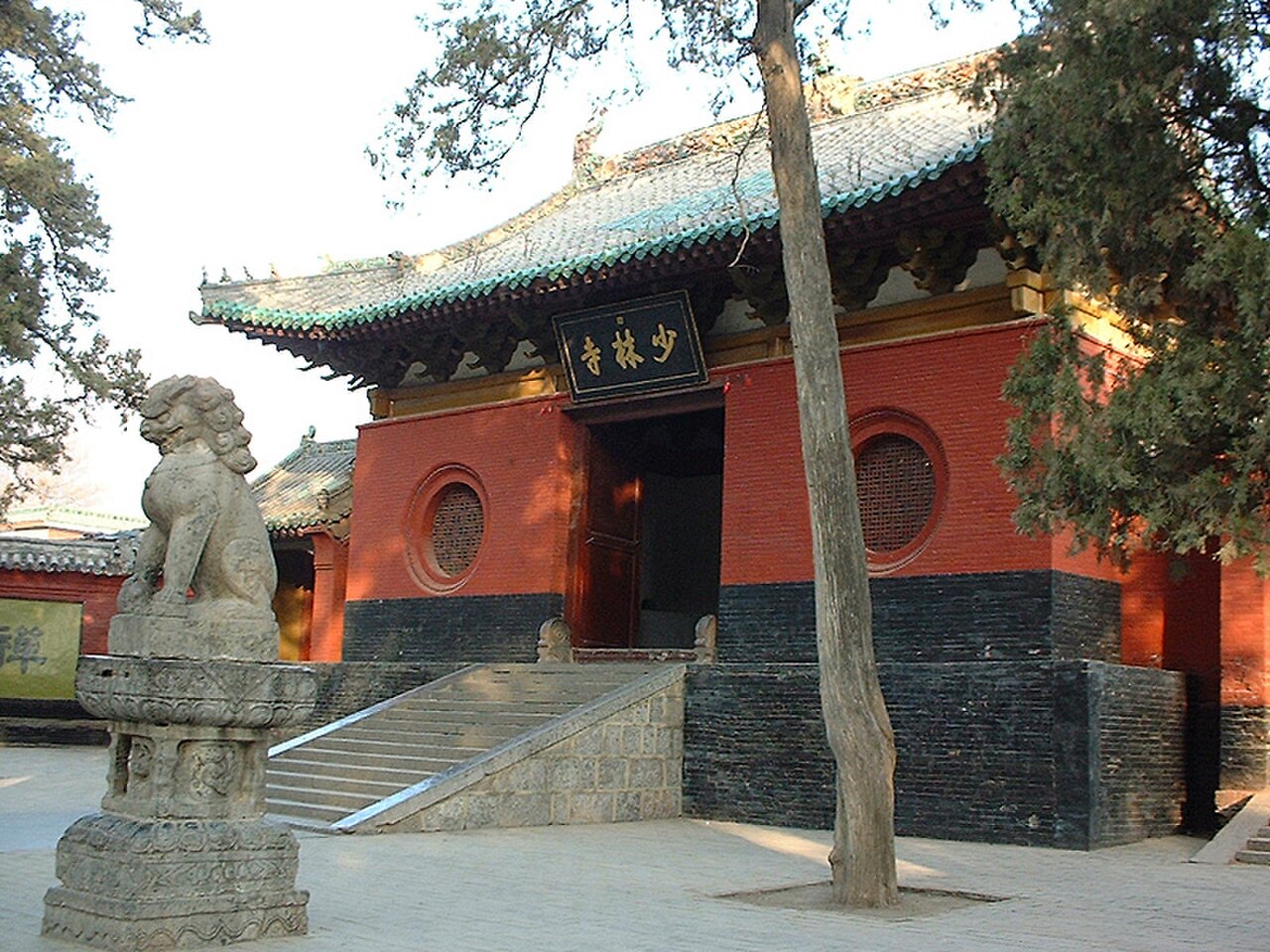
Under the Yuan, the Caodong master Fuyu led the temple and built its bell and drum towers. Shaolin remains a Caodong temple today. Ming records credit Shaolin monks with service against coastal pirates, and the court repaid them with steles, archways and repairs. The Kangxi emperor wrote the "Shaolin Si" plaque in 1704. The Yongzheng emperor reviewed plans and rebuilt the mountain gate in 1735, and the Qianlong emperor stayed the night in the abbot's quarters in 1750.
The great loss came in March 1928. During warlord fighting, Shi Yousan's troops burned the Dharma hall on 15 March and the main halls, bell and drum towers and sutra stores the next day. Chinese Wikipedia records 5,480 juan of scriptures lost. The Cultural Revolution did further damage. Since the 1980s the halls have been rebuilt on the old plan.
Walking the main compound
The main compound, called the Changzhu Yuan, runs south to north. The mountain gate dates from the Yongzheng rebuilding and still carries the Kangxi plaque. The Hall of Heavenly Kings was rebuilt in 1982 and the Mahavira Hall in 1986, and the Sutra Pavilion followed in 1993. These are careful reconstructions on the old foundations.
The older fabric starts further back. The Lixue Pavilion, also called the Bodhidharma Pavilion, dates from the Ming Zhengde period and marks the spot where, in legend, Huike stood in the snow asking Bodhidharma to teach him. Behind it, the Thousand Buddha Hall is a Ming building repaired under Qianlong and the largest surviving hall in the temple. Its walls carry a mural of five hundred arhats paying homage to Vairocana, 7.5 metres high and 42 metres long. The floor has 48 shallow pits that Chinese sources describe as worn by Qing-era monks practising their stances. Do not skip this hall on the way out.
The Pagoda Forest
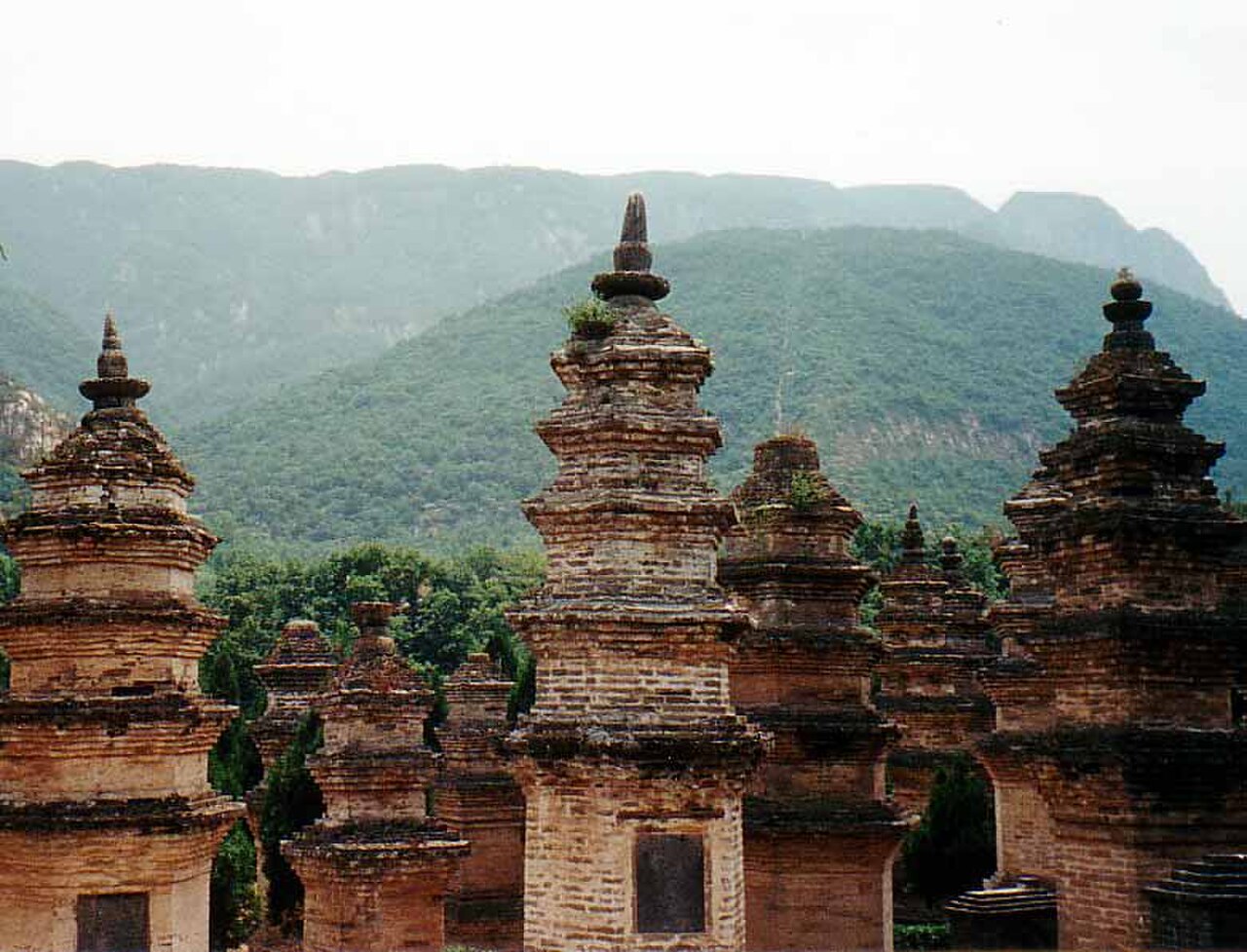
About 280 metres southwest of the compound, the Pagoda Forest holds 246 brick and stone memorial pagodas for abbots and monks across nearly 20,000 square metres of hillside. The pagodas range from the Tang to the Qing and vary from squat single-storey towers to slender stacks of eaves. Their carving and inscriptions make the site a reference for historians of sculpture and calligraphy. It is the quietest part of most visits.
Bodhidharma's hermitages
Chuzu Hermitage, about 1.3 kilometres north of the temple, was built in the Song to honour Bodhidharma and is part of the 2010 UNESCO listing. Above it, near the top of Wuru Peak, is the natural cave where tradition says he sat facing the wall for nine years. Erzu Hermitage, for Huike, stands on Boyu Peak across the valley. Each is a real walk uphill. Pick one if your legs or the weather limit you.
Martial arts and the scenic area
Shaolin became a national 5A scenic area in 2007. Ticket listings commonly describe the main entry ticket as covering the main compound, the Pagoda Forest, the hermitages and the martial arts performance hall, with cable cars and shuttle carts sold separately. Performance times and ticket rules follow the scenic area's own notice. The cable car up to Sanhuangzhai on Shaoshi Mountain is a separate trip and a separate ticket. The Mount Song section of the Zhengzhou guide explains how it fits.
Shaolin is still a monastery. Dress modestly in the halls, keep voices down, and avoid photographing monks at prayer.
Getting there
Coaches run from Zhengzhou and from Luoyang to Dengfeng, and local buses and taxis link Dengfeng with the scenic area entrance. Many travellers book a car for the day. Start early, because the valley fills with tour buses by mid-morning. If you want Shaolin plus Songyang Academy or a ridge walk, stay a night in Dengfeng.
Pairing it
Shaolin takes the whole day from Zhengzhou. Keep the city day for the Henan Museum, where the bronzes and jades give you the long history of the Central Plains before you walk the steles on Mount Song. Luoyang is about the same distance on the other side of Dengfeng if you are moving west.
Things to confirm before you go
- Ticket scope and the day's performance times.
- Cable car operation if rain or wind is forecast.
- Last return transport from Dengfeng to Zhengzhou.
- Shoes for the walk to the Pagoda Forest and hermitages.
Frequently asked questions
How much of Shaolin is original?
The Pagoda Forest, the Lixue Pavilion, the Thousand Buddha Hall, Chuzu Hermitage and many steles are old. The Mahavira Hall, Heavenly Kings Hall and Sutra Pavilion are rebuilds after the 1928 fire.
Is Shaolin a day trip from Zhengzhou?
Yes, a full one. Leave early and plan on returning in the evening.
Can you see kung fu?
The scenic area runs martial arts performances on a posted schedule. Check the times at the entrance.
What is the UNESCO listing?
Shaolin's main compound, Pagoda Forest and Chuzu Hermitage are part of the Historic Monuments of Dengfeng in "The Centre of Heaven and Earth", inscribed in 2010.
Sources
Facts in this article were checked against the following sources, retrieved 10 October 2026.
- 少林寺, Chinese Wikipedia
- Shaolin Monastery, English Wikipedia
- Historic Monuments of Dengfeng, UNESCO World Heritage Centre
- Scenic area ticket listings and Dengfeng transport notices
Photos are from Wikimedia Commons under the licences shown in each caption.