Nanhai Guanyin, the Southern Landmark of Mount Putuo
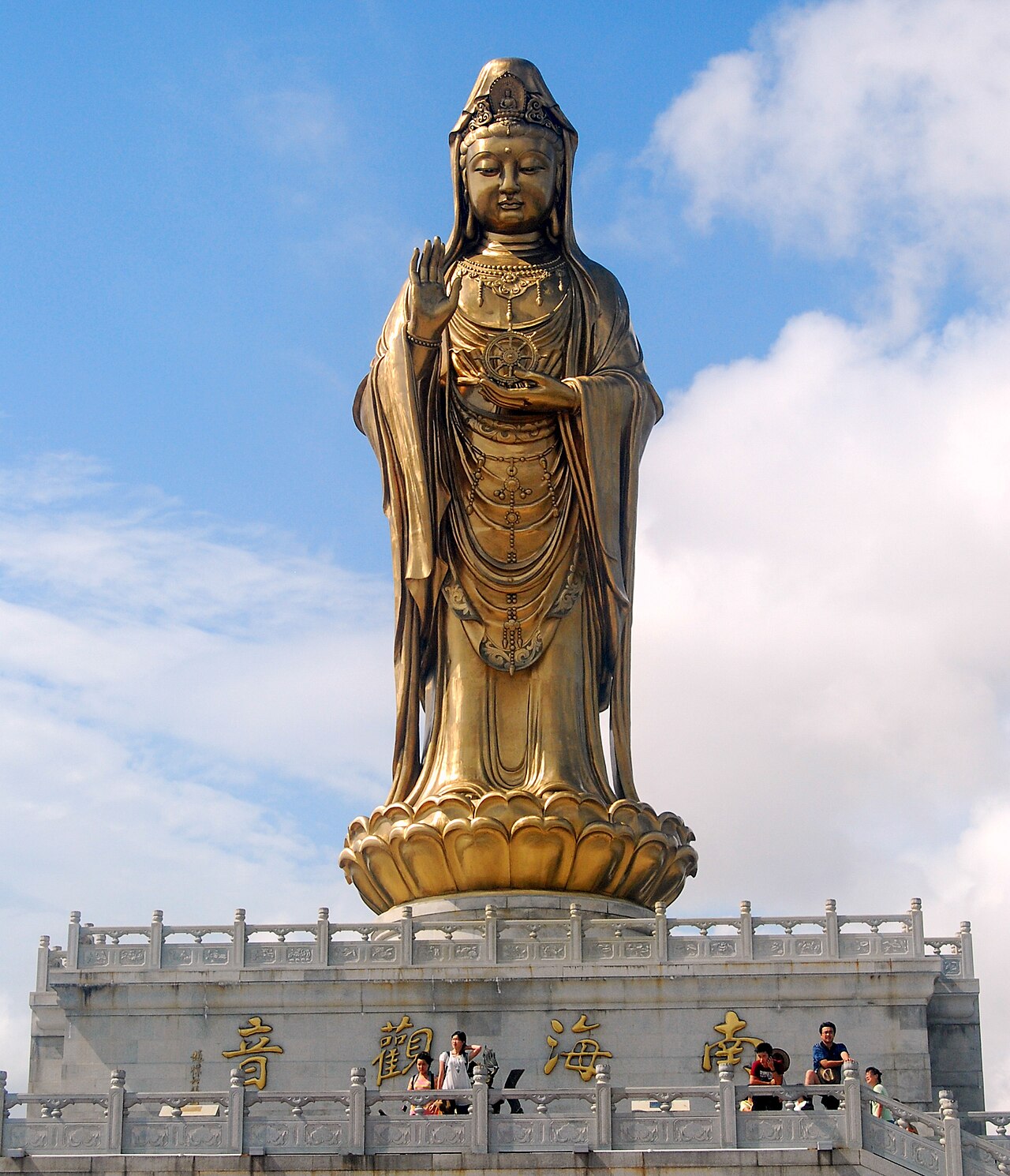
The Nanhai Guanyin, or South Sea Guanyin, is the tall bronze statue that marks the southern tip of Mount Putuo. Chinese Wikipedia on the standing image gives a height of 33 metres and a weight of more than 70 tonnes. It was funded by donors at home and abroad and consecrated on 30 October 1997. English Wikipedia lists the statue among the island's main features, near Zizhu Grove (Purple Bamboo Grove). For many visitors it is the photograph that proves they reached Putuo, and for pilgrims it is a stop for incense after or before the three great temples.
How the statue got there
Local Buddhist accounts, summarised on Chinese Wikipedia, link the project to Abbot Miaoshan in the mid-1990s and to a vision of Guanyin standing by the sea. Whatever one makes of the miracle stories that surround the consecration, the finished work is a clear modern landmark on an island whose pilgrimage history runs back more than a thousand years. The figure faces the East China Sea. The left hand holds a dharma wheel; the right hand shows the abhaya mudra. Inside the pedestal, travel listings describe a merit hall with further Guanyin images. A small door ticket is often charged at the statue in addition to the island entrance; listings in 2026 put that add-on at only a few yuan, but confirm the day's notice.
Hours for the statue area commonly follow temple patterns, around 6:00 to 17:30 on weekdays and a little later on weekends in some listings. Sunrise watchers come early when ferry and island buses allow.
Southern tip: Zizhu Grove and Bukenqu
Around the statue sit Zizhu Grove and the Bukenqu Guanyin Temple, the "Guanyin who would not leave" shrine tied to the Egaku legend that also explains Putuo's identity as Guanyin's bodhimanda. Nantian Gate and related shore rocks round out the southern cluster. Island buses connect this tip to Puji Temple and the central belt; walking the whole island in one go is possible but long for a first visit. Private cars are banned on Putuo, so bus timing matters more than map distance.
The southern tip is windy and exposed. Hats and layers help even in summer. Typhoon warnings close shore paths; check notices before you walk out to the rocks.
Hundred-Step and Thousand-Step beaches
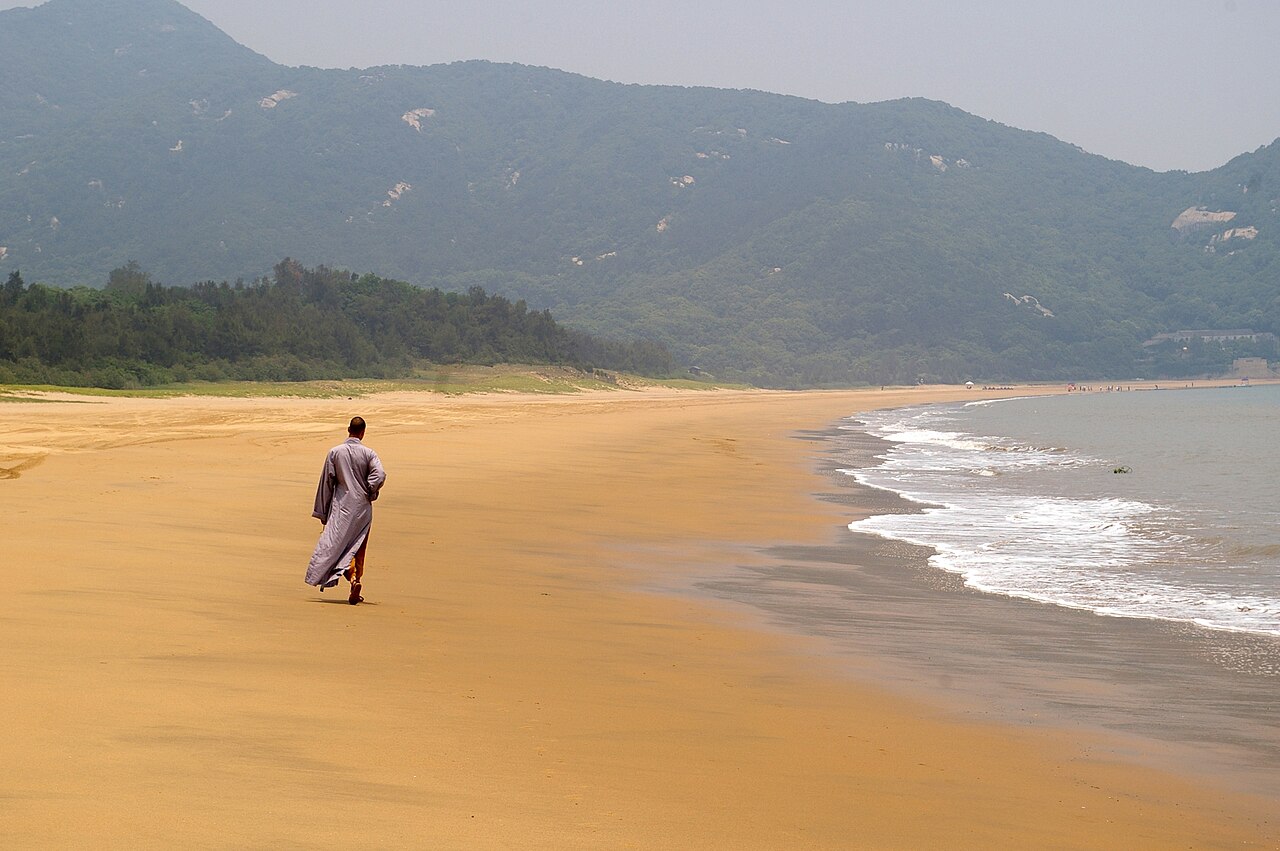
English Wikipedia names two major beaches: Hundred-Step Beach (Baibusha) and Thousand-Step Beach (Qianbusha). Hundred-Step Beach sits nearer the southern and central pilgrim belt and may charge for deck chairs, parasols and water activities when those concessions are open. Thousand-Step Beach lies closer to Fayu Temple and works as a long sandy recovery walk between hillside halls. Trip.com and similar listings treat both as free shore scenery inside the scenic area, with paid add-ons only for rentals. Soft evening light is better than noon glare for photos without temple crowds.
Sea wind disguises sun exposure. Swim only where posted and in season; Putuo is a pilgrimage island first, a beach resort second. Surf warnings in typhoon season are serious.
How to fit it into a Putuo day
The Zhoushan guide puts temples first and shores as recovery walking. A practical order for many visitors is Puji Temple in the morning, bus to the Nanhai Guanyin and Zizhu Grove, then either return via a beach walk or continue toward Fayu and Huiji if legs remain. Overnight on the island makes dawn at the statue or evening on Thousand-Step Beach realistic. Same-day mainland stacks from Shanghai or Hangzhou leave little margin when fog delays ferries.
Island entrance, ferry, buses and the small statue ticket add up. Combined passes sold on some channels are often just the sum of entrance and ferry. Check the day's official notice rather than locking yuan figures from last year's blog.
Before you go
- Reach the statue by island bus; do not expect private cars.
- Confirm statue door ticket and hours on the day's notice.
- Pair with Mount Putuo temples rather than treating the statue as a solo stop.
- Keep off wet rocks when the tide turns.
- Book lodging on Putuo if you want sunrise at the tip.
Frequently asked questions
How tall is the Nanhai Guanyin statue?
Chinese sources give 33 metres for the standing bronze image consecrated in 1997.
Is the statue free?
Island entrance is separate. Listings often add a small door ticket at the statue; confirm on the day.
Which beach is nearer the statue?
Hundred-Step Beach is the closer soft shore for many southern-tip itineraries. Thousand-Step Beach sits nearer Fayu Temple.
Can I see the statue and all three temples in one day?
Yes on a full island day with buses. Overnight is kinder if you also want dawn or evening shores.
Sources
Facts in this article were checked against the following sources, retrieved 13 October 2026.
- 普陀山南海观音立像, Chinese Wikipedia
- Mount Putuo, English Wikipedia
- Mount Putuo 2026 guide, China for Travelers
- Putuo Mountain Scenic Area, Trip.com
Photos are from Wikimedia Commons under the licences shown in each caption.