Aksu Travel Guide: An Oasis City Between the Tian Shan and the Taklamakan
Aksu is the seat of a huge prefecture on the northern edge of the Tarim Basin, a farming oasis of cotton fields and orchards with the Tian Shan to the north and the Taklamakan Desert to the south. The name is Turkic for "white water", after the Aksu River. The city itself is modern and has few sights. It works best as a place to rest, eat well and organise day trips on the southern Xinjiang route between Korla and Kashgar. The famous sights of the prefecture, such as the Kizil Caves and the Kuqa canyons, are two hours or more away by road. Plan one evening in town and at least one full day out.
A city on an old road
Aksu has been an oasis stop for two thousand years. Han-dynasty records call it the kingdom of Gumo, with about 3,500 households, and note its copper and iron. The monk Xuanzang passed through in 629 on his way to India and called it Baluka. He counted dozens of Buddhist monasteries and more than a thousand monks, and noted that the customs and writing were the same as in Kucha to the east, though the spoken language differed. In 717 a Tang army fought off a combined Arab, Tibetan and Türgesh attack here. The Qing gave the city its present name in 1757 and built a new walled town in 1883. Francis Younghusband, crossing from Beijing to India in 1887, found about 20,000 people and a large bazaar.
Little of that history survives in the streets. What you get instead is a working Uyghur and Han city: markets, fruit, grilled meat and big skies.
When to come to Aksu
The climate is dry and continental. From May to October the roads and day trips are easiest. July and August are hot in the oasis, though nights cool down. Autumn is the best time: the harvest brings the prefecture's well-known apples and other fruit into the markets, and the light over the Tian Shan is clearer. Winters are cold and windy and poor for canyon walks. Dust and strong sun are a fact of life all year; bring sunglasses, a hat and lip balm.
Getting in and where to stay
Aksu has an airport with flights to Urumqi and other Chinese cities, and a station on the Southern Xinjiang Railway between Korla and Kashgar. Xinjiang has more ID and security checks than most of China. Carry your passport at all times and allow extra time at stations, the airport and road checkpoints.
Stay in the centre near the pedestrian street, where food is easy after dark. For day trips, hire a car and driver through your hotel or a local agency the day before, and agree the route, stops and return time in advance.
Places worth visiting
The pedestrian street and night markets
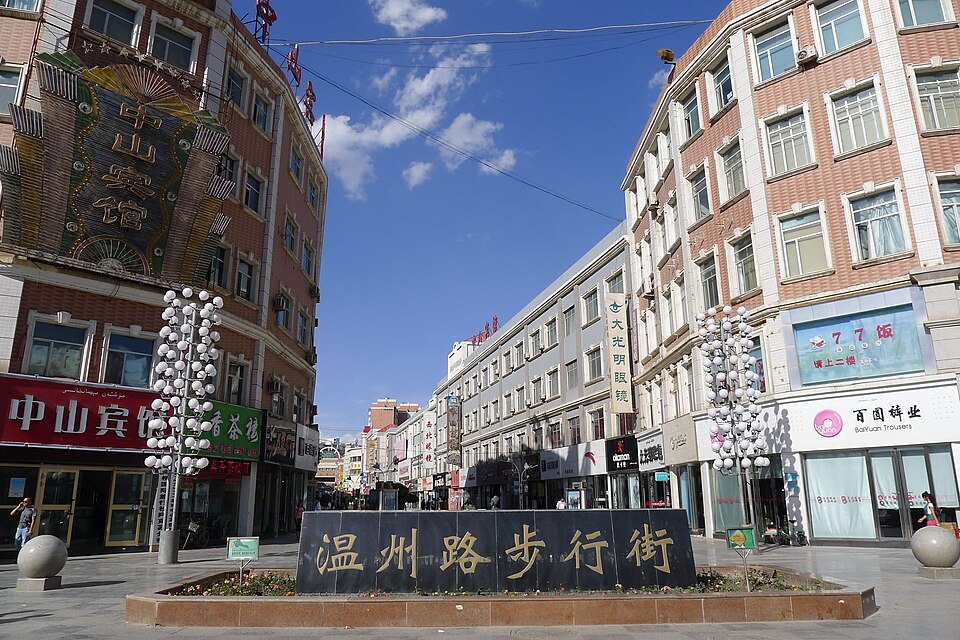
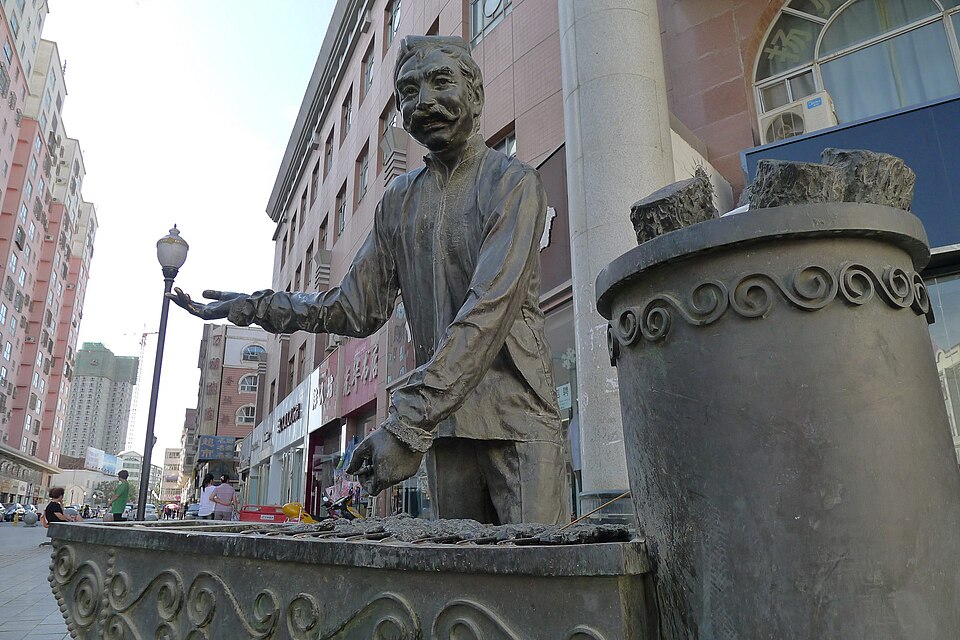
Arrival evening is for the centre: the pedestrian street, the stalls around it and dinner at one of the busy kebab or noodle places. Fruit stands are the best part in late summer and autumn. Ask before photographing people, especially at prayer times and around mosques.
The Kizil Caves
The Kizil Thousand Buddha Caves, in Baicheng County to the east, are the main reason many travellers come to this part of Xinjiang. There are 236 numbered caves cut into a cliff above the Muzat River, made between about the third and eighth centuries for the Buddhist kingdom of Kucha. They are thought to be the earliest major Buddhist cave complex in China, and they have been part of the Silk Roads World Heritage listing since 2014. Many statues were destroyed and some murals were removed to European museums in the early twentieth century, but the remaining paintings of jataka stories are still remarkable. The caves are about 75 kilometres by road from Kuqa. From Aksu it is a long day there and back, and many people base themselves in Kuqa instead. Opening arrangements for individual caves change, so check them before you go.
Kuqa and the canyon country
Kuqa, the old capital of Kucha, lies roughly 300 kilometres east of Aksu. It has the ruins of Subashi Temple north of town and the red Tianshan Mysterious Grand Canyon in the hills beyond. Closer to Aksu, Wensu County to the north has its own red-rock canyon country at the foot of the Tian Shan. Each of these is a full-day outing with a driver. Do not try to do two in one day.
In town
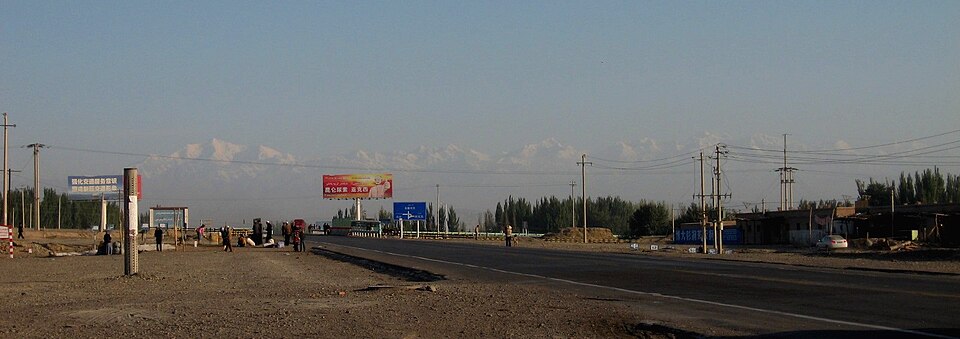
The riverside parks are pleasant for an evening walk once the heat drops, and on clear days the Tian Shan shows above the edge of town. That is about all the city has to see. Use the spare time to rest between long drives.
Eating in Aksu
Food is one of the best reasons to stop. Look for laghman (hand-pulled noodles with a stir-fried topping), polo (rice pilaf with mutton and carrots), lamb kebabs, samsa baked in a tandoor, and nang flatbread fresh from the oven. In season, buy apples, melons, grapes and walnuts from the markets. Many dishes are oily and some are spicy, so ask for less chilli if you need to. Busy local restaurants are a better bet than empty hotel banquet halls.
How to arrange the route
- One night: arrive, walk the pedestrian street, eat, sleep, move on.
- Two nights: add a full day with a driver to the Wensu canyons or to Kizil.
- Three nights: split it, with one night in Aksu and one or two in Kuqa for the caves, Subashi and the Tianshan canyon.
A typical southern Xinjiang loop runs Urumqi, Korla, Kuqa, Aksu, Kashgar, or the reverse, by rail or road.
What to cut if short on time
Keep one evening in the city centre and one excursion. Drop the second canyon, and do not attempt Kizil and a canyon on the same day. If the caves are your priority, move a night to Kuqa rather than doing a round trip from Aksu.
Things to confirm before you go
- Current entry rules and checkpoints for the routes you plan to drive.
- Driving times to Kizil, Kuqa and the Wensu canyons, agreed with your driver.
- Which caves at Kizil are open, and the entry arrangements.
- Train and flight times, with time for security checks.
- Heat or cold on your dates.
Frequently asked questions
How many days do I need in Aksu?
One night for the city and food, two or three if you add day trips. The city alone does not need more than an evening.
Can I visit the Kizil Caves from Aksu?
Yes, as a long day trip with a driver, but Kuqa is closer and makes an easier base.
Should I choose Aksu or Kashgar?
They do different jobs. Kashgar has the old town and bazaars; Aksu is a quieter stop on the way, close to the Kucha sites. Most southern Xinjiang trips pass through both.
Sources
The facts in this article were checked against the following Wikipedia and encyclopedia entries, retrieved September 18, 2026, and rechecked on October 14, 2026.
- Aksu City https://en.wikipedia.org/wiki/Aksu_City
- Aksu Prefecture https://en.wikipedia.org/wiki/Aksu_Prefecture
- Aksu (Chinese) https://zh.wikipedia.org/wiki/阿克苏市
- Kizil Caves https://en.wikipedia.org/wiki/Kizil_Caves
- Kucha https://en.wikipedia.org/wiki/Kucha
- Tarim Basin https://en.wikipedia.org/wiki/Tarim_Basin
Entry fees and access rules for the caves and canyons change; check the current notices before you travel.
All photos are from Wikimedia Commons, used under CC licenses; re-use requires attribution.
- aksu-street.jpg from File:阿克苏步行街.jpg, by Eric Feng, CC BY-SA 2.0
- aksu-tianshan.jpg from File:Outside of Aksu with Tian Shan range.jpg, by B_Aichner, CC BY-SA 4.0
- aksu-statue.jpg from File:阿克苏步行街的塑像.jpg, by Eric Feng, CC BY-SA 2.0