Kashgar Travel Guide: Old City Lanes, Id Kah and the Sunday Market
Kashgar has been an oasis on the Silk Road for more than 2,000 years, and it's one of China's westernmost cities, near the borders with Kyrgyzstan and Tajikistan. Three days is the right length: one for the Old City and Id Kah Mosque, a Sunday morning for the livestock market, and a spare day for the Apak Hoja Tomb or the road into the Pamirs. Plan your dates around Sunday if the animal market matters to you; nothing else in town replaces it.
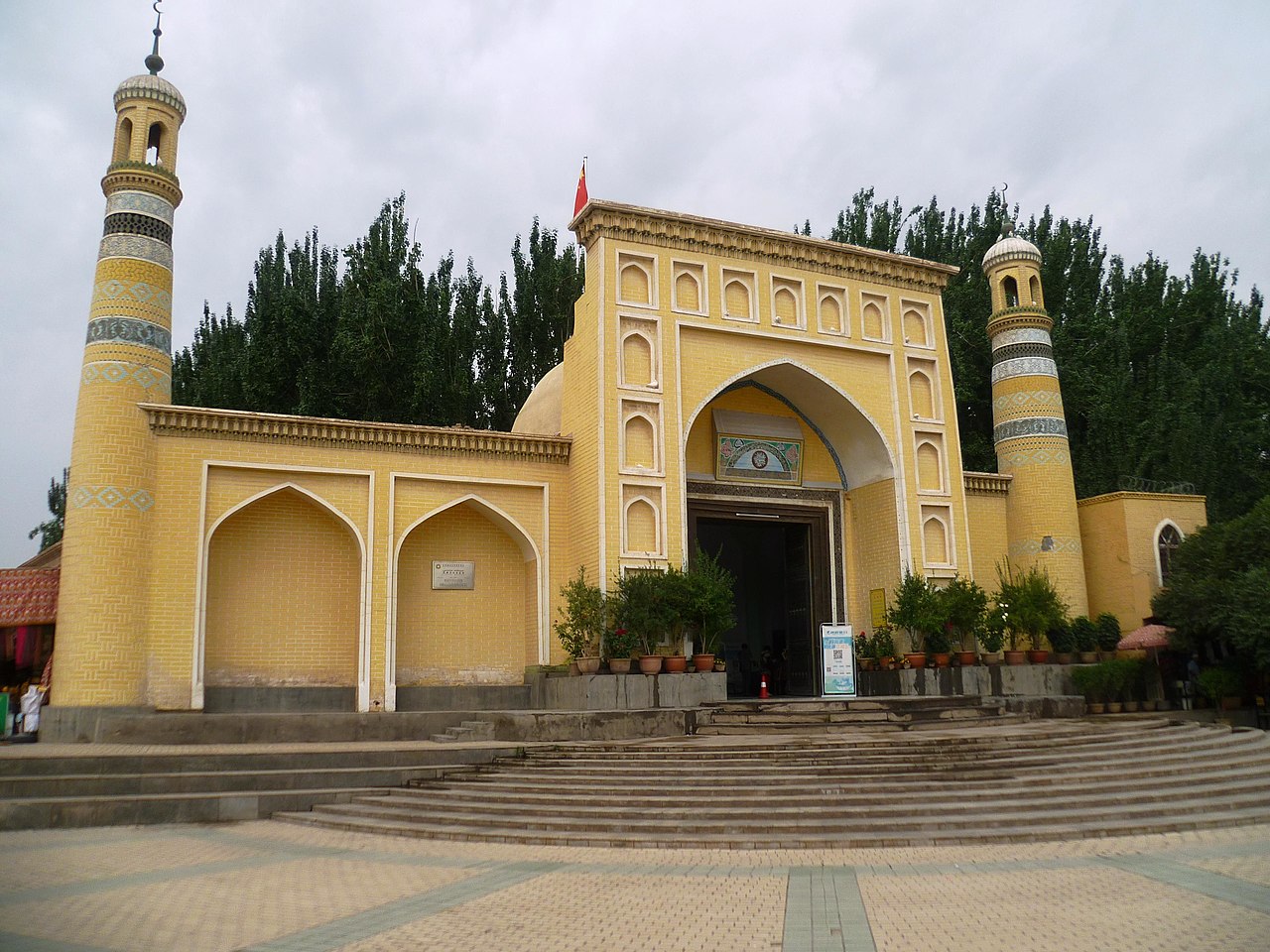
Id Kah Mosque and the square
Id Kah stands on the west side of Id Kah Square, the centre of town and the point every Old City walk comes back to. Tradition dates a major rebuild to 1442, with older roots and many later repairs, and it's one of China's largest mosques. It is an active place of worship. Non-Muslim visitors can usually enter outside the main prayer times, for a fee separate from the Old City. Dress modestly with arms and legs covered, keep your voice down in the courtyard and don't photograph people at prayer. At Friday midday prayers and at Eid the square fills, so watch from outside or come at another hour. Visitor hours change, so check at the gate; more on the Id Kah page.
The Old City
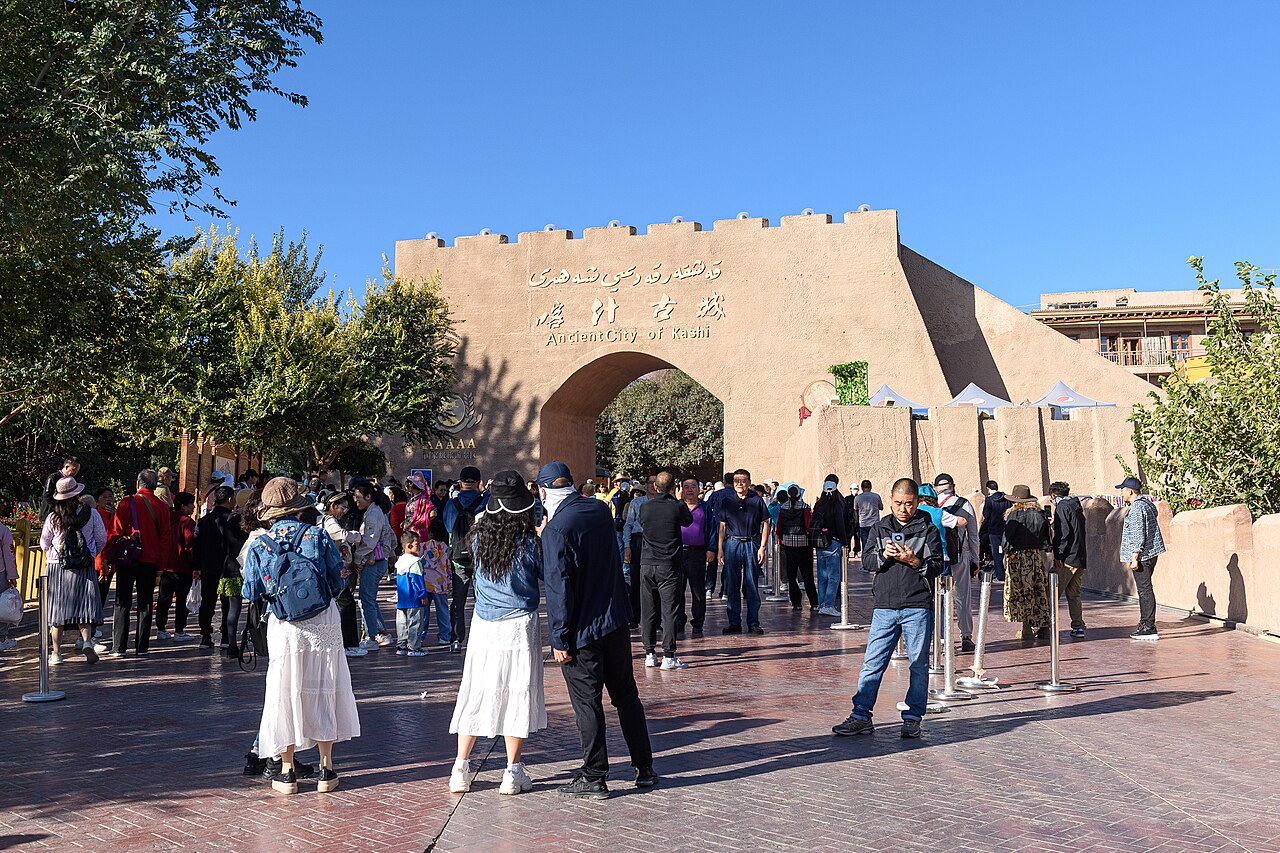
Before 2009 the Old City was often called the best-preserved traditional Islamic city in Central Asia. From 2009 most of its houses were demolished and rebuilt, officially because they were vulnerable to earthquakes and fire after the 2003 Bachu earthquake, and by 2012 much of it was new. Critics disputed the reasoning. What you walk through today is a reconstructed street pattern with craft workshops, tea houses and gated scenic streets north and east of the square.
It's still worth a full day. A good order:
- Morning: Start at the East Gate, where an opening ceremony is usually staged mid-morning and is free to watch. Then wander the lanes towards Id Kah; hexagonal paving tends to mark through routes, and some side lanes are dead ends.
- Midday: Retreat to a tea house when the heat builds.
- Afternoon: Look for Atlas silk, copper and musical instrument workshops, and the knife and hat sellers in the craft lanes north of the square.
- Evening: Come back after dark for the food alleys near the square.
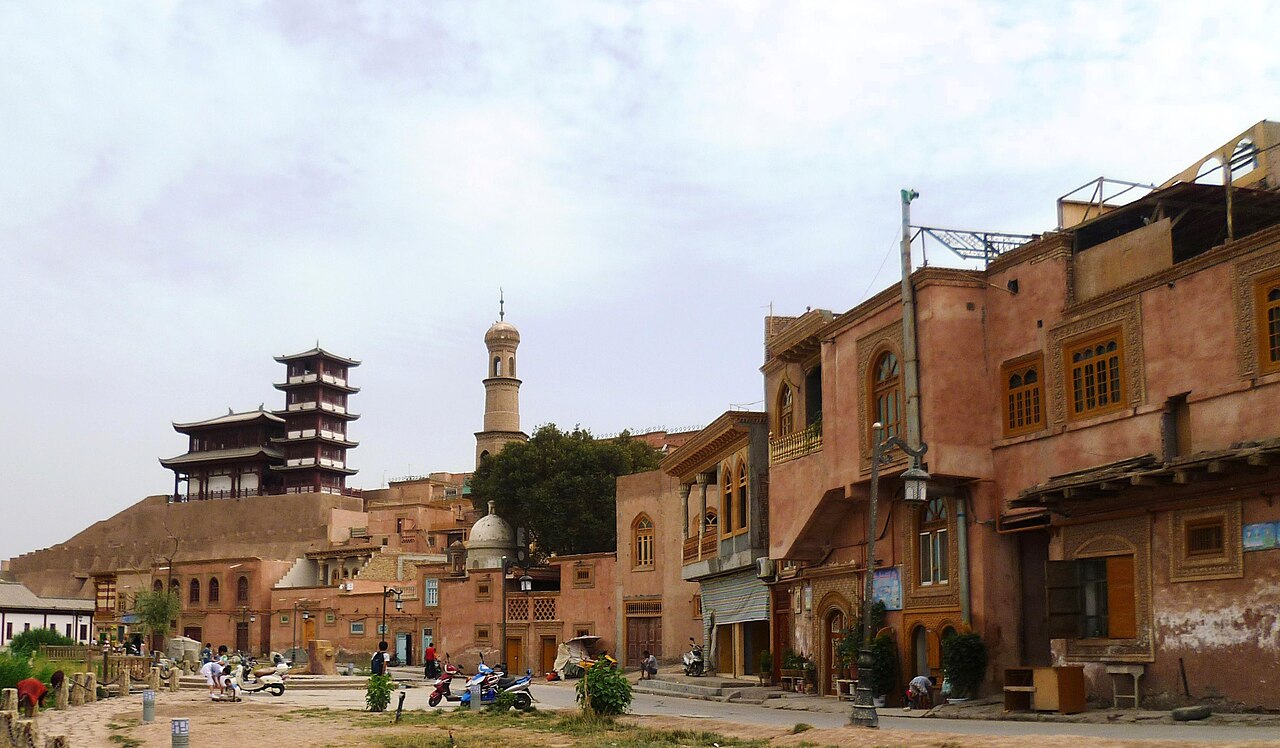
The scenic area's ticket and hours follow the official notice. The Old City page has a longer walking guide.
The Sunday market
Kashgar's bazaars have traded for 2,000 years. There are two different things to see, and people confuse them.
- The livestock market is held on Sunday mornings on the east side of town. Farmers bring sheep, goats, cattle, horses and donkeys, buyers check teeth and haggle, and there are food stalls at the edges. It's dusty and loud. Take a taxi and arrange the return, and ask before photographing anyone.
- The Grand Bazaar (the Central–Western Asia market) sells carpets, spices, dried fruit, hats and metalwork. It opens daily, but Sunday is the biggest day, with peak crowds said to reach a hundred thousand.
Confirm the livestock market's location and timing at your hotel on Saturday evening, especially around holidays. The Sunday Bazaar page explains the difference in more detail.
Apak Hoja Tomb
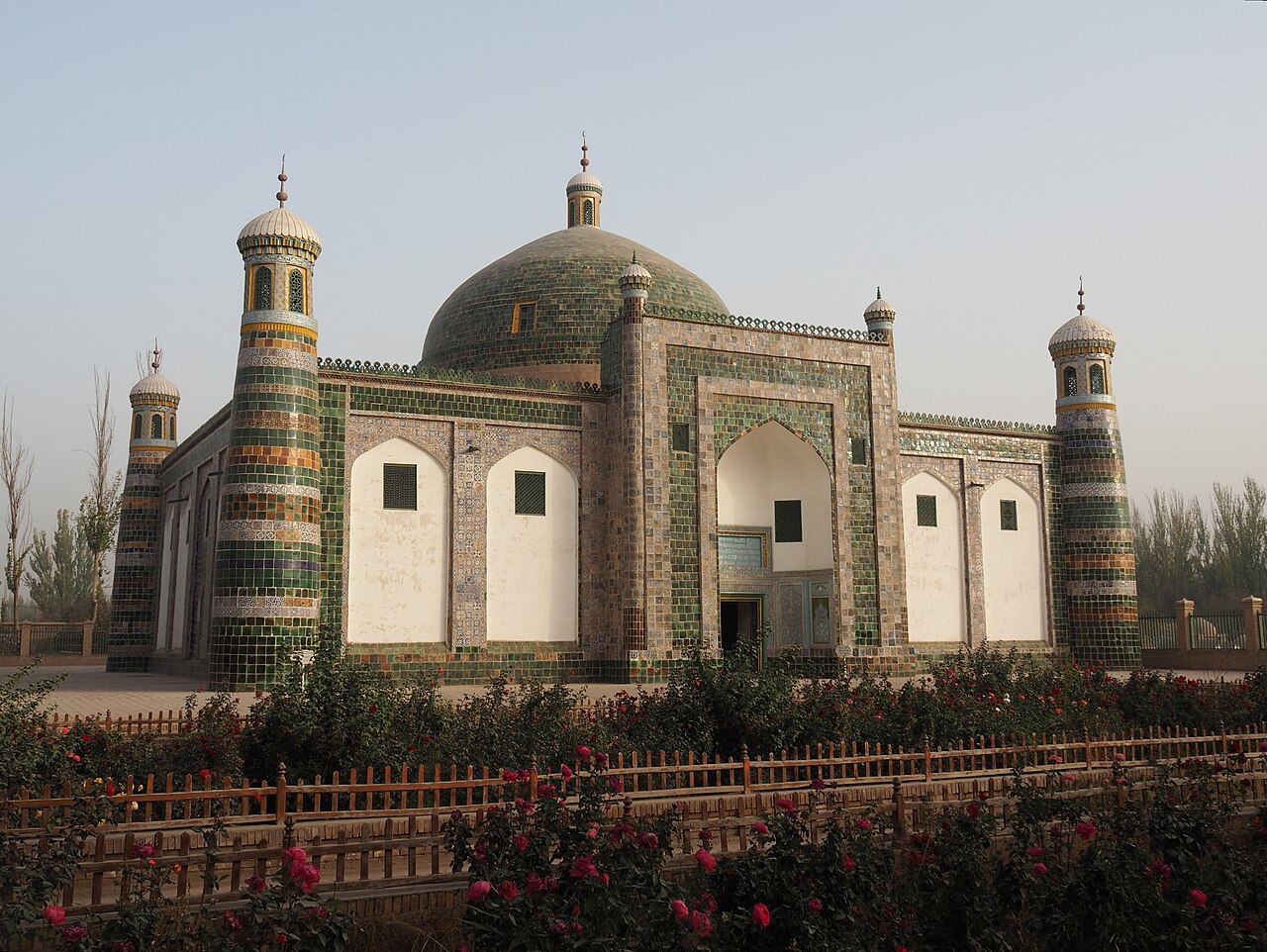
A few kilometres outside the centre, the mausoleum of the 17th-century Sufi leader Afaq Khoja is Xinjiang's best-known Islamic tomb garden, with glazed-tile domes and a large cemetery. It's often marketed as Xiangfei Garden after the legend of the Fragrant Concubine. Allow 60 to 90 minutes, preferably in the afternoon light. It's the first thing to drop on a short trip. Details on the Apak Hoja page.
The road to the Pamirs
Kashgar is the end of the Karakoram Highway, which runs south over the Khunjerab Pass to Pakistan. The stretch to Karakul Lake and Tashkurgan is spectacular, but it climbs to high altitude and passes through border areas where a permit is normally required. Arrange it in advance, give it its own day or overnight, and don't attempt it on the day you arrive.
When to come to Kashgar
April to June and September to October. Kashgar is one of China's driest cities: July averages about 26 °C with fierce sun, and January about −5 °C. Spring arrives fast and can bring dust. Eid and other festivals change crowds and opening around Id Kah, so check the Islamic calendar against your dates.
Getting in and where to stay
- Air: Kashi Laining International Airport has mainly domestic flights, most from Urumqi. Flying is the practical way in.
- Rail: Kashgar has China's westernmost railway station, on the Southern Xinjiang Railway to Urumqi, a very long ride. The Kashgar–Hotan line, opened in 2011, runs along the southern Tarim Basin to Yarkand and Hotan.
- Overland: Roads continue to Kyrgyzstan via the Torugart and Irkeshtam passes and to Pakistan via the Karakoram Highway. Check current border status before relying on them.
Stay in or beside the Old City scenic area so you can walk in the cool morning and evening. Taxis are cheap for the livestock market and the Apak Hoja Tomb. Carry your passport, because ID checks are frequent.
Eating in Kashgar
Uyghur food is the reason to eat out three times a day. Try polo (rice pilaf with lamb and carrot), laghman (pulled noodles), kawap skewers, samsa baked in clay ovens, fresh nan, yogurt, and melons in season. Tea houses are where you rest in the afternoon. Mobile payment works in most shops, but keep some cash for small stalls. Choose busy places full of locals over empty show restaurants.
How to arrange the route
Day 1: Old City from the East Gate ceremony, tea house at midday, Id Kah in the afternoon outside prayer times, dinner in the food alleys.
Day 2: Sunday livestock market early and the Grand Bazaar afterwards. If it isn't Sunday, explore the Old City more slowly and see the Grand Bazaar, then the Apak Hoja Tomb in the afternoon.
Day 3: A permitted Pamir trip towards Karakul, or a slow day in town. Don't do both the Pamirs and Apak Hoja in a rush.
Urumqi is the usual hub before Kashgar. Turpan is the classic eastern oasis, and the southern Silk Road continues to Hotan.
What to cut if short on time
With one day: the Old City and Id Kah, plus the livestock market only if it's Sunday morning. Cut in this order: the Pamir trip, the Apak Hoja Tomb, then long shopping.
Things to confirm before you go
- Id Kah visitor hours, dress rules and Friday restrictions.
- Old City scenic area tickets and the East Gate ceremony time.
- Livestock market location and timing, asked locally on Saturday.
- Border-area permits for the Pamir road.
- Your passport for checkpoints and hotels.
Frequently asked questions
How many days for Kashgar?
Two full days for the city and a market morning; three to add the Pamirs or the Apak Hoja Tomb.
Is the Old City authentic?
The street pattern and the craft and food life continue, but most houses were rebuilt after 2009. Come for the atmosphere, the people and the food.
Is the Sunday market open every day?
The goods bazaar opens daily and is busiest on Sunday. The livestock market is the Sunday morning event.
Can non-Muslims visit Id Kah Mosque?
Usually yes, outside prayer times and with a ticket, if you're modestly dressed. Friday midday and festivals are restricted.
Sources
The facts in this article were checked against the following sources, retrieved September 16, 2026, and rechecked on October 18, 2026.
- Kashgar https://en.wikipedia.org/wiki/Kashgar
- Kashgar (Chinese) https://zh.wikipedia.org/wiki/喀什市
- Id Kah Mosque https://en.wikipedia.org/wiki/Id_Kah_Mosque
- Afaq Khoja Mausoleum https://en.wikipedia.org/wiki/Afaq_Khoja_Mausoleum
- Karakoram Highway https://en.wikipedia.org/wiki/Karakoram_Highway
Tickets and religious-site rules change; this article does not quote yuan amounts.
All photos are from Wikimedia Commons, used under CC licenses; re-use requires attribution.
- kashgar-idkah.jpg from File:Id Kah Mosque Kashgar.jpg, by Radosław Botev, CC BY 3.0 pl
- kashgar-oldcity.jpg from File:East gate of the Ancient City of Kashi (20230923104429).jpg, by N509FZ, CC BY-SA 4.0
- kashgar-lanes.jpg from File:Kashgar Old City (crop).jpg, by Radosław Botev, CC BY 3.0 pl
- kashgar-apak-hoja.jpg from File:Abakh Hoja Tomb (23626754259).jpg, by Laika ac, CC BY-SA 2.0