Huangshan Travel Guide: The Mountain and the Huizhou Villages in Three Days
Huangshan is two trips in one city: a day on the granite peaks of Mount Huangshan, and two days among the whitewashed villages and old streets of Huizhou below it. Three days covers both. Spend day one on the mountain, going up one cable car and down another, with a night on the summit only if you want sunrise. Spend day two in Yi County at the World Heritage villages of Hongcun and Xidi, half an hour apart. Spend day three at the Huizhou Ancient City in Shexian, ending the evening on Tunxi Old Street. The mountain needs the most planning: a real-name timed booking, a 190-yuan main-season ticket in 2026 with cable cars extra, and an early start, because the walking-route checkpoints close at 15:00. Base yourself in Tunxi for the villages and Shexian, and in Tangkou the night before the mountain.
The city sits at the southern tip of Anhui, where Anhui, Zhejiang and Jiangxi meet, and its old name is Huizhou. It took the mountain's name in 1987. Huizhou merchants made fortunes in salt, tea and timber across the lower Yangtze and spent them at home on courtyard houses, ancestral halls and memorial arches of grey brick and black tile. That is the quieter half of Huangshan, and many visitors find it the better half.
Getting in and where to stay
By train, high-speed services reach Huangshan North station, about two hours from Hangzhou, with services from Hefei, Shanghai and other eastern cities. A tourist transport hub beside the station runs buses to the mountain's Tangkou gateway and to Hongcun and Xidi. Some trains stop at Shexian North instead, a different station, so check your ticket.
By air, Huangshan Tunxi International Airport is a short taxi ride from Tunxi.
Where to stay:
- Tunxi, the city centre, for the old street, restaurants and day trips to the villages and Shexian.
- Tangkou, at the southern foot of the mountain, for the night before your climb, so you can be at the gate early.
- A summit hotel for sunrise. Rooms are few and expensive; book them first.
- A guesthouse in Hongcun or Xidi if you want the villages at dawn and dusk without the day crowds.
When to come
Each season changes the mountain more than the villages.
- April to June: azaleas and good odds of a sea of clouds; rain is more frequent in June.
- July and August: cool on the summit, hot below, and the busiest months, with summit beds the hardest to find.
- September to November: clear and crisp, the most reliable season for sunrise and clouds. Late October and November bring autumn colour to the villages, especially Tachuan near Hongcun.
- December to February: snow on the pines and rime ice, fewer visitors and a lower 150-yuan ticket, but icy steps. Wear shoes with grip.
The weather on the mountain changes fast. Check the summit forecast, and bring a raincoat; umbrellas are hard to use on exposed ridges.
Places worth visiting
Mount Huangshan
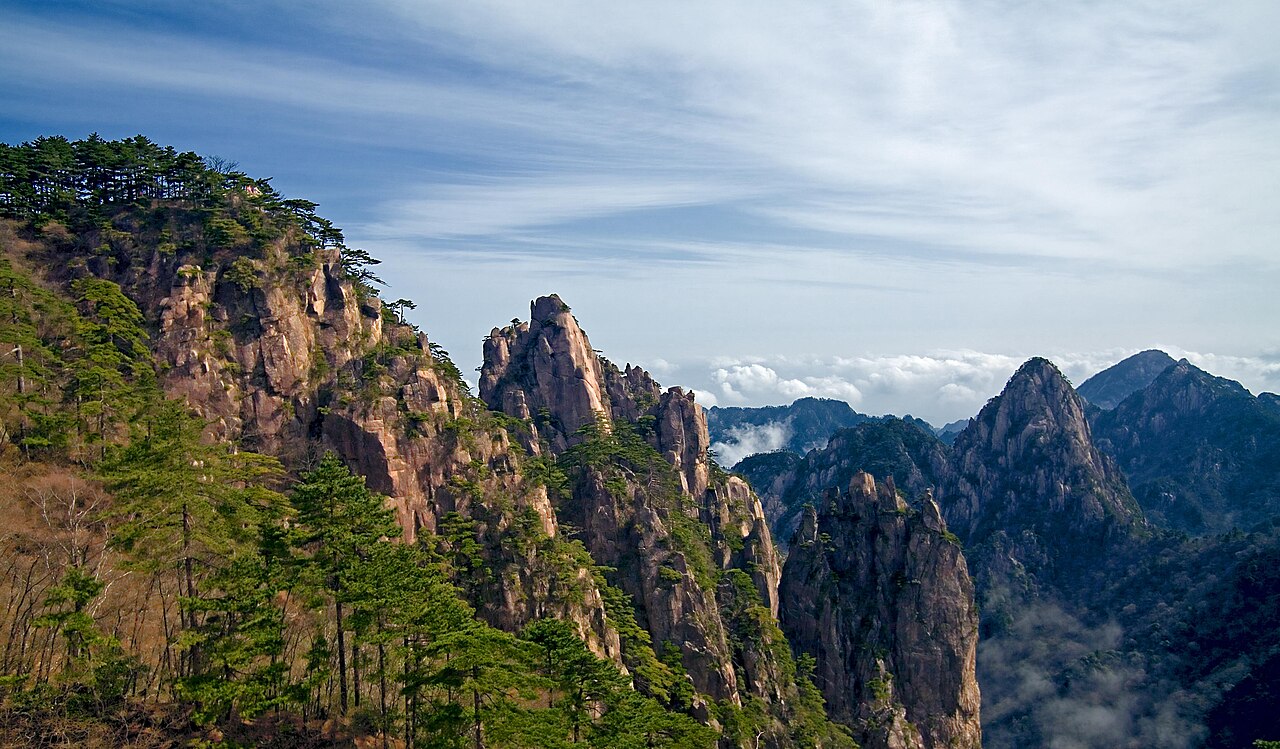
The massif is granite, about forty kilometres north to south, with three high summits: Lotus Peak at 1,864 metres, Bright Summit at 1,860 and Celestial Capital Peak at 1,829. Emperor Xuanzong of Tang renamed it Huangshan in 747 after the legend of the Yellow Emperor, and the Ming traveller Xu Xiake left the line still quoted on every brochure: after Huangshan, you need not see the Five Sacred Mountains. Its four wonders are the pines, the rocks, the sea of clouds and the hot springs, and the Welcoming Pine below Yuping Peak is probably the most photographed tree in China. It has been a World Heritage site since 1990.
Public listings for 2026 give the entrance ticket at 190 yuan in the main season and 150 yuan in winter, valid for about three days, with the Yungu, Yuping and Taiping cable cars charged separately one way at about 80 to 90 yuan. A one-day loop goes up Yungu and down Yuping. Cable cars, routes and summit nights are on the Mount Huangshan page.
Hongcun
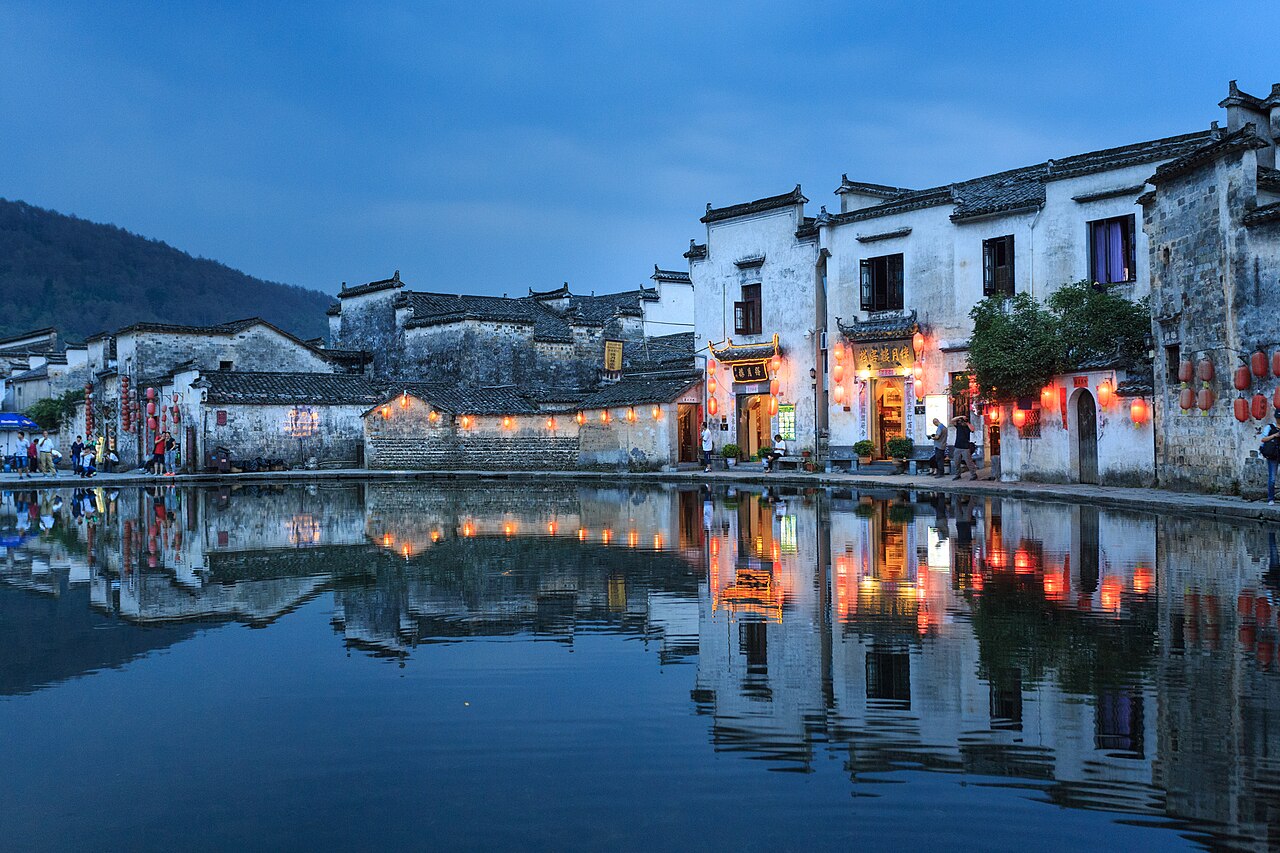
Hongcun, in Yi County, was founded by the Wang clan in 1131 and replanned in the Ming around water. A channel winds through the lanes past the doors, widens into the half-moon Moon Pond at the centre and runs into the bow-shaped South Lake. Locals describe the plan as an ox, with the pond as its heart and the lake as its stomach. Chengzhi Hall, built by a salt merchant in 1855, has some of the finest woodcarving in the region. With Xidi it became a World Heritage site in 2000. It is the busier village, so arrive early. Public listings for 2026 give a 104-yuan ticket. Buses and the walking loop are on the Hongcun page.
Xidi
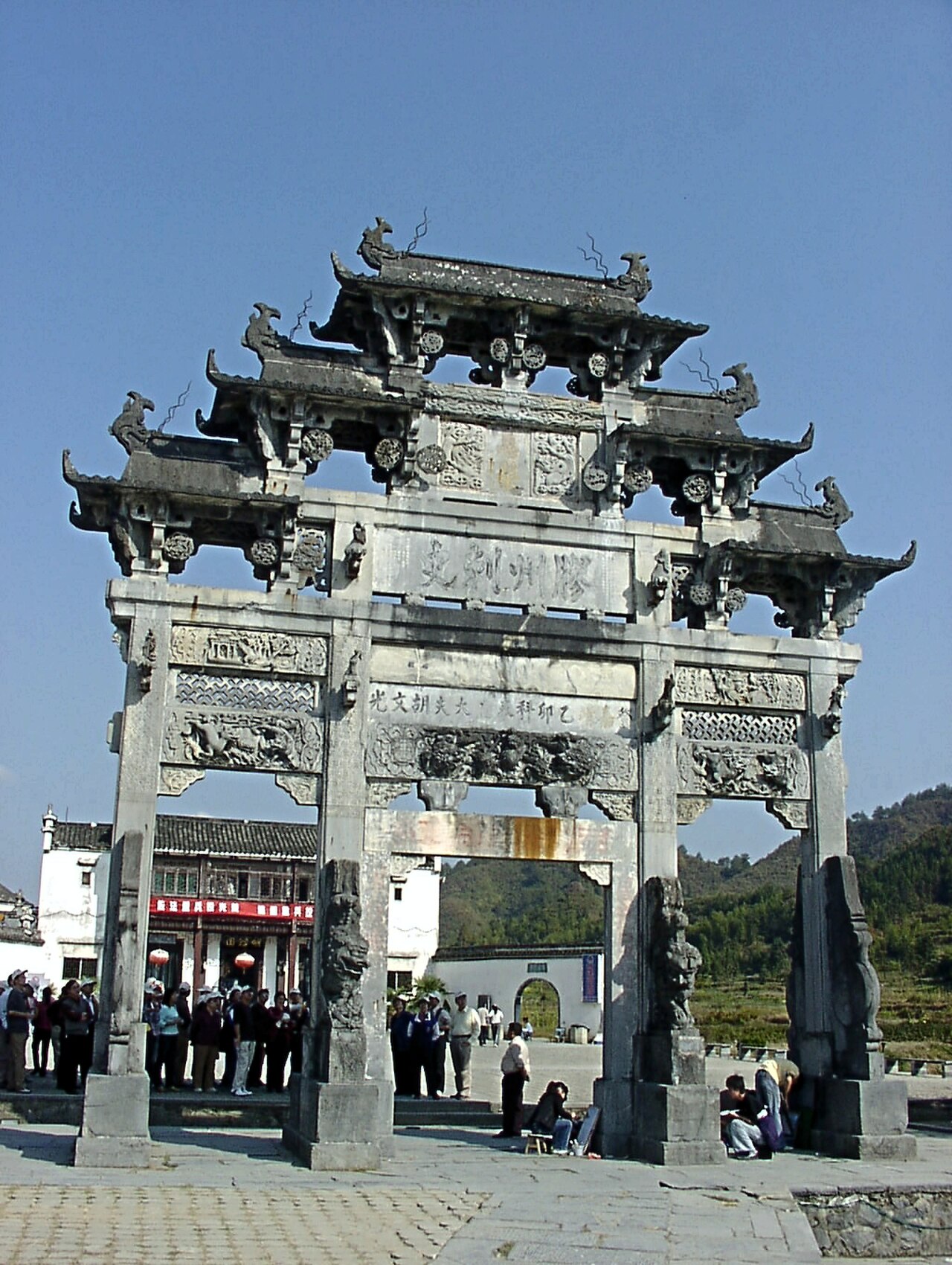
Xidi, half an hour from Hongcun, is a Hu clan village whose members went into trade in the Ming and brought the money home. About 124 Ming and Qing houses and three ancestral halls survive, behind blank whitewashed walls that hide carved interiors around narrow skywells. The Hu Wenguang memorial arch of 1578 stands at the entrance. Xidi is quieter than Hongcun and better for lanes and house interiors. Public listings for 2026 give a separate 104-yuan ticket. The walk and the houses to find are on the Xidi page.
Tunxi Old Street
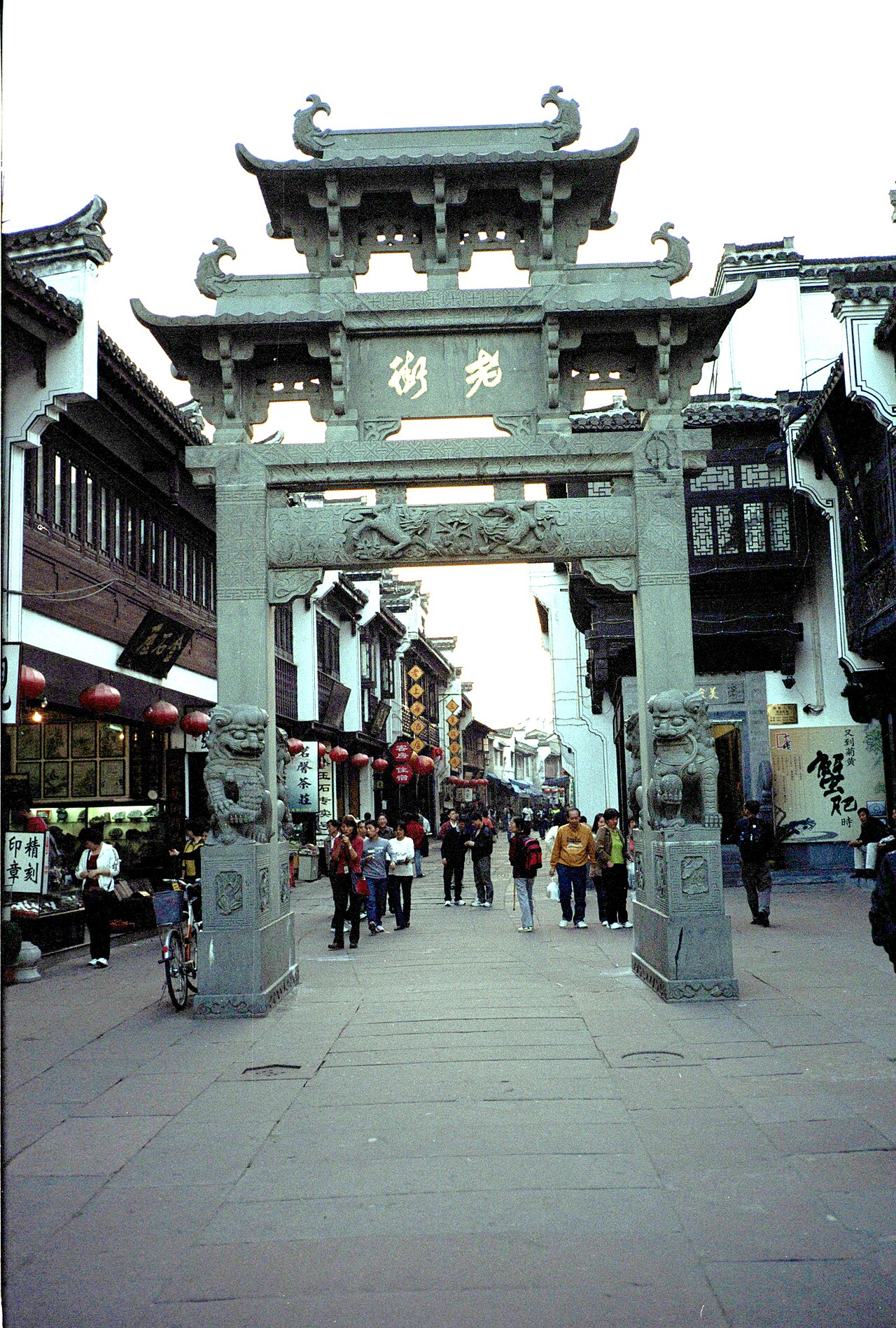
Tunxi Old Street is the pedestrian trading street in the city centre, about 1.3 kilometres long, with roots in the Song and two-storey Ming and Qing shopfronts along most of it. It sells ink, inkstones, Maofeng and Keemun tea, carvings and antiques of varying honesty, and Tongde Ren, a medicine shop founded in 1863, still trades. It is free and best in the evening, when the lanterns are lit. In 2009 it was named a historic and cultural street alongside Pingjiang Road in Suzhou. Shops and food stops are on the Tunxi Old Street page.
Huizhou Ancient City
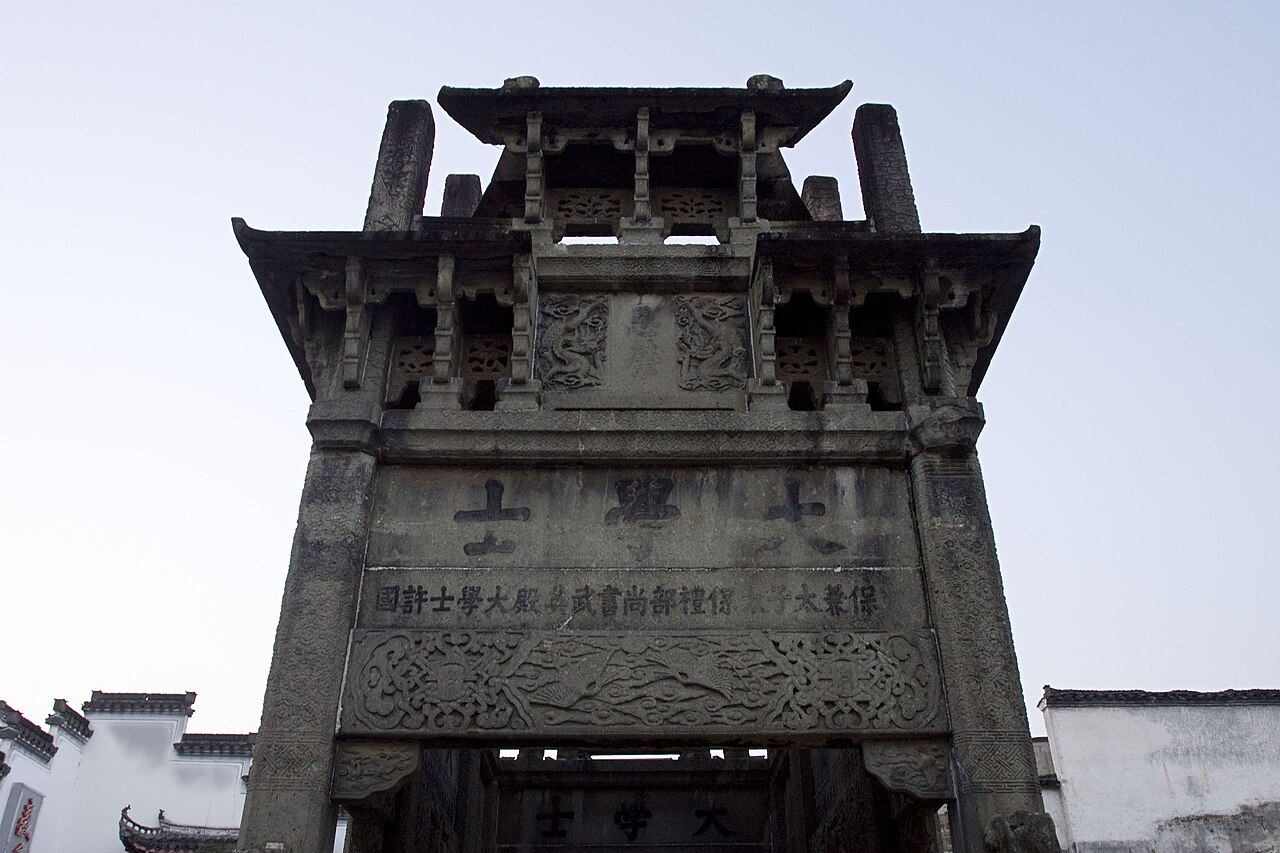
The old town of Shexian, twenty-five kilometres from Tunxi, was the seat of Huizhou Prefecture. Its centrepiece, the Xuguo Stone Arch of 1584, has eight legs and encloses a square of street, where most memorial arches are flat screens; it is free to see. Doushan Street keeps a lane of Qing merchant houses, and Yuliang Dam on the Lian River, rebuilt in 1605, was the wharf where Huizhou merchants boarded boats for Zhejiang and Jiangsu. A combo ticket for the paid sites was recently around 95 to 100 yuan. The half-day plan is on the Huizhou Ancient City page.
Eating in Huangshan
Huangshan is the home ground of Hui cuisine, one of China's eight great regional cooking styles, known for heavy oil, deep colour and slow cooking. The two dishes everyone talks about:
- Stinky mandarin fish (臭鳜鱼), lightly fermented before braising. It smells strong and tastes savoury.
- Hairy tofu (毛豆腐), tofu grown with a coat of white mould, then pan-fried and eaten with chilli sauce.
Also look for stone-ear mushrooms stewed with chicken, ham from the hills, and the Huizhou "first-grade pot", a layered stew served at banquets. For snacks, Huangshan shaobing, small crisp pastries filled with preserved vegetables and pork, are sold hot and in gift boxes. Drink the local tea: Huangshan Maofeng green tea and Keemun black tea both come from this region.
Eat the famous dishes at a proper Hui cuisine restaurant in Tunxi rather than at stalls by the scenic-area gates, and order a small portion of the fish first if you are unsure.
How to arrange the route
Day one: the mountain. Sleep in Tangkou the night before. Take the first shuttle to the Yungu cable car, walk the summit loop past Beginning-to-Believe Peak, Bright Summit and the Welcoming Pine, and come down by the Yuping cable car. Back to Tunxi for the night, or stay on the summit for sunrise and descend next morning.
Day two: the villages. Hongcun early in the morning before the tour groups, lunch, then Xidi in the afternoon. Back to Tunxi, or stay in a village guesthouse.
Day three: Shexian and Tunxi. The Xuguo Arch and Doushan Street in the morning, Yuliang Dam in the late afternoon, and Tunxi Old Street for dinner.
What to cut if short on time
With two days, do the mountain and one village day, choosing Hongcun if you want the water views and Xidi if you prefer lanes and fewer people. Shexian is the first cut; Tunxi Old Street fits into any evening. With only one day, choose either the mountain or the villages. Trying both in a day means rushing each.
Going further
Hangzhou is the usual city before or after, two hours by high-speed train. Hefei, the Anhui capital, has the Lord Bao memorial and the Baohe Park. Nanjing is the other big gateway, and Suzhou offers another kind of courtyard architecture in its gardens.
Confirm before you go
- Mountain booking: real-name, timed entry in advance on the official platform, with your ID or passport.
- Cut-off times: walking-route checkpoints close at 15:00 under the March 2026 notice. Check the cable-car and shuttle hours too.
- Summit hotels: book early, especially in summer and on holidays.
- Closed areas: Tiandu Peak, the West Sea Grand Canyon and other areas rotate closed for rest.
- Village tickets: Hongcun and Xidi are sold separately, with a combo option, and are valid for several days.
- Weather: check the summit forecast; bring a raincoat and shoes with grip.
Frequently asked questions
How many days do I need in Huangshan?
Three: one for the mountain, one for Hongcun and Xidi, and one for Shexian and Tunxi. Add a summit night for sunrise.
Can I climb Huangshan without the cable cars?
Yes, on stepped trails that take several hours each way and are hard on the knees. Most visitors use the cable cars and walk between viewpoints on the summit.
Hongcun or Xidi?
Hongcun for water and reflections, Xidi for lanes and carved interiors. They are half an hour apart, and most people see both in a day.
Where should I stay in Huangshan?
Tunxi for the villages and Shexian, Tangkou for an early start on the mountain, or a summit hotel for sunrise.
When is the best time for the sea of clouds?
September to November, and in spring after rain.
Sources
The background facts in this article were checked against the following Chinese Wikipedia entries, retrieved August 25, 2025. Ticket, booking and transport details come from the sources listed on each sight page, retrieved October 6, 2026.
- Huangshan (city) https://zh.wikipedia.org/wiki/黄山市
- Mount Huangshan https://zh.wikipedia.org/wiki/黄山
- Hongcun https://zh.wikipedia.org/wiki/宏村
- Xidi https://zh.wikipedia.org/wiki/西递
- Tunxi Old Street https://zh.wikipedia.org/wiki/屯溪老街
- Shexian https://zh.wikipedia.org/wiki/歙县
- Huangshan Scenic Area Administrative Committee, ticket notices: http://hsgwh.huangshan.gov.cn/lyfw/lyfw/mp/index.html
All photos are from Wikimedia Commons, used under CC licenses; re-use requires attribution.
- huangshan-mountain.jpg from File Huangshan pic 4.jpg, by Chi King, CC BY 2.0
- huangshan-hongcun.jpg from File Yixian Hongcun 2016.09.09 18-17-55.jpg, by Zhangzhugang, CC BY-SA 4.0
- huangshan-xidi.jpg from File Xidi1024x1360.jpg, by RolfMueller, CC BY-SA 3.0
- huangshan-tunxi.jpg from File Loujiepailou.jpg, by Gisling, CC BY 2.5
- huangshan-huizhou.jpg from File Xuguoshifang 5225.jpg, by Doctoroftcm, CC BY-SA 3.0