Baiyin Travel Guide: The Yellow River Stone Forest and Yongtai Fortress
Baiyin, about 60 kilometres north of Lanzhou, was built in the 1950s as a copper and non-ferrous mining city, and the city itself has little for visitors. The reason to come is in Jingtai County to the northwest: the Yellow River Stone Forest, a national geopark where sandstone and conglomerate pillars up to 200 metres high crowd a bend of the Yellow River. Give it a full day and, if you can, stay nearby for the early and late light. Nearby, the Ming fortress of Yongtai, known as the Turtle City for its shape, makes a good half-day. Two days covers both comfortably.
Copper town on the Yellow River
The name Baiyin, "white silver", comes from a Ming mining office, the Baiyin Chang, set up here in the Hongwu reign. Large copper deposits were found in 1953, and the city was founded in 1956 around the new mines, earning it the nickname "copper city". The Yellow River runs 214 kilometres through the prefecture in a long S-curve, between loess hills to the south and the edge of the Tengger Desert to the north. Rainfall is low and evaporation very high, so most of the land is dry and bare, which is what makes the river canyons so striking.
When to come to Baiyin
May to June and September to October are the best months, with warm days and clear light for photographs. Summers are hot in the canyons, so walk in the morning and late afternoon. Spring brings dust and wind. Winter is cold and dry. The high ground can change fast. In May 2021, 21 runners died when freezing rain and gales hit a mountain ultramarathon in the Stone Forest area. Take a warm, windproof layer even on a sunny day if you plan to walk high ground, and check the forecast.
Getting in and where to stay
Baiyin is on the Baotou–Lanzhou railway, and Baiyin South station opened at the end of 2022 on the high-speed network. The G6 expressway links it to Lanzhou. The Stone Forest is a separate trip of a couple of hours by road from either city. Jingtai county town has hotels and buses, and there are guesthouses in Longwan village inside the scenic area, which let you see the canyon at dawn. Arrange a car or check the last bus back before you set out.
Places worth visiting
Yellow River Stone Forest
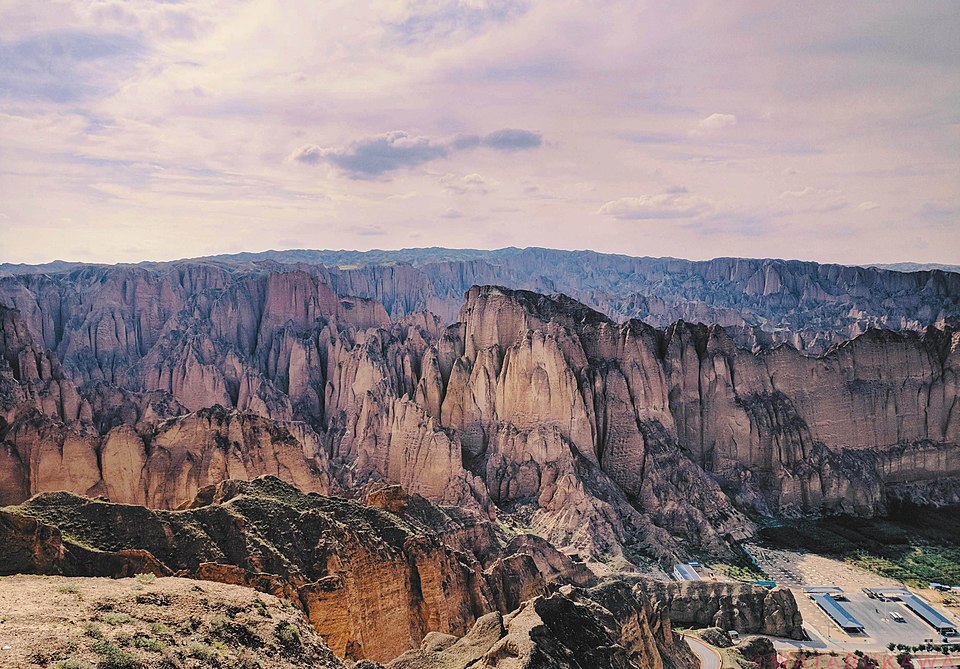
The geopark covers about 50 square kilometres, with some 10 square kilometres of stone forest. The pillars formed in gravel and sandstone beds about 2.1 million years old, cut by uplift, rain and collapse into towers mostly 80 to 100 metres high. It was named a national geological park in 2004, and its badlands have appeared in many Chinese films and TV dramas. The usual visit combines an overlook of the river bend, a stop in Longwan village by the water, and a trip into the canyons. Expect shuttle buses between the main areas.
River cliffs and Longwan
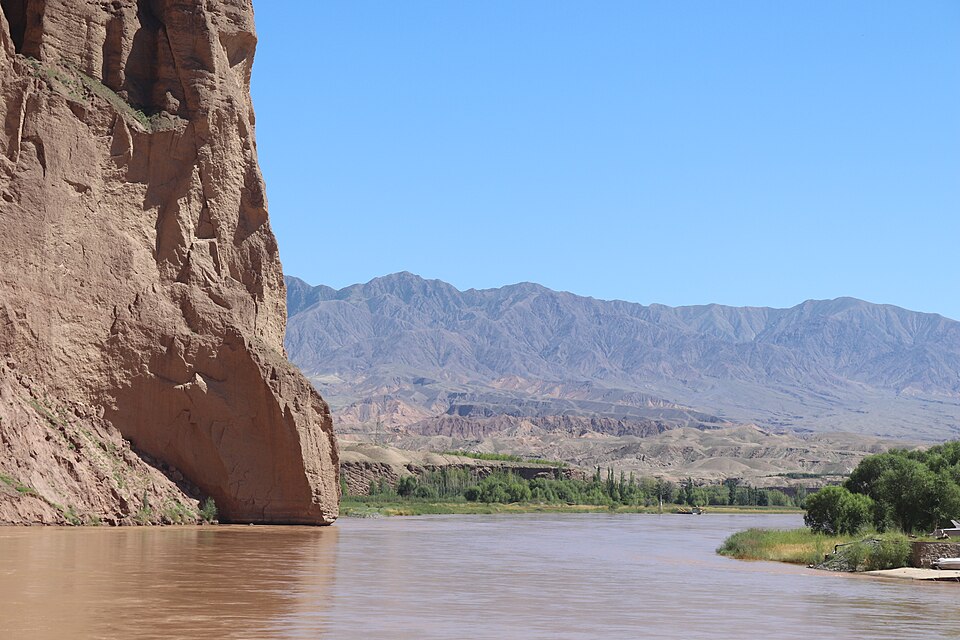
The best views of the river come from the viewpoints above the bend, where the Yellow River loops between cliffs and the fields of Longwan. Down by the water, operators offer rides on sheepskin rafts, the traditional Yellow River craft, and on faster boats. Follow the safety instructions, wear the life jacket, and avoid the river when the water is high or the wind is up.
Yinmagou canyon
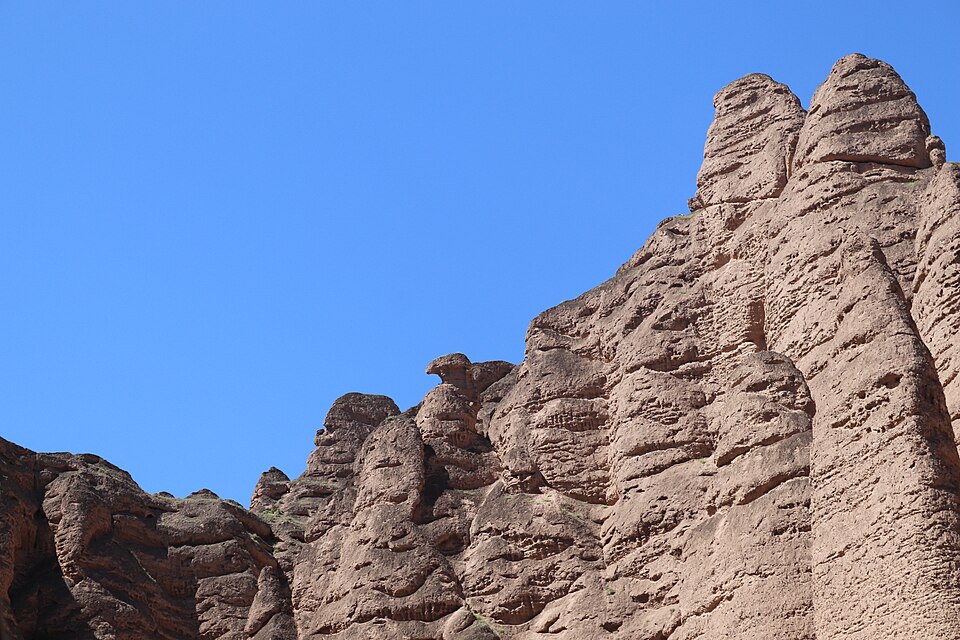
Yinmagou, the "horse-watering gully", is the main canyon among the pillars, a dry riverbed between towering walls. It is often visited by cart from the village, with stops for walking and photographs. The light is best when the sun is low; at noon the gorge is hot and flat. Do not enter side gullies during or after rain, when flash floods and rockfall are possible.
Yongtai Turtle City
At Yongtai village in Jingtai, the Ming built a fortress between 1606 and 1608 to guard against the Mongols. Its rammed-earth walls, 8 to 12 metres high and about 1.7 kilometres around, are shaped in a rough oval that gives it the name Turtle City. It has been a national protected site since 2006, and only a few dozen households still live inside. It is quiet and atmospheric, best in the late afternoon.
Huining
In the south of the prefecture, Huining is where the three main armies of the Red Army joined in October 1936, marking the end of the Long March. The memorial site there is a major red-tourism stop, a long way from Jingtai; it fits better on a route between Lanzhou and the east of Gansu.
Eating in Baiyin
This is northwest noodle country. Lanzhou-style beef noodles are everywhere, along with hand-pulled noodles with mutton, stewed lamb, and flatbreads. Around the Stone Forest, guesthouses in Longwan serve simple home meals. River fish is often sold by weight near the scenic area, so check the price before ordering.
How to arrange the route
- Day one: travel from Lanzhou or Baiyin to Jingtai, the Stone Forest in the afternoon, and a night in Longwan or Jingtai.
- Day two: dawn at the river overlook, Yinmagou in the morning, Yongtai in the afternoon, and back to Lanzhou in the evening.
If you are heading west along the Hexi Corridor, continue to Wuwei instead of returning to Lanzhou.
What to cut if short on time
Keep the Stone Forest. With one day, see the overlook, Longwan and Yinmagou, and skip Yongtai. Skip Baiyin city altogether unless you need a train. Leave Huining for a separate eastern route.
Things to confirm before you go
- Ticket, shuttle and cart prices at the Stone Forest. This guide does not quote 2026 prices because they could not be confirmed, so check the official notice.
- The weather on the high ground, and any warnings for wind, cold or rain.
- Transport between Jingtai, the scenic area and Lanzhou, including the last bus.
- Raft safety rules and river conditions on the day.
Frequently asked questions
How far is the Yellow River Stone Forest from Lanzhou?
It is a couple of hours by road from Lanzhou, via Baiyin or Jingtai. Most people make it an overnight trip.
Is one day enough?
One long day covers the highlights. Staying overnight gives you the best light and a quieter canyon.
Is Baiyin worth visiting for the city?
Not really. It is an industrial city; the Stone Forest and Yongtai are the reasons to come.
Sources
The facts in this article were checked against the following Wikipedia and encyclopedia entries, retrieved September 27, 2026, and rechecked on October 14, 2026.
- Baiyin https://en.wikipedia.org/wiki/Baiyin
- Baiyin (Chinese) https://zh.wikipedia.org/wiki/白银市
- Jingtai County https://en.wikipedia.org/wiki/Jingtai_County
- Yellow River Stone Forest National Geopark (Chinese) https://zh.wikipedia.org/wiki/黄河石林国家地质公园
- Yongtai fortress (Chinese) https://zh.wikipedia.org/wiki/永泰城址
Scenic-area tickets change; check the official notice before you go.
All photos are from Wikimedia Commons, used under CC licenses or public domain; re-use requires attribution.
- baiyin-stone-forest.jpg from File:黄河石林国家地质公园.jpg, by watarukawa, CC BY-SA 4.0
- baiyin-yellow-river-cliffs.jpg from File:景泰 黄河石林景区之黄河与崖壁 02.jpg, by Liuxingy, CC BY-SA 4.0
- baiyin-yinmagou.jpg from File:景泰 黄河石林景区之饮马沟大峡谷 07.jpg, by Liuxingy, CC BY-SA 4.0