Jinchang Travel Guide: China's Nickel Capital, Mars Base 1 and the Liqian Story
Jinchang is a mining city, and that is the honest reason to stop. It exists because geologists found a nickel-copper deposit here in 1958, and the State Council created the city in 1981 to house the people working it. Today it calls itself China's nickel capital. For travellers on the Hexi Corridor it is a one-night stop between Wuwei and Zhangye, good for a desert theme park, a curious Silk Road legend and a bowl of beef noodles. If you only have time for one colourful landscape in this stretch, give it to Zhangye.
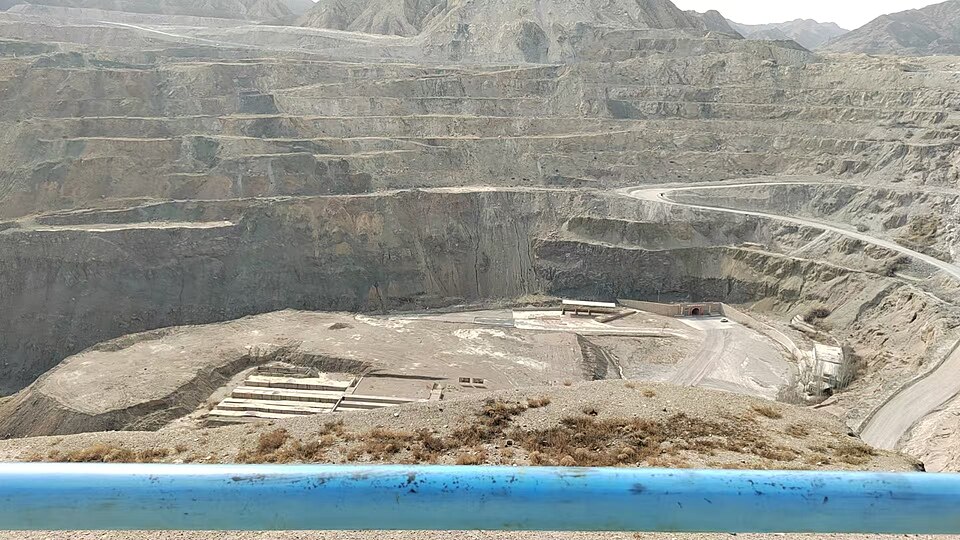
Why a nickel town is on the map
In May 1958 two coal geologists doing a radiometric survey near Baijiazui, in what is now Yongchang County, picked up a rock stained green with oxidised minerals. Follow-up drilling proved one of China's largest nickel-copper sulphide deposits, and from 1959 workers arrived from across the country to build a nickel and cobalt base. The company that grew from it, Jinchuan Group, still dominates the economy, and a 1964 open-pit blast is part of local lore. The city is small, about 440,000 people in the 2020 census, with most of them in Jinchuan District.
You can see the industrial scale from the roads around town. Mine areas are working sites, so don't wander in; view them from public roads and pull-outs.
What to do in a day
Mars Base 1
The most marketed attraction is a Mars-themed experience park in Ningyuanbao town, Jinchuan District, about 20 km from the city. The red rock and gravel desert really does look the part, and the site was built with guidance from China's astronaut training centre. Inside are simulated habitat modules, spacesuit photo sessions and overnight stays for stargazing. The Ctrip listing shows daily opening from 1 April to 31 October and weekend-only opening (Friday to Sunday) through winter. Ticket packages differ between sellers, so check the current price on the official ticket line or a booking app. You'll need a taxi or hired car; there is no useful bus.
It is a theme park. Families and sci-fi fans enjoy it, and people who want natural scenery should spend the time in Zhangye instead.
Jinshui Lake wetland park
An easy evening walk on the eastern edge of the city, a reservoir and wetland park with paths and birds. Free to wander, and a good way to see how much green this oasis city has squeezed out of the desert.
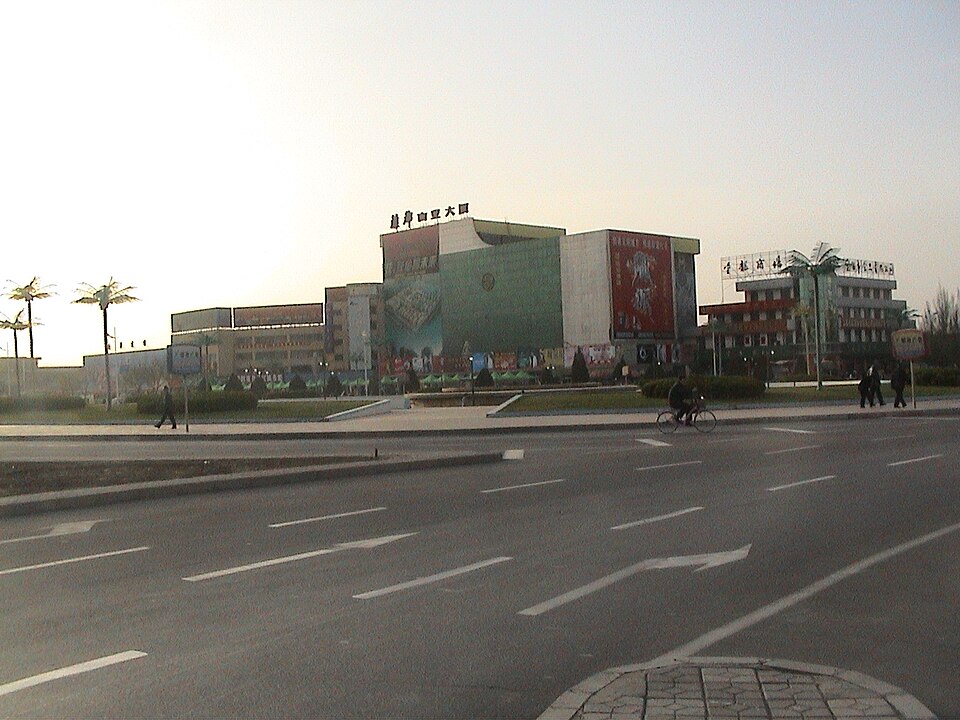
Yongchang County: Liqian and Beiwudang
Yongchang, the county town southwest of the city, carries two stops. Beiwudang Mountain, a temple hill 1 km north of town, has about 1,200 steps to a view over Yongchang. Further out, Liqian village in Jiaojiazhuang township sits on the site of a Western Han county called Liqian, and a theory floated in the 1940s claimed its people descended from Roman legionaries captured at Carrhae. Chinese authorities, archaeologists and a 2007 genetic study all found no support for it; the residents are genetically typical Han Chinese. The village plays up the story anyway. Go if you like odd history, and treat the Roman statues as tourism.
Han and Qing dynasty sections of the Great Wall also cross the prefecture. They are eroded earthen walls in open country, best reached with a driver who knows the tracks.
When to come to Jinchang
May to early October. The climate is semi-arid with strong sun and a northwesterly wind for much of the year, and spring winds can be fierce and dusty. Days are warm in summer but nights stay cool, which helps if you stay overnight at Mars Base 1 for the sky. Winter is cold and the theme park cuts its opening days.
Getting in and where to stay
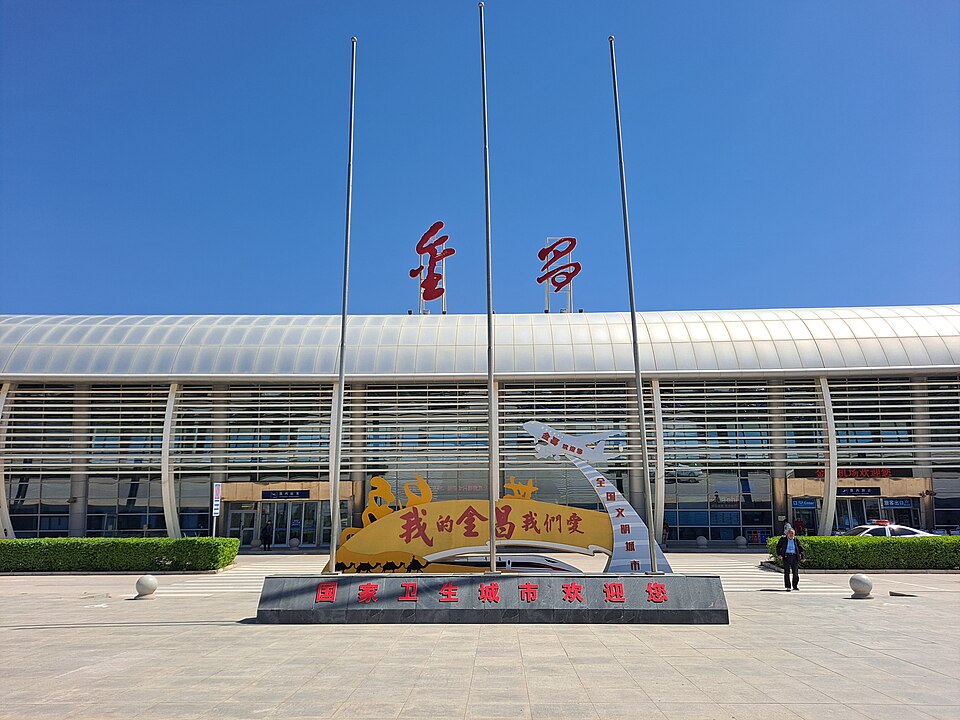
- Rail: Jinchang station is on the conventional Lanzhou–Xinjiang railway. The city has no high-speed service yet. The Lanzhou–Zhangye high-speed line opened as far as Wuwei on 29 June 2024, and the Wuwei–Zhangye section, with a new Jinchang South station, began track-laying in October 2026 and is planned to open at the end of 2027. Until then, check conventional train times carefully, as they are slower and fewer.
- Air: Jinchang Jinchuan Airport opened in August 2011, with a small number of domestic routes.
- Road: Buses and shared cars link Jinchang with Wuwei and Zhangye along the corridor highway.
Stay in Jinchuan District near the centre. Hotels are business-oriented and fine. The Wuwei guide and Lanzhou guide cover the legs east of here.
Eating in Jinchang
Northwest home cooking: Lanzhou-style beef noodles for breakfast, hand-pulled noodles, lamb dishes from Hui restaurants and big flatbreads for the road. Station-area noodle shops open early for the morning trains. Prices are low and usually posted.
How to arrange the route
One night, westbound: Arrive from Wuwei by midday, take a taxi to Mars Base 1 for the afternoon, and finish at Jinshui Lake or a noodle shop. Next morning, continue to Zhangye for the Rainbow Danxia at sunset.
Two days with a driver: Add Yongchang for Beiwudang and Liqian village, and a Great Wall section if the driver knows one.
What to cut if short on time
Skip the mine-area drive and the county sights. Mars Base 1 is the only stop most visitors will miss, and only if themed attractions appeal.
Things to confirm before you go
- Mars Base 1 opening days (winter weekdays are closed) and the current ticket package.
- Conventional train times, since no high-speed trains stop here until the new line opens.
- Wind and dust forecasts in spring.
- Return transport from the theme park before dusk.
Frequently asked questions
Is Jinchang worth visiting?
As a one-night break on the Hexi Corridor, yes, especially with children or for the Mars Base. As a destination on its own, no; Zhangye, Jiayuguan and Dunhuang have the stronger sights.
Did Roman soldiers really settle near Jinchang?
No evidence supports it. The Liqian theory dates from the 1940s, and later archaeology and a 2007 DNA study found the villagers are of Han Chinese ancestry.
Does Jinchang have high-speed trains?
Not yet. A new Jinchang South station on the Lanzhou–Zhangye high-speed line is planned for the end of 2027.
Sources
The facts in this article were checked against the following sources, retrieved September 27, 2026, and rechecked on October 18, 2026.
- Jinchang https://en.wikipedia.org/wiki/Jinchang
- Liqian https://en.wikipedia.org/wiki/Liqian
- Jinchuan Group (Chinese) https://zh.wikipedia.org/wiki/金川集团
- China State Railway Group, Lanzhou–Zhangye high-speed railway Wuwei–Zhangye section begins track-laying (12 October 2026) http://wap.china-railway.com.cn/xwzx/zhxw/202610/t20261012_160416.html
- Gansu culture and tourism, Jinchang travel overview (Mars Base 1, Jinshui Lake, Beiwudang) https://www.gswbj.gov.cn/a/2024/06/07/20738.html
- Ctrip, Mars Base 1 listing with seasonal hours https://you.ctrip.com/sight/jinchang832/133899862.html
Tickets change; this article does not quote yuan amounts.
All photos are from Wikimedia Commons, used under CC licenses or public domain; re-use requires attribution.
- jinchang-mine.jpg from File:Jinchang open-pit mine.jpg, by Stick.ccj, CC0
- jinchang-city.jpg from File:20060423105630.jpg, by Yaohua2000, CC BY-SA 3.0
- jinchang-airport.jpg from File:Jinchang Airport 2.jpg, by H2v5o68z, CC0