Dunhuang Travel Guide: Mogao Caves, the Singing Dunes and the Han Passes
Dunhuang is a small oasis city at the western end of Gansu's Hexi Corridor, and most visitors come for three things: the Buddhist murals of the Mogao Caves, the Singing Sand Dunes with Crescent Lake below them, and, if time allows, the Han dynasty ruins at Yumen Pass and Yangguan out in the Gobi. Three days is the practical length of a first trip. The single most important step is to book your Mogao Caves ticket before anything else, because daily numbers are capped: in 2026 the normal visit costs 238 yuan and sells out in the summer. Come between May and October for the easiest weather, stay in the town centre, and keep the caves and the passes on separate days.
Book Mogao before anything else
Plan your dates around the cave ticket, not the other way round.
- Normal visit, 238 yuan: two films at the Digital Exhibition Center and eight caves with a guide. Limited to 6,000 people a day.
- Emergency visit, 100 yuan: four caves, no films. Sold only when the normal tickets are gone in the peak season, with its own daily cap.
- Booking: through the official "莫高窟参观预约网" WeChat service account or mini-program. Foreign visitors can use the "Ticket Booking" option under the booking menu.
If your dates are fixed, book as soon as they open. If not, check availability first and then buy flights and hotels. The details are on the Mogao Caves page.
Getting in and where to stay
Dunhuang Mogao International Airport and Dunhuang railway station are both northeast of town. Flights connect with Lanzhou, Xi'an and other big cities, with more routes in summer. By rail, overnight trains run from Lanzhou and Xi'an, and the Dunhuang branch line joins the Lanzhou to Xinjiang corridor at Guazhou. Some travellers arrive on the high-speed line at Liuyuan, farther north, and transfer by road.
Stay in the town centre. It is small and walkable, close to the Shazhou night market and restaurants, and a short taxi ride from Mingsha Mountain. Mogao is about 25 kilometres southeast, and you start the cave visit at the Digital Exhibition Center between town and the caves. Airport and station hotels only make sense for very early departures.
Local taxis and hired cars cover the main sights. For Yumen Pass and Yangguan, either take the tourist bus and shuttle or hire a car with a driver.
When to come
Dunhuang is desert: very dry, sunny, hot in summer and freezing in winter, with big swings between day and night.
- May, June, September and October are the best months, warm days and cool nights.
- July and August are the hottest and busiest. Cave tickets sell out and the dunes are too hot to climb between noon and 15:00.
- November to March is cold and quiet, and the scenic areas cut their prices. For the 2026 to 2027 winter, from 1 December to 31 March, Mingsha Mountain and Crescent Lake are half price, as is the Yumen Pass site.
- Spring brings the most wind and sandstorms.
Whatever the season, bring sun protection and a warm layer for the evening.
Places worth visiting
Mogao Caves
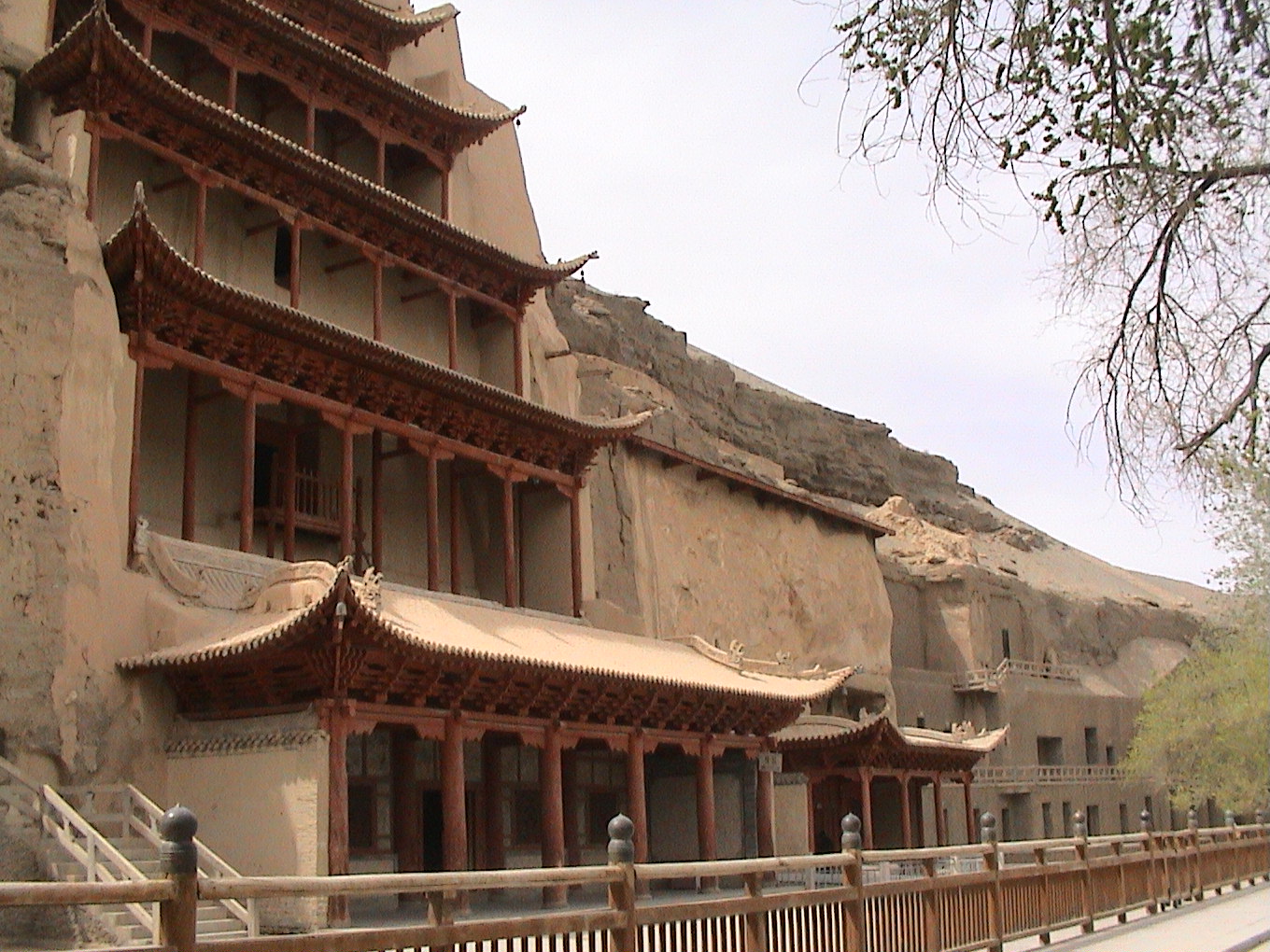
Monks began cutting caves into this cliff in the fourth century, and painting and sculpture continued for about a thousand years. Hundreds of decorated caves survive, and the site has been on the UNESCO World Heritage List since 1987. You see a rotating selection with a guide who unlocks each cave, then locks it again; photography is not allowed inside. A normal visit takes about four hours including the films and the bus. In the 2026 peak season, from 1 April to 30 November, hours are 8:00 to 18:00 and ticket checks stop at 16:10. Arrive at the Digital Exhibition Center at least 30 minutes early. Keep the rest of the day light.
Mingsha Mountain
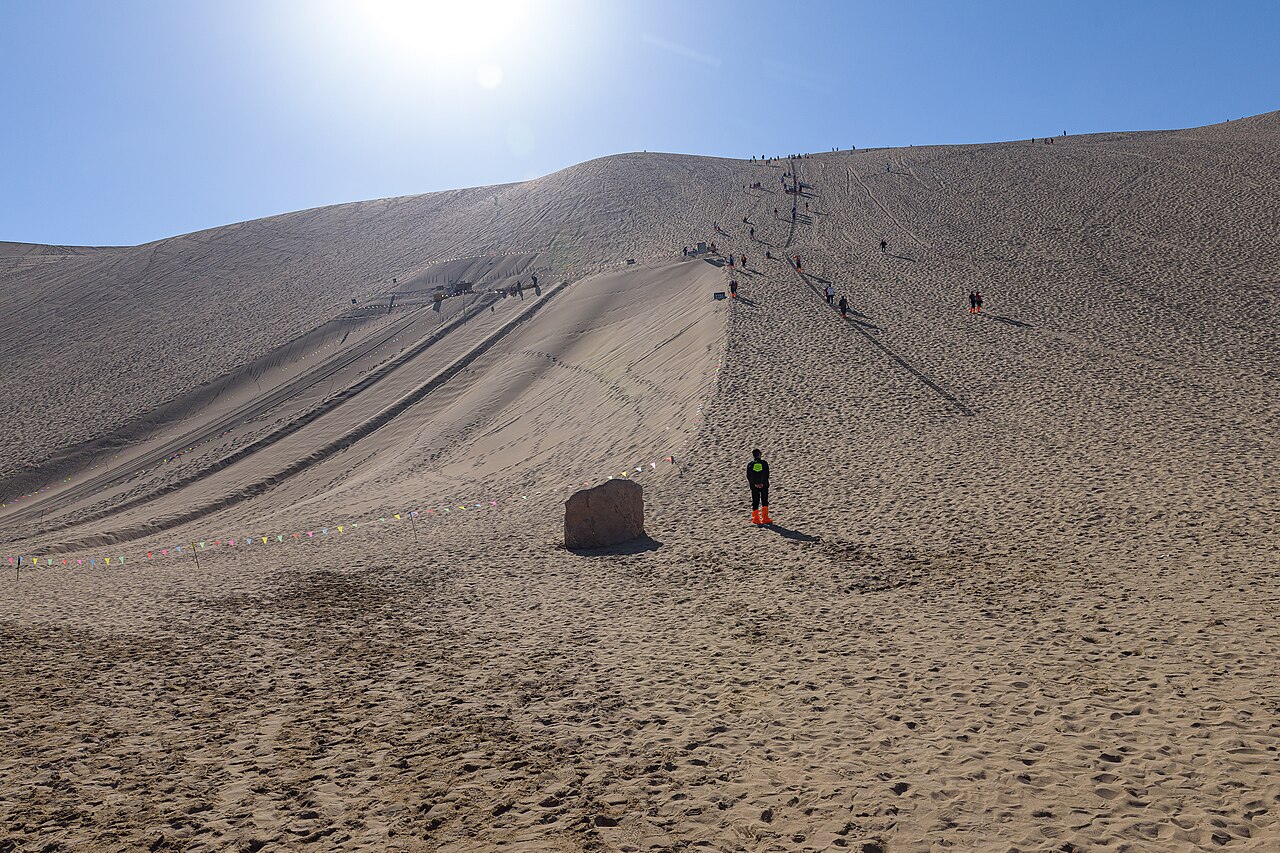
The Singing Sand Dunes rise about five kilometres south of town. The 2026 ticket costs 110 yuan from April to October and 55 yuan in the low season, it covers Crescent Lake too, and it is valid for three days with re-entry, so you can come for sunset one day and sunrise the next. Climbing soft sand is hard work, though a wooden ladder helps on the main ridge. Camels, sandboards and other rides are optional and paid on site. Rent shoe covers at the gate and bring plenty of water.
Crescent Lake
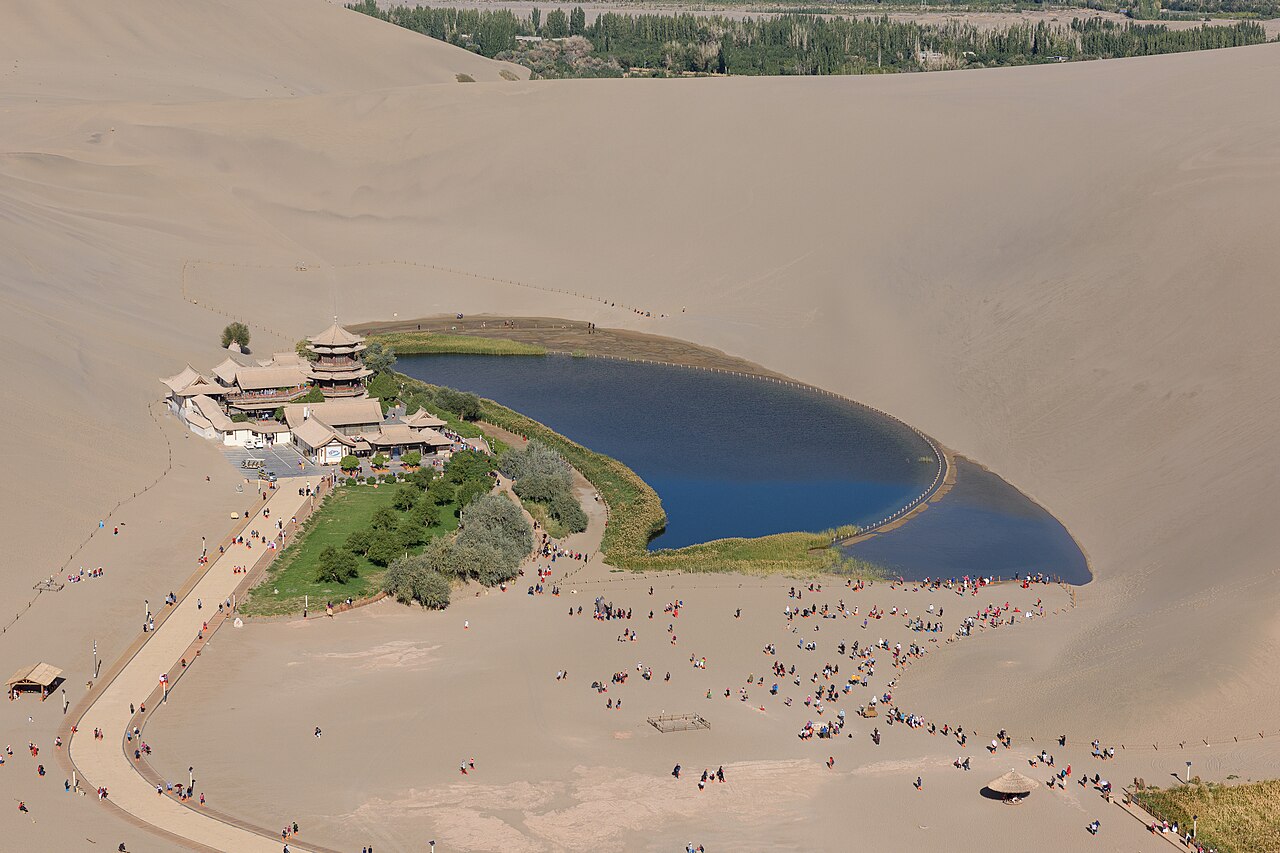
The crescent-shaped spring in a hollow of the dunes is the most famous image of Dunhuang. It shrank badly in the late twentieth century, and water projects have since stabilised it. A flat path leads from the gate to the lake, so anyone can visit without climbing. For the classic view of the curve, climb a little way up a ridge on the far side in the late afternoon.
Yumen Pass
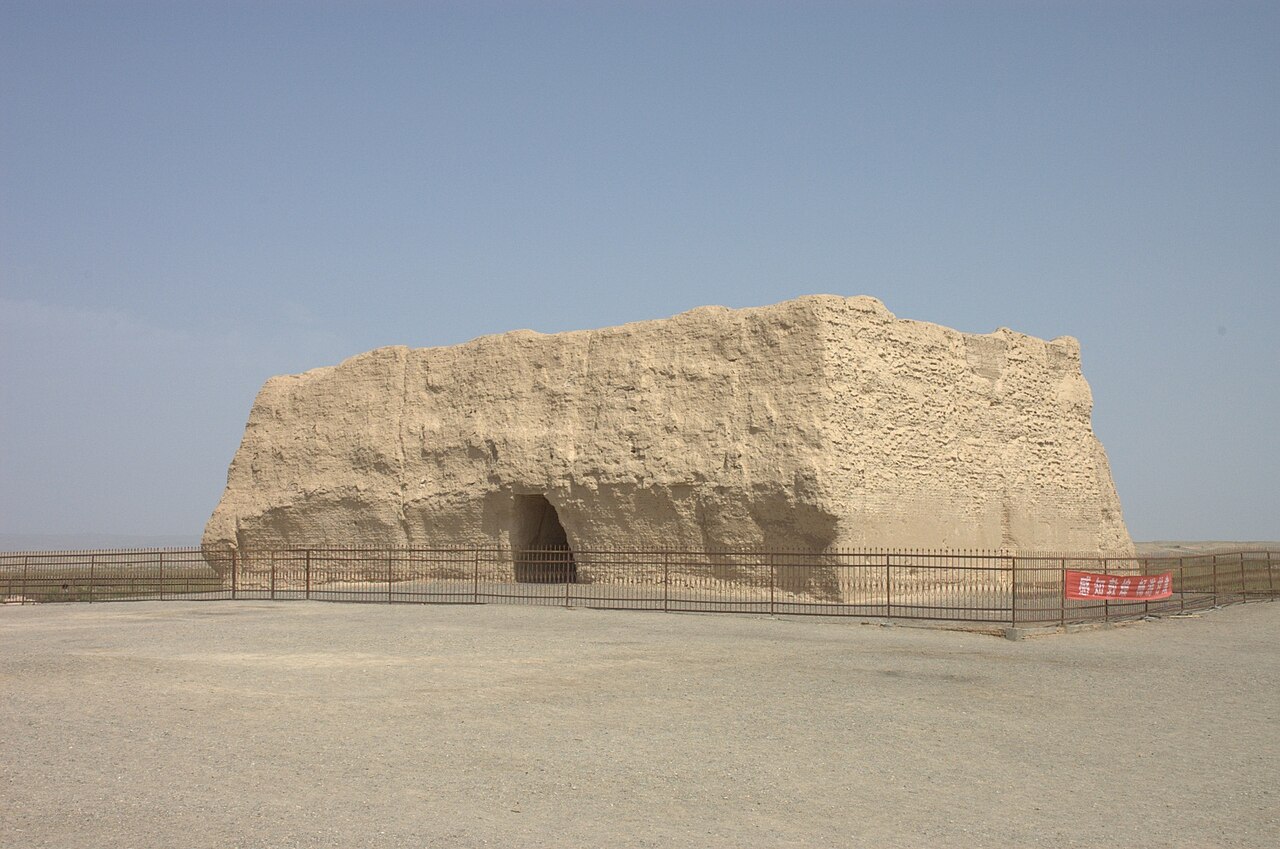
The Jade Gate, about 90 kilometres northwest of town, guarded the northern road west from around 111 BCE. Its ruins are the better of the two passes: the square rammed-earth Xiaofangpan fort, Han wall sections built of reeds and gravel, and a vast granary site. The site ticket is 40 yuan, and the 50-yuan sightseeing car links the scattered ruins.
Yangguan
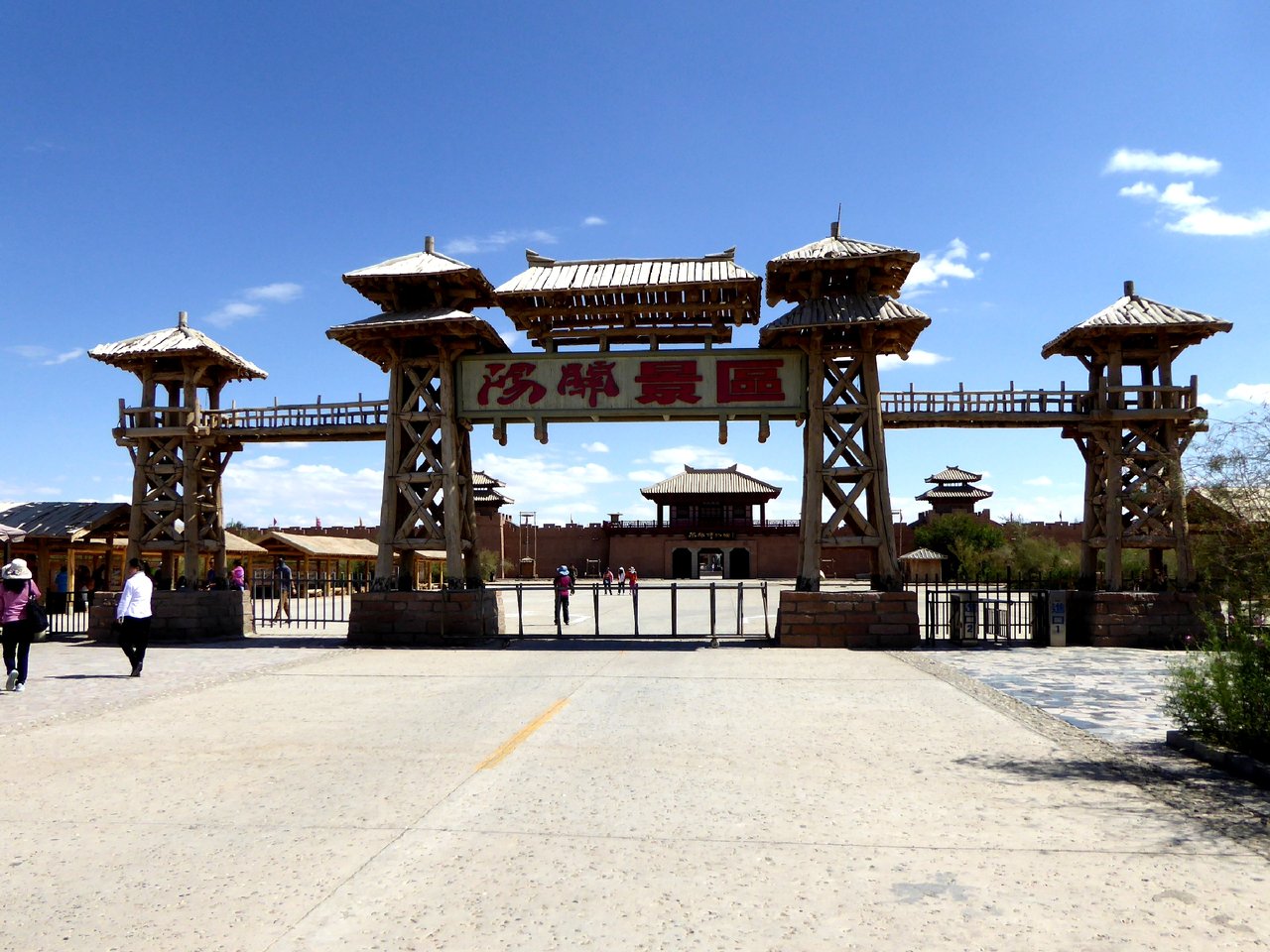
The Sun Pass, about 70 kilometres southwest, guarded the southern road. Only a weathered Han beacon tower survives, with a modern museum complex around it, but Wang Wei's farewell poem about the pass is known to every Chinese schoolchild. The site ticket is 50 yuan, or 90 yuan for a combined ticket with Yumen. A shuttle bus runs between the two passes three times a day each way, at 30 yuan.
Also worth your time
Dunhuang Museum. The city museum covers local archaeology and the Silk Road, and suits the afternoon after Mogao.
Western Thousand Buddha Caves. A smaller group of painted caves west of town, for anyone who wants more after Mogao.
Shazhou night market. Evening food stalls, dried fruit and souvenirs in the town centre. Busiest in summer.
Eating in Dunhuang
Food in Dunhuang is northwestern: hand-pulled and sliced noodles, roast and stewed lamb, cumin skewers, and donkey meat with yellow noodles, the local speciality. In summer, look for the local apricots and melons, and for dried fruit year round. The Shazhou night market is the easiest place to try a bit of everything on your first evening. Restaurants near the centre cater to visitors; ask your hotel where locals eat. Drink more water than usual. The air is extremely dry, and you will notice it after the dunes.
How to arrange the route
Three days works well if you have your Mogao ticket.
Day one: arrive, check in, and if you land early, spend the late afternoon at Mingsha Mountain and Crescent Lake for sunset. Dinner at the night market.
Day two: Mogao Caves in the morning, starting at the Digital Exhibition Center. In the afternoon, rest or visit the Dunhuang Museum. With energy left, use your three-day dune ticket for a second sunset.
Day three: a desert day to Yumen Pass and Yangguan by tourist bus and shuttle or a hired car. If the passes don't appeal, use the morning for a sunrise on the dunes and the afternoon for the Western Thousand Buddha Caves.
What to cut if short on time
Cut in this order:
- Yumen Pass and Yangguan. The long drive makes them the first to go.
- Western Thousand Buddha Caves.
- Dunhuang Museum.
Keep Mogao and the dunes. With one day only, see Mogao in the morning and the dunes at sunset.
Going further
Dunhuang sits at the end of a classic Silk Road route along the Hexi Corridor. Head east to Jiayuguan for the Ming fort at the end of the Great Wall, which is close to Jiuquan, Dunhuang's prefecture-level city. Farther east, Zhangye has the coloured Danxia hills, Wuwei the bronze galloping horse, and Lanzhou its beef noodles and onward trains to Xi'an. West, the road and rail continue into Xinjiang via Hami and Turpan. South, you can cross into Qinghai toward Xining.
Confirm before you go
- Your Mogao ticket type, date and time, and the documents you need.
- Mogao hours for your season and when ticket checks stop.
- Opening hours and ticket price at Mingsha Mountain and Crescent Lake, which change through the year.
- Bus times to the passes, the shuttle times between them, and the last bus back.
- Weather warnings for heat, wind or sandstorms.
- Any winter discounts for your dates.
Frequently asked questions
How many days do I need in Dunhuang?
Three days covers Mogao, the dunes and the passes. Two days covers Mogao and the dunes.
How do I book the Mogao Caves?
Through the official "莫高窟参观预约网" WeChat service account or mini-program, as early as you can for summer dates.
What is the best time to visit Dunhuang?
May, June, September and October for comfortable weather. Summer is hot and busy; winter is cold but cheap.
Can I visit Dunhuang as a day trip from Lanzhou?
No. It is over 1,000 kilometres away. Plan at least two nights.
Sources
- Dunhuang Academy, 2026 Mogao Caves opening notice: http://www.dunhuangcaves.org/info/1020/7498.htm
- Mingsha Mountain and Crescent Lake official site, 2026 New Year visitor guide: http://www.mssyyq.com/JQGG/1847
- Yangguan and Yumen Pass Tourist Area, visitor information: https://www.dhymg.com/sys-nd/1330.html
- NetEase, Dunhuang 2026 to 2027 winter offers: https://www.163.com/dy/article/L91OUVH10550FADZ.html
- Dunhuang, English Wikipedia: https://en.wikipedia.org/wiki/Dunhuang
- Dunhuang, Chinese Wikipedia: https://zh.wikipedia.org/wiki/敦煌市
- Mogao Caves, English Wikipedia: https://en.wikipedia.org/wiki/Mogao_Caves
- Mogao Caves, Chinese Wikipedia: https://zh.wikipedia.org/wiki/莫高窟
- Crescent Lake (Dunhuang), English Wikipedia: https://en.wikipedia.org/wiki/Crescent_Lake_(Dunhuang)
- Yumen Pass, English Wikipedia: https://en.wikipedia.org/wiki/Yumen_Pass
Wikipedia entries were retrieved September 16, 2026; official notices in October 2026.
All photos are from Wikimedia Commons, used under CC licenses; re-use requires attribution.
- dunhuang-mogao.jpg from File:Mogao_Caves.jpg, CC BY-SA 3.0
- dunhuang-crescent.jpg from File:Crescent_Lake_from_the_Singing_Sand_Dunes_(20230918101214).jpg, by N509FZ, CC BY-SA 4.0
- dunhuang-mingsha.jpg from File:Singing_Sand_Dunes_from_the_north_(20230918102219).jpg, by N509FZ, CC BY-SA 4.0
- dunhuang-yumen.jpg from File:Yumenguan.jpg, by 张骐, CC BY-SA 3.0
- dunhuang-yangguan.jpg from File:Yang Guan Dunhuang Jiuquan Gansu China 敦煌 阳关遗址 - panoramio (1).jpg, by Hiroki Ogawa, CC BY 3.0