Chen Clan Ancestral Hall: Where to Look Up in Liwan
The Chen Clan Ancestral Hall (Chen Clan Academy) is the densest concentration of Lingnan building craft most visitors will see in Guangzhou. Chen lineages from dozens of Guangdong counties pooled money in the late Qing to raise a joint clan hall and lodging compound for sons sitting exams or doing business in the provincial capital. Construction began in 1888 and finished around 1893–1894. The complex covers more than 15,000 square metres in a "three courtyards, three lanes, nine halls, two wings" layout. Since 1959 it has operated as the Guangdong Folk Arts Museum; in 1988 it joined China's Major Historical and Cultural Sites list. Put it first on the Liwan day in the Guangzhou travel guide.
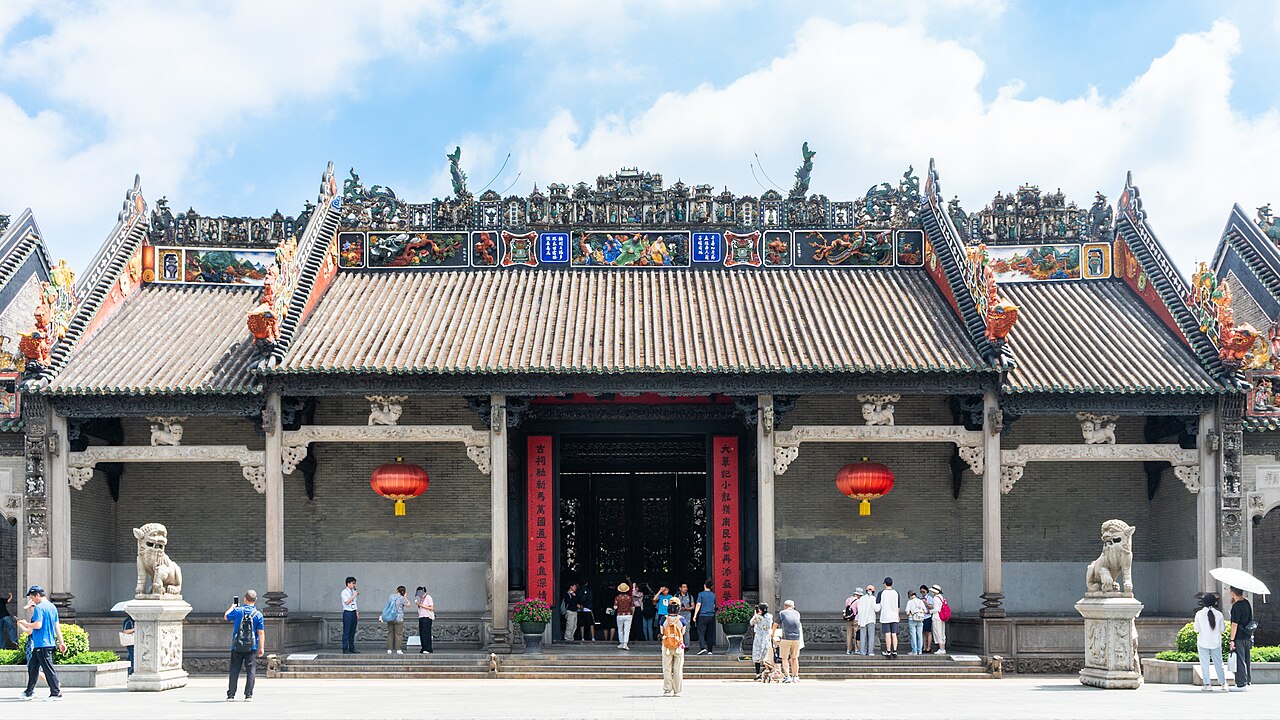
The seven crafts, not a single shrine hall
The draw is decoration stacked on decoration: wood carving, stone carving, brick carving, ceramic sculpture, plaster sculpture (ash sculpture), murals, and cast metalwork. Roof ridges carry ceramic and plaster figures that read as a continuous frieze once you learn to look along the eaves. Guides often cite plaster sculpture running more than 2,500 metres across the compound; even if you do not count metres, the density is obvious. Teak screen doors on the back gallery of the second courtyard use double-sided openwork scenes from Romance of the Three Kingdoms and other story cycles. Brick carvings flanking the main gate are metres wide; they repay a phone zoom as much as a naked-eye stare.
Juxian Hall, the central main hall, rises about 14.5 metres and anchors the axis. Walk courtyards in order from the head gate inward; zigzagging side lanes first makes the narrative of the compound harder to read. Bring patience for looking up. An hour and a half to two hours is a fair visit; three hours only if you read every exhibition case in the folk-arts museum layers.
Tickets, hours and the Tuesday close (2026)
Recent local listings put adult admission around 10 yuan, with half-price and free tiers for eligible visitors holding accepted documents. Booking through the Guangdong Folk Arts Museum WeChat account, then entering with the ID used to book, is the usual path; on-site windows may still sell when capacity allows. Peak-season hours have lately run roughly 09:00–18:00 (last entry about 17:30) from mid-April to mid-October, with a slightly earlier close in the cooler months. The museum is closed Tuesdays except statutory holidays. Confirm the day's notice before you build a Tuesday Liwan plan around this gate.
Free guided introductions sometimes gather at the main gate mid-morning and mid-afternoon; join on site if Chinese-language commentary helps. Photography of exteriors is generally fine; follow posted rules inside exhibition rooms.
A practical looking order
Enter at the head gate, pause for the brick carvings and the academy plaque, then move courtyard by courtyard toward Juxian Hall. Only after the main axis feels readable should you peel into side halls for folk-arts displays. The roof ridges reward a second look on the way out, when you already know which stories the ceramic figures are staging. Midday tour groups pack the first courtyard; arriving near opening thins that crush.
Rain turns open courtyards slick and darkens the wood carving; the visit still works, yet flash photography rules inside rooms matter more on dim days. Summer heat between stone courts builds quickly after 11:00, so the first two hours after opening are the kinder block. Bring binoculars or use phone zoom for the ridges; the naked eye alone under-reads the craft.
Getting there and the Liwan trio
Metro Lines 1 and 8 stop at Chen Clan Academy station; Exit D is the short walk in many current maps. The hall pairs cleanly with Shamian Island after lunch and Yongqing Fang / Enning Road in the afternoon. That is the city guide's day-one block. Keep Canton Tower for a river dusk on another day, and leave Yuexiu Park and Sacred Heart Cathedral for Yuexiu. Beijing Road is the Yuexiu evening, not a same-day add-on after Enning Road unless energy is unlimited.
Parking near the gate is scarce; metro beats a car here.
Things to confirm before you go
- Tuesday closure except statutory holidays.
- Peak versus off-season last-entry times.
- WeChat reservation and passport or ID matching the booking.
- Whether any temporary exhibition rooms need separate tickets (usually not for the main compound).
- Midday summer heat in open courtyards; morning is kinder.
- Roof-ridge detail needs zoom or binoculars.
Heat, rain and photo patience
Summer courtyards trap humidity after 11:00. Arrive near opening, finish the main axis before the first big tour groups, then use side halls when you need shade. Rain darkens teak screens and makes brick paving slick; the visit still works, but rush less and watch your footing between courts. Flash rules inside rooms matter more on dim days.
Roof ridges repay a second pass on the way out. Once you know which story cycles the ceramic figures stage, the friezes stop looking like random ornament. Phone zoom is enough; binoculars help if you have them. The folk-arts museum cases in side halls are optional depth, not the reason most people come.
Who should skip it
Skip only if you have already spent a heavy day on other highly decorated Lingnan clan halls and need a rest day, or if a Tuesday closure forces a reshuffle and Shamian-plus-Yongqing already fill the calendar. Keep it on almost every first Guangzhou trip: the craft density is the point of Liwan architecture, and the ticket is small relative to the tower.
Chen Clan or Nanyue King if you only have one museum morning?
Chen Clan for architecture and craft. Nanyue King for early Lingnan archaeology. Different days if possible; different stories if you must choose.