Shamian Island: A Slow Circuit on Artificial Ground
Shamian is a small artificial island in the Pearl River, only about 0.3 square kilometres, reached by bridges from Liwan District near Liu'ersan Road. The ground began as a sandbar (once called Shicui Shoal). From 1859 Britain and France leased and reclaimed it; the 1861 Shamian arrangements split the island roughly four-fifths British and one-fifth French. Consulates, banks and trading houses filled the new streets through the late nineteenth and early twentieth centuries. Today the island still holds 54 original building units listed together as a Major Historical and Cultural Site (1996). There is no gate ticket. Give it an hour of walking, more if you stop for coffee under the old trees. It sits mid-route on the Liwan day in the Guangzhou travel guide, after Chen Clan Ancestral Hall and before Yongqing Fang.
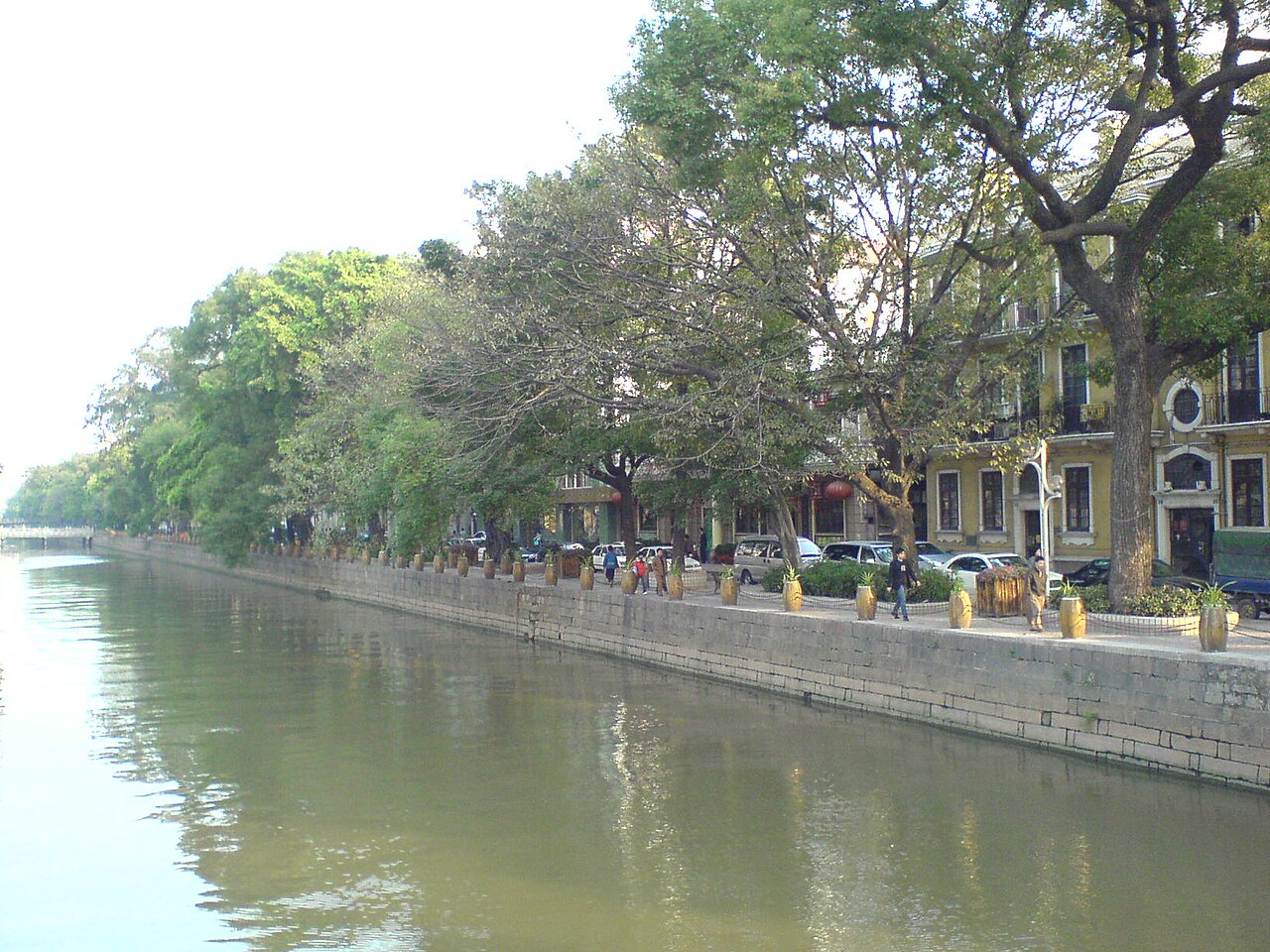
What you are looking at
The surviving stock is mostly Western-style commercial and institutional architecture from the concession decades: verandas, classical orders and garden setbacks that still feel unlike the denser qilou streets inland. Greenery is thick; guides cite more than 150 mature trees. The White Swan Hotel anchors one end as a long-running Guangzhou landmark hotel rather than a museum piece. Churches and former consular buildings sit along the main axes; facades change block by block, which is why a circuit beats a single photo stop.
Shamian is a living neighbourhood with hotels, offices and residents. Treat gateways and courtyards as private unless a sign invites you in. The sightseeing is the street, the river edge and the tree canopy.
How to walk it
Cross onto the island from the Liwan side and loop the main east–west streets plus the riverside path. A slow full circuit takes about an hour without museum detours. Morning light is softer on the river facades; late afternoon suits the opposite bank glow. Weekends bring more wedding photographers and tour groups; weekdays keep the pavement quieter.
Pairing is geographic: finish Chen Clan in the morning, lunch nearby, Shamian mid-day, then Enning Road and Yongqing Fang as the light drops. Do not try to add Canton Tower the same afternoon unless you accept a long metro jump and a rushed dusk.
Tickets and rules
The island walk is free at all ordinary hours. Individual buildings may run as hotels, offices or small museums with their own access rules. There is no single "Shamian ticket." Security presence is normal for a central river island; carry ID if asked and follow local instructions during events.
Getting there
Metro Line 1 to Huangsha, or Line 6 connections toward the Liwan river bend, then a short walk to the bridges, is the usual pattern. Exact exits shift with construction, so follow maps on the day. Ride-hail drops you at the bridgeheads. From Chen Clan Academy station the hop is short enough to keep on foot or one metro stop plus walk depending on heat.
Photography without turning it into a set
Classic shots sit on the riverside elevations and under the densest tree cover on the main avenues. Tripods and large lighting kits draw staff attention during busy wedding seasons; handheld cameras and phones cause fewer problems. Drones are a separate regulatory stack and usually the wrong idea over a dense river island. If rain traps you, hotel lobbies and cafes become the indoor pause, not a substitute for the street.
The island's bridges also frame views back toward Liwan's denser blocks, which helps explain why concession planners wanted water on more than one side. Spend a minute on a bridge looking both ways before you commit to a circuit direction.
Food and hotel edges
The White Swan and neighbouring cafes make it easy to pause without leaving the island. Treat any hotel lobby as hospitality space, not a free museum. For a Liwan food focus, many travellers still exit toward Qingping or Shangxiajiu after the circuit rather than forcing a full meal on Shamian itself. Keep expectations honest: the island sells atmosphere and architecture first, restaurants second.
Things to confirm before you go
- Bridge access and any temporary closures for events.
- Which buildings are open as museums versus private hotels.
- Summer midday heat on unshaded stretches; carry water.
- Weekend photo crowds around classic facades; weekday mornings are calmer.
- River cruise piers nearby are separate tickets if you add a boat later.
Heat, rain and Monday pivots
Summer midday on unshaded stretches is harsh; start earlier or use the tree canopy on the main avenues as your route spine. In thunderstorms, bridges get slippery and wedding groups vanish into cafes. Monday museum closures elsewhere make Shamian a useful free pivot with Beijing Road: both stay open when Nanyue King and Zhenhai Tower do not.
Who should skip Shamian
Skip only if pouring rain erases the outdoor walk and you refuse indoor backups, or if your only Guangzhou day must stay on Yuexiu museums and the cathedral. Keep it when you want concession-era street texture without a ticket queue. The craft density lives at Chen Clan; the breathing room lives here.
Shamian or Yongqing Fang if short on time?
Shamian for quieter riverside architecture. Yongqing Fang for arcade retail and opera-museum context. On a full Liwan day, do both.