Sacred Heart Cathedral: The Stone House on Yide Road
Sacred Heart Cathedral, often called the Stone House Cathedral, stands at No. 56 Yide Road in Yuexiu District. Construction began in 1863 and finished in 1888 after twenty-five years of work. Walls and columns are granite throughout. Guangzhou quarries did not supply the stone; blocks came from Kowloon sites such as Niutoujiao and Chaguoling, shipped by junk and cut on site. Quarrying alone took years; Cai Xiao, a stonemason from Jiexi in eastern Guangdong, is the named master builder who stayed with the project. Twin spires rise about 52.8 metres over roughly 2,900 square metres of floor area, making this one of China's largest Gothic-revival churches. It joined the national Major Historical and Cultural Sites list in 1996. Fit it on the Yuexiu day in the Guangzhou travel guide, after Yuexiu Park and before a Beijing Road evening stroll.
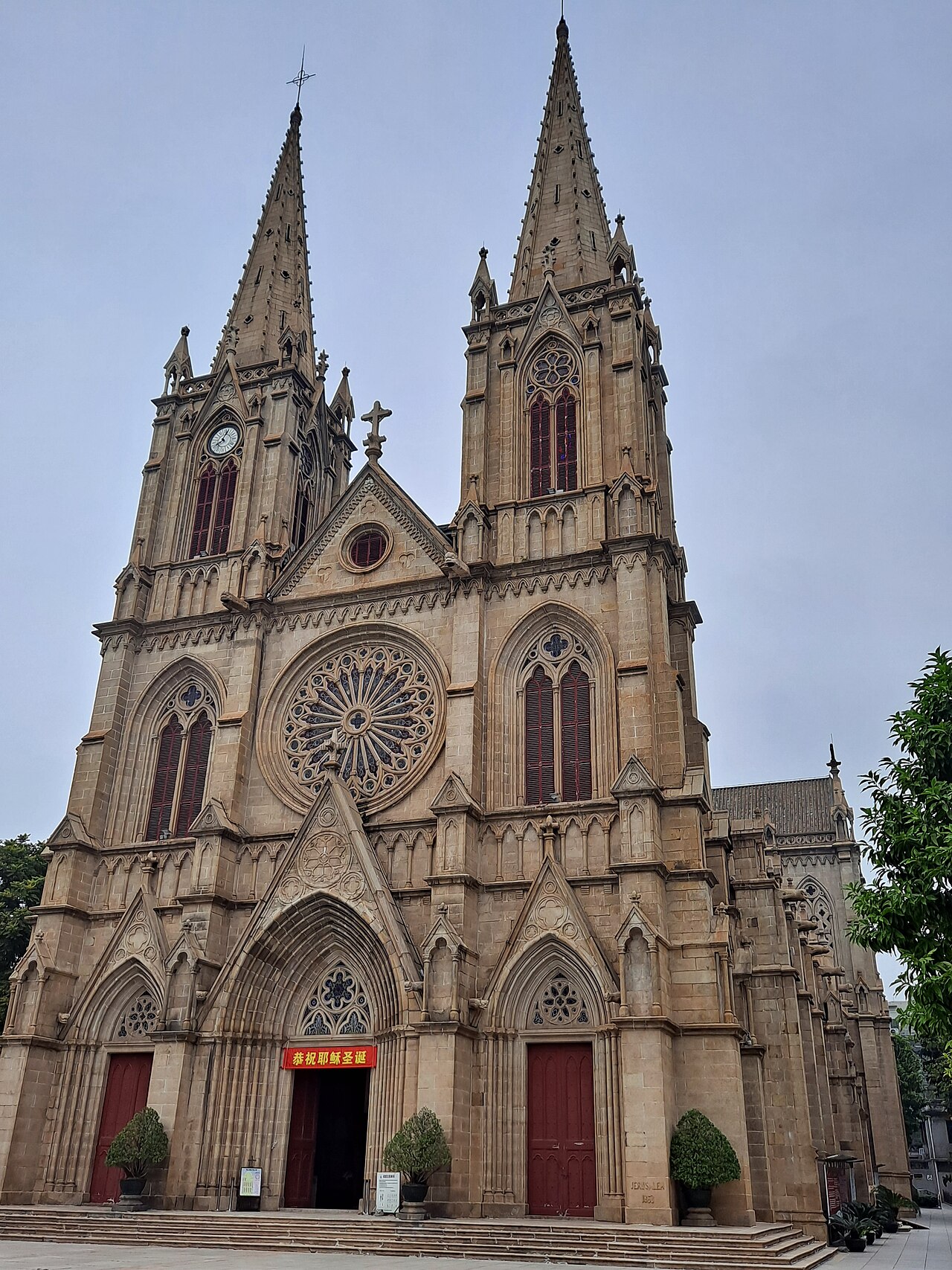
What to notice inside and out
Pointed arches, twin front towers and stained glass follow Gothic vocabulary even though the fabric is southern Chinese granite. The coloured glass seen today largely dates from the 2004–2006 restoration, with dozens of windows (on the order of ninety-eight panels and hundreds of square metres) remade to order. Exterior photography from the square is the reliable shot; interiors depend on whether visitor hours are open and whether a service is underway.
Dress for a working cathedral: covered shoulders, quiet voices, no wandering through a mass as if it were a hall exhibit.
Hours are the hard part
Admission has been free in recent years, yet access is tightly scheduled and changes by weekday. Multiple visitor guides disagree on exact morning and afternoon cutoffs, which is a warning to trust the parish notice board over any single blog. Patterns that keep recurring:
- Monday: typically closed to tourist visits.
- Tuesday–Friday: morning and afternoon visitor windows, with a mid-day gap.
- Saturday: a longer daytime window in some listings.
- Sunday: square access may open early for worshippers while interior tourist entry is limited to a short afternoon slot; some Sundays (often cited as the third Sunday of the month) keep the interior closed for parish activity.
Easter and Christmas services pack the building; skip those dates if photography is your only goal. Mass times are not sightseeing hours. When in doubt, arrive for the first published visitor window and accept that staff may pause entry without much English explanation.
Why the stone matters
The "Stone House" nickname is literal: load-bearing granite instead of the brick-and-timber mixes common in many South China churches of the same era. That choice drove the long build and the Kowloon quarry logistics. Standing at the square, the twin spires read European; the material provenance is Pearl River Delta labour and Hong Kong stone. Restoration glass from the mid-2000s should not be mistaken for nineteenth-century fabric, which saves disappointment when colours look modern up close.
Bring a weekday morning plan as the default. If the interior is closed when you arrive, the exterior still justifies the metro stop, and Beijing Road remains nearby for an early lunch.
Square etiquette
The open square in front of the facade is part of the visit, yet it remains church property in practice. Keep music speakers off, avoid climbing barriers for elevated shots, and step aside when wedding or baptism groups need the steps. Security staff have little patience for drone attempts or selfie sticks during busy liturgies. A ten-minute exterior stop done quietly beats a longer stop that ends in an argument.
Getting there and pairing
Yide Road sits in the old Yuexiu commercial grid; metro Line 2 or Line 6 stations serving Haizhu Square / Beijing Road area put you within a walk, with exact exits depending on transfers. Pair the cathedral with Yuexiu Park earlier and a free evening on Beijing Road later. The Nanyue King Museum is the history add-on between park and cathedral when legs hold. Liwan's Chen Clan Ancestral Hall, Shamian Island and Yongqing Fang are a different day. Canton Tower stays on the river night.
Things to confirm before you go
- Current visitor hours on the cathedral's posted notice or official channel for your weekday.
- Monday closure and Sunday interior limits.
- Whether any advance reservation is required on your date (rules have tightened and loosened).
- Dress code and photography limits inside during and outside services.
- Holiday and feast-day schedules, which overwrite the normal table.
Weekday vs Sunday reality
Weekday morning visitor windows are the reliable default for travellers who want the nave without interrupting worship. Sunday mornings belong to parish life; tourist interior slots, when they exist, are short and crowded. Feast days overwrite every table. If your only free hour is Monday, plan the exterior square only and move on to Beijing Road or Yuexiu Park.
Bring a light cover for shoulders even in heat. Staff enforce dress more strictly than many blogs admit, and arguing at the door wastes the narrow window you came for.
Who should skip the interior
Skip the interior if your only free slot is Monday, if a major liturgy fills the nave, or if you are content with the exterior spires from the square. Keep the stop when granite Gothic in a Chinese port city is on your list and you can hit a documented visitor window. The free price does not mean open-all-day access.
Exterior only or wait for the nave?
Exterior only is enough for most photography trips. Wait for the nave when quiet visitor hours are confirmed and you want the stained-glass volume from inside.