Hexia Ancient Town, Huai'an's Salt and Canal Quarter
Hexia is an old canal-side quarter in the northwest of Huai'an District, the historic core of Huai'an. In the Ming and Qing it grew rich on two trades, grain boats on the Grand Canal and the Huai salt that was checked and shipped from here to six provinces. A local saying claimed that Yangzhou's thousand years of splendour had moved to Xihuzui, the old name for this stretch. Today it is a district of stone-paved lanes, low brick houses and small museums, with the former home of Wu Cheng'en, author of Journey to the West, among them. It sits beside Fuma Lane, the street of Zhou Enlai's former residence, so the two pair naturally.
How a market grew on a river bend
The oldest name here is Xiangjiawan, a small bend on the right bank of the old Huai River where a market village grew up. In 1415 the official Chen Xuan opened the Qingjiangpu channel and linked up the inner canal, so the grain fleets heading north now passed along the south side of the settlement and it became a busy port. When the old course of the Huai stopped flowing, the riverbed to the north became a route for salt and firewood. Where the name Hexia comes from is disputed. Explanations range from below the river, because the town was lower than the riverbed, to a phrase used in the salt trade.
Until 1950 the area was split between three small towns, Xiangwan, Meili and Hexia, which were then merged. Meili takes its name from the Western Han writers Mei Cheng and Mei Gao, father and son, who are said to have come from here.
The salt merchants and their gardens
Hexia's peak came with salt. Under the Ming and Qing, sea salt from the coast of northern Jiangsu was inspected here and shipped to Hubei, Hunan, Jiangxi, Anhui, Henan and Jiangsu, and the merchants who held the licences grew very rich. Merchants from Shanxi dominated in the early Ming, and from the mid Ming they gave way to traders from Huizhou. The most powerful family was the Cheng clan of She County. By the early Qing, all thirteen great salt houses in Hexia were Chengs, and lanes in the town are still named after their shop names.
The Chengs built 24 of the 65 gardens recorded in Hexia, among them the Di Zhuang on Xiao Lake. Cheng Jinfang kept a library of tens of thousands of volumes. The boom ended abruptly. In 1832 the salt monopoly was reformed and licences opened to small traders, and the big houses lost their business within years. Gardens fell into ruin and were dug up for vegetable plots. In 1860 a Nian rebel raid burned much of the town. Chinese Wikipedia quotes contemporaries lamenting famous gardens destroyed in a matter of weeks.
What survives
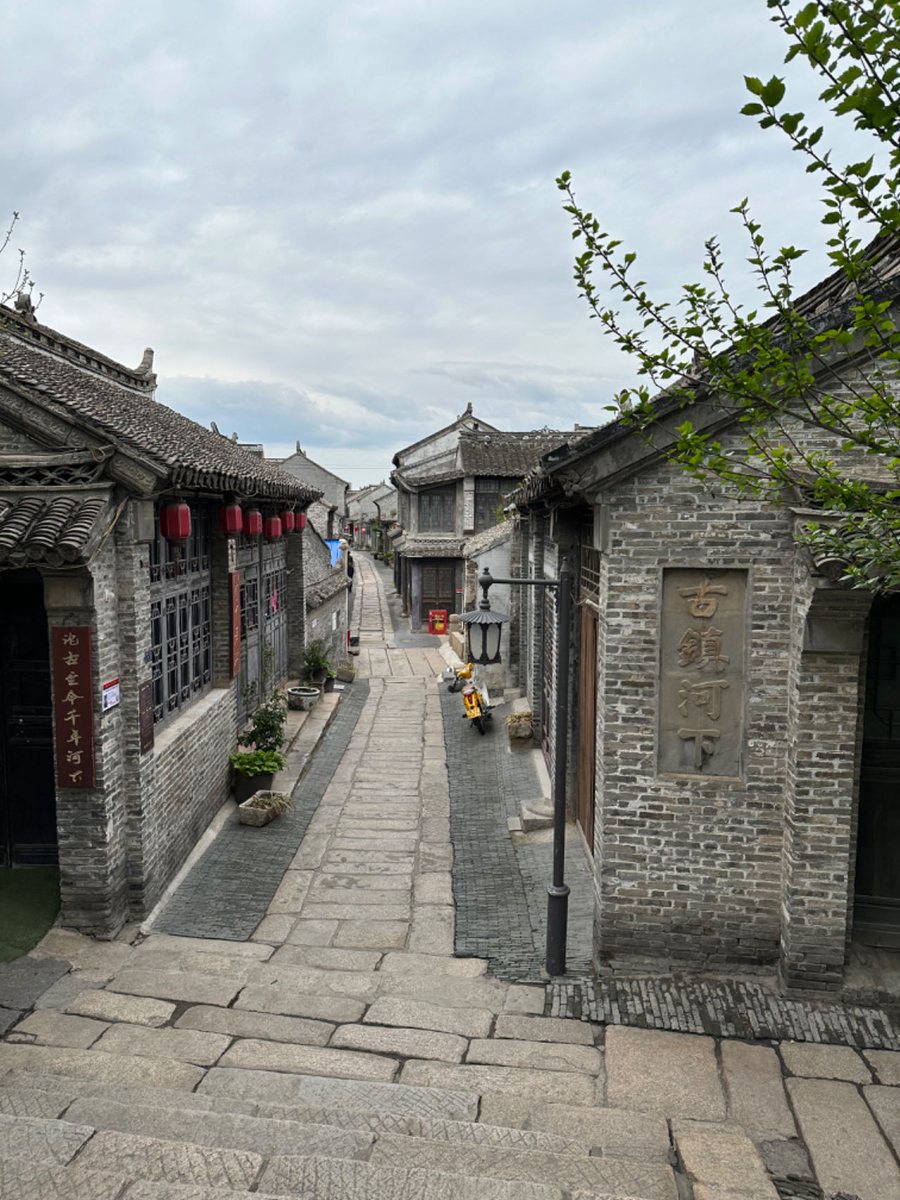
Despite the losses, Hexia kept its street pattern and much of its old fabric. Chinese Wikipedia says more than 80 per cent of the houses are brick and timber buildings from before the Republic, more than 70 per cent date from the Qing or earlier, and about 90 per cent of the streets are paved with stone slabs. In 2006 Hexia was listed as a national protected site as part of the Grand Canal, and since 2021 the district has been repaired as part of a canal heritage corridor project.
The best-known house is the former residence of Wu Cheng'en on Datong Lane. It was restored in 1982 and covers almost a hectare, with memorial halls to the novelist and to the Monkey King on either side. The town also has a rebuilt mansion of Shen Kun, a top scholar of the Ming examinations, and the Xiao Lake waterfront. Other notable people linked to Hexia include the Cheng family scholars Cheng Sili and Cheng Jinfang.
An evening walk
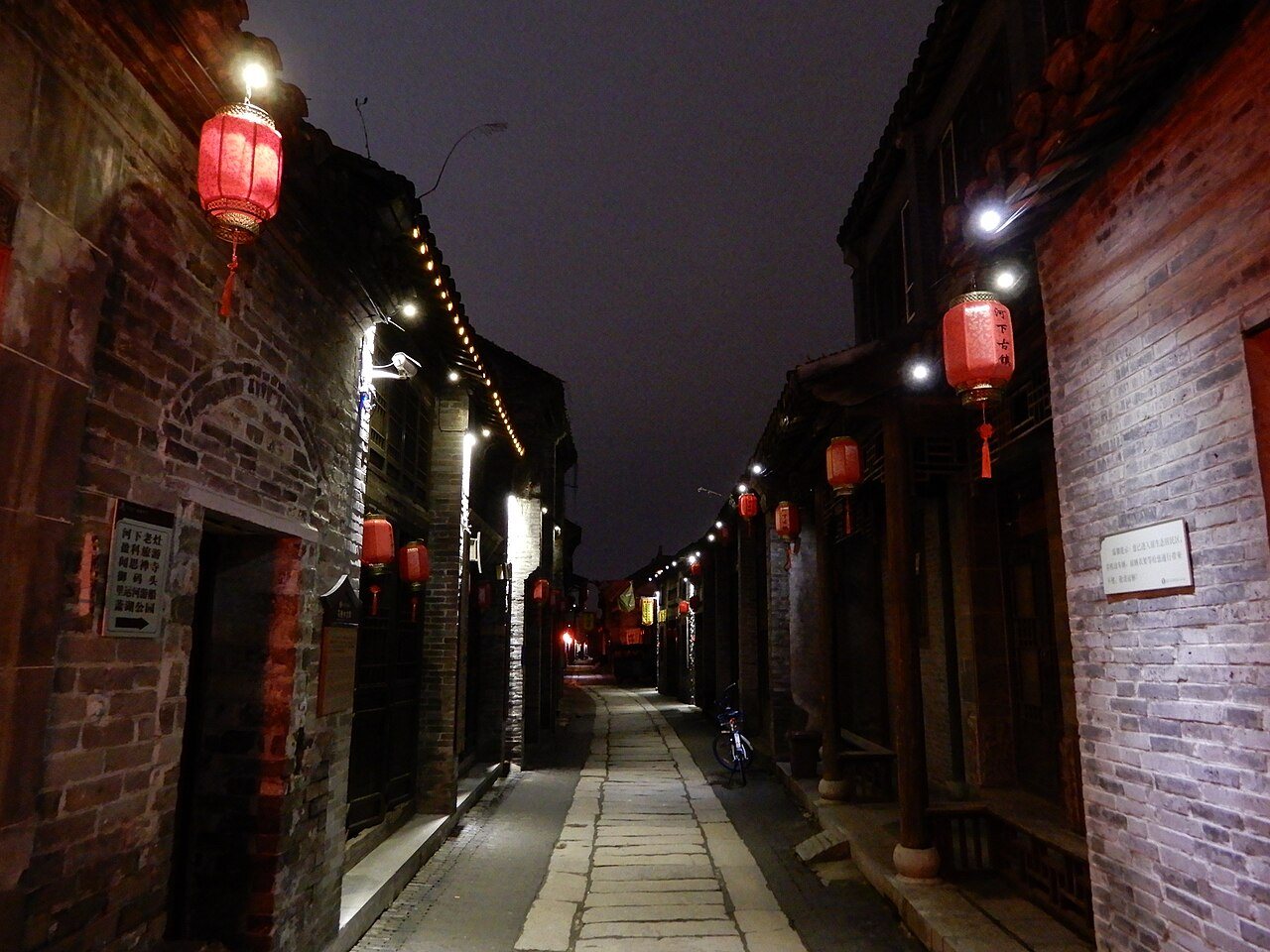
Hexia is pleasant at any time, and it is at its liveliest in the evening, when lanterns light the stone lanes and snack shops open. A good route starts at the south entrance, follows the main street north past old shop houses and side lanes named after the salt houses, detours to the Wu Cheng'en residence, and ends at Xiao Lake. Allow two hours, more if you stop to eat. Huai'an is a home of Huaiyang cuisine, so local dishes and snacks are an easy reason to linger.
Weekends and holidays bring crowds, and weekday evenings are calmer. Combine Hexia with Zhou Enlai's former residence and the old town drum tower for a full day on foot, as set out in the Huai'an travel guide.
Tickets and getting there
The lanes are open to walk, while individual museums and houses such as the Wu Cheng'en residence may charge entry or require booking. Prices and opening hours change, so check the day's notice at each site. Hexia is a short taxi ride or a walk from the old town centre and the Zhou Enlai residence.
Before you go
- Stone slabs are uneven and slippery after rain.
- Come late afternoon to see the lanes in daylight and then at dusk.
- Bring cash or a mobile payment app for small snack stalls.
- See the Huai'an travel guide for where to stay.
Frequently asked questions
Is Hexia worth visiting for non-literature fans?
Yes. The salt merchant history and the canal setting are interesting in their own right, and the evening atmosphere suits a slow walk.
How long should I spend?
Two hours for a walk, or half a day with the museums and a meal.
What is the connection to Journey to the West?
Its author, Wu Cheng'en, lived in Huai'an, and his former residence in Hexia is now a museum.
How far is it from Zhou Enlai's former residence?
They are neighbours. Hexia adjoins Fuma Lane, where the Zhou residence stands.
Sources
Facts in this article were checked against the following sources, retrieved 18 October 2026.
- Hexia Ancient Town, Chinese Wikipedia
- Wu Cheng'en former residence, Chinese Wikipedia
- Huai'an travel guide on this site
Photos are from Wikimedia Commons under the licences shown in each caption.