Zhou Enlai's Former Residence and Memorial Hall in Huai'an
Zhou Enlai, Premier of the People's Republic of China from 1949 until his death in 1976, was born in 1898 in a grey-brick family compound in the old town of Huai'an, now Huai'an District. The house where he spent his first twelve years is the main reason many Chinese travellers come to the city. Elsewhere in the same district, a large lakeside memorial complex tells the story of his whole career. This page covers both, since most visitors see them on the same day, and explains how they differ.
A family of secretaries from Shaoxing
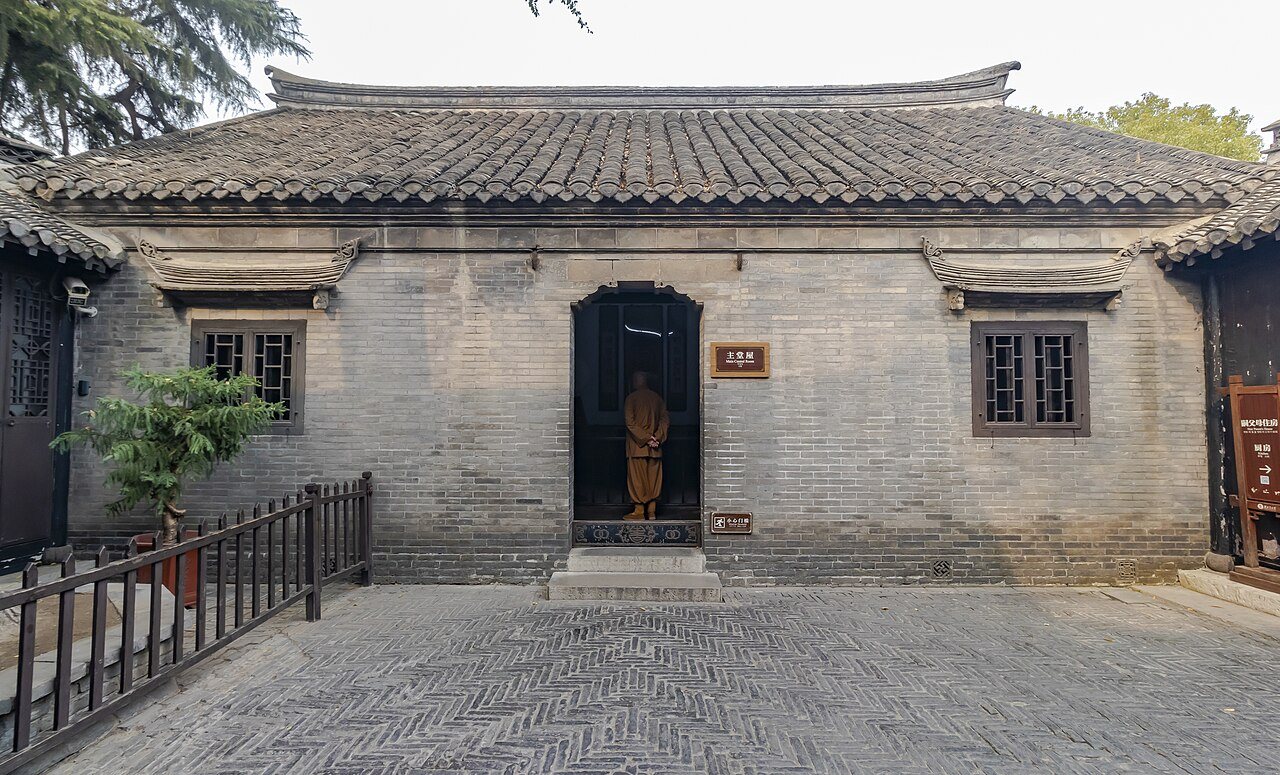
The Zhou family came from Shaoxing in Zhejiang. During the Xianfeng reign of the Qing, Zhou Enlai's grandfather Zhou Panlong and his elder brother moved to Huai'an to work as private secretaries to local officials, the trade for which Shaoxing men were famous. They bought two adjoining courtyards west of the Zhenhuai drum tower, with 32 rooms over about 1,960 square metres. The east courtyard opens east onto Fuma Lane at number 7, and the west courtyard opens south onto Ju Lane.
Zhou Enlai was born here on 5 March 1898. He lived in the house until 1910, when he left for Shenyang in the northeast to go to school. By the 1950s the compound had become a crowded tenement and was falling apart. In 1973 Zhou sent word through a State Council aide asking the county not to let people visit, not to move the residents out and not to repair the house. After his death the county restored it in 1978, and it opened to the public in 1979. It became a provincial protected site in 1982 and a national one in 1988.
What you see at the residence
The residence is modest, and that is its point. The courtyards have grey brick walls, tiled roofs, a well and simple rooms furnished in period style, including the room where Zhou was born. An exhibition hall in the compound tells the story of his family and early life. The whole visit takes about an hour.
Because Zhou is deeply respected in China, the house draws school groups, work units and party delegations, especially around anniversaries in January and March. Arrive early on weekdays in term time. Most people move through quietly, and visitors are expected to behave as they would at a memorial.
The Zhou Enlai Memorial Hall
The Memorial Hall stands at Taohuayin in Huai'an District, on a site approved in 1986. It opened on 6 January 1992 with a name plaque in the hand of Deng Xiaoping. The grounds cover about 40 hectares, some 70 per cent of it water, with a memorial island and three artificial lakes. An 800-metre axis runs north through a viewing terrace, the main hall, an exhibition hall of his life and work, a bronze statue square and a replica of the West Flower Hall, his residence and office in Zhongnanhai in Beijing.
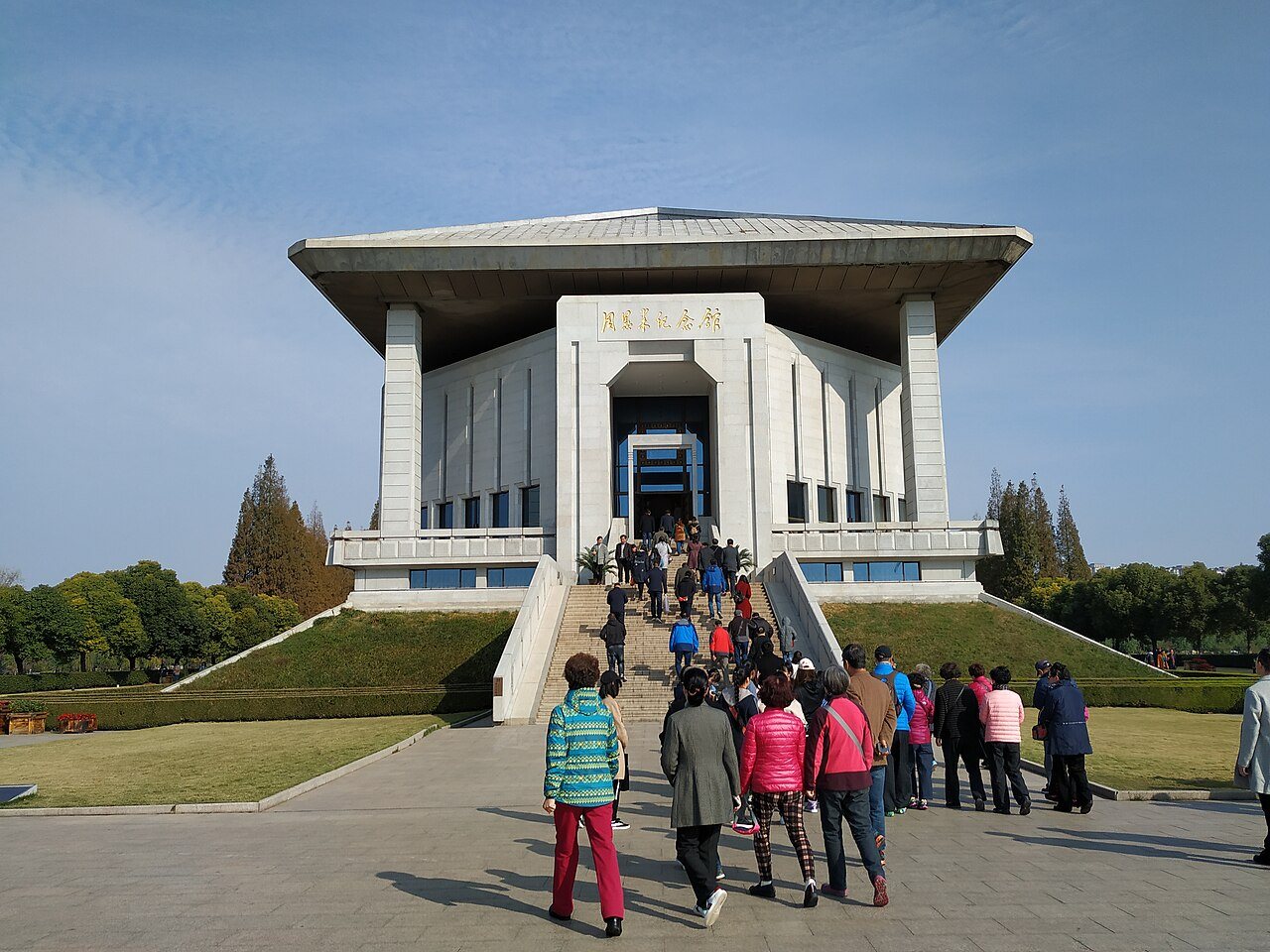
The main hall is 26 metres tall, square outside and octagonal inside, with a film hall, a central hall of remembrance and a viewing platform on three levels. The life and work exhibition, expanded in 2008 for the 110th anniversary of his birth, has four galleries of photographs, documents and objects arranged by period. The bronze statue, 7.6 metres tall with its base, was made by the sculptor Li Shouren and shows Zhou in a characteristic standing pose from the 1950s and 1960s. The West Flower Hall replica, added in 1998 for his centenary, recreates his rooms at the same scale as the original. Since 8 January 2016, the 40th anniversary of his death, the hearse that carried his body has been displayed in a hall on the grounds.
How to combine them
The two sites suit different visitors. The residence is personal and quick, while the memorial hall takes two to three hours and covers his whole political life. Many people see the residence in the morning, walk to the Zhenhuai drum tower and the canal governor's office site for lunch nearby, and take a taxi to the memorial hall in the afternoon. Hexia Ancient Town is close to the residence and makes a good evening stroll. The Huai'an travel guide has the full one-day old town route.
Tickets and getting there
Entry arrangements at both sites can change, including any need to book in advance with ID, so check the official notice before you go and carry your passport or ID card. Opening hours are posted at the gates. Both sites are in Huai'an District, southeast of the modern centre at Qingjiangpu, and a taxi from the railway station is the simplest way to reach them.
Before you go
- Dress neatly and keep voices low, as many visitors come to pay respects.
- Avoid anniversary dates in January and March if you dislike crowds.
- Pair the residence with the old town sights on foot.
- Read the Huai'an travel guide for food and onward routes.
Frequently asked questions
Which should I visit if I only have time for one?
The former residence, for the setting of his childhood. The memorial hall suits those who want the full political story.
How long do the two sites take together?
Half a day to a full day, depending on how long you spend in the memorial exhibitions.
Is the house original?
The compound is the original family property, restored in 1978 after decades as a crowded tenement.
Where was Zhou Enlai born?
In this house in Huai'an, on 5 March 1898.
Sources
Facts in this article were checked against the following sources, retrieved 18 October 2026.
- Zhou Enlai former residence, Chinese Wikipedia
- Zhou Enlai, English Wikipedia
- Huai'an travel guide on this site
Photos are from Wikimedia Commons under the licences shown in each caption.