Moganshan
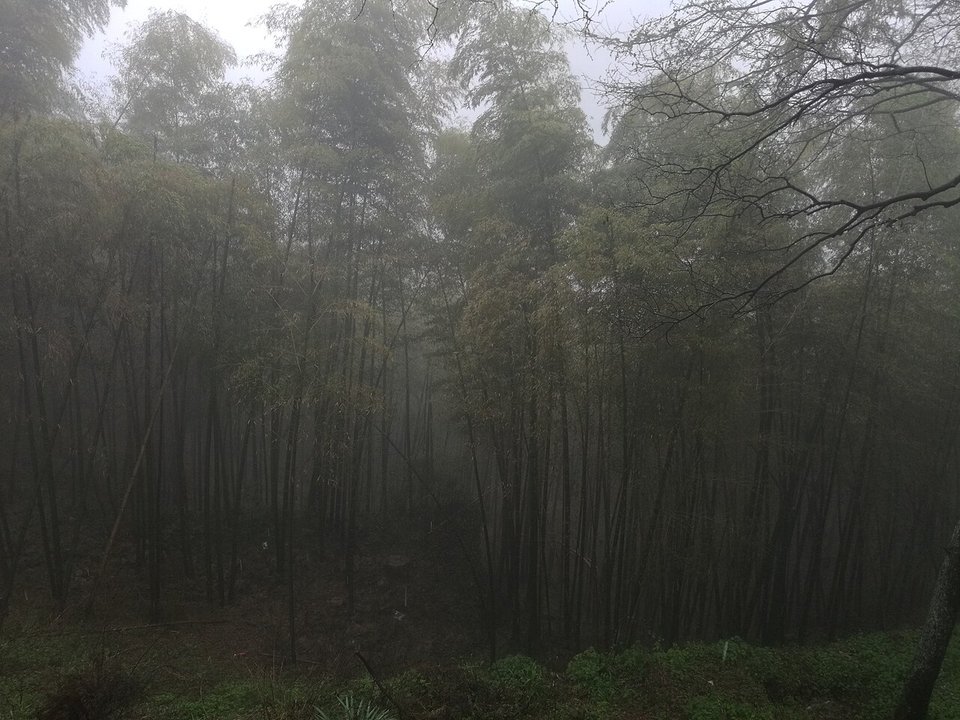
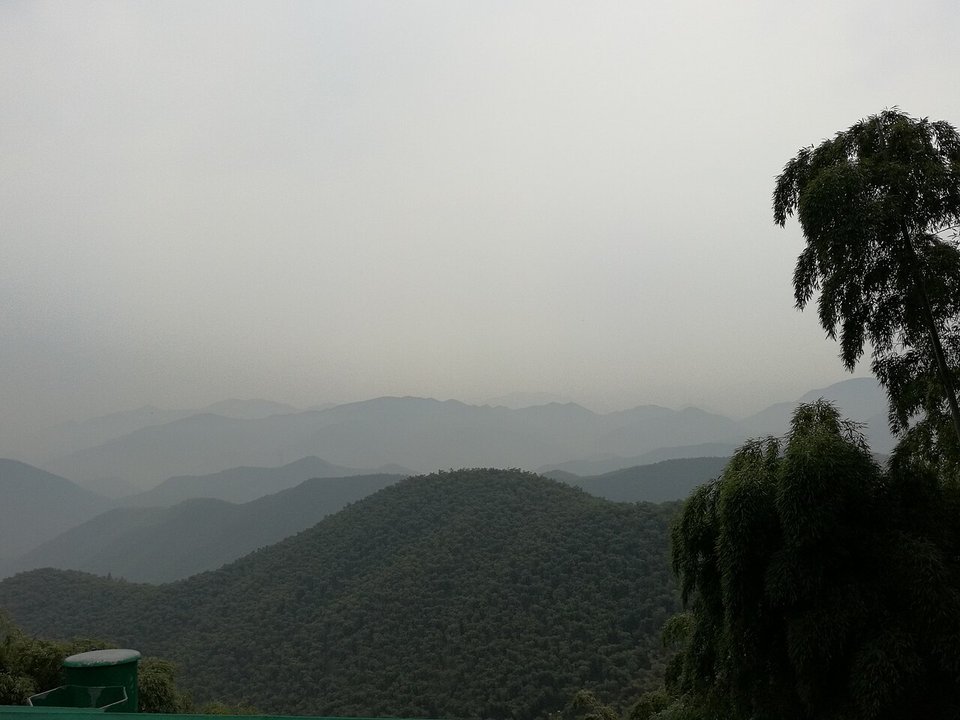
Moganshan, Mount Mogan, rises from the flat Hangzhou plain in Deqing County, in the Huzhou prefecture, a little over 40 kilometres northwest of Hangzhou. It is a low mountain, about 720 metres at its highest point, Tashan, and it is almost entirely covered in bamboo. Its reputation rests on being cool. For more than a century people from Shanghai and Hangzhou have come up here to escape the summer heat, and it is counted with Lushan, Beidaihe and Jigongshan as one of China's four classic summer resorts.
The sword legend
The mountain is named after Gan Jiang and Mo Ye, the husband and wife swordsmiths of legend who forged a pair of swords for the King of Wu in the Spring and Autumn period. Chinese Wikipedia points out that the story is attached to the mountain late. The earliest record it cites is a Ming gazetteer of the Jiajing reign, which mentions a sword casting pool with clear water and a sword grinding stone beside it.
Today the legend is the backbone of the scenic area. Sword Pond, Jianchi, is a stream that drops through a gorge in a series of falls, with the grinding stone and a sword testing rock along the path. It is the most visited spot on the mountain and the best place for water after rain. The path descends all the way, so many visitors leave it for the end of the day.
How the hill station began
Western missionaries found the mountain in the early 1890s. Chinese Wikipedia names the American Baptist E. N. Fletcher, who came up the Grand Canal from Hangzhou and saw how cool it was, and says other missionaries followed and began renting rooms from villagers. In 1898 a Presbyterian missionary built the first European style villa, and in the same year the residents formed a summer association that ran the hill like a small self governing town. By the 1920s there were 154 Western villas, along with churches, tennis courts, a swimming pool, a library and a post office.
In 1928 the Zhejiang provincial government took over the administration and many foreigners sold up. Chinese officials, bankers and writers bought or built their own villas, and the mountain became a retreat for the Nationalist elite.
Villas and their stories
Chiang Kai-shek and Soong Mei-ling came here on their honeymoon after their wedding in Shanghai in December 1927. The statesman Huang Fu retired to the mountain in 1928 and bought villa number 509, which he renamed the White Cloud villa, Baiyun Shanguan. Chinese Wikipedia says Zhou Enlai met Chiang there in 1937 for secret talks on cooperation between the two parties. In July 1948 Chiang held the meeting at the Songyue Lu villa that decided to issue the gold yuan, a currency whose collapse helped bring down his government. In 1984 a conference of young economists met on the mountain, remembered in China as the Moganshan meeting.
The Shanghai gangsters Zhang Xiaolin and Du Yuesheng had a villa built in imperial palace style in 1935, with glazed roof tiles that stand out among the European houses. Many villas now belong to institutions or have become hotels and guesthouses.
The scenic area today
The ticketed scenic area covers the top of the mountain. Huzhou Bendibao lists the ticket as including Sword Pond, Luhuadang Park, the White Cloud villa and Wuling village, the cluster of old villas around the Songyue Lu. Luhuadang is a grassy park with old trees and villas, and Xuguangtai is a lookout over the bamboo where early risers sometimes catch a sea of cloud.
Below the mountain, Yucun village has become a weekend scene of cafes, restaurants and craft shops, and is free. The surrounding valleys are full of boutique guesthouses, which are the reason many people come.
Tickets and hours
Ticket prices vary by season. Bendibao's listing gives 80 yuan. A September 2026 report gives 100 yuan in the peak period of July, August and the May Day and National Day holidays, 80 yuan from March to June and September to November, and 50 yuan from December to February, with cheaper online prices and a ticket valid for three days. The same report gives scenic area hours of 7:30 to 17:00 with last entry at 16:30.
Bendibao lists free entry for children under 1.1 metres, people aged 70 and over and military personnel, and half price for children from 1.1 to 1.4 metres and people aged 60 to 69. Check the day's notice for the current band.
The shuttle rule
Since 30 November 2018, private cars have not been allowed to drive into the scenic area between 8:00 and 17:30. Visitors park at a transfer centre below the mountain and ride the shuttle bus up. Guests of inns inside the scenic area can drive in with a booking and a parking reservation, according to a December 2025 report in a Zhejiang paper, and staff advised checking the Zhejiang Moganshan mini programme for the current rules. The September 2026 report gives the shuttle as 35 yuan return, with a 15 yuan loop bus on the mountain.
Getting there
The nearest railway station is Deqing, and travel listings mention a tourist bus from the station to the transfer centre. Hangzhou is about 1.5 hours away by car and Shanghai about 2.5 to 3 hours. For a canal town in the same prefecture, pair the mountain with Nanxun.
Frequently asked questions
When is the best time to visit?
Summer for the cool air, though it is busy. Spring and autumn are quieter and better for walking.
Can I drive up?
During the day, generally only if you are staying at an inn inside the scenic area. Otherwise use the shuttle.
How long should I spend?
One full day for the main sights. Most visitors stay at least one night.
Sources
Facts in this article were checked against the following sources, retrieved 22 October 2026.
- 莫干山, Chinese Wikipedia
- Moganshan, English Wikipedia
- Huzhou Bendibao, Moganshan listing
- Sina, Moganshan opening hours and tickets, September 2026
- Sina, Moganshan shuttle times, September 2026
- Tide News, car transfer rule at Moganshan, December 2025
- Huzhou travel guide on this site
Photos are from Wikimedia Commons under the licences shown in each caption.