Lishui Travel Guide: Yunhe Terraces, Xiandu and Mountain Zhejiang
Lishui is the green, mountainous southwest of Zhejiang, and its best sights are spread across its counties rather than in the city. The Yunhe Terraces, up to 700 levels of rice paddies climbing from 200 to 1,400 metres, are the largest terrace system in East China. Xiandu in Jinyun is a 5A river valley with the 170-metre stone spire of Dinghu Peak. Longquan is the home of celadon, and Songyang is a county of old villages. Plan three days with a car, based in Lishui city or the counties themselves.
Places worth visiting
Yunhe Terraces
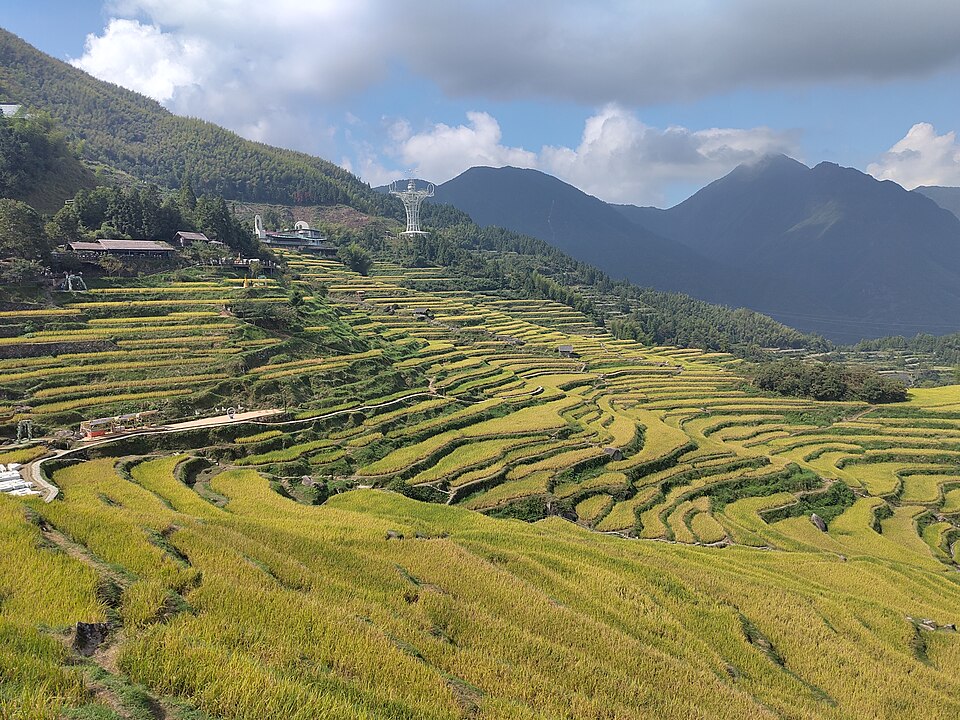
In Chongtou town, Yunhe County, terraces cover about 50 square kilometres of hillside between 200 and 1,400 metres, with up to 700 levels in places. They were begun in the Tang and expanded in the Yuan and Ming, partly to feed local silver miners, and She people who arrived in the late Ming and early Qing farmed them on a large scale. Many plots were abandoned in recent decades and have since been restored.
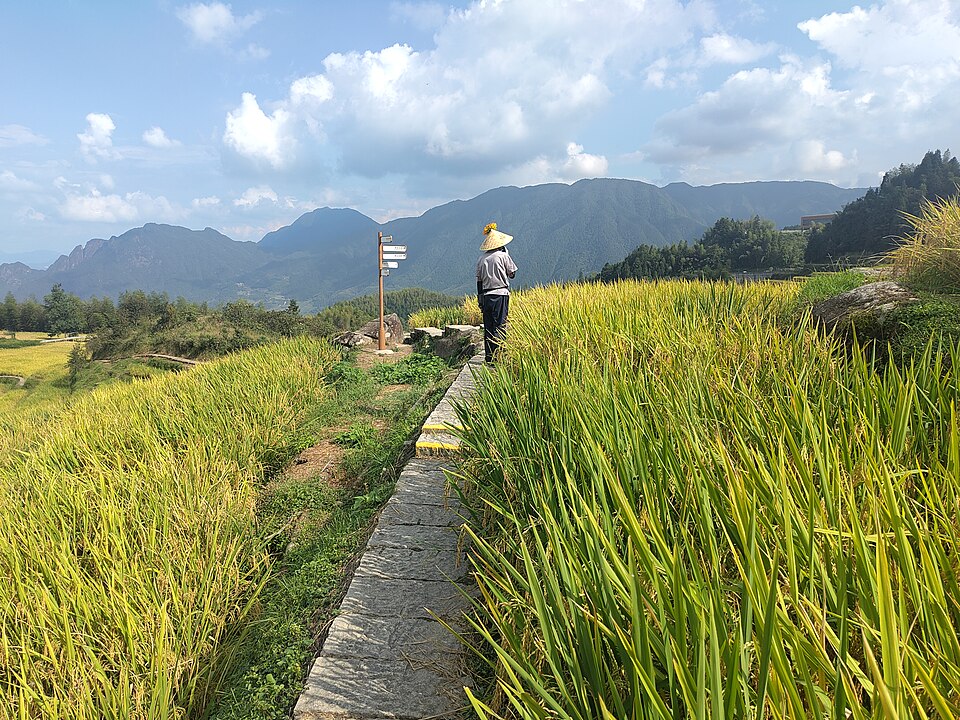
How to see them. The scenic area has viewing platforms at different heights; the classic shot looks down over the curving terraces from above. The terraces change through the year: flooded and mirror-like in spring when they're filled for planting, green in summer, golden at the autumn harvest, and sometimes dusted with snow in winter. Dawn often brings a sea of cloud, while midday is usually hazy and flat. Allow a half day to a full day, and stay nearby if you want sunrise. Tickets and shuttles follow the scenic area's notice. The Yunhe Terraces sight guide has seasonal hours, the ropeway and a walking route.
Xiandu, Jinyun
Seven kilometres north of Jinyun town, Xiandu is a 5A scenic area of river meadows and cliffs, linked in legend with the Yellow Emperor. Its centrepiece is Dinghu Peak, a sheer stone pillar rising from the riverbank, surrounded by caves, gorges and an old academy. It's also a favourite film location, with some 500 productions shot here by 2020. The early morning mist on the river is the classic view. Allow half a day. See the Xiandu sight guide for the Yellow Emperor shrine, Niweng Cave and the two day ticket.
Longquan
Longquan celadon reached its peak in the Southern Song, with its famous jade-green glazes. Archaeologists have found more than 300 kiln sites around Longquan, and the Dayao kilns have been a national protected site since 1988. Today the town has workshops and studios where you can watch potters and buy pieces, from cheap to collector-grade. Longquan is also famous for sword-making.
Songyang
Founded in 199, Songyang is the oldest county in the Lishui region. It's known for traditional villages of rammed-earth and timber houses scattered across the hills, and it's slow travel: drive between villages, stay in a guesthouse and walk.
Lishui city
The city itself is a base for food and transport. The Yanyu Lou (Misty Rain Tower) dates back to the Northern Song and has been praised by poets. About half an hour west, Tongji Weir is a 6th century arch dam still in use, facing the painters' village of Dagangtou across the Ou River; see the Tongji Weir sight guide.
When to come to Lishui
Spring (April to May) for water-filled terraces and planting, and autumn (late September to November) for the golden harvest and clearer air. Summers are long, very hot and humid, with afternoon storms; winters are short and mild, with occasional frost and the chance of snow on the higher terraces.
Getting in and where to stay
- Rail: Lishui station is on the Jinhua–Wenzhou railway, with fast trains to Hangzhou via Jinhua and to Wenzhou. The Songyang–Lishui section of the Quzhou–Lishui railway was still under construction in October 2026, so don't plan around it yet.
- Air: Lishui Airport opened on 18 July 2025 in Liandu District, about 15 km from the city centre, with flights to Beijing and Shanghai among its early routes.
- Road: A car is close to essential for the terraces, Xiandu and Songyang.
Sleep in Lishui city for transport, then in Yunhe near the terraces for sunrise, or in a Songyang village guesthouse.
Eating in Lishui
Mountain Zhejiang food: Jinyun shaobing (flatbread baked in a barrel oven), Anren fish head, bamboo shoots, mountain snails and braised river fish. Village guesthouses serve local vegetables and cured meats. Prices are usually reasonable and posted.
How to arrange the route
Day 1: Arrive in Lishui, drive to Yunhe for the terraces at sunset, and stay overnight.
Day 2: Terraces at sunrise, then drive to Jinyun for Xiandu in the afternoon and try Jinyun shaobing.
Day 3: Longquan for celadon, or Songyang's villages, then back to Lishui.
Hangzhou and Wenzhou are the big cities either side.
What to cut if short on time
Keep the Yunhe Terraces. Add Xiandu if you have another half day. Longquan and Songyang need time and driving, so cut them first on a short trip. Skip sightseeing in Lishui city.
Things to confirm before you go
- Terrace viewing platform access and the season's water and harvest timing.
- Cloud and haze forecasts for sunrise.
- Car hire or a driver for the counties.
- Railway changes if the Songyang–Lishui line opens.
Frequently asked questions
Yunhe or Yuanyang?
Yuanyang in Yunnan is the UNESCO-listed Hani terrace landscape, bigger and more famous. Yunhe is far easier to reach from Shanghai and Hangzhou, and the largest terrace system in East China.
What is the best season for the terraces?
Spring for flooded mirror terraces, autumn for gold. Dawn gives the best chance of cloud seas in both.
How many days for Lishui?
Two days for the terraces and Xiandu, three to add Longquan or Songyang.
Sources
The facts in this article were checked against the following sources, retrieved September 18, 2026, and rechecked on October 18, 2026.
- Lishui https://en.wikipedia.org/wiki/Lishui
- Yunhe County https://en.wikipedia.org/wiki/Yunhe_County
- Lishui (Chinese) https://zh.wikipedia.org/wiki/丽水市
- Yunhe Terraces (Chinese) https://zh.wikipedia.org/wiki/云和梯田
- Xiandu (Chinese) https://zh.wikipedia.org/wiki/仙都风景名胜区
- Longquan celadon (Chinese) https://zh.wikipedia.org/wiki/龙泉窑
- Lishui Airport opens, Xinhua, July 2025 http://www.zj.xinhuanet.com/20250718/1e717f81d2b242478b6dd5611de71b49/c.html
- Quzhou–Lishui railway (Chinese) https://zh.wikipedia.org/wiki/衢丽铁路
Tickets change; this article does not quote yuan amounts.
All photos are from Wikimedia Commons, used under stated licenses; re-use requires attribution.
- lishui-yunhe-terraces.jpg from File:Yunhe Terraces Scenic Area in autumn from above.jpg, by Nico le terrible, CC BY 4.0
- lishui-yunhe-worker.jpg from File:Worker in Yunhe Terraces Scenic Area in autumn.jpg, by Nico le terrible, CC BY 4.0
- lishui-countryside.jpg from File:Mountain view in Lishui countryside.jpg, by Lishuilynn, CC BY-SA 4.0