Chongqing Travel Guide: The Vertical City in Three or Four Days
Chongqing is best on foot and after dark. Spend your first evening on the Yuzhong peninsula, where the Yangtze and Jialing rivers meet. Walk from Jiefangbei to Hongyadong, whose lights are on from 19:30 to 23:00, and look back at it from Qiansimen Bridge. The next day, cross the Yangtze on the cableway (30 yuan one way) and see Ciqikou old town. Keep one full day for a trip out: the Buddhist carvings at Dazu, 35 to 40 minutes by high-speed train, or the karst bridges of Wulong, now 34 minutes from Chongqing East on the fastest trains. Three days covers the city and one trip out, four covers both. Very little needs booking ahead, except Dazu on weekends.
Planning: slopes, nights and one day out
Think in floors, not blocks. Yuzhong is built on a ridge, so streets run at different levels and a five-minute walk on a map can mean a hundred steps. Hongyadong has entrances on its 11th floor and its 1st floor, onto two different roads. Map apps often get the levels wrong, so check which road you are aiming for. Wear proper shoes.
Put the night views first. The peninsula's lit-up riverfronts are the image of Chongqing. Spend your first clear evening there and keep it free of other plans.
Choose your day trip by interest.
| Dazu Rock Carvings | Wulong karst | |
|---|---|---|
| What | Tang and Song Buddhist cliff carvings, UNESCO 1999 | Three natural rock bridges in a gorge, UNESCO 2007 |
| Train | Chongqing West or Shapingba to Dazu South, 35 to 40 minutes | Chongqing East to Wulong South, from 34 minutes |
| Ticket (2026) | 115 yuan for Baodingshan (March to November) | 155 yuan with shuttle and lift (March to October) |
| Best for | Art and history | Landscape and walking |
Both make a long day. If you leave the city only once, pick one of them. Don't do them on consecutive days unless you like early starts.
When to come to Chongqing
The city's annual mean is about 18.8°C, and its summers are famous: July and August regularly reach close to 40°C, and Chongqing has long been called one of China's "furnaces". Winters are mild but grey and foggy. The most comfortable months are April and May and late September to November, when the fog is lighter and evenings by the river are pleasant. It rains in every season, so carry an umbrella.
On national holidays the peninsula is packed, and crowd controls on Qiansimen Bridge and around Hongyadong are common. Arrive before dark to get a spot.
How to get in and where to stay
By air: Chongqing Jiangbei International Airport (CKG) is north of the centre. Metro Line 3 and Line 10 run from the terminals into the city. Allow about an hour to Yuzhong.
By train: check your station.
- Chongqing North, for most high-speed trains from Chengdu, Xi'an and elsewhere, is on metro Lines 3, 4 and 10.
- Chongqing West, in Shapingba district, for many trains south and west and for Dazu.
- Chongqing East, which opened on 27 June 2025, serves the new high-speed line towards Qianjiang and Wulong South.
- Shapingba station is close to Ciqikou and also has Dazu trains.
Where to stay: Yuzhong, around Jiefangbei and Bayi Road or near Xiaoshizi station, so you can walk to the night views and back. Nan'an, across the Yangtze, has river views back at the peninsula and is one cableway ride away. For a trip built around Wulong, consider a night near Xiannüshan instead of a long return.
Places worth visiting
Jiefangbei and the peninsula
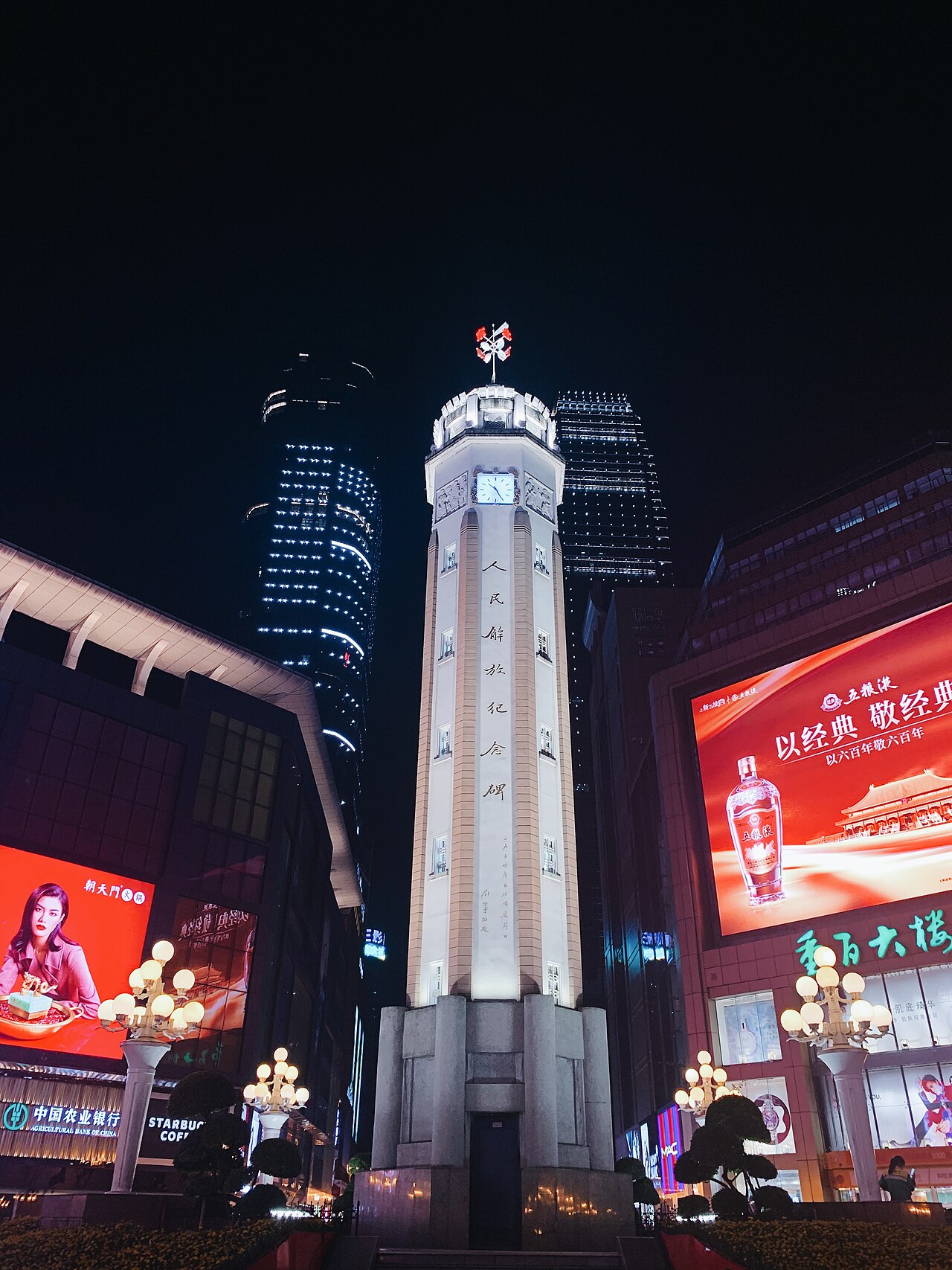
The monument at the centre of Yuzhong was begun on 31 October 1946 as a memorial to victory in the war against Japan, when Chongqing had been China's wartime capital. It was later renamed the People's Liberation Monument, which gives the area its name, Jiefangbei. Today it stands in a pedestrian square surrounded by malls and towers, the city's busiest shopping district. It is free and open all the time. Spend half an hour here in the late afternoon, eat on Bayi Road, then walk ten minutes to Hongyadong. Metro: Lines 1 and 6 to Xiaoshizi, Line 2 to Linjiangmen, or Lines 1 and 2 to Jiaochangkou. See Jiefangbei.
Hongyadong after dark
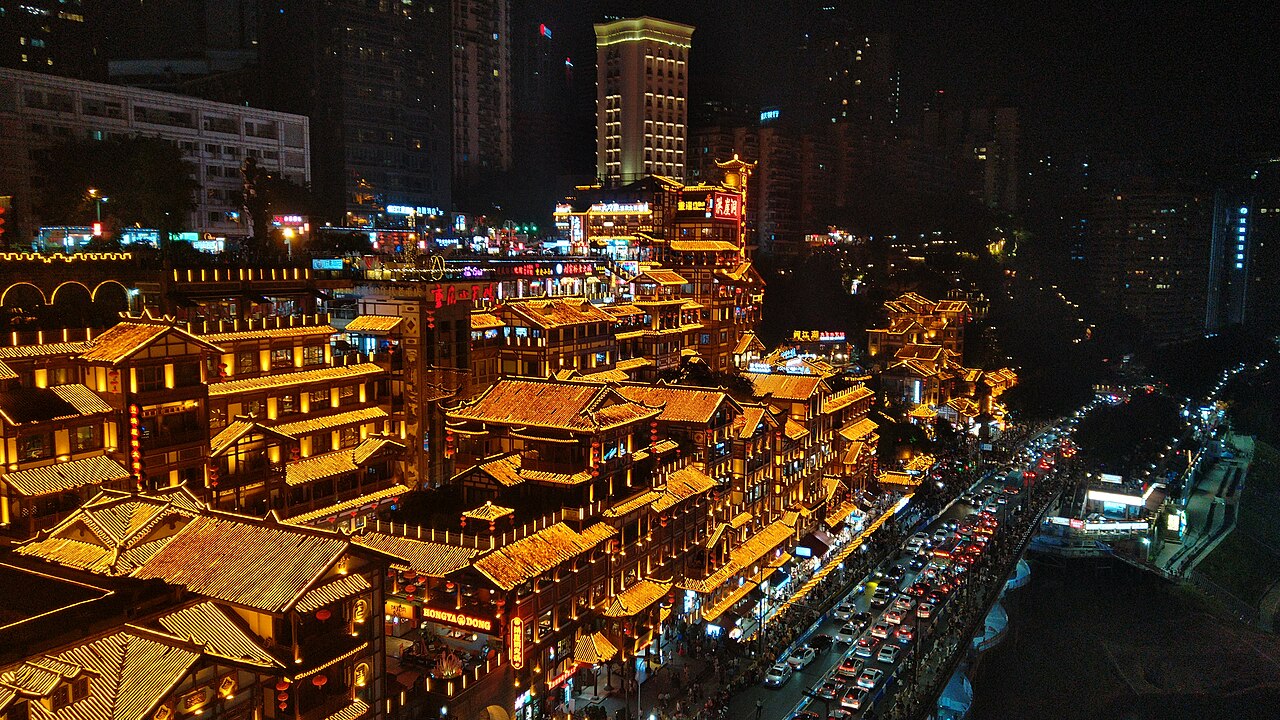
A 2006 complex built into the cliff above the Jialing River in the style of Chongqing's old stilt houses, eleven storeys of shops, restaurants and walkways. It is free, and since 15 April 2026 the lights have been on from 19:30 to 23:00. Enter at the top, on Cangbai Road (11th floor), and work your way down through the building to Jiabin Road at river level. Then walk out onto Qiansimen Bridge for the classic view back at the building, or cross to the Grand Theatre riverbank on the far side for the widest shot. Expect crowds from 19:30 on clear weekends. See Hongyadong.
The Yangtze River Cableway
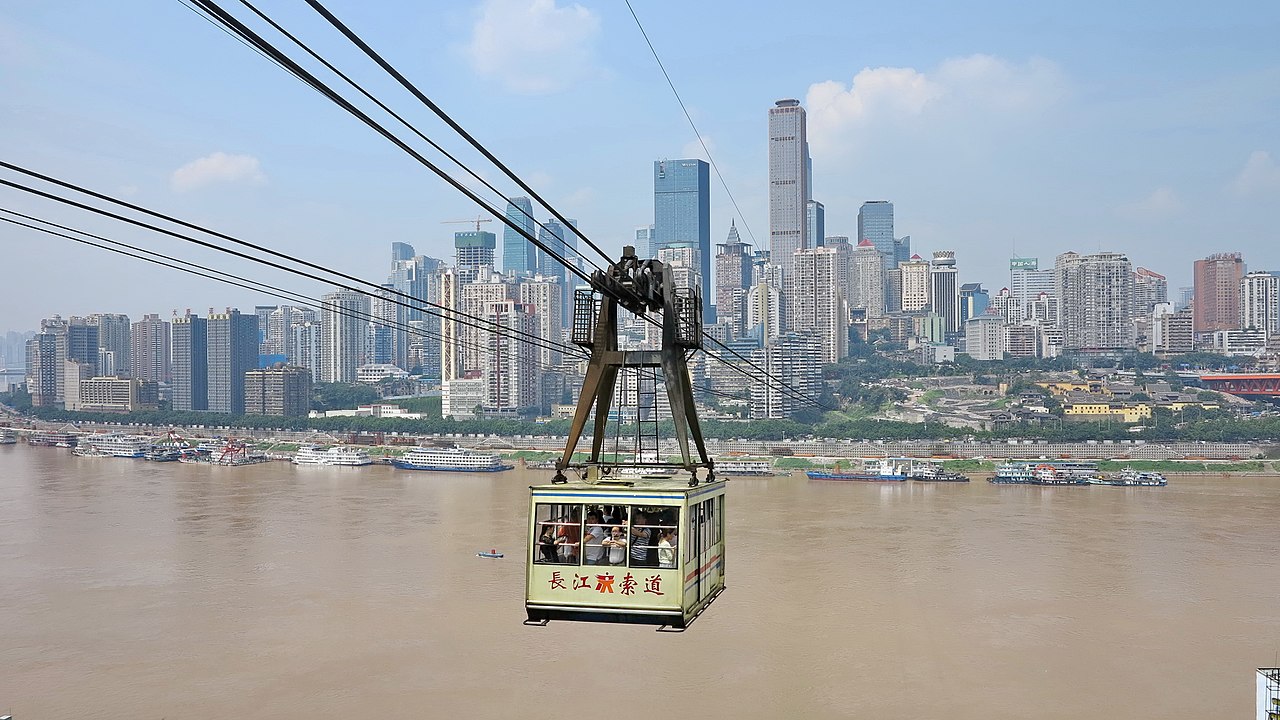
Opened on 24 October 1987 as everyday transport across the Yangtze, the cableway runs 1,166 metres from Xinhua Road in Yuzhong to Shangxin Street in Nan'an, a crossing of a few minutes. Today almost everyone on it is a visitor. In 2026 it costs 30 yuan one way or 50 yuan return, and children under 1.3 m ride free. It runs 08:00 to 22:00 in the main season and 08:00 to 21:00 in winter. The north station is near Xiaoshizi. Queues at dusk can top an hour on holidays, so ride in the morning or go one way and come back by metro. See Yangtze Cableway.
Ciqikou old town
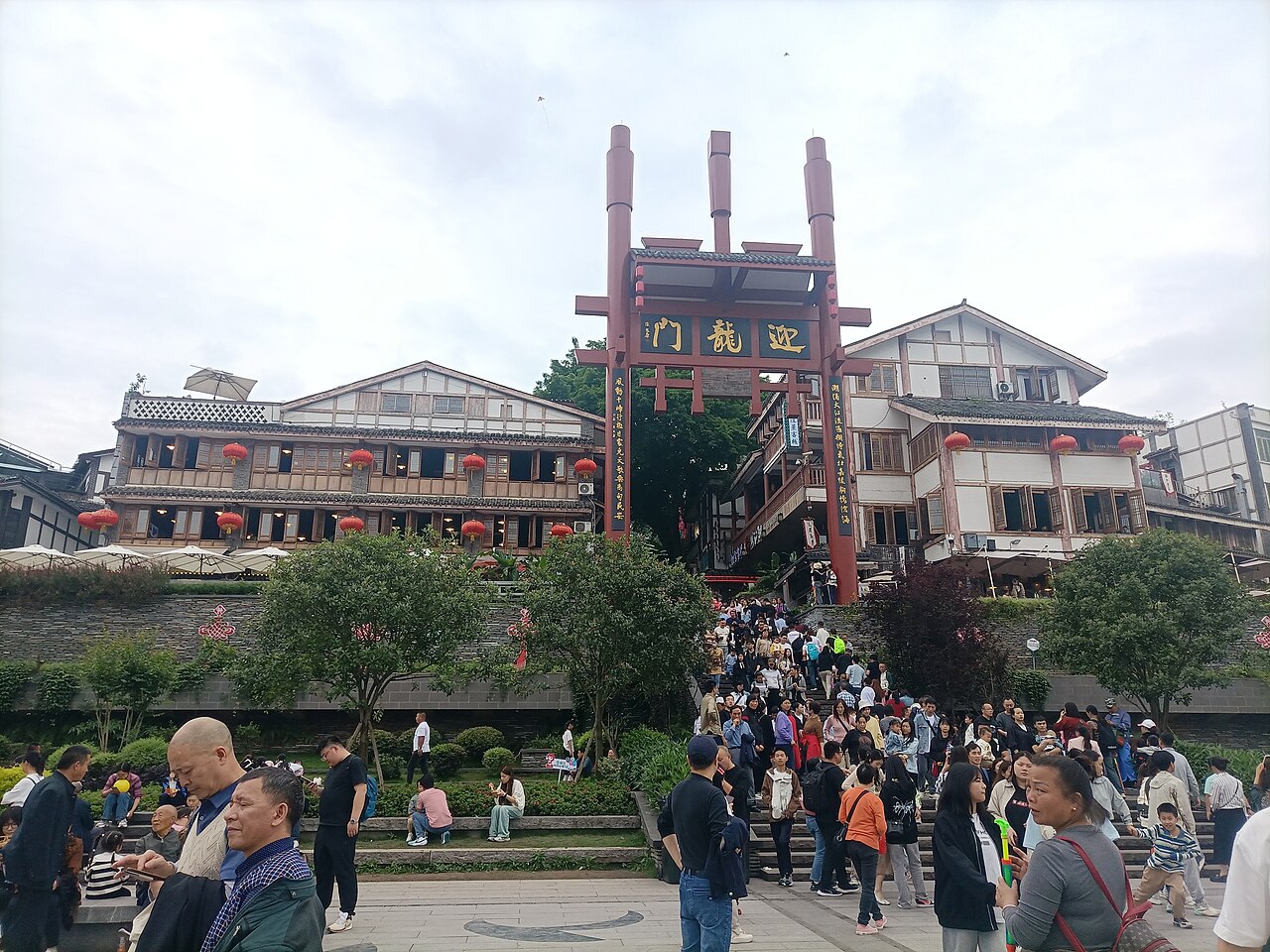
A Ming and Qing wharf town on the Jialing in Shapingba, once called Longyin and nicknamed "Little Chongqing". Its name, "porcelain port", recalls the trade that came through. The main street is a busy snack market. Quieter side lanes lead down towards the river. It is free, and metro Line 1 stops at Ciqikou station. Go early in the morning, as by late morning on weekends the main street is a slow shuffle. Two hours is enough. See Ciqikou.
The Dazu Rock Carvings
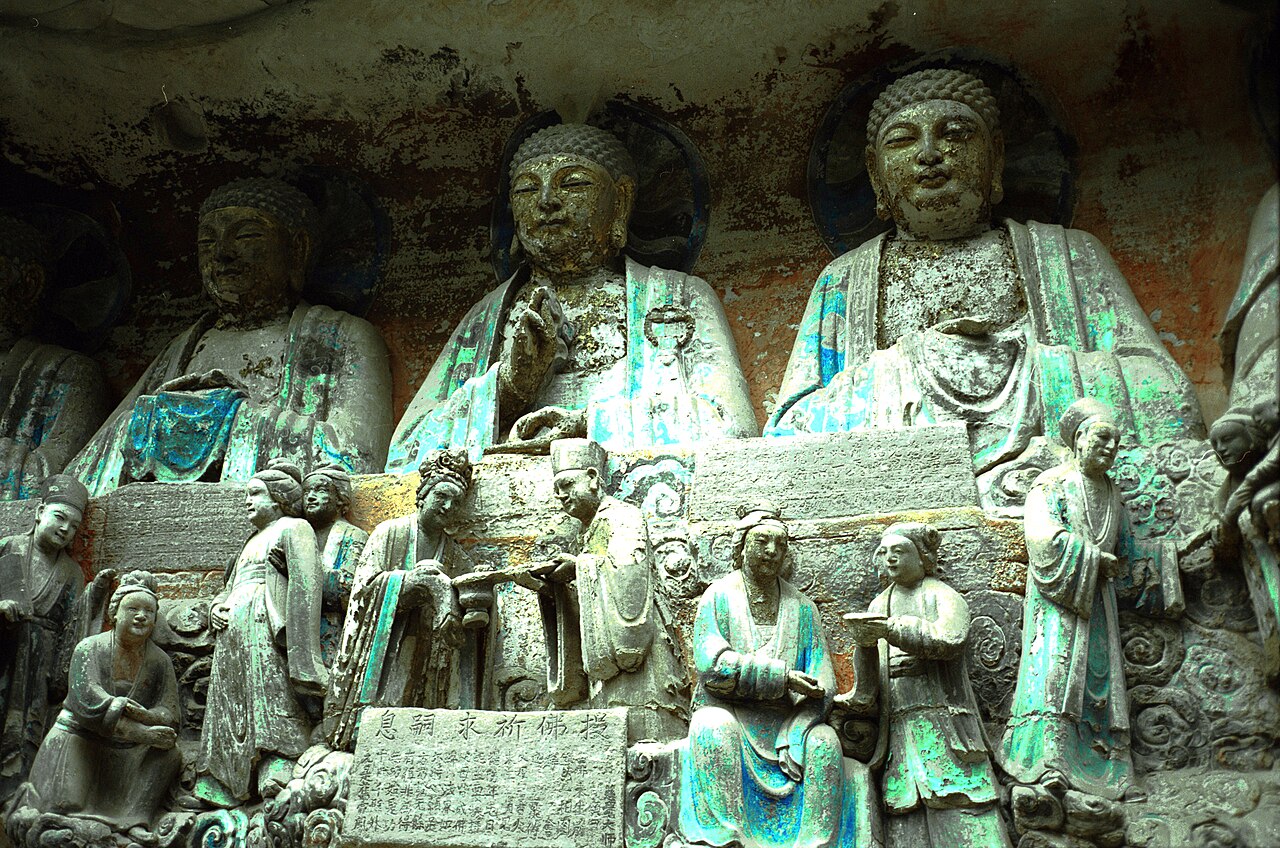
Tens of thousands of Buddhist, Daoist and Confucian figures carved into cliffs from the late Tang to the Song, listed by UNESCO in 1999. Baodingshan, about 15 km from Dazu town, is the main site: a horseshoe-shaped gorge lined with huge carved scenes, including the gilded Thousand-Hand Guanyin and a 31-metre reclining Buddha. Beishan, closer to town, has smaller, finer carvings. In 2026 Baodingshan costs 115 yuan from March to November, or 140 yuan with Beishan, valid on the same day. Book on the 大足石刻 WeChat account. Take a train from Chongqing West or Shapingba to Dazu South, then a tourist bus. See Dazu Rock Carvings.
Wulong's Three Natural Bridges
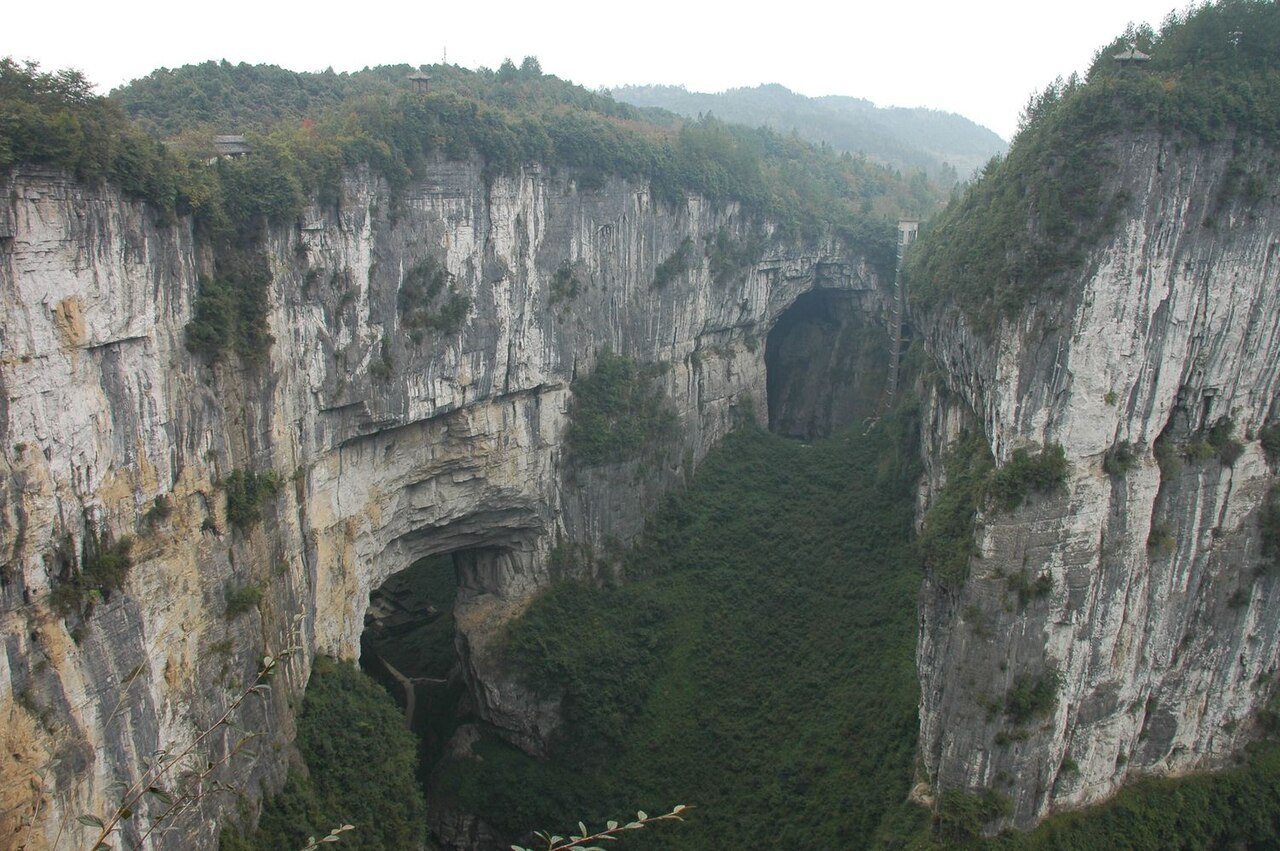
Three enormous natural limestone arches, Tianlong, Qinglong and Heilong, span a gorge between two collapsed sinkholes in Wulong, part of the South China Karst World Heritage site since 2007. A lift takes you down into the gorge, you walk beneath the bridges, and a shuttle brings you back up. The 2026 peak-season ticket (March to October) is 155 yuan including the shuttle bus and lift. From September to April the site opens 08:30 to 16:30. The new high-speed line reaches Wulong South from Chongqing East in about 34 minutes on the fastest trains. You then need a bus or taxi to the visitor centre at Xiannüshan town. See Wulong.
Eating in Chongqing
Hotpot comes first. Chongqing hotpot uses a beef-tallow broth loaded with chilli and Sichuan pepper, often in a pot divided into nine squares so you can keep different foods at different heats. The classic things to cook in it are tripe, duck intestine and huanghou (aorta), dipped briefly and eaten with sesame oil and garlic. Order a split pot with a mild side if anyone in your group is unsure, and say wei la (mildly spicy) when ordering. Even that is hot.
Chongqing's other style is jianghu cooking: big, bold dishes such as laziji (chicken buried in dried chillies), pickled-mustard fish and spring-water chicken. For breakfast, locals eat xiaomian, small bowls of noodles in chilli oil, or with wanza (minced pork and peas). Bayi Road near Jiefangbei is the central snack street, and Ciqikou is busy with stalls. A proper hotpot dinner takes an evening. Don't squeeze it in before a cableway queue on a hot July day.
How to arrange the route
Day 1, the peninsula. Afternoon at Jiefangbei, early dinner on Bayi Road, then Hongyadong from the top as the lights come on at 19:30, and Qiansimen Bridge for the view. If you have the energy, take the metro to Liziba on Line 2 to see the train run through a residential building.
Day 2, rivers and old town. Ciqikou at about 09:00, back to Yuzhong for lunch, then the cableway across to Nan'an in the afternoon. Return by metro, and spend the evening at a hotpot restaurant. If it's raining, swap in the Three Gorges Museum, opposite the Great Hall of the People.
Day 3, Dazu. Early train from Chongqing West to Dazu South, Baodingshan in the morning and Beishan in the afternoon, back by evening.
Day 4, Wulong (optional). Early train from Chongqing East to Wulong South, the Three Natural Bridges, and either back the same evening or a night at Xiannüshan.
Onward travel. Chengdu is about an hour to an hour and a half by high-speed train, for pandas and a gentler pace. Leshan, for the Giant Buddha, is beyond Chengdu. Guiyang, to the south in Guizhou, is about two hours by fast train, and Zunyi is on the way.
What to cut if short on time
Drop in this order:
- Wulong. It costs a whole day.
- Ciqikou, if the peninsula's lanes have already given you enough "old Chongqing".
- The cableway, in fog or if the queue would eat your evening. The view from the bridges is free.
- Dazu, on a two-day trip.
Keep: one evening on the peninsula with Hongyadong and Qiansimen Bridge, and one proper hotpot.
Things to confirm before you go
- Dazu: real-name booking on the 大足石刻 WeChat account, the season's price, and the last entry at Baodingshan (around 16:10 in 2026 listings). Also the train back.
- Wulong: what the ticket includes (shuttle and lift), the closing time for your month, and the high-speed train back from Wulong South.
- Cableway: that it's running. Maintenance closures and storms stop it, so check the operator's notices on the day.
- Hongyadong: lights 19:30 to 23:00 since April 2026. Holiday crowd controls can close stretches of road and bridge.
- Your railway station: Chongqing North, West and East are far apart.
- Weather: heat in July and August, fog from November to February.
Frequently asked questions
How many days do you need in Chongqing?
Three days covers the city and one day trip, to Dazu or Wulong. Four days lets you do both.
When are the Hongyadong lights on?
From 19:30 to 23:00 since 15 April 2026. The classic view is from Qiansimen Bridge.
Is the Yangtze Cableway worth it?
Yes, once, ideally one way at a quiet time. It costs 30 yuan one way, or 50 yuan return. If the queue is very long, the bridges have free views.
Dazu or Wulong?
Dazu for Buddhist art and history, Wulong for dramatic karst scenery. Both are now under an hour by high-speed train.
Is Chongqing food very spicy?
Yes, especially hotpot. Ask for a split pot with a mild side and order wei la (mildly spicy).
Sources
The historical and geographic facts were checked against these Chinese Wikipedia entries, retrieved 11 August 2026.
- Chongqing (city) https://zh.wikipedia.org/wiki/重庆市
- Hongyadong https://zh.wikipedia.org/wiki/洪崖洞
- Ciqikou Old Town https://zh.wikipedia.org/wiki/磁器口古镇
- Yangtze Cableway https://zh.wikipedia.org/wiki/长江索道
- Jiefangbei https://zh.wikipedia.org/wiki/解放碑
- Dazu Rock Carvings https://zh.wikipedia.org/wiki/大足石刻
- Wulong Karst https://zh.wikipedia.org/wiki/武隆喀斯特
Prices, hours and transport were rechecked on 10 October 2026 against the Chongqing municipal government's Hongyadong lighting notice (April 2026) and its report on the Chongqing East–Qianjiang high-speed line (June 2025), the cableway operator's site (cqsuodao.com), and 2026 listings from ticketing sites and local travel agencies for Dazu, Wulong and the cableway. The Wulong price comes from an agency listing, not the scenic area itself. The official notice on the day takes priority.
All photos are from Wikimedia Commons, used under CC licenses; re-use requires attribution.
- chongqing-jiefangbei.jpg from File Jiefangbei at Night 20201024.jpg, by Este Momento, taken October 24, 2020, CC BY-SA 4.0
- chongqing-hongyadong.jpg from File 202308 Hongya Cave at night from Qiansimen Bridge.jpg, by Jonashtand, taken August 18, 2023, CC BY-SA 4.0
- chongqing-cableway.jpg from File 重庆 长江上的渡江索道1 - panoramio.jpg, by Nyx Ning, taken September 13, 2015, CC BY-SA 3.0
- chongqing-ciqikou.jpg from File 磁器口古镇-迎龙门.jpg, by Xiumuzidiao, taken May 2, 2024, CC BY 4.0
- chongqing-dazu.jpg from File 大足石刻.JPG, by Gisling, taken November 1, 2006, CC BY-SA 3.0
- chongqing-wulong.jpg from File Wulongtianshengsanqiao.JPG, by Brookqi, taken November 2008, public domain