Yangzhou Travel Guide: Six Stops in the Canal City (with a Three-Day Itinerary)
Yangzhou sits in central Jiangsu on the north bank of the Yangtze, known in ancient times as Jiangdu and Guangling, where the Grand Canal crosses the great river. The Tang poets never stopped writing about it. Li Bai's line "in the misty flowers of the third month, go down to Yangzhou" has been advertising the city for over a thousand years. Its patrimony came from the salt merchants: through the Ming and Qing, the two-Huai salt merchants gathered here and turned the banks of Slender West Lake into a scroll of water gardens, filling the town with rockeries, corridors, and reception halls. Jiang Kui named it the famed city of Huai-an's left, the lovely place of Zhuxi, moon-watchers call it the City of the Moon, and the knife-work and heat-control of Huaiyang cuisine walked from these kitchens onto state-banquet tables. The six places below (Slender West Lake, Geyuan, Heyuan, Dongguan Street, Daming Temple, and the China Grand Canal Museum) have all had their origins checked against public sources.
Planning a short Yangzhou stay
Protect one signature half-day and one buffer for transport. Cut malls and duplicate viewpoints if the calendar is tight. A cut list beats a checklist when time runs short.
When to come to Yangzhou
"Misty flowers of the third month" means the lunar third month, falling around April, those few weeks are Yangzhou at its peak, willow catkins and peach blossom, drizzle and leaning bridges, the whole city in color, and the crowds at their fullest. September to November is the steadiest second choice, crisp air and osmanthus in the gardens. Summer is muggy, winter leaves the gardens bare, though Slender West Lake under snow is another picture. Garden-hopping means a lot of walking, with a light jacket for the cool mornings and evenings of spring and autumn. In season, Slender West Lake tickets and the Canal Museum reservations need booking ahead through official channels.
How to get in and where to stay
Use the main airport or high-speed rail station that serves Yangzhou, then ride metro, bus, or taxi per posted notices. Stay near the primary visitor cluster if walking matters; treat outlying scenic areas as day trips, not hotel districts. Nearby canal-city walks continue in Taizhou (Jiangsu).
Places worth visiting in the city
Slender West Lake
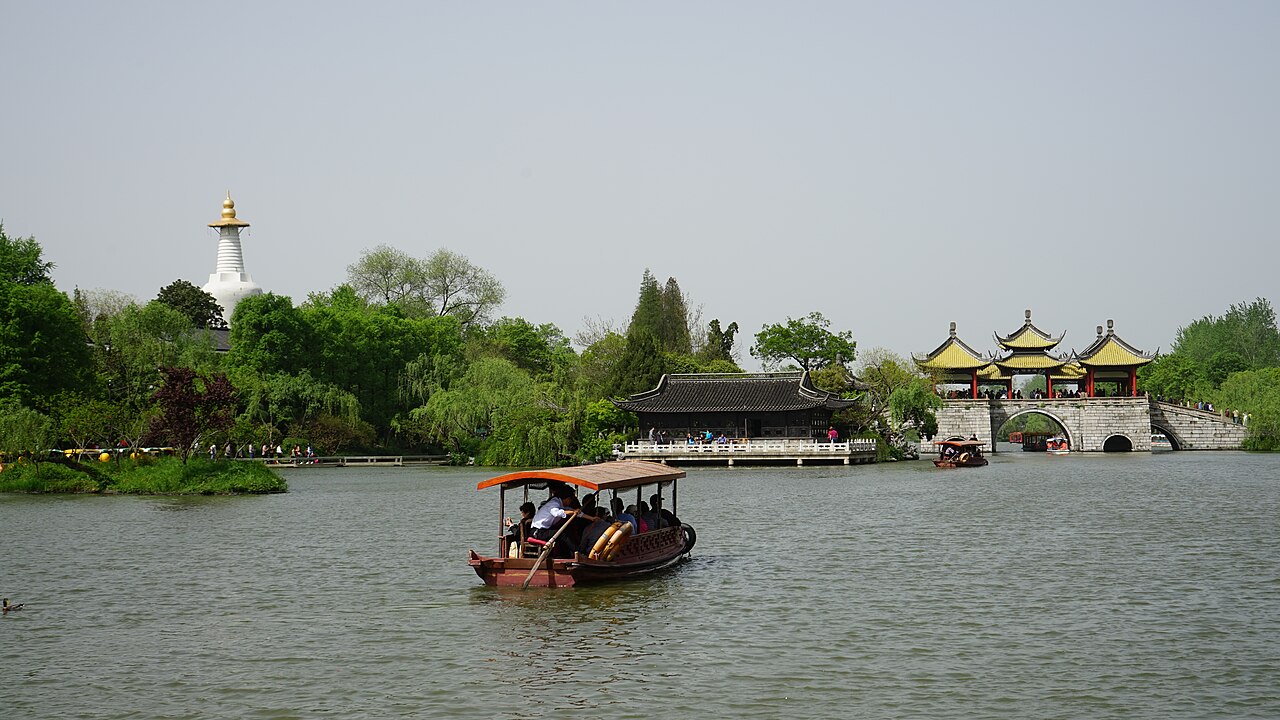
Slender West Lake lies northwest of the old city, originally a stretch of moat. Through the Ming and Qing, salt merchants of the two-Huai salt administration spent fortunes hiring master gardeners along its banks, working it into a scroll of water gardens. Qing writer Li Dou recorded its splendor in his Yangzhou Painted Boats Record. Today the lake and its sights have been restored into a national scenic area and a 5A attraction, and of the twenty-four lake views the two most famous (White Pagoda in Sunny Clouds and the Five Pavilion Bridge) stand where the water opens widest.
The Five Pavilion Bridge looks like a lotus floating on the water, five pavilions in a line over fifteen arches; on a full-moon night each arch holds its own moon, which is why the bridge doubles as the city emblem. The White Pagoda, so the story goes, was stacked overnight by a salt merchant in salt sacks to please the Qianlong Emperor, unverifiable, but the tale flatters the lake nicely. Enter at the Great Rainbow Bridge and walk toward Twenty-Four Bridge, two or three hours on foot, or take the painted pleasure boat and let the boatman tell the stories. Bridge and boat pacing are on the Slender West Lake page.
Daming Temple
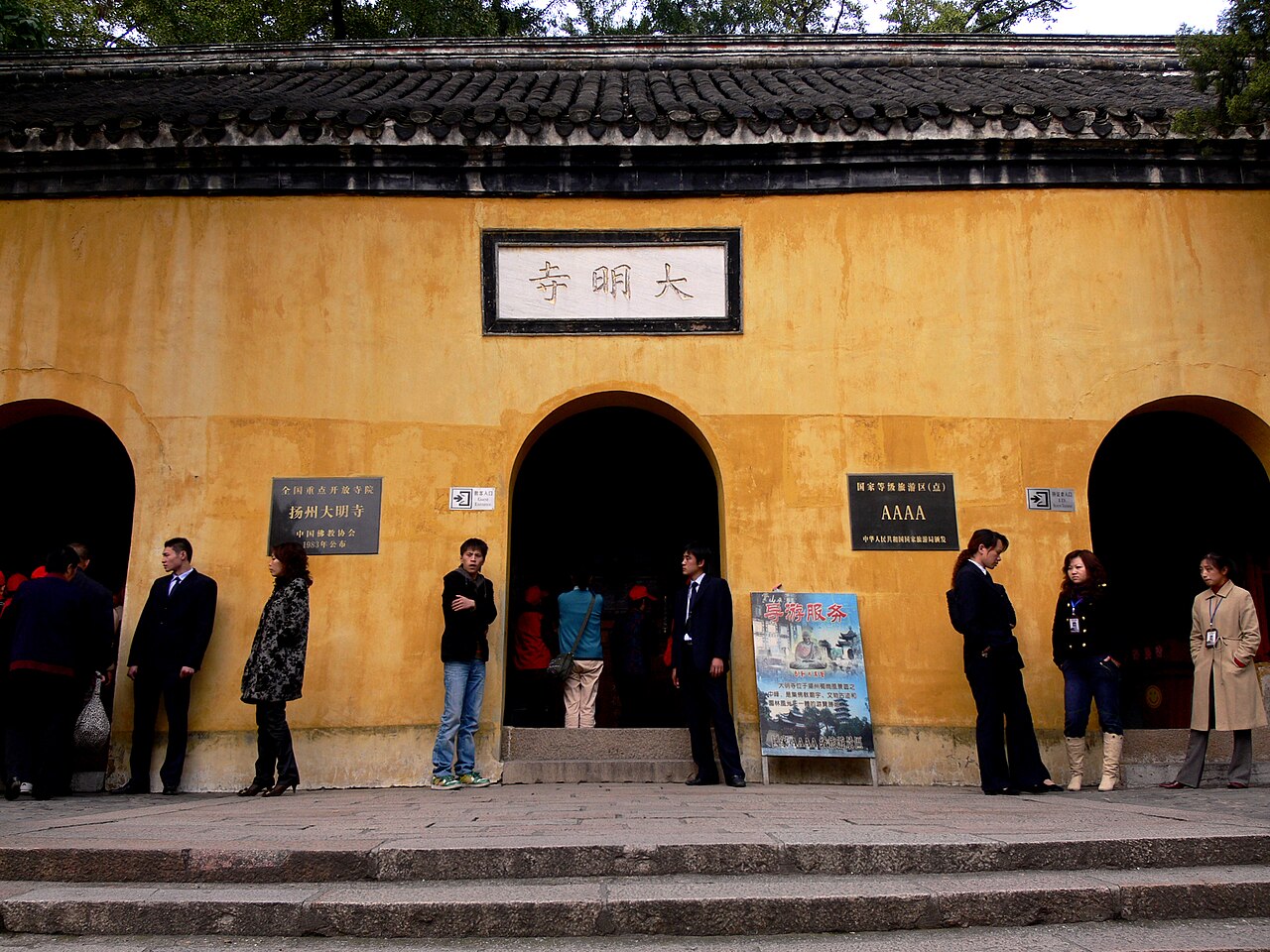
Daming Temple crowns the middle peak of Shugang hill at the end of Slender West Lake. It was where the monk Jianzhen lived and taught before his six voyages to Japan, and the old saying calls it the finest sight in Yangzhou; the temple is a nationally protected cultural site. Founded in the Southern Dynasties, it is also the home of the Jianzhen Memorial Hall, built on Premier Zhou Enlai's instruction with design work by Liang Sicheng, keeping Tang-style architecture alive in Yangzhou.
The Qiling Pagoda inside was first built in 601 in the Sui dynasty (Li Bai, Gao Shi, and Liu Changqing all climbed it and left poems) and today's rebuild opens views over the whole city. Pingshan Hall on the grounds was built by Ouyang Xiu when he governed Yangzhou in the Northern Song; sitting there, the hills of Jiangnan seem to bow before the railing, which is how the hall got its name. Temple and lake share one line of travel, finish the lake and walk straight up the hill, a perfect single day. Jianzhen Hall and pagoda notes are on the Daming Temple page.
Geyuan
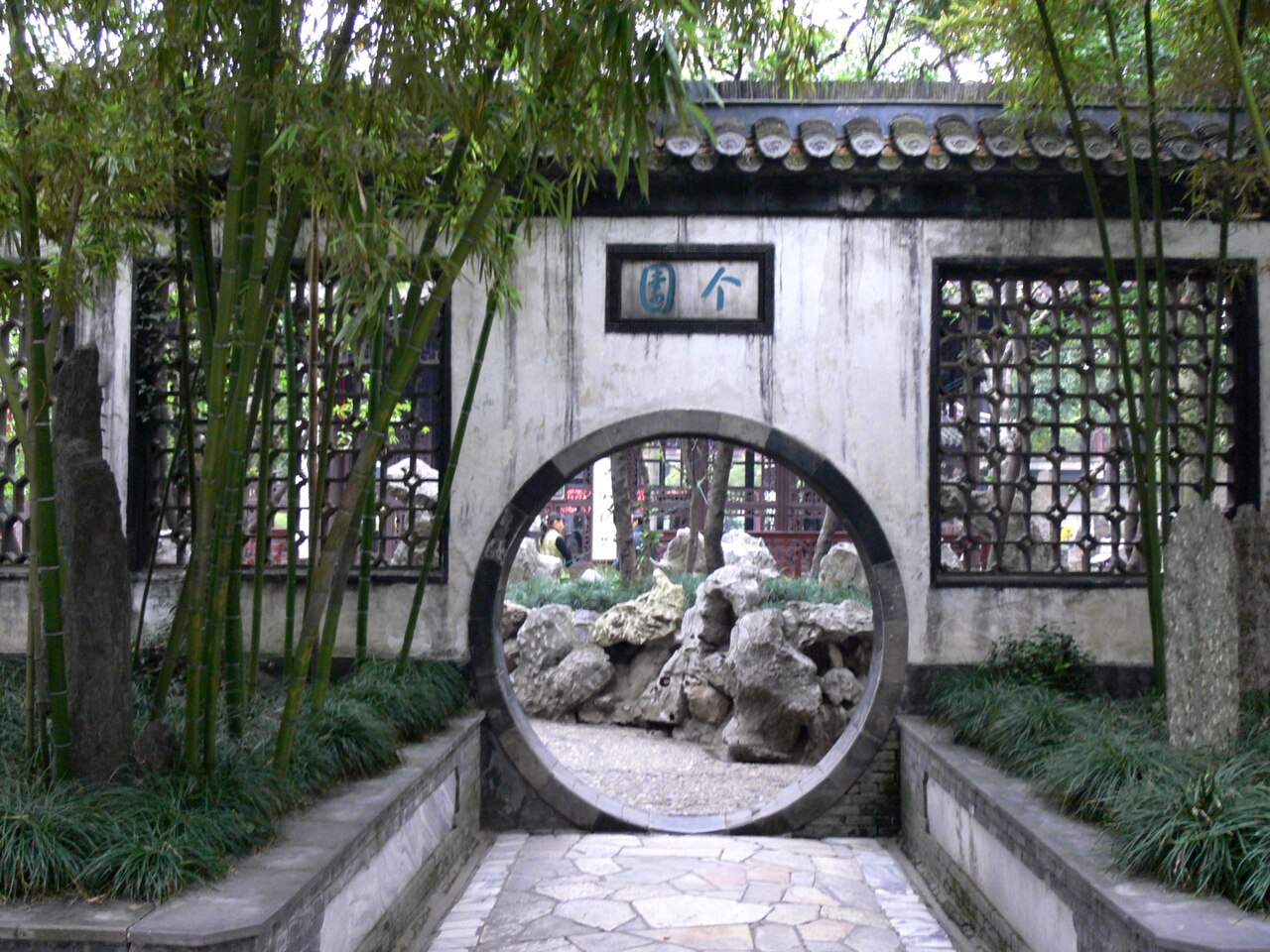
Geyuan stands on Dongguan Street, the garden residence of the salt merchant Huang Zhijun, laid out in 1818 in the Jiaqing reign of the Qing. The name is a play on bamboo, the owner loved it, and "moonlight on bamboo makes a thousand 'ge' characters," each leaf tracing the shape of the word. The garden's masterpiece is the Four Seasons rockery: four groups of stones, one per season, bamboo-shoot stones for spring, Taihu stones for summer, yellow stone for autumn, and white Xuan stone heaped into a snowbound winter. One circuit of the garden and you have lived through a year.
In 1988 Geyuan entered the third batch of national protected cultural sites, and it is the best-preserved of Yangzhou's salt-merchant gardens. It is not large (an hour and a half covers it) but the Four Seasons rockery deserves a slow walk, the yellow-stone autumn hill above all, the summit of Yangzhou's rockery art. It sits right on Dongguan Street, so garden and street visit flow together. Four Seasons rockery tips are on the Geyuan page.
Heyuan
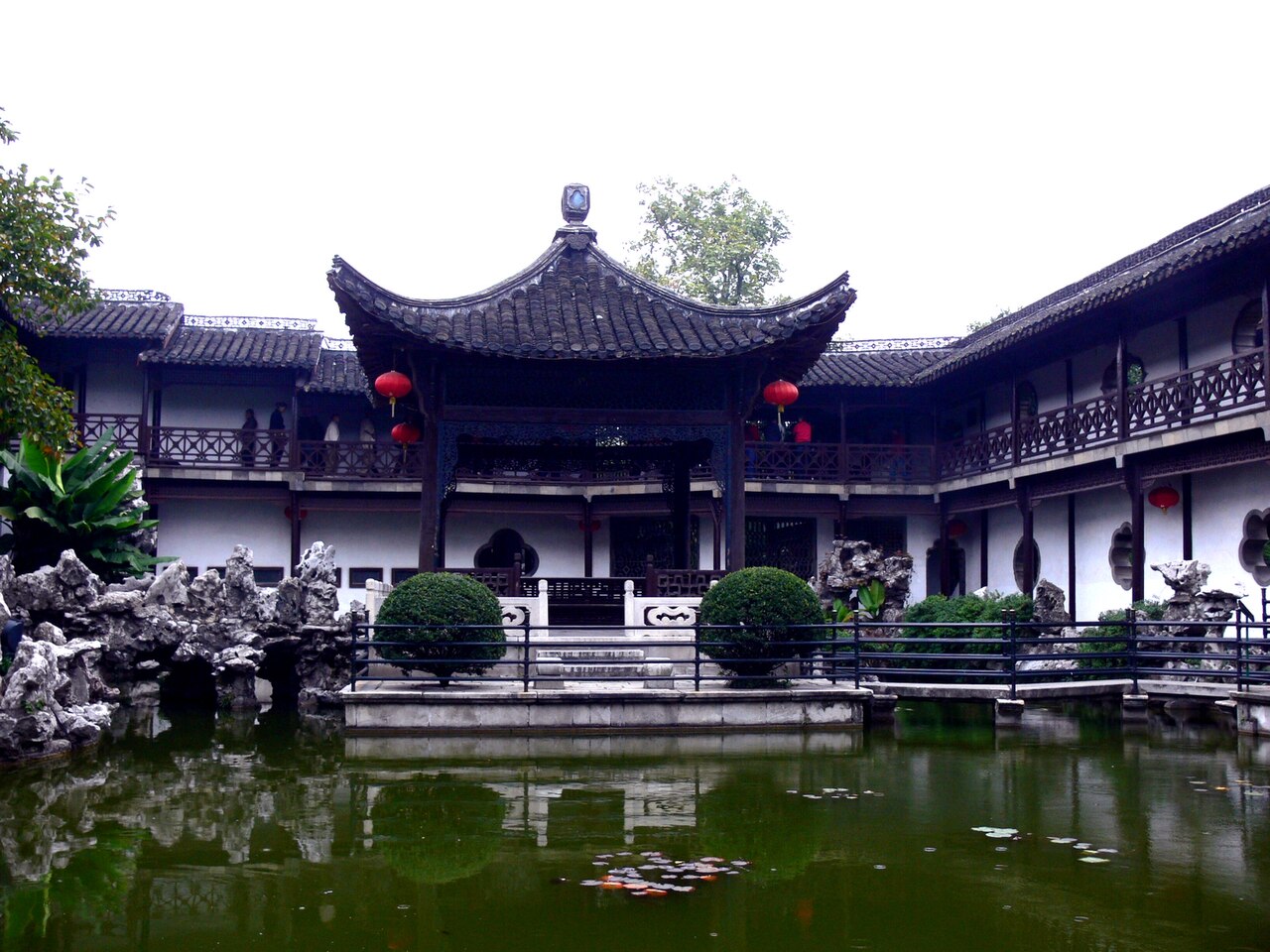
Heyuan, formally the Xiaoxiao Mountain Villa, is the private garden of He Zhidao, a late-Qing intendant, and Yangzhou people simply call it the He Garden, decades newer than Geyuan and crowned "the first garden of the late Qing." Its fame rests on the double-decker winding corridor that runs through the whole compound: the designer used two-level turning galleries to divide the front residences from the rear garden, the walkways rising and dipping between halls, lattice windows punched through the sandwich walls, walk the corridor and the scenery travels past the windows, which earned it the nickname of an early overpass.
Heyuan also sets Chinese halls and Western houses in one courtyard: the Yuxiu Building is a full Western-style residence with shutters, fireplace, and French railings, an eye-opener in late-Qing Yangzhou. The garden lies in the Nanhexia historic district, ten-odd minutes by car from Geyuan; see both in a day and you get the two schools of salt-merchant gardening side by side. It is likewise a nationally protected cultural site. Corridor walking notes are on the Heyuan page.
Dongguan Street
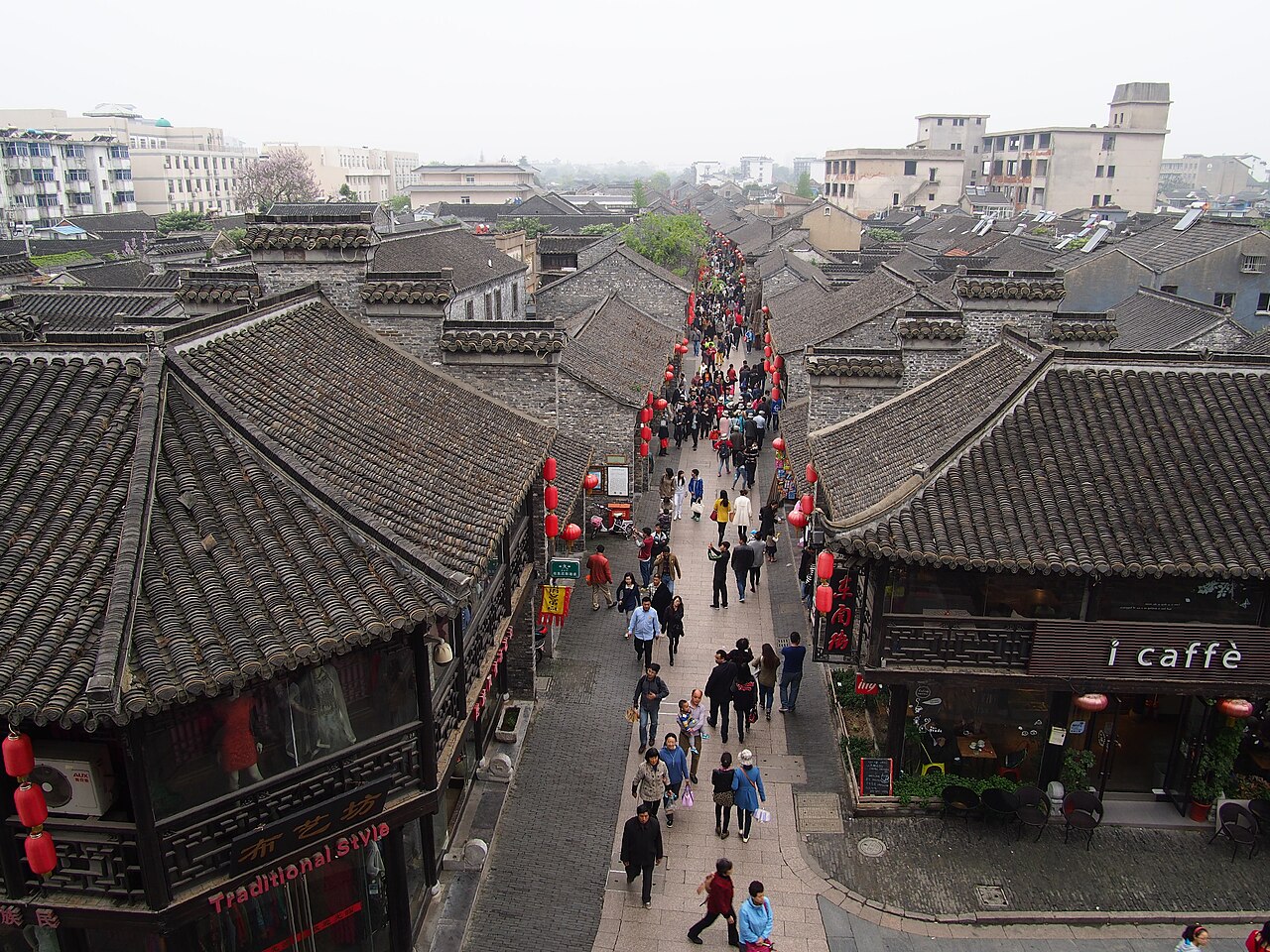
Dongguan Street is the axis of Yangzhou's old town, running from the ancient canal wharf into the city, with a thousand years of canal trade pressed into one street. The road is narrow, paved in bluestone slabs, lined with old shops, sauce gardens, teahouses, and craft workshops, and it holds several protected sites of its own. Geyuan sits just off the street, and the Yipu compound at No. 356 is another salt-merchant residence, both nationally protected.
The best hour for Dongguan Street is evening, when the day-trippers thin out and the lamps come on. Buy a Huangqiao baked bun or a bowl of shredded tofu, drift down to the old wharf, and the wind comes off the canal. The Xie Fuchun perfume-powder shop, a brand from the Daoguang years, still trades on the street, a good stop for gifts. The street is free and strings together half of central Yangzhou's sights. Evening lamp tips are on the Dongguan Street page.
China Grand Canal Museum
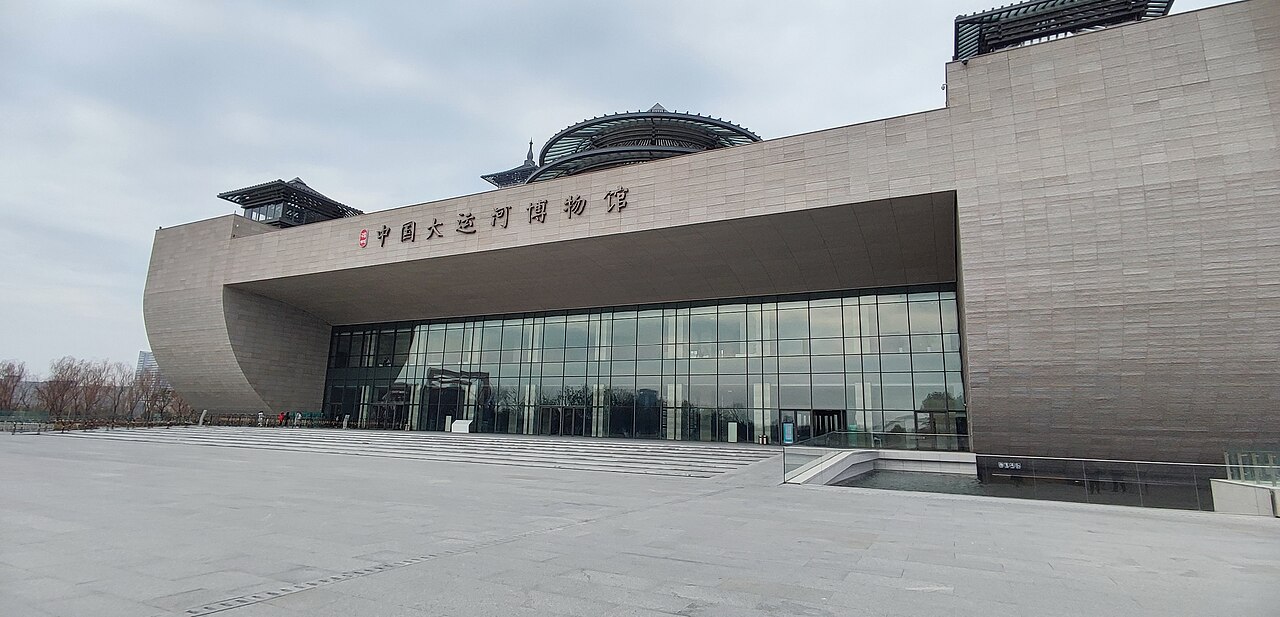
The China Grand Canal Museum stands on the Three Bays of the canal, opened on June 16, 2021, a large modern museum dedicated to the Grand Canal. The building is a sight in itself, a vast ship-shaped hall facing the water, with a Tang-style pagoda beside it, both reflected in the bends of the canal.
The exhibitions take the canal's 2,500 years apart piece by piece, from grain transport and waterworks to everyday life. The biggest draw is an entire cross-section of an excavated canal bed, moved whole from an archaeological site, the strata pressing one dynasty's riverbed upon another. There are immersive digital shows too, including an old canal street that rains indoors. Entry is free but reservation is required and peak-season slots go fast; give it half a day to a full day, it is the key to understanding this capital of canals. Booking and gallery priorities are on the China Grand Canal Museum page.
Eating in Yangzhou
The Yangzhou day starts with morning tea. Fuchun Teahouse's three-delicacy buns, crab-roe soup dumplings, and thousand-layer oil cake are the standard trio with a pot of Kuilongzhu tea, locals stretch it from six to nine. Dadou gansi tests the knife: one square of dried tofu cut into dozens of layers. Crab-powder lion's-head meatballs want four parts fat to six lean, dissolving on the tongue. Yangzhou fried rice was born here, the grains distinct, the mixings exact. On the street there is Yangzhou salted goose, cold-sliced and never greasy, half a goose is a household staple. Morning tea means queues; for Fuchun or Yichun go at six or seven, or duck into a neighborhood teahouse. The small shops around Dongguan Street and Ganquan Road are the most down-to-earth, and Huaiyang sweetness is sweetness that lifts the flavor, heavy-taste eaters wince at the first bite and cannot stop by the third.
How to arrange the route
Three days covers lake, gardens, street, and canal.
Day one: into Slender West Lake, walk to Daming Temple, a light lunch at the foot of the hill, the temple in the afternoon, then Dongguan Street for dinner and the evening lamps.
Day two: Geyuan on Dongguan Street in the morning, lunch along the street, Heyuan in the afternoon, tea back in the old town at night.
Day three goes to the China Grand Canal Museum, the exhibitions in the morning, a walk along the Three Bays in the afternoon, closing the canal line. In three days you have the salt merchants' gardens, the Tang temple, the Qing street, and today's canal museum.
Nanjing is just across the river. Suzhou is the next garden city down the line. Wuxi is the Taihu stop between Suzhou and Nanjing.
Things to confirm before you go
- Slender West Lake is crowded in season; enter at the 7:30 opening for fewer people and better light. Boat rides are ticketed separately from admission.
- The Canal Museum is free but reservation is required, slots tighten in peak season, and it closes Mondays (except statutory holidays), check before going.
- Morning-tea houses queue; for the famous ones go at six or seven, or choose a neighborhood teahouse.
- Spring brings willow catkins, allergy sufferers should pack masks; summer is muggy and rainy, carry an umbrella.
- Garden-hopping is mostly on foot; wear comfortable shoes, with buses and taxis filling the gaps between gardens.
Frequently asked questions
How many days for Yangzhou?
Three is comfortable. Slender West Lake plus Daming Temple one day, Dongguan Street with Geyuan and Heyuan one day, the Canal Museum one day. In a squeeze, two days cover the essentials.
Slender West Lake or West Lake in Hangzhou?
They are different things. Hangzhou's West Lake is open lake-and-hill country; Slender West Lake is a scroll of water gardens paid for by salt merchants, and it rewards you for reading it as a garden.
When do the viburnum flowers bloom?
Around April. The qionghua is Yangzhou's city flower, blooming at Slender West Lake and Daming Temple; the exact weeks shift with the year's temperature.
Is the Canal Museum good for kids?
Yes. Immersive digital shows and a reproduced canal street give children plenty to do, just grab the reservation slot early.
Sources
The facts in this article were checked against the following Chinese Wikipedia entries, retrieved August 31, 2026.
- Yangzhou (city) https://zh.wikipedia.org/wiki/扬州市
- Slender West Lake https://zh.wikipedia.org/wiki/瘦西湖
- Geyuan https://zh.wikipedia.org/wiki/个园
- Heyuan https://zh.wikipedia.org/wiki/何园
- Dongguan Street (Yangzhou) https://zh.wikipedia.org/wiki/东关街_(扬州)
- China Grand Canal Museum https://zh.wikipedia.org/wiki/扬州中国大运河博物馆
The Chinese Wikipedia entry for Daming Temple is still incomplete; its basic facts (Jianzhen's residence and teaching, "finest sight in Yangzhou," sixth batch of national protected sites, the Qiling Pagoda's founding date) were additionally verified against the entry summary and the temple's published materials.
All photos are from Wikimedia Commons, used under CC licenses; re-use requires attribution.
- yangzhou-shouxihu.jpg from File Five Pavilion Bridge and White Pagoda 2017.jpg, by Amarespeco, CC BY-SA 4.0
- yangzhou-daming.jpg from File Daming temple.JPG, by Gisling, CC BY-SA 4.0
- yangzhou-geyuan.jpg from File Bamb Garden in Yangzhou.JPG, by Gisling, CC BY 3.0
- yangzhou-heyuan.jpg from File He Garden.jpg, by Gisling, CC BY 3.0
- yangzhou-dongguan.jpg from File 东关街 - Dongguan Street - 2015.04 - panoramio.jpg, by rheins, CC BY 3.0
- yangzhou-canal.jpg from File China Grand Canal Museum.jpg, by FoolPiasar, CC BY-SA 4.0
- yangzhou-city.jpg from File The Five Pavilion bridge.jpg, by Gisling, CC BY-SA 4.0