Pingliang Travel Guide: Kongtong Mountain and Eastern Gansu
People come to Pingliang for Kongtong Mountain, a 5A scenic area about 12 km west of the city that Chinese tourism material calls the first Taoist mountain of China. The main peak reaches 2,123 metres, the temple ridges sit roughly 650 metres above the valley floor, and a proper visit takes a full day. The city itself is where you sleep, eat noodles and catch the train. Allow two nights if you arrive by rail, because Pingliang has no high-speed link to Xi'an.
Kongtong in brief
Kongtong rises where the Jing River leaves the hills, on the old Silk Road route out of the Guanzhong plain toward the west. Legend places the Yellow Emperor here asking the sage Guangchengzi about the Way, and the mountain has carried Taoist temples, Buddhist halls and cave shrines for centuries. Local sources count dozens of building groups across eight terraces, nine palaces and twelve courtyards. Forest covers most of the 84 square kilometre scenic area, so the walk feels greener than visitors expect from the loess plateau.
What matters for planning: the temples are spread along ridges joined by steep stairs, the high points are exposed to wind and storms, and the scenic area runs its own shuttle vehicles from the gate. Climbing everything on foot is possible but slow.
Places worth visiting
Kongtong Mountain: a full ridge day
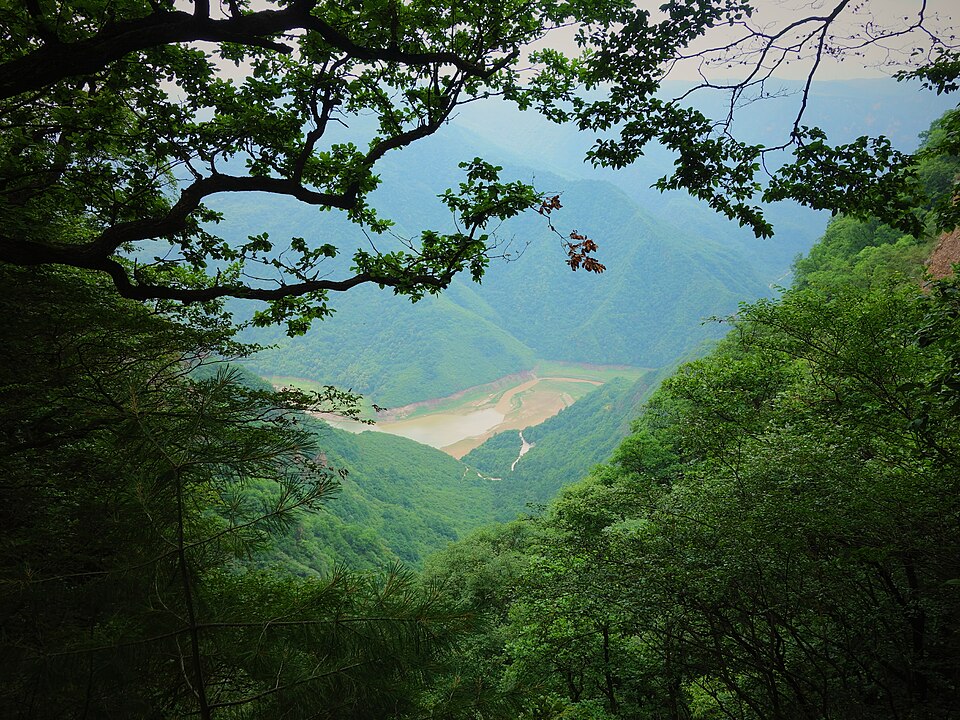
City buses 9, 13 and 21, plus a double-decker sightseeing bus, are listed by the scenic area as running to the Kongtong Ancient Town visitor centre, where you board the scenic-area transport. Bus 13 also continues to the foot of the mountain if you want to walk up from the bottom, which adds hours. From Pingliang Station a typical public-transport journey is bus 22 to Panxuan Lu, then bus 13; journey planners show about 80 minutes.
Once on the mountain, the Middle Terrace (Zhongtai, around 1,894 metres) is the flat hub where most routes meet. From there you choose ridges: the summit area, cliff temples and the stairway sections reward the effort but drain legs quickly. Pick a circuit you can finish before the last shuttle down, and ask at the visitor centre what time that is on your day. Ticket price, shuttle and cable car fares change; read the official notice rather than an old blog post.
Sufi tombs and the city
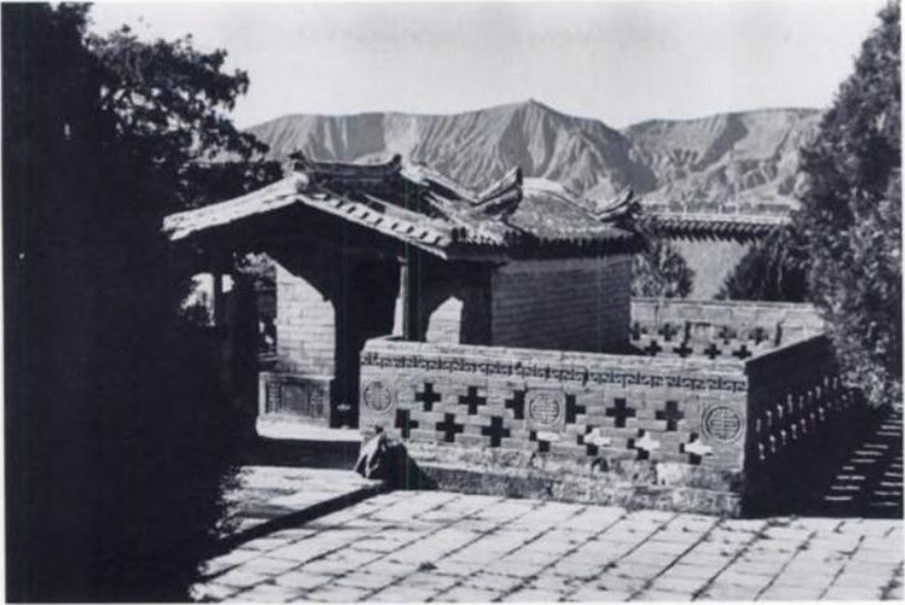
Pingliang has a sizeable Hui Muslim community, and historic gongbei, the domed tombs of Sufi saints, are part of the town's fabric. They are places of worship first, so visit quietly, dress modestly and ask before photographing. If you have a spare morning after the mountain, a walk through the older districts and a city museum visit gives context; on its own, the city is not a reason to come.
The imperial inscription
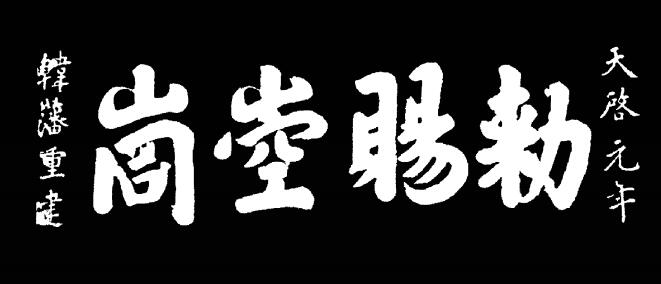
The characters on this plaque, "Kongtong, by imperial grant", hint at how long the mountain has had official patronage. Inscriptions and steles are scattered across the ridges. Reading them slowly is a better use of time than racing to the highest photo platform.
When to come to Pingliang
May to October is the hiking season. July and August are the greenest months but bring afternoon storms on the exposed ridges, so start early and come down if thunder starts. Late September and October bring the autumn colour that the city promotes; the October holidays also bring the crowds, so go on weekdays if you can. Winter is cold, with ice on stairs and some sections closed. Even in summer, carry a warm layer for the summit wind.
Getting in and where to stay
- Rail: Pingliang has two stations, Pingliang and Pingliang South, on conventional lines. Direct trains from Xi'an take roughly four and a half to six hours. Routes via the Yinchuan–Xi'an high-speed line need a change and are not faster.
- Air: there is no airport in Pingliang. Most visitors fly into Xi'an Xianyang and continue by train or coach; check coach times, as the expressway is often quicker than the train.
- Road: long-distance coaches link Pingliang with Xi'an, Lanzhou, Tianshui and Yinchuan.
- Where to sleep: central Pingliang has the widest choice of hotels and restaurants. Lodging near the Kongtong Ancient Town makes an early start easier but evenings are quiet.
Eating in Pingliang
This is noodle country. Hand-pulled beef noodles, lamb dishes and steamed buns fill most menus, with many Hui restaurants serving halal food. Mountain stalls sell snacks and drinks, but the choice thins out late in the day, so carry water and something to eat for the ridges. Dinner in town after the descent is the meal to look forward to.
How to arrange the route
Day 1: arrive, check the next day's weather and shuttle times, eat in the city.
Day 2: first bus to the Kongtong visitor centre, a full day on the ridges, back in town for dinner.
Day 3 (optional): a slow morning around the gongbei and city museums, then onward travel.
Continue east to Qingyang for loess plateau villages, south to Tianshui for the Maijishan grottoes, or north to Guyuan in Ningxia. Zhangye and Dunhuang are much farther west along the Hexi Corridor.
What to cut if short on time
With only one day, take the earliest bus and spend it all on Kongtong. Drop the city sights first. Do not try to fit a same-day train to Xi'an after the ridge walk unless you have checked that a late departure exists.
Things to confirm before you go
- Kongtong ticket, shuttle and cable car fares and hours on the official notice.
- Last shuttle down from the mountain on your date.
- Weather and any ice or storm closures on the ridges.
- Train times from Xi'an or Lanzhou, since services are limited.
Frequently asked questions
How many days do I need in Pingliang?
Two nights is usual: one full day on Kongtong Mountain and time either side for the train.
How do I get from Pingliang to Kongtong Mountain?
City buses 9, 13 and 21 and a sightseeing bus run to the Kongtong Ancient Town visitor centre, where scenic-area shuttles take you up. A taxi is quicker if you are short of time.
Is Kongtong Mountain hard to climb?
Parts are steep, with long stairways and exposed ridges. Using the scenic shuttles keeps it moderate; walking up from the base is a serious day.
Is there a high-speed train to Pingliang?
No direct high-speed service runs from Xi'an. Conventional trains take about four and a half to six hours.
Sources
The facts in this article were checked against the following sources, retrieved September 18, 2026, and rechecked on October 20, 2026.
- Pingliang https://en.wikipedia.org/wiki/Pingliang
- Kongtong Mountains https://en.wikipedia.org/wiki/Kongtong_Mountains
- Pingliang (Chinese) https://zh.wikipedia.org/wiki/平凉市
- Kongtong Mountain (Chinese) https://zh.wikipedia.org/wiki/崆峒山
- Kongtong District government, Kongtong Mountain page http://www.kongtong.gov.cn/zjkd/LYJD/art/2022/art_a9891a6ff95d4a9a871601a91bbf80ac.html
- Pingliang Municipal Government, autumn at Kongtong (2025) https://www.pingliang.gov.cn/lmtj/jxtjhtp/jrtj/art/2025/art_94d889a2fba04b8490b3777287546b8d.html
- Pingliang bus route planner, Pingliang Station to Kongtong east gate https://pingliang.gongjiao.com/ride/1495419.html
- Xi'an to Pingliang train listings (Qunar) https://train.qunar.com/train/tickets/xian-to-pingliang/2026-10-17
Scenic tickets change; this article does not quote yuan amounts, so check the official notice for your date.
All photos are from Wikimedia Commons, used under CC licenses or public domain; re-use requires attribution where applicable.
- pingliang-kongtong.jpg from File:崆峒山.jpg, by DarthVachel, CC BY-SA 4.0
- pingliang-gongbei.jpg from File:A gongbei sufi saints tomb at Pingliang Gansu.jpg, public domain
- pingliang-kongtong-edict.jpg from File:勑賜崆峒.jpg